
Seeing the Future: How Technology, Fashion, and Digital Lifestyles Are Transforming the Global Eyewear Market
Rising vision disorders, increased screen exposure, premium contact lenses, smart eyewear innovation, and fashion-forward consumer trends are driving unprecedented growth across the global eyewear industry.

Eyewear has evolved far beyond its traditional role as a simple vision-correction tool. What was once considered a medical necessity has transformed into a dynamic industry that combines healthcare, fashion, technology, and personal expression.
Today, consumers purchase eyewear not only to improve vision but also to protect eye health, reduce digital eye strain, enhance comfort, and make style statements. From premium spectacles and daily disposable contact lenses to AI-enabled smart glasses and blue-light filtering solutions, the modern eyewear market is undergoing a remarkable transformation.
This shift is being fueled by a combination of demographic trends, technological innovation, changing lifestyles, and growing awareness of eye health. As digital device usage reaches record levels worldwide, consumers are increasingly seeking products that support both vision and overall well-being.
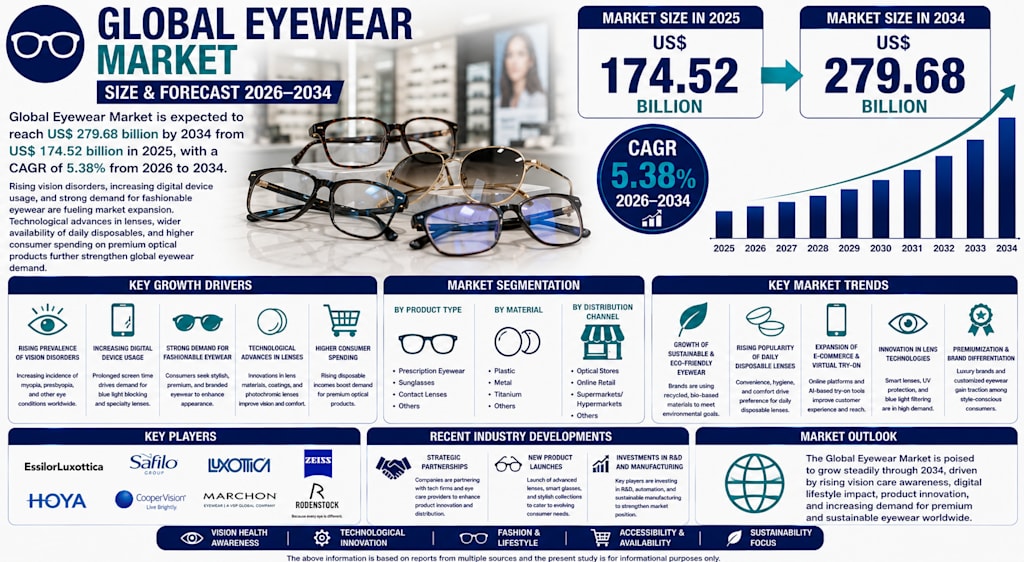
According to Renub Research, the Global Eyewear Market is projected to grow from US$ 174.52 billion in 2025 to US$ 279.68 billion by 2034, expanding at a compound annual growth rate (CAGR) of 5.38% between 2026 and 2034. Rising prevalence of vision disorders, increasing screen exposure, demand for fashionable eyewear, technological advances in lenses, and growing adoption of premium optical products are among the key drivers supporting market expansion.
As consumers increasingly view eyewear as both a health necessity and a lifestyle accessory, the industry is entering one of its most innovative growth periods.
Eyewear Is Becoming Essential in the Digital Age
Modern life is more visually demanding than ever before.
People spend countless hours each day using smartphones, laptops, tablets, televisions, gaming devices, and digital workstations. This dramatic increase in screen exposure has created new challenges for eye health.
Digital eye strain, dry eyes, blurred vision, headaches, and visual fatigue have become common concerns among consumers of all ages.
As a result, demand for corrective and protective eyewear solutions continues to grow.
Today's eyewear market includes:
Spectacles, contact lenses, sunglasses, blue-light-filter glasses, progressive lenses, bifocals, daily disposable lenses, and specialized protective eyewear.
Consumers increasingly rely on these products to improve comfort, enhance visual performance, and protect long-term eye health.
Continuous advancements in lens technology, coatings, materials, and frame design are making eyewear more effective, comfortable, and appealing than ever before.
Digital Eye Strain Is Driving New Consumer Demand
One of the strongest growth drivers within the eyewear industry is the rapid increase in digital eye strain.
The widespread use of screens for work, education, communication, and entertainment has significantly increased visual stress.
Consumers are actively seeking products designed to reduce discomfort associated with prolonged screen exposure.
Blue-light-filtering lenses have emerged as one of the most popular solutions.
These products help reduce exposure to blue-violet light emitted by digital screens while improving visual comfort.
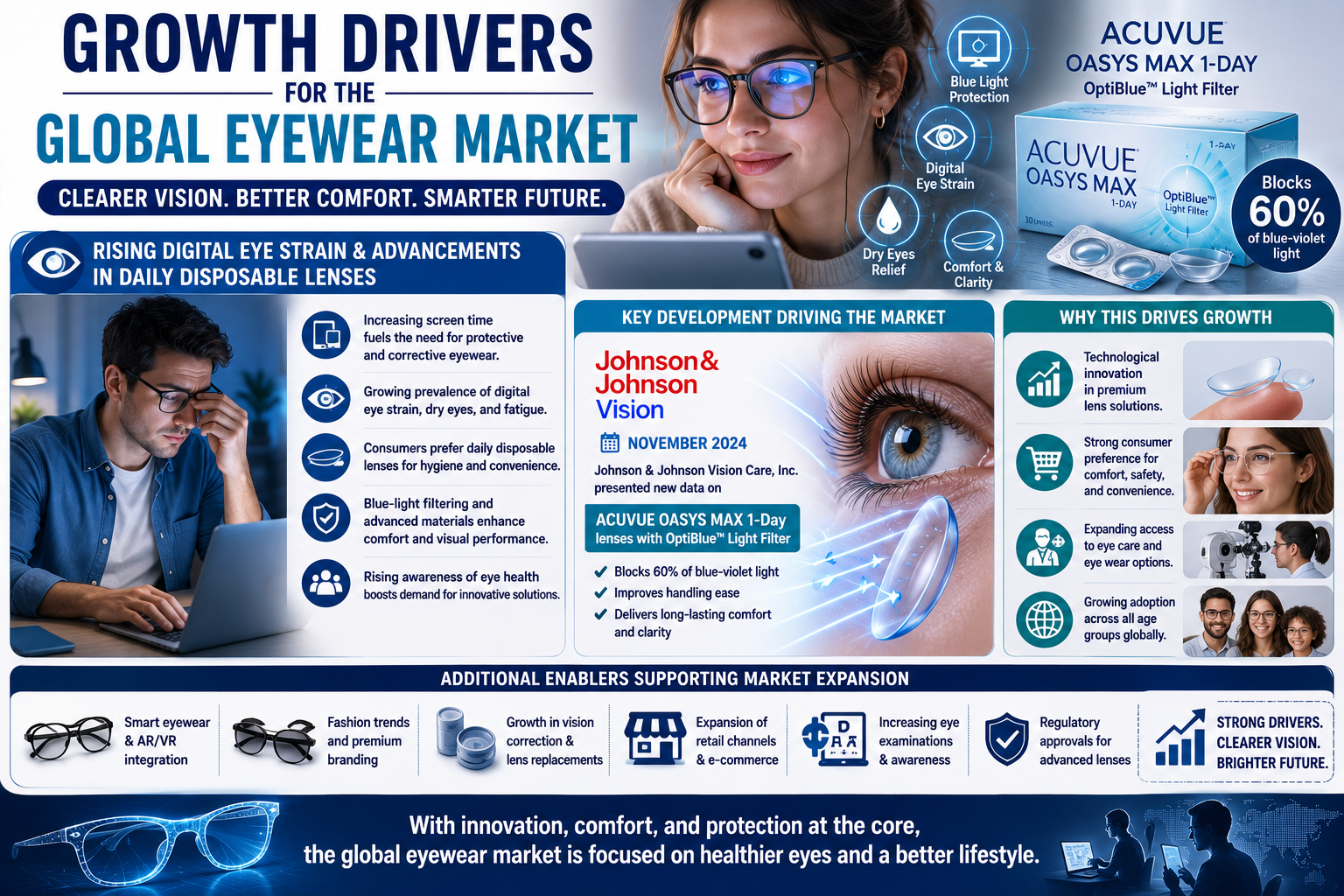
A significant example occurred in November 2024 when Johnson & Johnson Vision Care presented new data regarding its ACUVUE OASYS MAX 1-Day contact lenses featuring the OptiBlue Light Filter.
The technology blocks approximately 60% of blue-violet light while improving lens handling and wearer comfort.
Such innovations demonstrate how manufacturers are responding directly to modern lifestyle challenges.
As screen usage continues increasing globally, demand for digital-eye-strain solutions is expected to remain strong.
Contact Lens Innovation Is Reshaping Vision Care
The contact lens segment continues to experience significant innovation.
Consumers increasingly prefer products that combine convenience, comfort, hydration, and superior visual performance.
Daily disposable contact lenses have become particularly popular because they reduce maintenance requirements while improving hygiene and convenience.
Manufacturers are investing heavily in advanced materials capable of improving oxygen flow, moisture retention, and overall wearer comfort.
A notable example occurred in June 2024 when Bausch + Lomb introduced INFUSE for Astigmatism, designed specifically to improve hydration, comfort, and visual stability for daily disposable lens users.
The development highlights growing demand for personalized vision solutions capable of addressing specific refractive conditions.
As consumers become increasingly willing to invest in premium vision care products, advanced contact lenses are expected to remain a major growth driver.
Expanding Manufacturing Capacity Supports Global Growth
The eyewear industry is also benefiting from significant investments in manufacturing and research infrastructure.
Global companies are expanding production facilities and research capabilities to better serve growing markets while accelerating innovation.
In July 2024, Carl Zeiss Meditec AG opened a new research and manufacturing facility in China.
The investment strengthens the company's ability to serve one of the world's fastest-growing vision-care markets while supporting innovation in lenses, diagnostics, and ophthalmic technologies.
Localized manufacturing offers several advantages:
Improved supply-chain efficiency, faster delivery times, reduced costs, and greater responsiveness to regional consumer preferences.
As demand for premium eyewear continues increasing worldwide, investments in production and R&D capabilities are expected to remain a key industry trend.
Eyewear Has Become a Fashion Statement
While vision correction remains essential, eyewear has increasingly become a form of personal expression.
Consumers now view glasses and sunglasses as important fashion accessories that reflect personality, style, and lifestyle preferences.
Luxury brands, designer collections, limited-edition releases, and customizable frame options continue attracting strong consumer interest.
Fashion trends influence everything from frame materials and colors to lens shapes and design aesthetics.
Premiumization is particularly evident in urban markets where consumers seek products that combine functionality with distinctive visual appeal.
The growing overlap between fashion and vision care is encouraging manufacturers to collaborate with designers, luxury brands, and lifestyle influencers.
As consumers increasingly prioritize appearance alongside performance, fashion-oriented eyewear remains a significant contributor to market growth.
Smart Eyewear Is Opening a New Frontier
One of the most exciting developments within the eyewear market involves smart glasses.
These products combine traditional eyewear functionality with advanced technologies such as audio systems, voice assistants, augmented reality, cameras, and connectivity features.
Interest in smart eyewear has accelerated significantly in recent years.
In February 2025, EssilorLuxottica announced plans to expand smart-glasses production capacity to approximately 10 million units annually by 2026.
The expansion builds upon the success of Ray-Ban Meta smart glasses, which have sold more than two million units since their launch in September 2023.
The growth of smart eyewear demonstrates increasing consumer interest in wearable technology that integrates seamlessly into everyday life.
As artificial intelligence and augmented reality technologies continue evolving, smart glasses may become one of the industry's most transformative segments.
Augmented Reality Is Enhancing the Shopping Experience
Digital innovation is also transforming how consumers purchase eyewear.
Virtual try-on technologies are becoming increasingly popular, allowing customers to evaluate products remotely before making purchasing decisions.
In August 2024, Innovative Eyewear partnered with Geenee Inc. to launch advanced augmented reality shopping solutions.
The collaboration introduced the Lucyd Kiosk, enabling consumers to virtually try on eyewear, preview audio capabilities, and explore products through interactive digital experiences.
These technologies help reduce uncertainty, improve customer satisfaction, and support online retail growth.
As e-commerce continues expanding, virtual shopping experiences are expected to become increasingly sophisticated.
Online Retail Is Expanding Market Access
The growth of online eyewear retail has significantly increased product accessibility.
Consumers can now browse extensive product catalogs, compare prices, customize lenses, and order prescription eyewear without visiting physical stores.
Digital channels provide several advantages:
Convenience, wider selection, competitive pricing, home delivery, and access to customer reviews.
Online retailers have also improved prescription verification processes and virtual fitting technologies, making digital purchases more reliable.
While professional eye examinations remain essential, e-commerce platforms are helping broaden access to vision care products across numerous regions.
The continued expansion of online distribution channels remains an important driver of market growth.
Regional Markets Driving Industry Expansion
United States
The United States remains one of the world's most influential eyewear markets.
High awareness of eye health, widespread digital device usage, strong insurance coverage, and extensive access to optometrists and ophthalmologists support robust demand.
Premium contact lenses, blue-light-filter glasses, and fashion-oriented eyewear continue experiencing strong growth.
Germany
Germany's eyewear market benefits from advanced manufacturing capabilities, high-quality optometric services, and strong consumer demand for premium optical products.
Progressive lenses, advanced coatings, and sustainable frame materials are particularly popular among German consumers.
China
China represents one of the fastest-growing eyewear markets globally.
Rapid urbanization, increasing myopia rates, rising disposable incomes, and growing awareness of eye health continue driving strong demand.
Premium contact lenses, blue-light protection products, and fashion-forward eyewear are experiencing particularly rapid adoption.
Saudi Arabia
Saudi Arabia's eyewear market is expanding due to rising screen usage, growing healthcare awareness, and increased consumer spending.
Fashion eyewear, contact lenses, and premium sunglasses are becoming increasingly popular among younger consumers.
Sustainability Is Becoming a Priority
Environmental concerns are beginning to influence purchasing decisions throughout the eyewear industry.
Single-use contact lenses, plastic frames, and packaging waste have attracted increasing scrutiny from environmentally conscious consumers.
Manufacturers are responding by exploring:
Bio-based materials, recycled plastics, sustainable acetate, eco-friendly packaging, and circular manufacturing practices.
Although adoption remains in its early stages, sustainability is expected to become an increasingly important differentiator in the coming years.
Companies capable of balancing environmental responsibility with affordability and performance will likely gain competitive advantages.
Challenges Continue to Affect Market Growth
Despite strong growth prospects, the industry faces several challenges.
One of the most significant is affordability.
Premium prescription eyewear, advanced lens technologies, and specialty contact lenses remain expensive for many consumers.
Limited access to optometrists and diagnostic services further restricts adoption in certain low-income and rural regions. Many individuals continue delaying eye examinations or relying on low-quality alternatives due to cost concerns.
Environmental concerns also present challenges.
Daily disposable contact lenses contribute to plastic waste, while conventional plastic frames remain difficult to recycle. Expanding sustainable alternatives without significantly increasing costs remains a key challenge for manufacturers.
Addressing these issues will be important for ensuring long-term market development.
Final Thoughts
The global eyewear market is evolving rapidly as vision care, technology, fashion, and digital lifestyles become increasingly interconnected.
Consumers now expect eyewear products to deliver more than simple vision correction. They seek comfort, protection, personalization, style, and advanced technological functionality.
From blue-light-filter lenses and premium contact lenses to smart glasses and augmented reality shopping experiences, innovation continues reshaping the industry.
With the market projected to grow from US$ 174.52 billion in 2025 to US$ 279.68 billion by 2034, the future of eyewear appears exceptionally bright.
As awareness of eye health continues increasing and technological advancements accelerate, eyewear will remain an essential part of daily life—helping people see more clearly, live more comfortably, and connect more seamlessly with the increasingly digital world around them.
About the Creator
Enjoyed the story? Support the Creator.
Subscribe for free to receive all their stories in your feed.
Comments
There are no comments for this story
Be the first to respond and start the conversation.