
Sanitary Ware Is Redefining Modern Living Through Hygiene, Design, and Smart Innovation
Rising Urbanization, Growing Hygiene Awareness, and Smart Bathroom Technologies Are Driving the Global Sanitary Ware Market

The modern bathroom has evolved far beyond its traditional purpose. Once viewed simply as a functional space, today's bathrooms have become an extension of personal comfort, lifestyle, and design preferences. Consumers are increasingly seeking sanitary ware products that combine hygiene, aesthetics, water efficiency, and advanced technology. As a result, the global sanitary ware industry is experiencing significant transformation.
Driven by rapid urbanization, rising living standards, expanding construction activities, and growing awareness of sanitation, sanitary ware products are becoming essential elements of modern residential and commercial infrastructure. From smart toilets and touchless faucets to designer wash basins and water-saving cisterns, innovation is reshaping how consumers interact with bathroom spaces.
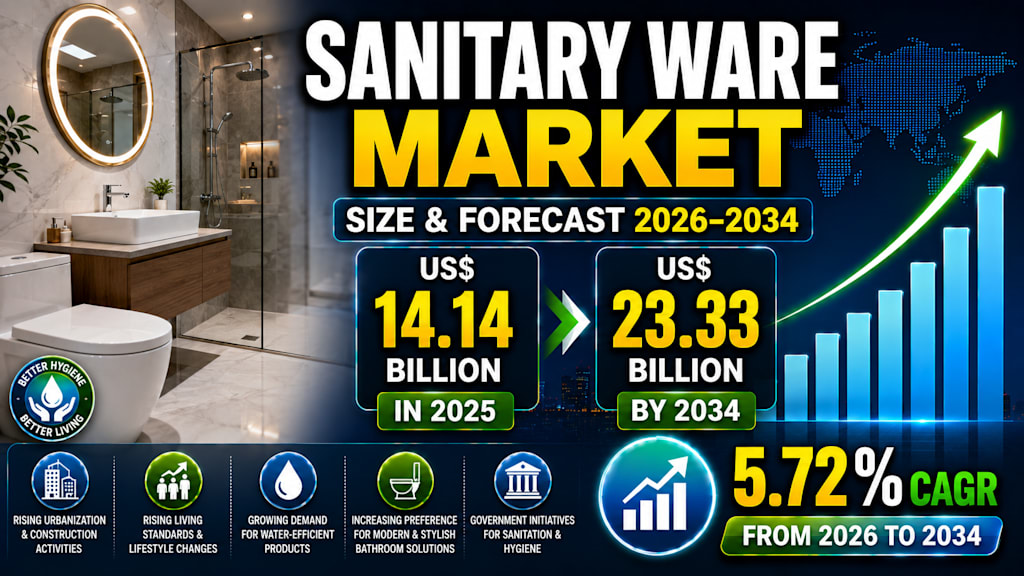
According to Renub Research, the Sanitary Ware Market is projected to grow from US$ 14.14 billion in 2025 to US$ 23.33 billion by 2034, expanding at a compound annual growth rate (CAGR) of 5.72% between 2026 and 2034. Urbanization, rising living standards, construction growth, and increasing demand for modern and water-efficient bathroom solutions are among the key factors driving market expansion.
As hygiene, sustainability, and smart living become increasingly important priorities worldwide, sanitary ware is emerging as a critical component of modern lifestyles.
The Growing Importance of Sanitary Ware in Modern Society
Sanitary ware refers to ceramic, porcelain, and related products used in bathrooms, washrooms, and kitchens for hygiene and sanitation purposes.
Common products include toilets, wash basins, urinals, bidets, bathtubs, cisterns, and various bathroom fixtures. These products are designed to be durable, easy to clean, water-resistant, and aesthetically appealing.
Beyond functionality, sanitary ware plays an important role in maintaining public health and improving living standards.
The growing global focus on sanitation has elevated the importance of these products in both developed and developing nations. Governments, healthcare organizations, and public institutions increasingly recognize that access to proper sanitation infrastructure is essential for improving quality of life and preventing disease.
As a result, investments in sanitation infrastructure continue to support market growth worldwide.
Urbanization Is Driving Demand Worldwide
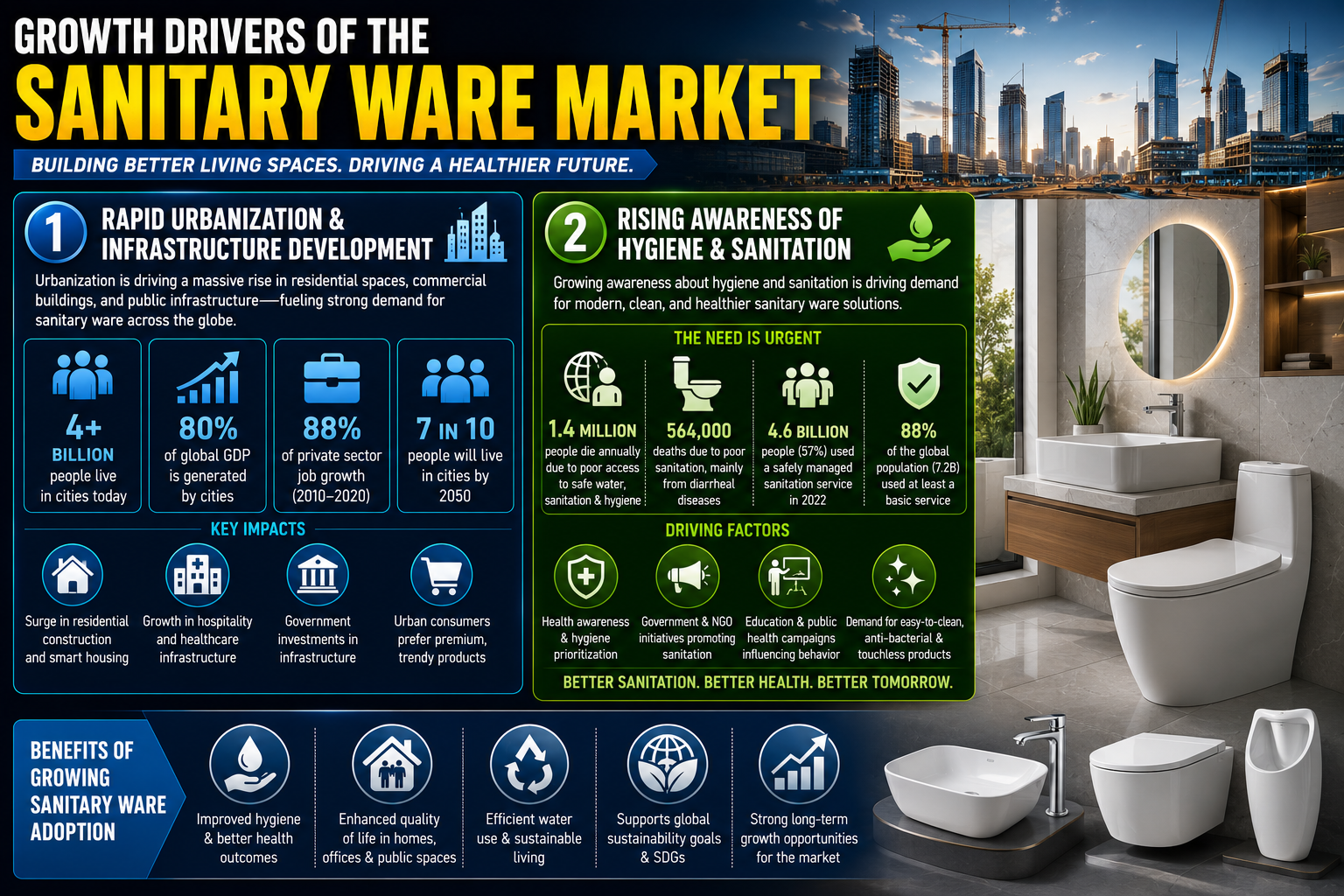
Rapid urbanization remains one of the strongest growth drivers for the sanitary ware market.
Today, billions of people live in urban environments, and global urban populations continue to increase every year. As cities expand, demand for residential housing, commercial buildings, healthcare facilities, educational institutions, and hospitality infrastructure continues to grow.
Every new building requires bathroom and kitchen installations equipped with sanitary ware products.
Governments across emerging economies are investing heavily in affordable housing projects, smart city developments, and infrastructure modernization programs. These initiatives are generating substantial demand for toilets, wash basins, cisterns, and related fixtures.
Urban consumers are also more likely to prioritize design, comfort, and modern amenities, creating opportunities for premium sanitary ware manufacturers.
As global urbanization accelerates, the need for advanced sanitary solutions is expected to rise steadily.
Hygiene Awareness Is Reshaping Consumer Preferences
Growing awareness of hygiene and sanitation has become another major catalyst for market growth.
Health organizations continue emphasizing the importance of proper sanitation in preventing diseases and improving public health outcomes. Poor sanitation remains a significant challenge in many regions, highlighting the need for improved infrastructure and access to hygienic facilities.
Recent global health events have further reinforced the importance of cleanliness and personal hygiene.
Consumers increasingly seek sanitary ware products that are easy to clean, resistant to bacterial growth, and designed to minimize physical contact.
Touchless technologies, anti-bacterial surfaces, and self-cleaning systems are becoming increasingly popular as hygiene standards continue to evolve.
Educational campaigns, public health initiatives, and government sanitation programs are also contributing to increased demand for modern sanitary ware solutions.
As awareness grows, hygiene-focused innovation will remain a key market driver.
Smart Bathrooms Are Transforming the Industry
Technology is revolutionizing nearly every area of the home, and bathrooms are no exception.
The emergence of smart bathroom technologies is transforming sanitary ware from basic utility products into intelligent lifestyle solutions.
Modern sanitary ware products increasingly incorporate advanced features such as sensor-based operation, automatic flushing systems, heated toilet seats, self-cleaning mechanisms, and water-saving technologies.
Many premium products now integrate Internet of Things (IoT) capabilities, allowing users to monitor water consumption and customize settings through mobile applications.
Consumers appreciate the combination of convenience, hygiene, and efficiency offered by smart bathroom solutions.
Manufacturers continue investing heavily in research and development to create innovative products that enhance user experiences while supporting sustainability goals.
As smart home adoption expands globally, smart sanitary ware is expected to become increasingly mainstream.
Water Conservation Is Becoming a Key Priority
Water scarcity concerns are influencing purchasing decisions across the sanitary ware industry.
Consumers, governments, and environmental organizations are increasingly focused on reducing water consumption and promoting sustainable resource management.
Manufacturers are responding by introducing water-efficient products designed to minimize waste without compromising performance.
Dual-flush toilets, low-flow faucets, water-saving cisterns, and intelligent flushing technologies are becoming increasingly common.
These innovations help households and businesses reduce water usage while lowering utility costs.
Water-efficient sanitary ware is particularly important in regions facing water shortages and environmental pressures.
As sustainability becomes a global priority, demand for environmentally responsible bathroom solutions is expected to continue growing.
Wash Basins Remain an Essential Market Segment
Wash basins represent one of the most important product categories within the sanitary ware market.
Used in homes, offices, hotels, hospitals, and public facilities, wash basins are fundamental to maintaining hygiene and supporting daily routines.
Modern consumers increasingly seek wash basins that combine practicality with contemporary design.
Manufacturers offer a wide range of styles, including pedestal basins, wall-mounted units, countertop designs, and under-mount options.
Premium materials, innovative shapes, and minimalist aesthetics are becoming increasingly popular among consumers seeking personalized bathroom experiences.
As interior design trends continue evolving, wash basins remain a central feature of modern bathroom spaces.
Cistern Technology Is Supporting Water Efficiency
Cisterns play a crucial role in toilet systems by storing and releasing water for flushing purposes.
Advancements in cistern technology have significantly improved water efficiency while enhancing user convenience.
Dual-flush systems allow users to select different water volumes depending on usage requirements, helping reduce overall water consumption.
Concealed cistern designs have also gained popularity because they improve aesthetics and create cleaner bathroom appearances.
Governments promoting water conservation initiatives are encouraging widespread adoption of efficient cistern technologies.
As sustainability becomes increasingly important, the cistern segment is expected to experience continued innovation and growth.
Kitchen Fixtures Are Expanding Market Opportunities
Although bathrooms remain the primary focus of sanitary ware products, kitchen fixtures are becoming an increasingly important market segment.
Kitchen sinks, faucets, and related fixtures are essential components of modern kitchens and play a vital role in food preparation and cleaning activities.
Consumers increasingly prioritize kitchen designs that combine functionality, hygiene, and visual appeal.
Materials such as stainless steel, granite composites, and premium ceramics are gaining popularity due to their durability and ease of maintenance.
Touchless faucets and water-saving technologies are also becoming more common as consumers seek smart and environmentally friendly solutions.
The rise of modular kitchens and smart homes continues to create new opportunities for manufacturers.
Residential Construction Continues to Fuel Growth
Residential applications account for a significant portion of global sanitary ware demand.
Population growth, urban expansion, and rising living standards are driving strong demand for new housing developments worldwide.
Homeowners increasingly invest in bathroom renovations, interior upgrades, and premium sanitary fixtures that enhance comfort and property value.
Government housing initiatives in emerging economies are also supporting market expansion.
As consumers become more design-conscious, demand for aesthetically pleasing and technologically advanced sanitary ware products continues to rise.
The residential segment is expected to remain one of the strongest contributors to future market growth.
Hospitality and Healthcare Sectors Create Additional Demand
Commercial sectors such as hospitality and healthcare represent important growth opportunities for sanitary ware manufacturers.
Hotels, resorts, hospitals, clinics, and healthcare facilities require high-quality sanitary products capable of supporting hygiene, durability, and user comfort.
Luxury hospitality projects increasingly emphasize premium bathroom experiences as part of broader customer satisfaction strategies.
Healthcare facilities prioritize sanitary ware solutions that support infection control and simplify maintenance procedures.
As tourism, healthcare investment, and commercial construction continue expanding globally, demand from these sectors is expected to increase steadily.
Challenges Facing the Market
Despite positive growth prospects, the sanitary ware industry faces several challenges.
High Costs of Premium Products
Advanced sanitary ware products equipped with smart technologies often carry higher price tags.
Smart toilets, sensor-based fixtures, and luxury bathroom solutions may remain inaccessible to price-sensitive consumers, particularly in developing markets.
Manufacturers must balance innovation with affordability to achieve broader market penetration.
Raw Material and Supply Chain Volatility
The industry depends heavily on raw materials such as ceramic clay, silica, and specialized finishing materials.
Price fluctuations, transportation disruptions, and supply chain uncertainties can increase production costs and impact profitability.
Managing these challenges remains an important priority for manufacturers worldwide.
Regional Markets Show Strong Growth Potential
United States
The United States market benefits from strong demand for premium bathroom solutions, home renovation activities, and increasing adoption of smart sanitary technologies.
United Kingdom
The UK market emphasizes sustainability, water efficiency, and innovative bathroom design, driving demand for environmentally friendly products.
India
India is among the fastest-growing sanitary ware markets due to rapid urbanization, rising incomes, government sanitation initiatives, and expanding residential construction.
Saudi Arabia
Saudi Arabia's infrastructure development, hospitality growth, and Vision 2030 initiatives continue to create significant opportunities for sanitary ware manufacturers.
Final Thoughts
The sanitary ware industry is evolving rapidly as consumers prioritize hygiene, comfort, sustainability, and smart living experiences.
According to Renub Research, the global Sanitary Ware Market is expected to grow from US$ 14.14 billion in 2025 to US$ 23.33 billion by 2034, reflecting strong demand driven by urbanization, rising living standards, infrastructure development, and technological innovation.
From intelligent toilets and water-saving cisterns to stylish wash basins and touchless fixtures, sanitary ware products are transforming modern bathrooms into spaces that combine functionality, wellness, and design.
As the world continues focusing on sanitation, sustainability, and smarter living environments, sanitary ware will remain at the center of healthier and more comfortable lifestyles for millions of people worldwide.
About the Creator
Enjoyed the story? Support the Creator.
Subscribe for free to receive all their stories in your feed.
Comments
There are no comments for this story
Be the first to respond and start the conversation.