
Samsung's 24-Hour Robot Won't Rewrite Manufacturing Costs. Here's What Will.
A bipedal humanoid that never sleeps sounds like a cost revolution. The real variable is fully loaded cost per effective hour, and the math doesn't close yet.
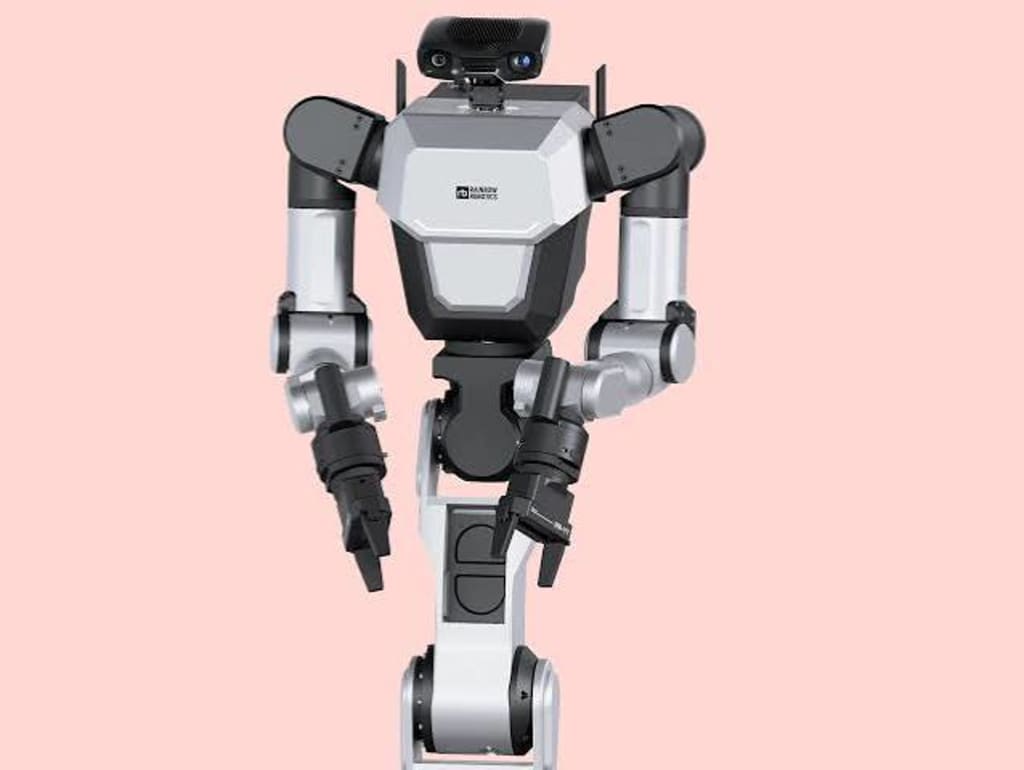
Will 24-Hour Robots Rewrite the Cost Logic of Manufacturing?
The intuitive objection is correct. If the task is strictly "move 10,000 boxes from Point A to Point B," a bipedal humanoid robot is not the best tool. Wheeled AMRs, automated forklifts and conveyors are faster, more energy-efficient, higher-payload and easier to control. A wheeled platform does not spend compute and control precision on standing upright or taking a step. When it fails, it usually stops where it is. A bipedal robot that loses balance can fall into material, equipment or people.
The cost arithmetic is just as blunt. Wheeled AMRs sit in a mature supply chain, with unit prices often in the tens of thousands of dollars and payback periods that can be kept to roughly one to one and a half years. A bipedal humanoid's bill of materials is roughly ten times that of a wheeled base. Industrial humanoid payback periods stretch beyond eight years, while manufacturing lines usually use a three-to-five-year red line. Two legs, multiple joints and complex balance control add failure points and maintenance cost. A robot can run around the clock, but if it needs frequent human intervention, spare parts and calibration, and if it moves goods at half the speed of a dedicated AMR, the economics do not close. The robot does not pay for its own repairs. The owner does.
So the flat-floor, fixed-route case against humanoids is strong. That case does not explain why Samsung is building one.
Samsung is buying an environment interface, not handling speed
Samsung Electronics is developing a bipedal humanoid aimed at CES 2027 in Las Vegas. Its RX business promotion office is verifying the robot's ability to work 24 hours in industrial settings at the Seoul R&D campus in Umyeon-dong. The robot is learning surrounding environments and work methods while performing repetitive tasks such as moving goods. Samsung and partner-company staff are working three shifts around the clock to check the robot's work process. The company is evaluating this robot and other candidates for the show.
That detail matters. Samsung is not claiming the humanoid is the best way to move a box across a clean, flat factory floor. It is testing whether a human-shaped machine can keep working in environments that were designed for human bodies, not for wheels.
Large parts of manufacturing are not new, wheel-optimized plants. They are older buildings with steps, thresholds, narrow aisles, multi-floor flows, mixed pedestrian and vehicle traffic, and shelving at heights designed for human reach. Deploying an AMR there often requires a retrofit: floor marking, obstacle removal, elevator permissions, shelf-height changes, traffic separation. That retrofit bill is rarely included in the AMR's purchase price. It is also hard to pay when an existing plant cannot stop production for a layout rebuild.
A humanoid's premium buys an option to skip part of that retrofit. It can use human vertical routes: stairs, ramps, vehicle doors. It can reach shelves from floor to ceiling. It can pick up tools and containers designed for human hands. It does not require the physical space to be rebuilt so that wheels can pass.
Samsung's own path points in that direction: verify in its own manufacturing sites, accumulate reliability and motion data, then extend to home and service scenarios. If the endgame is the home, an unstructured environment, a bipedal humanoid is the only general form that can enter without remodeling the customer's house. The factory handling test is a way to feed motion control, balance and manipulation data with a relatively controlled industrial setting. It is not a declaration that moving goods is the humanoid's best commercial use.
There is also a strategic motive. Samsung is a fast follower in robotics, starting later than Chinese makers that have already built scale and cost advantages. CES 2027 is a deadline for a visible result. A robot that demonstrates continuous operation and whole-body movement is a stronger proof of embodied intelligence and motion control than another wheeled AMR. The company is using a handling task to prove reliability, not to argue that handling is the end market.
The variable that matters is fully loaded cost per effective hour
"The robot does not need to rest" sounds like the decisive variable. It is not. The cost logic changes when the fully loaded cost per effective operating hour, including maintenance, wear, supervision, energy, spare parts and downtime, falls below the cost of the labor it replaces.
Traditional three-shift manufacturing does not pay only three wages. It pays night-shift allowances, holiday cover, training, turnover and the management complexity of scheduling people. A robot replaces that stream of variable cash outflow with a depreciating capital asset. If the total cost falls below the three-shift labor cost, the cost structure changes. Samsung Securities has put one extreme case on the table: after mass production, a humanoid's hourly operating cost could fall to about $1.20, roughly one-sixth of Chinese manufacturing labor cost. That estimate has severe conditions attached.
First, 24-hour operation is not 24-hour value creation. Battery swaps, material replenishment, calibration, cleaning, software updates and repairs all take time. Hot-swap battery technology can change a battery without shutting down the system, avoiding a reboot and cutting interruption to minutes. Boston Dynamics' Atlas, a leading commercial example, runs for about four hours under normal working conditions, swaps its own battery in about three minutes and returns to work. That is the current commercial frontier. It shortens downtime. It does not eliminate wear.
Second, for a long time there will still be people beside the robot. Samsung's three-shift monitoring is the tell. The early form of unmanned operation is fewer people plus high supervision, not "no people." The handling worker becomes a robot operator, exception handler, battery swapper and software maintainer. The labor cost does not disappear. It changes skill and job category. If a humanoid moves goods at half the speed of a dedicated machine and needs human intervention every few hours, 24-hour operation only accumulates maintenance and supervision costs around the clock.
More precisely: the cost logic flips when the fully loaded cost per effective operating hour falls below the replaced labor cost. In dedicated handling, that flip already happened for wheeled AMRs. For humanoids, it is still far away. In existing unstructured sites where wheeled machines cannot enter and retrofit is too expensive, "24-hour operation" becomes a cost lever only after reliability crosses a threshold. Before that, it is a demonstration.
Hot swap and the three-shift monitor show what early commercialization looks like
The report contains one detail that matters more than the 24-hour target: the three-shift staff checking the robot. That is the early state of commercialization: fewer people, high supervision. Hot swap reduces interruption. It does not remove the need for battery inventory, swap mechanisms, exception handling, safety fencing and data review. Someone designs, maintains and backs up the system.
This is not unusual. Early automated lines replaced some manual labor and created technical roles. The relevant factory calculation is whether total labor, maintenance, energy and downtime per unit of output fall after adding the robot, not whether one robot can replace three workers. If the answer is no, 24-hour operation only spreads fixed cost thinner while pushing variable maintenance cost higher. The humanoid's general form creates exactly this tension: it can cover many tasks, but the complexity of generality feeds back into reliability and maintenance cost.
Three thresholds before the cost logic changes
A humanoid has to cross three thresholds before it rewrites manufacturing cost logic.
The first is reliability. A robot can work 24 hours only if it does not need frequent human intervention. If it needs an exception handled every few hours, 24-hour operation turns three-shift workers into three-shift operators. Bipedal balance, joint wear, battery thermal management and material-recognition failures are all potential stoppages. Without reliability, the humanoid is a twitching metal object on the floor.
The second is effective operating efficiency. UBTech's Walker S2, by the company's own account, reaches 30% to 50% of human production efficiency. If a humanoid moves goods at half the speed of a dedicated AMR, it has to create extra value in places where the AMR cannot enter. Its commercial logic is to be the only general form that can move in environments where an AMR cannot, not to compete on pure handling speed.
The third is fully loaded cost. Purchase price, energy, maintenance, spare parts, software subscriptions, supervision, safety. Manufacturing lines use a three-to-five-year payback red line. A bipedal humanoid above eight years is outside that line. The threshold is crossed only when mass production lowers BOM cost, reliability lowers intervention frequency, and generality avoids enough retrofit spending. All three have to arrive together.
What would change the cost logic
The cost logic will change, but "the robot does not sleep" is not the variable that changes it. The change comes when automation stops being a dedicated machine that requires the physical environment to be rebuilt around it, and becomes a general environment interface that can enter an existing human-shaped space without a retrofit bill.
That is what Samsung is testing in its own factories. The test is whether a human-shaped machine can accumulate enough reliability and motion data to become useful in sites where wheels cannot go and remodeling is too expensive. Beating an AMR at pure handling is not the question. The factory is a controlled training ground. CES 2027 is a checkpoint. The handling task is a test load, not the end market.
For manufacturers, the near-term path remains unglamorous. Use dedicated automation where it fits. Use wheeled AMRs where the floor is flat and the route is fixed. Put humanoids first in unstructured, multi-task, high-retrofit-cost sites as a validation exercise. Until reliability, effective efficiency and fully loaded cost all cross their thresholds, a 24-hour humanoid is an option on a future production model, not a materials-handling bill that balances today.
About the Creator
Jin
Writer of reamstories
https://reamstories.com/jin
Enjoyed the story? Support the Creator.
Subscribe for free to receive all their stories in your feed. You could also become a paid subscriber, letting them know you appreciate their work.
Comments
There are no comments for this story
Be the first to respond and start the conversation.