
Sam Altman Called Your Idle RAM “Quite Terrible.” His Industry Made the Memory Crisis.
The OpenAI CEO says local memory is wasted. The shortage started with AI data centers, and the bill landed on everyone else.
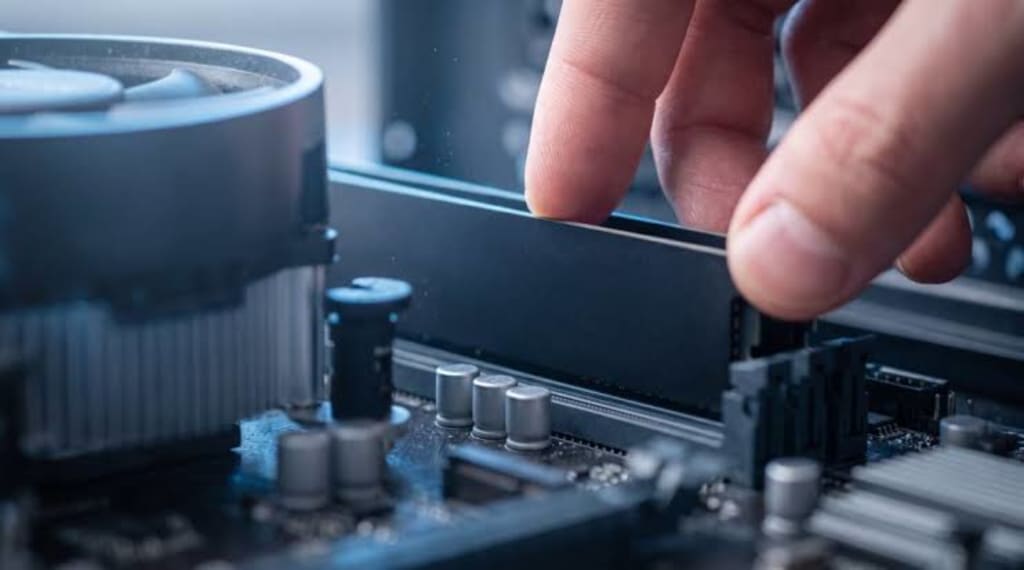
In late October 2026, Sam Altman sat down on Cheeky Pint, the podcast hosted by Stripe co-founder John Collison. The conversation moved from compute supply to the trend of running open-source models locally. Altman gave the judgment that later became a screenshot:
“From a global allocation perspective, having everyone in the world stuff a bunch of limited DRAM into their computers and use it only 5% of the time is actually ‘quite terrible.’ In an environment of severely constrained supply, you want the cloud to achieve maximum utilization. And many people’s intuition is exactly the opposite.”
The technical core fits in three sentences: when resources are scarce, centralized scheduling beats decentralized idling. Altman’s own analogy is a car parked 95% of the time, which he says is better shared than owned. If this audio had aired in 2019, it would likely have joined the stock footage of Silicon Valley CEOs talking about efficiency. Then it would have been forgotten.
The date matters. This is October 2026.
A causal chain deleted from the argument
Start with numbers from public market data in the first half of 2026.
Overall DRAM contract prices rose 90 to 95 percent year over year. HBM prices rose more than 200 percent. In the U.S. market, a 32GB DDR5 memory kit went from $100 to $200 a year earlier to more than $400. A 64GB kit approached $1,000. Memory chips’ share of a smartphone bill of materials jumped from 10 to 15 percent to more than 30 percent. Some flagship models approached 50 percent. In April 2026, Sony raised prices across the PS5 lineup. The cheapest model went from $400 at launch to $600.
The driver of those numbers is not ordinary users’ computer cases. Producing each bit of HBM consumes roughly three times the wafer capacity of standard DRAM. The die area is larger, the stacking process is more complex, and yield losses run through the whole line. Samsung, SK Hynix, and Micron are steering more DRAM wafers toward HBM. HBM wafer starts as a share of total DRAM wafer starts rose from about 18 percent at the end of 2025 to 22 percent by the end of 2026. The expected figure for the end of 2027 is 30 percent. About 70 percent of advanced memory capacity worldwide has gone to AI data centers. Consumer electronics such as phones and computers get the remaining 30 percent. SK Hynix’s DRAM and HBM chips are sold out through 2029. The shortage is expected to last until 2030.
Consumer memory scarcity did not happen on its own. High-margin AI orders repriced capacity allocation. OpenAI is a heavyweight buyer in that repricing. Estimates from TechInsights and other institutions show that OpenAI’s Stargate data center project reached agreements with Samsung and SK Hynix involving up to 900,000 DRAM wafers per month. That figure has been described as potentially touching about 40 percent of global DRAM output. The exact basis is disputed. Some analyses say it should be read as a planning ceiling, not an already locked-in share. The direction is not disputed. The CEO of an organization that consumes enormous amounts of global memory capacity discussed memory scarcity and removed the question of who created the scarcity from the argument.
Altman’s 5 percent utilization claim gains rhetorical self-consistency inside that cleared causal vacuum. He does not need to prove that local users’ idle memory caused the scarcity. He only needs to say that idling is waste. The audience fills in the next step: centralize in the cloud. The omitted middle step is the starting point of the whole affair. The cloud needs to centralize because cloud buyers such as OpenAI have already withdrawn capacity from the consumer market at scale.
The selective vision of the word “efficiency”
Step back. Set aside causation for a moment and look at the argument itself.
The figure “5 percent of the time” has no measurement method or data support in the interview transcript. It is an estimate Altman gave orally. Even if we accept the surface meaning, the figure holds only under a narrow definition. It counts only the time DRAM is used for AI inference. It leaves out concurrent use of the same memory for the operating system, the browser, games, office software, and development environments. The DRAM in a personal computer has never been a dedicated device that only runs AI. It is a shared workbench for general computing. Squeezing the multitasking, concurrent usage pattern of a general-purpose workbench into an efficiency metric designed for a single AI inference workload is a definitional cut. That measurement is not neutral.
The proposition of maximum cloud utilization also sidesteps the cloud’s own efficiency problems. Centralization does not automatically produce high efficiency. The cloud’s maximum utilization depends on a continuously saturated stream of requests. If the cloud itself has overprovisioning, resource reservation, or regional idling, its waste may be no less than that of distributed local memory. Existing research on the economics of local and cloud inference paints a more complex picture than the claim that the cloud is always more efficient. The cloud does have advantages in per-query energy efficiency. Intelligent routing, which keeps part of the workload local and sends part to the cloud, can achieve 60 to 80 percent reductions in total energy consumption, compute, and cost. That beats pure cloud deployment. Centralized versus distributed has never been a binary efficiency proposition. It is an engineering and institutional question that trades off latency, privacy, control, and marginal cost. Altman compresses that question into a single utilization metric. He substitutes a multidimensional choice with a technical inevitability that has one correct answer.
The single metric excludes the core value proposition of local inference. In LocalLLaMA community discussions, the most concentrated rebuttal to Altman’s argument does not deny that the cloud may be superior in hardware utilization efficiency. The rebuttal points to something else. My GPU sits idle 95 percent of the time. The cost is mine, not someone else’s. In exchange I get no rate limits, terms of service that do not change, prices that do not rise, and data that does not leave my home. For users who handle medical data, financial data, or internal confidential information, local inference is a precondition for compliance and control, not inefficient waste. To zero out those values and then declare that efficiency requires centralization is not an objective analysis of resource allocation. It uses one view of efficiency to cancel the legitimacy of other views.
Who has the right to name “waste”
The debate turns on a question about naming rights: who gets to call something waste?
A user places 64GB of memory in a personal computer. Most of the time, AI inference does not fill it. Altman names that “a terrible allocation of the world’s limited DRAM supply.” The act of naming presupposes a position. The correct use of global DRAM is measured by the utilization rate of cloud AI inference. An individual’s control over their own hardware has legitimacy only when it serves that externally defined efficiency standard. Within this framework, the user is not an autonomous user of resources. The user is a temporary custodian of resources. The cloud’s needs judge how well the user performs as custodian.
This explains why the top comments under NDTV and Yahoo reports are not technical rebuttals. They are a kind of instinctive anger. One reads: “A billionaire who has sucked the world’s resources dry is now asking the rest of us to take nothing so we can hand over the little we have left to him.” Another widely quoted Reddit comment is shorter: “He sees anyone owning something for their own use as a resource taken from him.”
Those reactions are powerful for a reason beyond economic precision. They identify a structural asymmetry in Altman’s argument. The party that created the scarcity is allowed to speak in the name of solving the scarcity. The party that bears the consequences of scarcity, once it uses the remaining resources for its own needs, is redefined as the source of waste. TechNews analysis points to the business logic behind that asymmetry. Altman’s claim “implies a strategic intent for OpenAI to preserve its cloud subscription business model. If local inference matures with the spread of AI PCs, users’ dependence on cloud services will drop sharply, directly threatening the core of OpenAI’s revenue.” When the referee of efficiency is also the beneficiary of efficiency, efficiency discourse stops being a neutral analytical tool. It becomes a political claim about the right to control resources.
Altman is not wrong about the abstract proposition that pooling can improve utilization. He chooses, at a moment of resource scarcity created by his own industry, to use that abstract proposition to reframe ordinary users’ normal use of their own hardware.
It is like a person who pumps vast amounts of water from a public reservoir to fill his own swimming pool. Then he turns to a neighbor holding a cup and says: most of the time the water in your cup is not being drunk. From a global water allocation perspective, this is quite terrible.
Of course, the water in the neighbor’s cup is not being drunk every second. The word waste feels jarring at this moment because of who is naming the idling. The person naming it happens to be the person who made the water scarce. Stop asking why your memory is not running inference all the time. Ask who still has the right to call another person’s control over their own possessions waste in a world where AI demand has redrawn the direction of capacity flows.
About the Creator
Jin
Writer of reamstories
https://reamstories.com/jin
Enjoyed the story? Support the Creator.
Subscribe for free to receive all their stories in your feed. You could also become a paid subscriber, letting them know you appreciate their work.
Comments
There are no comments for this story
Be the first to respond and start the conversation.