
Rooftop Support Frames: Supporting Plant and Services on Flat Roofs
Rooftop Support Frames
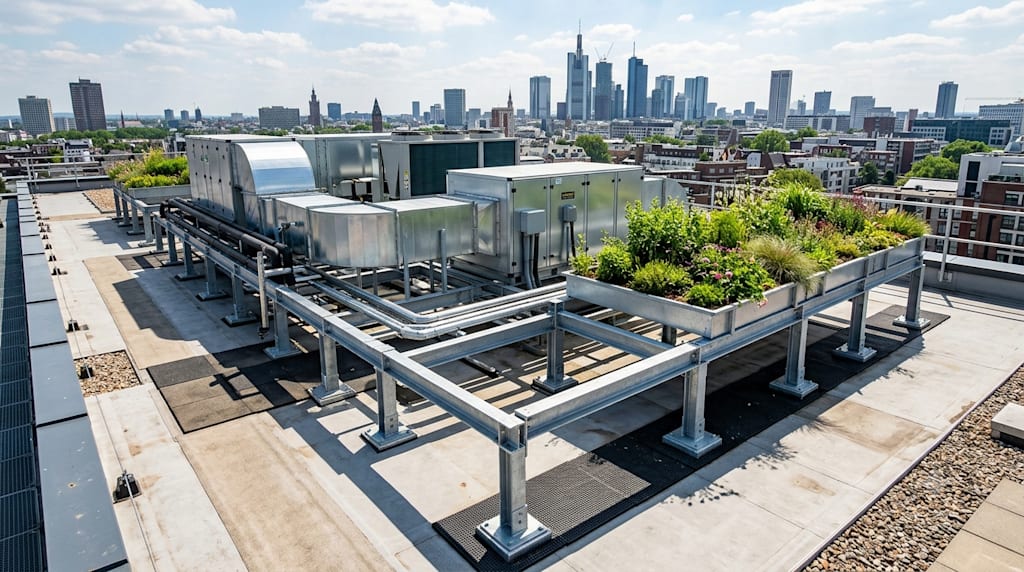
Rooftop support frames are structural systems designed to safely support plant equipment, pipework, ductwork and cable management systems installed on flat or low-pitched roofs. These frames distribute weight evenly across the roof surface, helping to protect roofing membranes while providing a stable platform for mechanical and electrical services. Common applications include air handling units (AHUs), chillers, fans, HVAC equipment and associated pipework.
Modern rooftop support frames are typically designed as non-penetrative systems, meaning they do not require drilling into the roof structure. This helps maintain the integrity of waterproof membranes and reduces the risk of leaks developing over time.
Why Rooftop Support Frames Are Important
Commercial and industrial buildings often rely on rooftop plant equipment to maximise internal floor space. However, placing heavy equipment directly on a roof can create concentrated loads that may damage roofing materials or affect structural performance.
Rooftop support frames help address these challenges by spreading loads across a wider area and providing secure mounting points for equipment. They also create clearance beneath equipment, making maintenance, inspection and cable management more accessible.
In addition to protecting the roof structure, support frames can help minimise vibration transfer and improve overall system stability. Many systems incorporate anti-vibration components that reduce noise and mechanical stress.
Common Applications for Rooftop Support Frames
Rooftop support systems are used across a wide range of sectors, including commercial buildings, industrial facilities, healthcare environments, educational institutions and data centres. Their versatility allows them to support numerous types of equipment and services.
Typical applications include:
* Air handling units (AHUs) * Chillers and cooling systems * HVAC equipment * Pipework systems * Ductwork installations * Cable trays and cable management systems * Heat pumps * Mechanical and electrical services (M&E) equipment * Solar panel support structures
Types of Rooftop Support Frames
Different projects require different support solutions depending on equipment size, weight and environmental conditions.
Heavy Duty Frames
Heavy duty frames are designed for large rooftop plant such as chillers and air handling units. These systems provide substantial load-bearing capacity while ensuring weight is distributed evenly across the roof surface. Heavy duty support frames are commonly manufactured using galvanised steel components to provide long-term durability and corrosion resistance.
Light Duty and Modular Frames
For lighter applications, modular frame systems offer flexibility and ease of installation. These systems are often used for air conditioning equipment, refrigeration systems and general M&E services. Modular designs can be configured to suit varying equipment sizes and layouts.
Pipework and Cable Support Systems
Smaller rooftop support frames can be used specifically for pipework, ductwork and cable trays. These supports help maintain alignment, reduce stress on services and accommodate thermal movement where necessary.
Bespoke Support Frames
Some rooftop installations involve unusual equipment layouts, irregular roof levels or non-standard loading requirements. Bespoke support frames can be engineered to meet specific project requirements while ensuring compliance with structural and safety standards.
Key Features of Rooftop Support Systems
Many modern rooftop support frames incorporate features that improve both performance and installation efficiency.
Non-Penetrative Design
One of the most important features of rooftop support frames is their ability to support equipment without penetrating the roof membrane. This helps maintain waterproofing performance and reduces long-term maintenance concerns.
Load Distribution
Support frames are specifically engineered to distribute equipment loads evenly. This reduces pressure points and helps prevent damage to roofing materials. Engineering calculations may be used to assess foot pressure, wind loading and structural performance.
Corrosion Resistance
As rooftop systems are exposed to weather throughout the year, components are often manufactured from galvanised steel, aluminium or other corrosion-resistant materials. This helps ensure long-term reliability in challenging outdoor environments.
Adaptability
Many rooftop support systems feature modular components and adjustable elements that allow them to accommodate varying equipment sizes, roof configurations and future modifications.
Considerations When Selecting Rooftop Support Frames
Choosing the right rooftop support frame involves assessing several factors, including equipment weight, roof construction, environmental conditions and future maintenance requirements. Structural load calculations, vibration management and compliance with building regulations should all be considered during the design process.
Careful planning helps ensure that rooftop support systems provide long-term stability, protect roof integrity and support the safe operation of building services throughout the lifespan of the installation. Rooftop support frames remain an essential component of modern commercial and industrial building infrastructure, providing practical solutions for supporting equipment while preserving roof performance.
About the Creator
Enjoyed the story? Support the Creator.
Subscribe for free to receive all their stories in your feed.
Comments
There are no comments for this story
Be the first to respond and start the conversation.