
Reducing Payroll Admin: How UK Employers Can Automate Pension Uploads
More than ever, UK employers are looking to reduce manual payroll admin to improve efficiency, accuracy, and compliance.


Payroll admin refers to the many tasks involved in managing employee pay and maintaining compliant payroll processes, including:
- Entering data surrounding employee hours and overtime.
- Calculating wages, tax, and National Insurance (NI) deductions.
- Processing pension contributions and uploading contribution files to pension providers.
- Creating and distributing employee payslips.
- Updating employee records and salary changes.
- Managing sick leave, holiday pay, and statutory payments.
- Preparing Full Payment Submission (FPS) and Employer Payment Summary (EPS) reports and submitting them to HM Revenue and Customs (HMRC).
- Correcting payroll errors and responding to payroll queries from employees.
These payroll admin tasks are becoming increasingly time-consuming and difficult to manage as businesses grow, which is why UK employers are automating many parts of the payroll process, particularly pension uploads.
What Are Pension Uploads?
Pension uploads refer to the process of transferring employee pension data from a payroll system to a workplace pension provider. This data typically includes employee and employer pension contributions, pensionable earnings, auto-enrolment information, opt-ins and opt-outs, and employee details.
For many years, human resources (HR) and payroll teams have manually entered pension data into spreadsheets before transferring it to the workplace pension provider. While this approach works, the risks of mistakes, delays, and compliance issues are much higher than when the process is automated.
Common issues with manual pension processing include:
Incorrect contribution calculations: Manual calculations increase the risk that employee or employer pension contributions are incorrect, leading to compliance issues and employee disputes.
Incomplete or inaccurate employee records: Incomplete or inaccurate employee information can lead to enrollment and contribution errors.
Delayed unintentional exclusion: Manual uploads and spreadsheet-based processes are time-consuming, potentially delaying pension submissions.
Inconsistent data: When information is entered manually across multiple systems, more errors can occur between payroll records and pension data. This creates challenges with reporting and audits.
These pension-related issues can also affect broader payroll tasks, especially when teams are understaffed or already managing complex requirements, such as understanding the difference between FPS and EPS reports for HMRC compliance.
How Employers Can Automate Pension Uploads
UK employers can automate pension uploads by using payroll systems that transfer employee pension data directly to workplace pension providers without manual intervention.
Automated systems can calculate employee and employer pension contributions, generate compliant files, identify missing or inaccurate records, process auto-enrolment updates, and more.
Some automated payroll systems also integrate directly with workplace pension providers, creating a fully connected workflow.
Benefits of Automating Pension Uploads
1. Reduced payroll admin
Automated pension uploads reduce the amount of repetitive manual tasks your HR teams are responsible for, such as calculating employee and employer pension contributions. This gives them more time to focus on higher-value tasks, such as FPS and EPS reporting, PAYE compliance, and employee support.
2. Improved contribution accuracy
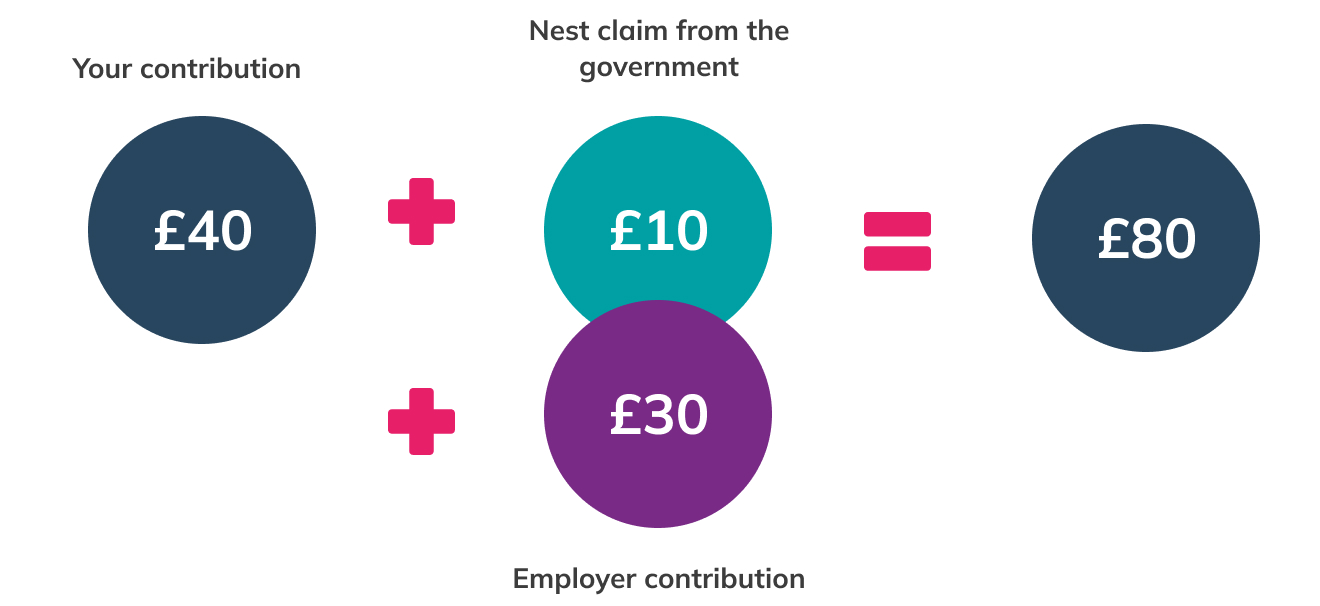
Automation reduces the likelihood of human errors, ensuring pension contributions are calculated correctly and on time. This improves payroll accuracy, which lowers the risk of employee disputes, timely and costly payslip corrections, or compliance issues.
(Image Source: Nest Pensions)
3. Guaranteed compliance
Automated pension uploads ensure employers stay compliant with reporting requirements and UK auto-enrolment regulations set by The Pensions Regulator. This is because automated systems can accurately calculate contributions, maintain consistent employee records, reduce manual processing errors, and submit pension data on time.
4. Faster payroll processing
Automation speeds up pension uploads by removing time-consuming manual tasks, such as spreadsheet preparation and data entry. This ensures the entire payroll process runs efficiently, which gives employers more time to focus on high-value tasks.
5. Increased consistency
Automated pension uploads ensure data is processed exactly the same way each pay cycle, reducing variation across teams, especially in larger businesses. This improves overall payroll consistency and boosts employee trust.
Ready To Reduce Payroll Admin?
Employers have legal responsibilities to ensure workplace pensions are calculated and submitted correctly, and failure to do so can result in significant financial penalties or legal action.
Automating pension uploads not only reduces payroll admin but also reduces errors, thereby improving compliance. This is especially important as payroll processes become more complex and businesses continue to grow in competitive landscapes.
About the Creator
Dmytro Spilka
I'm a tech writer based in London. Founder of Solvid and Pridicto. My work has been featured in TechRadar, Entrepreneur, The Next Web, and Huff Post.
Enjoyed the story? Support the Creator.
Subscribe for free to receive all their stories in your feed.
Comments
There are no comments for this story
Be the first to respond and start the conversation.