
Rebuilding Gaza: A Sustainable Approach Using Debris Recycling and Modern Construction Technologies
Rebuilding Gaza: A Sustainable Approach Using Debris Recycling and Modern Construction Technologies
Introduction
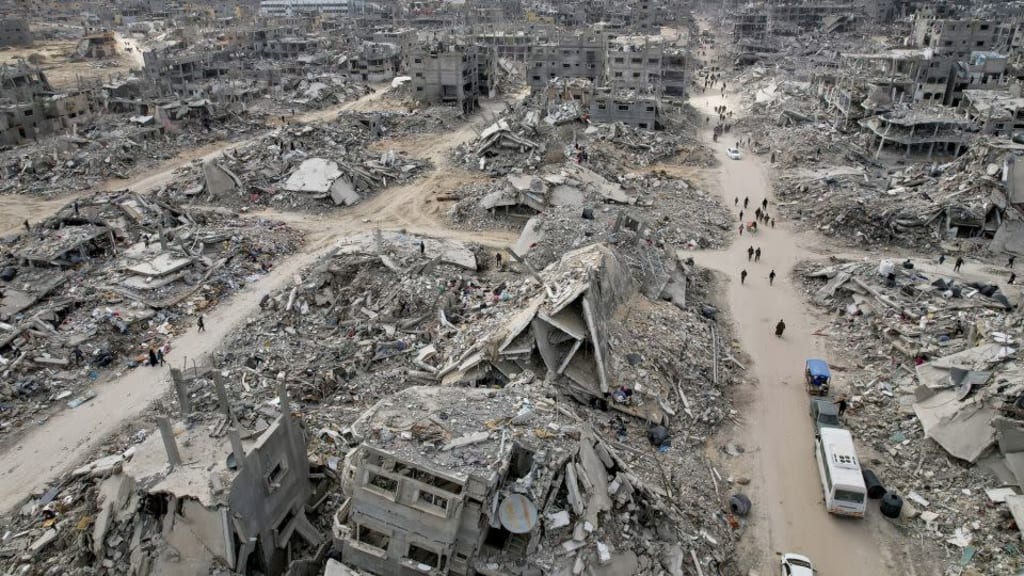
Gaza has suffered extensive destruction due to conflicts and wars, leaving behind millions of tons of debris from demolished buildings. This debris is not just an environmental and economic challenge but also an opportunity for sustainable reconstruction.
By recycling rubble and transforming it into new construction materials using advanced recycling and 3D printing technologies, we can provide a fast and cost-effective solution for rebuilding the city while reducing the need for imported raw materials and minimizing environmental impact.
This research aims to present a comprehensive strategy for rebuilding Gaza through debris recycling, addressing challenges and proposing solutions, with references to successful global examples.
________________________________________
1. The Importance of Debris Recycling in Reconstruction
1.1 Reducing Costs and Promoting Sustainability
• Using recycled rubble reduces the need for imported gravel and cement, lowering costs by 30-50%.
• Decreases carbon emissions from cement production and material transportation.
• Preserves natural resources such as stones, gravel, and sand.
1.2 Accelerating Reconstruction
• Locally available recycled materials speed up the construction process compared to importing materials.
• Recycled debris can be used in both traditional construction and 3D printing.
1.3 Reducing Environmental Damage
• Dumping debris randomly causes air and water pollution.
• Recycling reduces pollution and improves air quality and the overall environment.
________________________________________
2. Debris Recycling Techniques
2.1 Mobile Recycling Stations
Instead of waiting for permanent recycling facilities, mobile stations can be deployed to:
• Crush concrete into smaller pieces using mobile crushers.
• Grind rubble into fine particles suitable for reuse in concrete and bricks.
• Sort materials to remove metals, glass, plastics, and other impurities.
2.2 Producing New Construction Materials from Recycled Debris
After processing, recycled materials can be used to produce:
• Concrete bricks: Mixed with cement, water, and strengthening agents.
• Ready-mix concrete: Used directly in buildings and infrastructure.
• Asphalt for roads: Recycled rubble can be incorporated into asphalt production.
• Marine barriers and retaining walls: Used for coastal protection.
• Filling and leveling materials: To prepare uneven areas for construction.
• Land reclamation in Gaza: Using rubble to expand land area by filling parts of the sea.
________________________________________
3. 3D Printing: The Future of Construction in Gaza
3.1 Advantages of 3D Printing
• Faster construction: A house can be completed in 24-48 hours.
• Minimal waste: Only the required amount of materials is used.
• Flexible designs: Easily creates complex architectural structures.
• Utilization of recycled materials: Recycled rubble can replace traditional concrete after treatment.
3.2 Successful Global Examples
• Netherlands: Entire homes built using recycled concrete.
• UAE: The first 3D-printed office building using recycled materials.
• China: Multi-story houses printed in just a few days.
________________________________________
4. Treating Chemical Contamination in Debris
Debris from bombed buildings may contain harmful chemicals, such as sulfates, chlorides, and explosive residues, requiring advanced treatment before reuse.
4.1 Cleaning and Treatment Methods
1️⃣ High-pressure water washing: Removes dust and surface contaminants.
2️⃣ Chemical treatment: Neutralizing harmful chemicals using alkaline or acidic solutions.
3️⃣ Thermal treatment: Heating rubble to 300-600°C to remove organic pollutants.
4.2 Sorting Techniques to Ensure High-Quality Recycled Materials
• Magnetic separation: Removes iron, steel, and other metals.
• Air separation: Removes lightweight materials like plastics and wood.
• Manual and mechanical sorting: Ensures high-quality recycled materials.
________________________________________
5. Challenges and Solutions in Debris Recycling
5.1 Challenges
🔹 Material inconsistency: Leads to poor-quality recycled concrete.
🔹 Weak adhesion between materials: Requires improved bonding agents.
🔹 Environmental concerns: Ensuring all hazardous materials are removed.
5.2 Proposed Solutions
✅ Enhancing material quality by adding special polymers and binding agents.
✅ Conducting chemical analysis to ensure compliance with construction standards.
✅ Developing advanced recycling infrastructure in collaboration with international organizations.
________________________________________
6. Practical Steps for Implementing the Project in Gaza
6.1 Phase 1: Planning and Preparation
📌 Conducting a comprehensive survey of debris quantity and affected areas.
📌 Establishing mobile recycling stations to process rubble locally.
📌 Selecting sites for 3D-printed construction and running initial trials.
6.2 Phase 2: Execution and Expansion
📌 Producing concrete bricks and ready-mix concrete for housing projects.
📌 Introducing 3D printing technology for rapid housing reconstruction.
📌 Implementing chemical treatment protocols and regular quality testing.
6.3 Phase 3: Evaluation and Development
📌 Assessing success based on cost, speed, and construction quality.
📌 Expanding the project to include roads, public facilities, and infrastructure.
📌 Sharing knowledge with leading countries in sustainable reconstruction.
________________________________________
7. Conclusion: Rebuilding Gaza Sustainably
Recycling debris using modern technologies is not just an option; it is a strategic necessity for fast and effective reconstruction. Implementing solutions such as debris recycling, 3D printing, and chemical treatment will contribute to rebuilding Gaza in a smarter and more sustainable way.
Executing this strategy will position Gaza as a global model in sustainable reconstruction, creating a brighter future for its people.
🚀 "Every broken stone can become part of a modern and sustainable city."
Saher Mohamed
About the Creator
Enjoyed the story? Support the Creator.
Subscribe for free to receive all their stories in your feed.
Comments
There are no comments for this story
Be the first to respond and start the conversation.