
Real Estate Tokenization Development Strategies That Increase Investor Confidence
Discover how Real Estate Tokenization Development strategies improve security, compliance, transparency, and investor confidence for long-term growth.

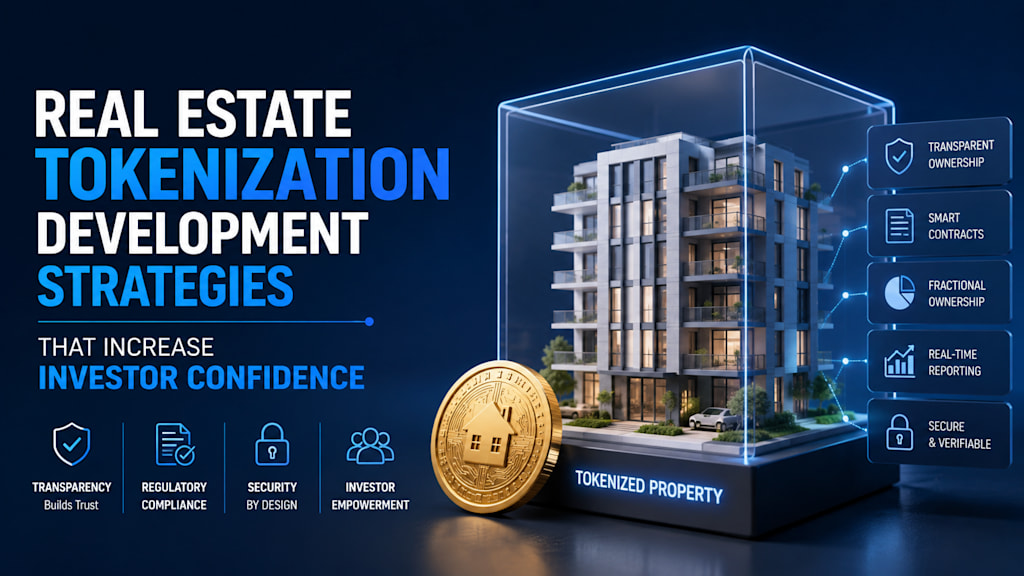
The real estate industry is entering a new era where blockchain technology is transforming how assets are owned, traded, and managed. Traditional property investments often require significant capital, involve lengthy paperwork, and suffer from limited liquidity. These challenges have encouraged businesses and investors to explore digital alternatives that simplify ownership while maintaining transparency and regulatory compliance.
Real estate tokenization development has emerged as one of the most practical innovations in this space. By converting ownership rights into blockchain-based digital tokens, companies can offer fractional investment opportunities, automate transactions through smart contracts, and create more accessible investment ecosystems. However, technology alone does not guarantee investor trust. Confidence is built through secure platforms, legal compliance, transparent operations, and reliable governance.
Organizations that plan to launch tokenized real estate platforms must prioritize investor-centric strategies throughout the development lifecycle. Every decision—from blockchain selection to smart contract auditing—plays an important role in creating a trustworthy investment environment. The following strategies explain how businesses can strengthen investor confidence while building scalable tokenization platforms.
Build on a Secure Blockchain Infrastructure
The foundation of every successful tokenization platform is a secure blockchain network. Investors expect their ownership records to remain accurate, immutable, and protected against unauthorized modifications.
Selecting an enterprise-grade blockchain provides transparency while ensuring that every transaction can be verified. Public blockchains offer openness, while permissioned networks provide greater control for regulated environments. The choice depends on business objectives, compliance requirements, and expected transaction volume.
Security also includes encrypted wallets, multi-signature authorization, identity verification, and continuous monitoring. When investors know their digital assets are protected by advanced security measures, they are more likely to participate confidently.
Prioritize Regulatory Compliance from Day One
Compliance remains one of the strongest indicators of platform credibility. Since tokenized real estate represents ownership interests or investment securities in many jurisdictions, companies must align development with local financial regulations.
Legal compliance includes investor verification, Know Your Customer (KYC), Anti-Money Laundering (AML) procedures, securities regulations, taxation requirements, and ongoing reporting obligations. Ignoring these elements can expose both investors and platform operators to significant risks.
Development teams should collaborate closely with legal professionals to integrate compliance directly into the platform rather than treating it as an afterthought. Automated compliance workflows reduce operational complexity while increasing investor confidence.
Create Transparent Asset Verification Processes
Investors want assurance that every token represents a legitimate real estate asset. Transparency begins long before tokens are issued.
Each property should undergo comprehensive verification, including ownership validation, legal documentation, property valuation, inspection reports, and financial assessments. These records can be securely linked to blockchain transactions, allowing investors to review critical information before making investment decisions.
Providing verified documentation reduces uncertainty and strengthens trust throughout the investment lifecycle.
Implement Thorough Smart Contract Auditing
Smart contracts automate property transactions, dividend distribution, ownership transfers, and governance activities. Since these contracts directly manage investor assets, they must operate without vulnerabilities.
Professional code audits identify security flaws, logical errors, and performance issues before deployment. Independent third-party audits further strengthen platform credibility because investors recognize that security has been validated objectively.
Regular updates and continuous monitoring ensure smart contracts remain secure as regulations and business requirements evolve.
Develop an Investor-Friendly User Experience
Advanced technology should never create unnecessary complexity for investors. Even experienced blockchain users appreciate intuitive interfaces that simplify every stage of the investment process.
A well-designed dashboard should provide clear property information, investment history, token balances, earnings, ownership percentages, transaction records, and portfolio performance. Simple onboarding processes combined with guided verification reduce friction for new users.
Mobile accessibility, multilingual support, and responsive interfaces also improve the overall experience, encouraging wider participation across global markets.
Strengthen Identity Verification Systems
Identity verification protects investors while reducing fraud across the platform. Digital identity solutions help verify participants before they gain access to investment opportunities.
Modern verification systems combine document authentication, biometric verification, facial recognition, and risk assessment to confirm investor identities. Automated verification also accelerates onboarding while maintaining regulatory compliance.
When every participant is verified, investors gain greater confidence that the platform maintains high standards of integrity.
Enable Fractional Ownership with Clear Governance
Fractional ownership is one of the greatest advantages of tokenized real estate. Instead of purchasing an entire property, investors can own smaller portions represented by digital tokens.
However, fractional ownership requires clearly defined governance structures. Investors should understand voting rights, revenue distribution policies, maintenance responsibilities, exit procedures, and dispute resolution mechanisms.
Transparent governance eliminates uncertainty and ensures that every participant understands their rights and responsibilities.
Maintain Accurate Real-Time Reporting
Investor confidence depends heavily on visibility. Real-time reporting enables investors to monitor their portfolios without relying on delayed updates.
Modern dashboards can display rental income, occupancy rates, asset appreciation, maintenance expenses, dividend distributions, and transaction histories. Blockchain technology further enhances transparency by maintaining immutable records that investors can independently verify.
Access to reliable data supports informed investment decisions while reducing speculation and misinformation.
Improve Liquidity Through Secondary Market Integration
One of the biggest limitations of traditional real estate investing is illiquidity. Investors often wait months or years before selling their ownership interests.
Tokenization platforms can improve liquidity by integrating compliant secondary marketplaces where investors trade ownership tokens under regulatory guidelines. Increased liquidity makes investments more attractive because participants have greater flexibility to adjust their portfolios.
Secure trading environments with transparent pricing mechanisms further increase investor confidence.
Protect Digital Assets with Enterprise Security
Cybersecurity remains a major concern for blockchain platforms. Investors expect robust protection against hacking, phishing, data breaches, and unauthorized access.
Comprehensive security measures include:
- Multi-factor authentication
- Hardware security modules
- Encrypted communications
- Cold wallet storage
- Continuous penetration testing
- Threat detection systems
- Backup and disaster recovery planning
Regular security assessments demonstrate an ongoing commitment to protecting investor assets.
Automate Operational Processes
Automation reduces human error while improving platform efficiency. Smart workflows can manage token issuance, investor onboarding, compliance verification, dividend distribution, tax calculations, reporting, and ownership transfers.
Automation also shortens transaction times, minimizes administrative costs, and improves consistency across operations.
Investors appreciate platforms that deliver reliable, predictable, and efficient experiences without unnecessary delays.
Build Strong Communication Channels
Technology alone cannot replace effective communication. Investors expect timely updates regarding property performance, regulatory developments, maintenance activities, and financial distributions.
Regular newsletters, platform announcements, educational resources, webinars, and customer support channels help maintain transparency throughout the investment journey.
Responsive communication demonstrates accountability and strengthens long-term investor relationships.
Establish Independent Asset Valuation
Property values influence investment decisions, making independent valuations essential for credibility.
Certified valuation experts should assess assets using recognized industry standards before token issuance. Periodic reassessments ensure pricing remains aligned with market conditions.
Publishing valuation methodologies allows investors to understand how token prices reflect underlying asset value.
Integrate Risk Management Frameworks
Every investment carries risk. Rather than minimizing these risks, successful platforms openly communicate them while implementing strategies to reduce exposure.
Risk management includes:
- Market analysis
- Legal risk assessments
- Cybersecurity planning
- Operational controls
- Insurance coverage
- Disaster recovery strategies
- Portfolio diversification
Transparent risk disclosure allows investors to make informed decisions based on realistic expectations.
Adopt Scalable Platform Architecture
As investor participation increases, platforms must handle growing transaction volumes without sacrificing performance.
Cloud-native infrastructure, modular architecture, API integrations, and scalable blockchain networks enable businesses to expand efficiently while maintaining fast response times.
Investors gain confidence when platforms continue operating smoothly even during periods of increased activity.
Educate Investors About Tokenization
Many investors remain unfamiliar with blockchain technology. Educational initiatives help bridge this knowledge gap.
Comprehensive learning resources should explain:
- How tokenization works
- Ownership rights
- Blockchain security
- Smart contracts
- Investment risks
- Portfolio management
- Tax implications
Knowledgeable investors are more comfortable making long-term investment decisions.
Foster Long-Term Transparency
Investor confidence grows through consistent transparency rather than one-time disclosures.
Platforms should provide continuous updates regarding:
- Financial performance
- Asset management
- Governance decisions
- Security improvements
- Compliance changes
- Market developments
Maintaining openness throughout the investment lifecycle strengthens credibility and encourages repeat participation.
The Future of Investor-Centric Tokenization
The future of tokenized real estate will increasingly focus on investor experience. Artificial intelligence, automated compliance, decentralized identity verification, predictive analytics, and interoperable blockchain ecosystems will continue improving platform efficiency and transparency.
Institutional investors are also showing growing interest in tokenized assets, increasing the importance of enterprise-grade infrastructure and regulatory compliance. Businesses that invest in secure technology, reliable governance, and transparent operations today will be better positioned to attract both retail and institutional investors in the years ahead.
As blockchain adoption expands globally, investor confidence will remain the defining factor that separates successful tokenization platforms from those that struggle to gain market acceptance.
Conclusion
Real estate tokenization development is reshaping property investment by making ownership more accessible, transparent, and efficient. While blockchain technology provides the technical foundation, lasting investor confidence depends on much more than digital innovation. Secure infrastructure, regulatory compliance, verified assets, audited smart contracts, transparent governance, and responsive communication all contribute to building trust.
Organizations that prioritize these development strategies create platforms capable of attracting long-term investors while supporting sustainable business growth. As the tokenized real estate market continues to evolve, businesses that place investor confidence at the center of their development approach will be best positioned to lead the next generation of digital property investment.
About the Creator
Ethan hunt
Ethan is a blockchain and Web3 specialist focused on building decentralized ecosystems that enhance transparency, security, and global accessibility.
Enjoyed the story? Support the Creator.
Subscribe for free to receive all their stories in your feed.
Comments
There are no comments for this story
Be the first to respond and start the conversation.