
Ranjit Bajaj: The Man Who Is Rewriting India's Football Story — And What FIFA Has to Do With It
Man Who Is Rewriting India's Football Story — And What FIFA Has to Do With It
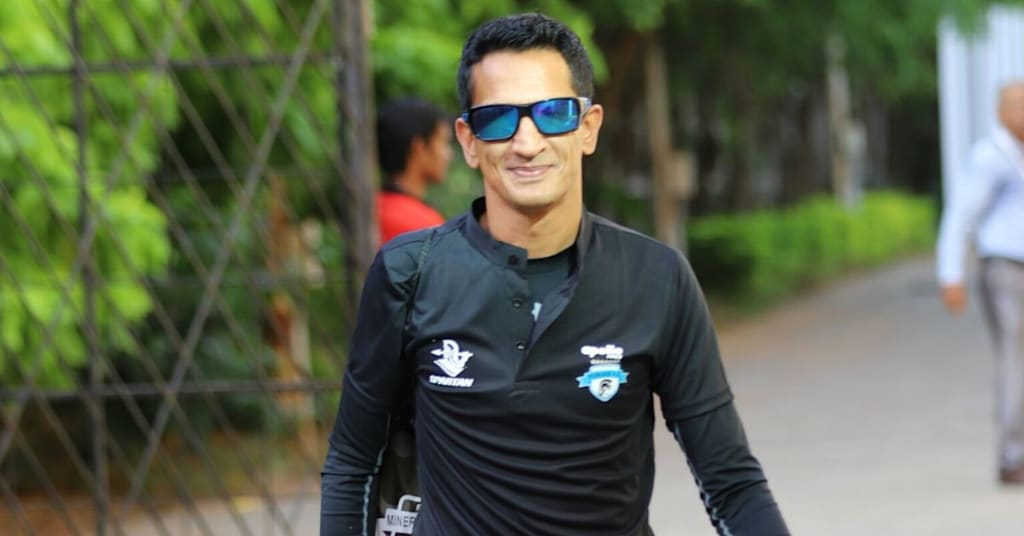
When we talk about football in India, the conversation almost always circles back to one name: Ranjit Bajaj. Not a player who dazzled crowds with his footwork. Not a star imported from abroad. But a man who mortgaged his wife's gold jewellery to send a group of Indian teenagers to compete in Europe — and came back with trophies.
That is not a metaphor. That literally happened.
And if you want to understand why that matters, you first need to understand the world Ranjit Bajaj is fighting to change — a world governed, at the very top, by an organisation called FIFA.
What Is FIFA?
FIFA stands for Fédération Internationale de Football Association — in plain English, the International Federation of Association Football. It is the global governing body of the sport we know as football (or soccer), and it is one of the most powerful sports organisations on the planet.
Founded on 21 May 1904 in Paris, FIFA today has 211 national member associations — a number that rivals the United Nations itself. Its headquarters sit in Zürich, Switzerland, and its supreme decision-making body is the FIFA Congress, where every member nation gets exactly one vote, regardless of size or footballing reputation.
FIFA's role is enormous. It:
Sets the rules of the game (in collaboration with the International Football Association Board, or IFAB)
Organises and governs the iconic FIFA World Cup — both men's and women's
Oversees international player transfers
Sets standards for refereeing, coaching, and sports medicine
Promotes grassroots development of football worldwide
In short, if football is a religion, FIFA is the Vatican. Everything from a youth tournament in Chandigarh to the World Cup final in a packed stadium flows through the structures FIFA has built.
But FIFA is also an institution with a complicated history — one marked by corruption scandals, controversies over host nation selection, and criticism of how power is distributed between footballing giants and developing nations like India.
Which is exactly where Ranjit Bajaj enters the picture.
Who Is Ranjit Bajaj?
Ranjit Bajaj is the founder and driving force behind Minerva Academy FC, widely regarded as the most successful football academy in India. Based in Chandigarh, Minerva has quietly — and sometimes loudly — been producing world-class young footballers for over a decade.
Before Minerva became the powerhouse it is today, Bajaj's résumé read like that of someone who never took the easy path. He represented India at the U-19 level as a footballer. He appeared on the first season of MTV Roadies. He is a mountaineer, an animal activist, and holds an Asian record. A restless, multi-faceted personality — but football has always been his truest north.
In 2015, Bajaj established Minerva Punjab FC, a senior club that climbed to the I-League, India's top football division at the time. He later went on to found Minerva Academy FC, Himachal FC, Techtro Swades United, and Delhi FC. Each club was built with the same philosophy: find raw talent, develop it with discipline, and give it a stage.
The Gold That Became Glory
Perhaps no story better captures who Ranjit Bajaj is than this one.
When his U-14 team qualified to compete in Europe's most prestigious youth football tournaments — the Gothia Cup in Sweden, the Dana Cup in Denmark, and the Norway Cup — there was no sponsor in sight. No government grant. No wealthy patron.
Bajaj mortgaged his wife's gold jewellery and raised ₹56 lakhs.
And the results? Minerva Academy became the first-ever Indian team to win the Gothia Cup — defeating a Brazilian side 3–1 in the final at the SKF Arena. At the Dana Cup, they triumphed again, scoring over 100 goals across just seven matches. These are not minor achievements. The Gothia Cup alone attracts over 1,800 teams from more than 100 countries.
For context, this is an Indian team — from a city most global football fans couldn't place on a map — beating the world.
What Ranjit Bajaj Has Built
The numbers behind Minerva's success are staggering:
68 trophies won under Bajaj's leadership
International titles including the Gothia Cup (2023), Mina Cup (2022), and Subroto Cup (2023)
National titles spanning U-13, U-15, U-16, U-18 Youth I-Leagues, the Hero I-League, and the Hero Futsal Club Championship
Minerva is the only Indian club to have won all age-group national titles in a single year (2017–18)
Over 70 players from Minerva's academy have gone on to represent India at the national level
One of those players, Anwar Ali, scored a goal against Lionel Scaloni's Argentina in the U-20 Cotiff Cup. Another, Thoiba Singh Moirangthem, became the youngest-ever goalscorer in the AFC Cup. These are the children Ranjit Bajaj believed in when no one else did.
The Man Who Takes on the System
Bajaj's journey has not been without conflict. As Minerva grew, so did his frustration with the establishment. He became one of the most vocal critics of the All India Football Federation (AIFF), India's governing body for the sport — which operates under the umbrella of FIFA's Asian confederation, the AFC.
He alleged favouritism, lack of transparency, and decisions made for political gain rather than sporting merit. He called out poor refereeing, biased national camp selections, and what he saw as the systematic marginalisation of clubs that refused to play by unspoken political rules.
Where others whispered, Bajaj shouted. On social media. In press conferences. In interviews.
And while that earned him enemies in high places, it also earned him something more valuable: the trust of players, parents, fans, and football lovers across India who had long felt the same frustrations but lacked a voice.
Why This Matters in the Context of FIFA
FIFA's stated mission is to grow football "at every level, from grassroots initiatives to elite international competitions." It talks about inclusion, accessibility, and developing the sport in every corner of the world.
Ranjit Bajaj is proof that this is possible — but also proof of how much the system can work against those who try.
India, with a population of over 1.4 billion, remains a football underdog on the global stage. Yet Minerva's academy has shown that Indian children, given proper coaching, international exposure, and a coach who believes in them, can beat the world's best youth teams.
The question FIFA — and India's own football administrators — must answer is: why isn't this the norm?
Bajaj himself has been clear: India does not lack talent. It lacks organisation, investment, and a system that rewards genuine development over political convenience.
A Blueprint for Indian Football
What Ranjit Bajaj has built at Minerva is not just a football academy. It is a model — one that the AIFF, state associations, and even FIFA's development programmes should be studying and replicating.
The model is simple in theory, hard in practice:
Scout young talent from across the country, especially from overlooked regions
Provide residential training with high-quality coaching
Expose players to international competition as early as possible
Keep politics out of selection and let merit decide
It sounds obvious. In India's football ecosystem, it has been revolutionary.
The Road Ahead
Indian football is at an inflection point. The Indian Super League (ISL) has brought glamour and investment to the sport. The national team, while still ranked in the lower reaches of FIFA's global standings, has shown moments of genuine promise.
But sustainable progress — the kind that produces FIFA World Cup qualifiers, not just one-off upsets — requires exactly what Ranjit Bajaj has been building for a decade: a grassroots pipeline that works.
As FIFA continues its global expansion and prepares for a 48-team World Cup, the pressure is growing on Asian nations, including India, to raise their game. The AFC has already allocated more World Cup spots to the continent. India has a genuine, if narrow, window of opportunity.
Whether that window becomes a door depends on whether the country's football administrators have the wisdom to learn from someone like Ranjit Bajaj — a man who risked everything, played by his own rules, and quietly changed what Indian football is capable of.
The gold he mortgaged came back as trophies. The question now is whether Indian football, and FIFA's support systems, will finally give him — and the generation of players he has produced — the stage they deserve.
About the Creator
Enjoyed the story? Support the Creator.
Subscribe for free to receive all their stories in your feed.
Comments
There are no comments for this story
Be the first to respond and start the conversation.