
Quantified Self, Decoded: Apple Health’s AI-Driven Pivot to Longevity
By integrating lab biomarkers, AI-powered insights, and a new "Health Age" metric, the redesigned Apple Health app transforms raw data into actionable longevity strategies, bridging the gap between consumer wearables and clinical medicine.

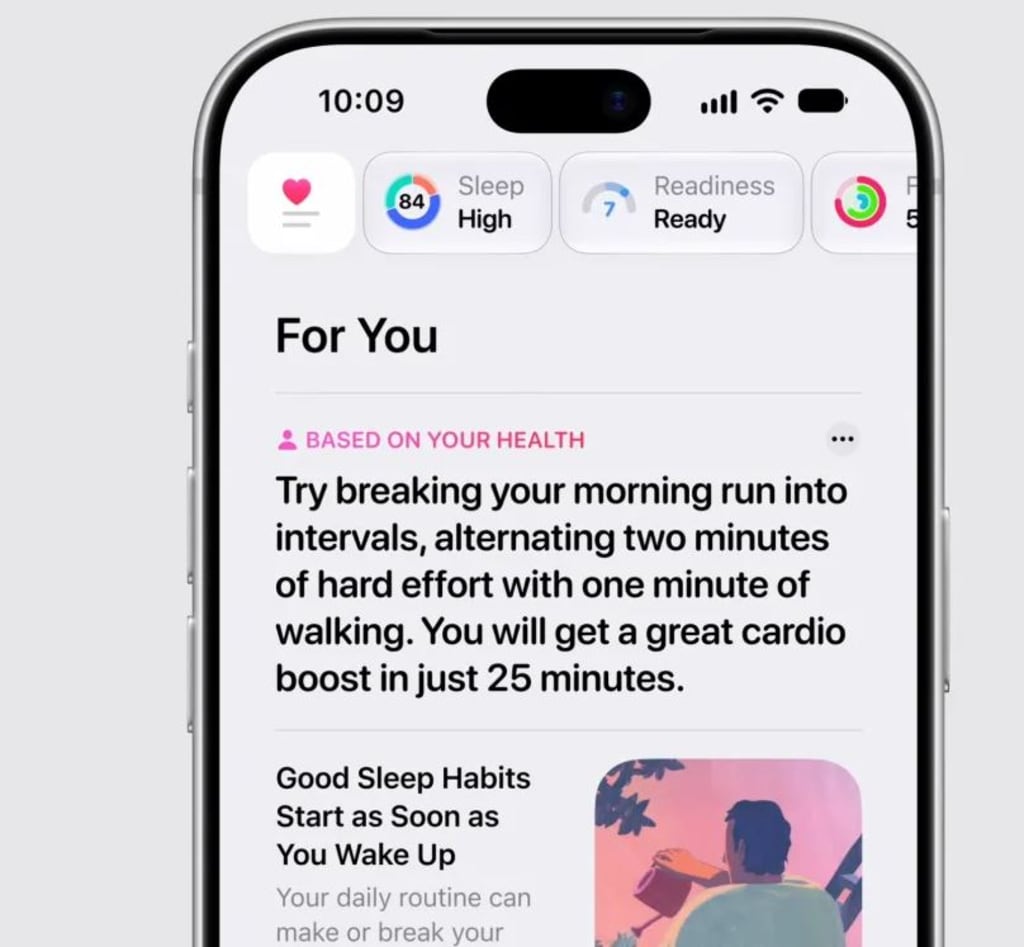
Alongside the new Apple Watch Series 12 and Ultra 4, Apple on Wednesday introduced a redesigned Apple Health app that takes advantage of Apple Intelligence to make better sense of your health data. For years, the Health app has been a repository, a digital shoebox filled with steps, heart rates, and sleep cycles. But for many users, this data remained siloed and difficult to interpret. The new update changes that paradigm, moving from passive tracking to active interpretation. The changes deliver a new Insights tab that includes a summary of the most timely information, plus personalized guidance, assessments, a new “readiness” score, and a computation of your “Health Age.” This shift positions Apple not just as a hardware manufacturer, but as a proactive health partner capable of synthesizing complex biological signals into clear, human-readable advice.
The concept of "Health Age" is perhaps the most psychologically potent feature in the update. It is a way to understand how your various health metrics compare with your actual age and uses data like your VO2 max, sleep quality, resting heart rate, and activity levels. But Apple is going further than previous iterations by incorporating biomarkers from blood tests. By combining wearable data with clinical lab results, the app creates a holistic view of biological aging. If your Health Age is lower than your chronological age, it serves as positive reinforcement; if it is higher, it acts as a wake-up call, pinpointing specific areas such as cardiovascular efficiency or sleep hygiene that require attention. This gamification of biology leverages behavioral psychology to motivate sustainable lifestyle changes.
The additions also include a new Longevity tab, which uses metrics from your Apple Watch and iPhone to assess your health across sleep, movement, heart health, and other factors. This tab serves as the central hub for the app’s new predictive capabilities. Your lab results can be incorporated into this guidance, and Apple announced a team-up with Quest Diagnostics for a 50-biomarker panel for $119, giving users quick access to data that can only come from lab tests. This partnership is a strategic masterstroke. It lowers the barrier to entry for comprehensive blood testing, bringing clinical-grade diagnostics into the consumer mainstream. By integrating these results directly into the Health app, Apple closes the loop between detection and action, allowing users to see how their daily habits impact their internal biology in real-time.
With Apple Intelligence, Apple’s Health app has been improved to make sense of other health data, too, which comes into play in features like the readiness score and the Insights tab. Instead of presenting static charts, the AI analyzes patterns across multiple data streams to offer contextual advice. For instance, the app could suggest that a user incorporate more intervals into their morning run to improve their cardio health, based on a recent dip in VO2 max trends. Or it might recommend an earlier bedtime if it detects elevated stress markers combined with poor sleep efficiency. The app will also go deeper into areas like fitness and heart health as well, Apple said, offering nuanced recommendations that adapt to the user’s changing physiology and goals.
The Health app also allows users to take in-depth assessments of how well their bodies are moving, which can help people who are older or recovering from injury. Using the iPhone’s camera and computer vision, the app can analyze range of motion, balance, and gait. A trainer can even demonstrate certain moves for you to try as you take the assessment, which Apple claims is like having a coach right there with you. This feature democratizes access to physical therapy and functional fitness coaching, providing valuable feedback for those who cannot afford regular sessions with a specialist. It also serves as an early warning system for mobility issues, potentially identifying risks for falls or musculoskeletal injuries before they become severe.
The updated Health app rolls out later this year, starting in U.S. English. This phased rollout suggests that Apple is carefully tuning its AI models to ensure accuracy and safety before expanding globally. Health is a high-stakes domain, and Apple’s cautious approach reflects its commitment to reliability.
By weaving together wearable data, clinical labs, and AI-driven insights, Apple is building a comprehensive health ecosystem that extends far beyond the wrist. The redesigned Health app is no longer just a record of what you did; it is a guide for who you can become. In the quest for longevity, knowledge is power, and Apple has just given users the most powerful tool yet: understanding.
About the Creator
Mark Lim
Hi I am mark an automotive student and a car, tech and food enthusiast ! Im gonna try and post daily & hope you enjoy what I write and do share my page with people you know. I would gladly appreciate it! Cheers
Enjoyed the story? Support the Creator.
Subscribe for free to receive all their stories in your feed.
Comments
There are no comments for this story
Be the first to respond and start the conversation.