
Programmers Love Open Source. They Still Pay for Cheap GPT.
Open weights give developers an exit. Subsidized Claude and Codex give them a Tuesday afternoon.
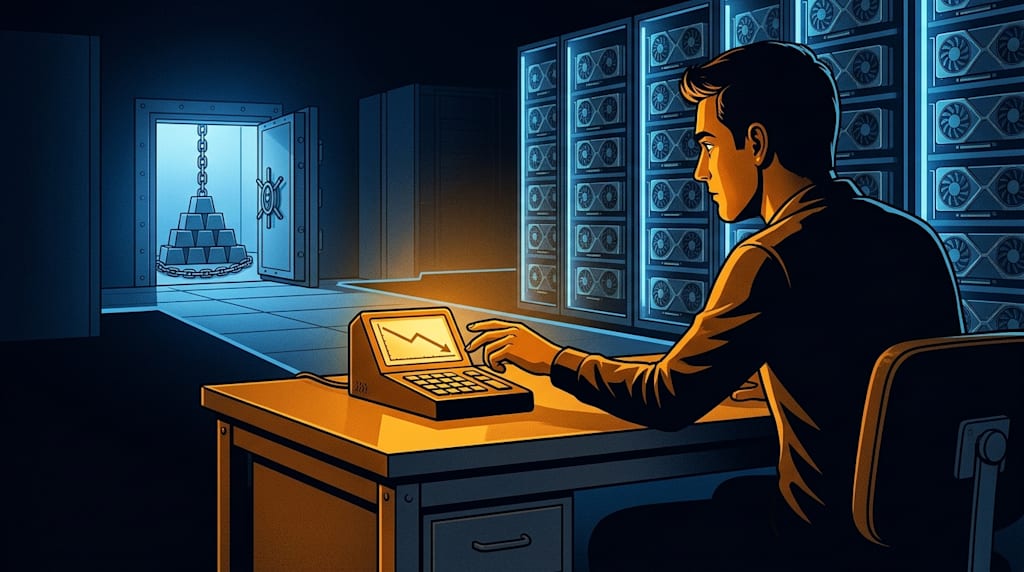
The question sounds binary: do programmers support open-source DeepSeek, or cheap GPT? Most programmers support cheap GPT with their wallets and open-source DeepSeek with their options. Those are different kinds of support, and they do not compete for the same slot in a working developer’s life.
Scope matters. Below 300B parameters, open weights can still be a practical local tool. Above 300B, the economics change. A model that large is not something an ordinary programmer downloads and runs as a daily driver. It becomes a theoretical exit, a pricing anchor, and supply-chain insurance. The cheap official product, Claude Code, Codex, and the subscriptions around them, becomes the daily tool. One decides what programmers use on Tuesday afternoon. The other decides what vendors can charge on Tuesday afternoon.
1. Above 300B, open weights are an option, not a daily tool
DeepSeek’s open weights matter. They are also not, for most programmers, a replacement for a subsidized official product.
Take a model in the DeepSeek V4 Flash class: roughly 304B total parameters, 13B active parameters, a mixture-of-experts structure. With 2-bit/4-bit mixed quantization, it can fit into a 128GB MacBook Pro and run. That sentence is true and misleading. The model file is still around 97GB. It needs a specialized inference engine. And 2-bit quantization produces visible degradation in long-context reasoning, complex code generation, and tool use. It is a demonstration. It is a research object. It is a toy for people who enjoy the toy. It is not what a team uses to ship a feature on Friday.
This is why the ordinary programmer’s relationship to open weights above 300B is better described as an option than as a tool. The option is not exercised every day. It is exercised when the vendor raises prices, cuts quotas, changes terms, or stops serving a region. Its value lies in the fact that it exists. A supplier that knows the exit exists cannot behave as if it does not.
The parties that benefit most directly from open weights are inference deployers: Together AI, Fireworks, and similar companies. They can take the weights, stand up a service, and compete for traffic. But they run into a hard wall. They cannot match DeepSeek’s own deployment efficiency. At the same hardware cost, DeepSeek can serve a full model while a third-party deployer often serves a cut-down version or charges a higher price. Traffic flows back to DeepSeek. The open weights help the deployers in theory and dilute their advantage in practice.
For an ordinary programmer, the open-source question is therefore less urgent than it sounds. Unless you run a cloud inference business, the fact that the weights are open does not change your daily workflow. It changes your bargaining position. That matters, but it is not the same as having a local model that replaces Claude Code.
2. The cheap official product is a subsidy, not a price
If you have used Claude Code or Codex recently, the first thing you notice is that they feel cheap. Not cheap in quality. Cheap in the sense that the meter is clearly not running at API rates. The official products are subsidized, and on heavy users they are subsidized to the point of loss.
The numbers reported by teams using these tools are stark. A 25-person startup that puts every employee on individual subscriptions and runs the weekly quota to the ceiling can end up with a monthly bill around $3,000. The same usage through an enterprise API plan can land between $30,000 and $40,000. That is roughly a 10x gap. A $200 subscription plan can yield far more API-equivalent tokens than the sticker price suggests. Anthropic’s internal estimates for Agent SDK subscription subsidies have been reported in the range of 15x to 30x API rates. This is why the company tried to move Agent SDK usage out of the subscription pool and then stopped when the reaction hit. In April 2026, removing Claude Code from the Pro plan produced a churn event loud enough to reverse the decision.
The loss is not an accident. It buys two things.
The first is the ARR base. Claude Code’s annualized revenue run rate passed $2.5 billion in 2026, with enterprise customers contributing more than half. In a market where everyone fights for the same developers, the fastest way to stabilize ARR is to create ARR first. A heavy user who costs the company money on a subscription can still be worth more in the aggregate, because that user sits in a Monday meeting and tells the boss, “We need this.” No external sales team can replicate that internal advocacy. The subsidy is customer acquisition dressed as a subscription.
The second is workflow data. One lab routes some user traffic through a Claude API endpoint to collect distillation data. The practice is a rational response to a known problem. Model makers do not know what users want. Benchmark farming kills. The users who gravitate to Claude Code and Codex do not produce random chat logs. They produce work trajectories: files, tests, failed attempts, corrections, constraints, acceptance criteria, and the moment when the developer decides the output is good enough. A single high-quality trajectory of that kind used to cost thousands of dollars to construct and clean. Now users pay a subscription fee, hand over the workflow, and the lab gets cleaner data with better context. That data can be distilled, ranked, and fed back into the next training round. Anthropic’s later crackdown on distillation, banning tens of thousands of accounts and restoring charges on intercepted requests, shows how much that flywheel is worth. You do not build a wall around something you consider worthless.
The subsidy window is narrowing. Anthropic is moving toward an IPO, which means the marginal value of new user data is falling while the drag on the financial statements is rising. OpenAI has been quietly tightening quotas and aligning subscription value closer to API prices. The current cheapness of official products is acquisition pricing, not steady-state pricing. Blackwell will make the steady state much cheaper than the Hopper era. It will not make it as cheap as today’s subsidized subscription.
That is the contradiction in the common claim that “DeepSeek is not cheap on product use.” It is true. DeepSeek’s API list price is not the thing most programmers compare. They compare a subsidized official product against an unsubsidized API, and the subsidized product wins. Many developers who lost accounts to Anthropic’s crackdown still come back because the welfare is fat. The wallet does not care about the purity of the pricing model.
3. Blackwell lowers the cost floor, not the subsidy bill
The low prices from GPT and Grok have a structural cause, and Blackwell is a large part of it. GB300 NVL72 delivers roughly 65x the token generation per GPU compared with H200, 50x the token throughput per megawatt, and pushes inference cost from about $4.20 per million tokens on Hopper to about $0.12 per million tokens. That is a 35x reduction in the cost floor. xAI’s Grok 4.5 can price output at $6 per million tokens, about 60% below GPT-5.6 Terra, because the underlying cluster economics have been rebuilt.
The distinction that matters is this: Blackwell makes “cheap without subsidy” possible. It does not explain the entire current price. Today’s extreme low prices are the sum of a lower cost curve and an acquisition subsidy stacked on top. The subsidy will recede. The cost curve will not snap back. The steady-state price after the subsidy ends will be far below the Hopper era. It will still be far above the “$200 subscription, $4,000 of API-equivalent usage” deal that heavy users enjoy now.
When a programmer says GPT is cheap, the correct translation is often: the official product is cheap because the vendor is buying market share and workflow data. The API is cheaper than it used to be because Blackwell changed the unit economics. Those are two different kinds of cheap. One is a promotion. One is a new floor.
4. Chinese models: beyond the invoice
The invoice is not a small thing. RMB payment, stable domestic access, and Chinese VAT invoices are structural advantages in enterprise procurement. A team that cannot get a compliant invoice cannot expense the tool. A team that cannot pay in RMB cannot easily put the tool through a normal finance workflow. Overseas models have a clear gap there.
But the advantages of Chinese models go beyond the invoice.
First, data residency and built-in compliance. Domestic headline models operate under the Interim Measures for the Management of Generative AI Services. Data does not leave the border. Content filtering is built in. Overseas models carry cross-border data risk and require extra content review. For teams under classified protection, financial, or government compliance constraints, this decides whether the tool can be used at all.
Second, Chinese-language scenarios and engineering maturity. In dialect handling, classical poetry, Chinese documents, tables, and invoice recognition, domestic models have industrial-grade advantages. By 2026, reasoning quality at the top of the domestic market has caught up to the GPT-5 class, while price is roughly one-fifth. DeepSeek V4 Flash’s API price after the official adjustment is 4.5 RMB per million output tokens in off-peak hours and 9 RMB per million output tokens at peak. For cost-sensitive production workloads outside the subsidy bubble, that absolute price is still very low.
Third, the sovereign option in open weights. For private deployment, offline operation, or supply-chain autonomy, DeepSeek’s MIT-licensed weights provide an exit that closed overseas models cannot provide. The option is not exercised every day. It is exercised when the supply chain breaks, when compliance changes overnight, or when the price becomes unacceptable. On that day, it is the only thing that keeps the team running.
5. DeepSeek’s open-source play: spray glyphosate
Open-sourcing DeepSeek matters, but it does not matter more than cheap Claude to the average programmer. It matters most to deployers such as Together AI and Fireworks. The ordinary programmer who is not running an inference business is, in a precise sense, watching from the stands.
DeepSeek’s open-source strategy is a market move. When DeepSeek cannot capture all the traffic itself, or cannot serve all the demand, it can open-source part of its framework to attract deployers, expand its alliance, and spray glyphosate on the market. The point is to suppress the growth of other model makers. “If I cannot eat it, you will not eat it either.” There are two ways to survive: become stronger, or make rivals wither. DeepSeek is Canada goldenrod. The metaphor is harsh and accurate. It does not monetize every flower. It expands the root system and changes the soil so that other plants struggle.
That strategy affects the closed-source market. It creates a persistent pricing anchor and an exit option. A vendor that knows the open weights exist cannot push subscription prices or quota cuts too far without risking a migration story. The programmer may never run the open model. The programmer still benefits from its existence, because the vendor’s pricing team knows it exists.
6. What programmers are actually supporting
If “support” means the tool a programmer opens on a normal workday, the answer is clear: most programmers choose the subsidized official product, whether or not it is open source. The choice is rational. Inside the subsidy window, the cost and experience combination of Claude Code and Codex is hard to beat with DeepSeek’s API list price or a 300B+ self-deployment. Open source does not get a vote in the daily workflow. The wallet and the workflow do.
If “support” means the market position a programmer is willing to defend, open-source DeepSeek matters for a different reason. Its role is different: a pricing anchor and an exit option. It constrains closed-source vendors from going too far on price and quotas. Every developer who uses a subsidized product is indirectly enjoying the constraint created by open-source competition, even if that developer never downloads a weight file.
The subsidy will recede. Blackwell will permanently lower the steady-state price, but not to today’s subsidy level. When that happens, the question “can open source become a daily affordable substitute above 300B?” will finally get a serious test, instead of being covered up by loss-making official products. Until then, the plain description is this: programmers support cheap GPT with their daily usage and open-source DeepSeek with their options. The daily tool decides the present. The option decides the floor. A healthy market needs both.
About the Creator
Jin
Writer of reamstories
https://reamstories.com/jin
Enjoyed the story? Support the Creator.
Subscribe for free to receive all their stories in your feed. You could also become a paid subscriber, letting them know you appreciate their work.
Comments
There are no comments for this story
Be the first to respond and start the conversation.