
Power Transformers Are Energizing the Future of Global Electricity Infrastructure
Rising Electricity Demand, Renewable Energy Expansion, and Grid Modernization Are Driving Growth in the Global Power Transformer Market

Electricity has become the foundation of modern society. Homes, industries, hospitals, transportation systems, and digital infrastructure all depend on reliable power to function efficiently. Behind this vast network of electricity generation and distribution lies one of the most critical components of the energy sector: the power transformer.
Although often hidden within substations and power facilities, power transformers play an essential role in ensuring electricity can travel safely and efficiently across long distances. As countries invest heavily in renewable energy, grid modernization, and expanding electrical infrastructure, demand for advanced power transformers is rising steadily across the world.
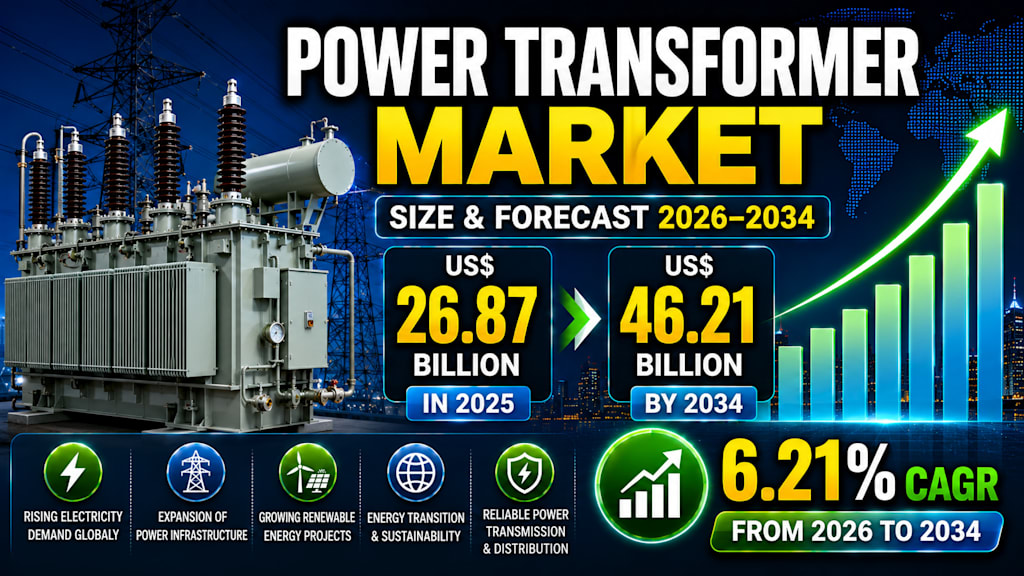
According to Renub Research, the global Power Transformer Market is expected to increase from US$ 26.87 billion in 2025 to US$ 46.21 billion by 2034, growing at a compound annual growth rate (CAGR) of 6.21% between 2026 and 2034. Rising electricity consumption, expansion of renewable energy projects, and ongoing investments in transmission and distribution infrastructure are among the major factors supporting market growth.
As global energy systems evolve to meet the needs of a rapidly growing population, power transformers are becoming increasingly important in enabling reliable, efficient, and sustainable electricity delivery.
Why Power Transformers Are Essential to Modern Energy Systems
Power transformers are electrical devices that transfer energy between circuits through electromagnetic induction. Their primary function is to increase or decrease voltage levels to enable efficient transmission and distribution of electricity.
When electricity is generated at power plants, transformers step up voltage levels to reduce transmission losses during long-distance transport. Near homes, businesses, and industrial facilities, transformers step voltage down to safe and usable levels.
Without transformers, modern power grids would be unable to deliver electricity efficiently over large distances.
Power transformers are installed in generating stations, substations, industrial facilities, renewable energy plants, and utility networks. They serve as the backbone of electrical infrastructure, helping maintain stability, efficiency, and reliability throughout the energy system.
As electricity demand continues to grow worldwide, the importance of transformer technology is becoming even more pronounced.
Rising Global Electricity Demand Is Driving Market Growth
One of the strongest drivers of the power transformer market is the continuous increase in global electricity consumption.
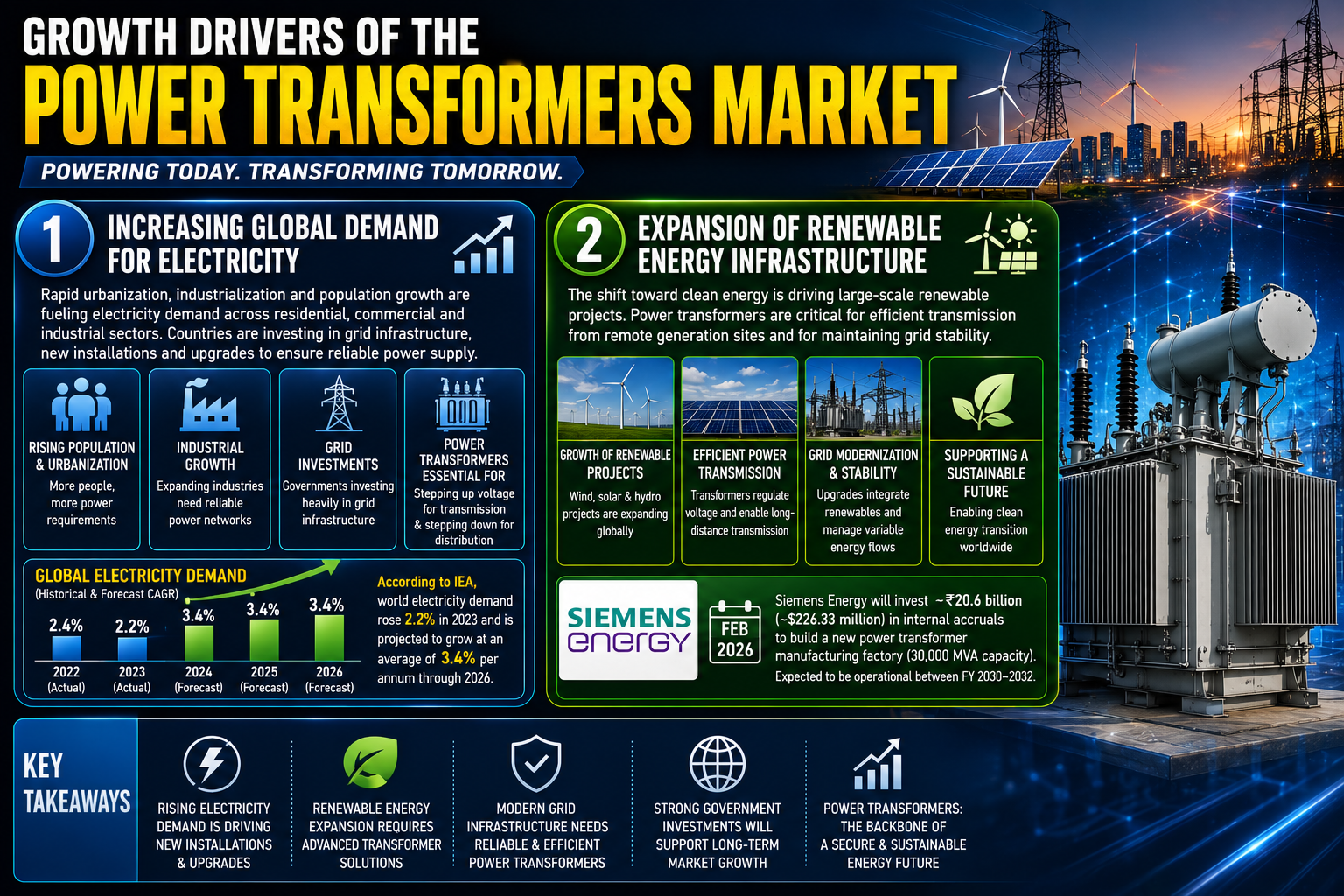
Population growth, urbanization, industrial expansion, and digitalization are contributing to rising energy requirements across residential, commercial, and industrial sectors.
According to the International Energy Agency (IEA), global electricity demand increased by 2.2% in 2023 and is expected to continue growing at an average annual rate of approximately 3.4% through 2026.
Developing nations are expanding power infrastructure to support economic growth and improve living standards. New cities, industrial parks, transportation systems, and commercial developments require reliable electricity networks capable of meeting growing demand.
Power transformers play a central role in these networks by facilitating efficient voltage regulation and transmission.
In addition to new installations, many countries are replacing aging transformers with modern, energy-efficient alternatives that improve grid performance and reduce losses.
As electricity consumption continues increasing worldwide, demand for advanced transformer solutions is expected to remain strong.
Renewable Energy Expansion Is Creating New Opportunities
The global transition toward renewable energy represents another major growth catalyst for the power transformer industry.
Governments around the world are investing heavily in solar parks, wind farms, hydroelectric facilities, and other clean energy projects to reduce carbon emissions and strengthen energy security.
However, renewable energy installations often generate electricity in remote locations far from population centers. Efficient transmission of this electricity requires sophisticated transformer technology capable of managing varying voltage levels and integrating renewable generation into national grids.
Power transformers play a critical role in ensuring renewable energy can be transmitted reliably and efficiently.
Large-scale wind and solar projects rely on transformers to connect generation facilities to transmission networks while maintaining grid stability.
As countries continue expanding renewable energy capacity, the demand for power transformers designed for renewable integration is expected to increase significantly.
Grid Modernization Is Reshaping the Industry
Many electrical grids currently operating around the world were built decades ago and require significant modernization.
Aging infrastructure can contribute to energy losses, reliability issues, and operational inefficiencies. Governments and utilities are therefore investing heavily in grid modernization initiatives designed to improve performance and resilience.
Modernization efforts often involve replacing outdated transformers with advanced models capable of supporting higher loads and integrating with digital monitoring systems.
Smart grid technologies are becoming increasingly important as utilities seek to improve efficiency, automate operations, and respond more effectively to changing energy demands.
Advanced transformers equipped with monitoring and diagnostic capabilities help utilities optimize performance while reducing maintenance requirements.
As power networks become more sophisticated, transformer technology is evolving to support increasingly intelligent and automated energy systems.
Smart Grids Are Driving Demand for Advanced Transformers
The development of smart grids is creating new growth opportunities throughout the transformer market.
Unlike traditional grids, smart grids utilize digital technologies to monitor, manage, and optimize electricity flows in real time.
These systems require advanced transformers capable of supporting communication networks, automation platforms, and dynamic power management.
Smart transformers provide enhanced visibility into network conditions, allowing utilities to detect faults more quickly and improve operational efficiency.
They also facilitate integration of distributed energy resources such as rooftop solar systems, battery storage installations, and electric vehicle charging infrastructure.
As governments and utilities continue investing in smart grid development, demand for intelligent transformer technologies is expected to increase steadily.
Shell-Type Transformers Continue to Gain Attention
Among various transformer designs, shell-type transformers are gaining popularity due to their efficiency and reliability.
In shell transformers, the magnetic core surrounds the windings, providing superior magnetic control and enhanced mechanical protection.
This design helps reduce losses while improving resistance to mechanical stress and short-circuit conditions.
Shell transformers are commonly used in power plants, substations, and industrial facilities where high reliability and efficient voltage regulation are essential.
Their compact design and strong performance characteristics make them attractive solutions for modern electrical infrastructure projects.
As power systems become increasingly complex, shell-type transformers are expected to play a growing role in supporting high-performance applications.
Gas-Insulated Transformers Are Supporting Safer Infrastructure
The market for gas-insulated transformers is expanding as organizations seek safer and more environmentally friendly alternatives to traditional oil-filled equipment.
Unlike conventional transformers that use mineral oil for insulation and cooling, gas-insulated transformers utilize specialized gases that reduce fire risk and environmental concerns.
These transformers are particularly well suited for densely populated urban areas where safety considerations are paramount.
Gas-insulated technology also offers space-saving advantages, making it attractive for cities with limited land availability.
Industries including transportation, manufacturing, and commercial real estate are increasingly adopting gas-insulated transformers as part of broader sustainability and safety initiatives.
High-Capacity Transformers Are Supporting Energy Growth
The growing demand for electricity is driving increased investment in high-capacity power transformers.
Transformers in the 501 MVA to 800 MVA range are particularly important for large-scale transmission networks, utility substations, and power generation facilities.
These high-capacity units enable efficient transfer of large volumes of electricity while minimizing transmission losses.
Renewable energy projects, industrial developments, and expanding urban centers all require robust transmission infrastructure capable of handling growing power demands.
Utilities are increasingly investing in high-capacity transformer installations to ensure long-term reliability and support future growth.
As global energy consumption rises, demand for these large-scale transformer solutions is expected to continue expanding.
Commercial Infrastructure Is Creating Additional Demand
Commercial buildings represent another important application area for power transformers.
Office complexes, shopping centers, hospitals, hotels, educational institutions, and data centers all require reliable electricity supplies supported by efficient transformer systems.
Modern commercial facilities depend on sophisticated electrical infrastructure to support advanced technologies, climate control systems, security networks, and digital operations.
Compact, energy-efficient transformers are becoming increasingly popular in commercial environments where space utilization and operational efficiency are key priorities.
As urban development and commercial construction continue worldwide, demand for commercial transformer solutions is expected to remain strong.
Challenges Facing the Power Transformer Market
Despite positive growth prospects, the industry faces several challenges.
High Initial Investment Costs
Power transformers are highly specialized pieces of equipment that require significant capital investment.
Manufacturing involves expensive raw materials such as copper, steel, insulating materials, and specialized components. Transportation, installation, testing, and maintenance further increase project costs.
For developing regions with limited infrastructure budgets, these expenses can create barriers to adoption.
Supply Chain and Raw Material Volatility
Transformer production depends heavily on materials such as copper, aluminum, electrical steel, and insulating oils.
Price fluctuations and supply chain disruptions can significantly impact manufacturing costs and project timelines.
Increasing demand for these materials from renewable energy, electric vehicle, and electronics industries is placing additional pressure on global supply chains.
Managing these challenges remains a priority for manufacturers seeking to meet growing market demand.
Regional Markets Offer Strong Growth Potential
United States
The United States market is benefiting from grid modernization programs, renewable energy development, and rising demand from data centers. Aging infrastructure replacement remains a major growth driver.
United Kingdom
The UK continues investing heavily in renewable energy and electrical infrastructure upgrades. Offshore wind projects and smart grid initiatives are creating substantial opportunities for transformer manufacturers.
India
India represents one of the fastest-growing transformer markets globally. Rapid urbanization, industrialization, rural electrification programs, and renewable energy expansion are driving significant demand for new transformer installations.
Saudi Arabia
Saudi Arabia's investments in power infrastructure, industrial development, and renewable energy projects under Vision 2030 are supporting continued growth in transformer demand. Harsh environmental conditions are also creating demand for high-performance transformer technologies.
The Future of Power Transformation
The future of the power transformer industry will be defined by efficiency, digitalization, and sustainability.
Smart transformers capable of real-time monitoring, predictive maintenance, and advanced communication will become increasingly common as utilities modernize their networks.
Environmental considerations will encourage further innovation in insulation technologies, energy-efficient designs, and sustainable manufacturing practices.
At the same time, the expansion of renewable energy, electric transportation, and smart cities will continue creating new opportunities for transformer manufacturers worldwide.
As electrical infrastructure becomes more sophisticated, transformers will remain central to the reliable delivery of electricity.
Final Thoughts
Power transformers are among the most important yet often overlooked components of modern energy infrastructure. They enable efficient electricity transmission, support renewable energy integration, and ensure reliable power delivery across homes, businesses, and industries.
According to Renub Research, the global Power Transformer Market is expected to grow from US$ 26.87 billion in 2025 to US$ 46.21 billion by 2034, reflecting strong demand driven by electrification, grid modernization, and renewable energy expansion.
As the world continues investing in cleaner energy systems and smarter electrical networks, power transformers will remain at the heart of this transformation. They are not merely electrical components—they are essential enablers of the future energy economy, helping power a more connected, sustainable, and electrified world.
About the Creator
Enjoyed the story? Support the Creator.
Subscribe for free to receive all their stories in your feed.
Comments
There are no comments for this story
Be the first to respond and start the conversation.