
Power Transformer Market Set to Reach US$46.21 Billion by 2034 as Global Energy Demand Surges
Grid modernization, renewable energy expansion, and rising electricity consumption are fueling unprecedented demand for power transformers worldwide.

Electricity powers nearly every aspect of modern life. From homes and hospitals to factories, data centers, and transportation networks, reliable electricity has become essential for economic growth and daily living. Yet behind the scenes of every electrical system lies a critical piece of equipment that often goes unnoticed: the power transformer.
Power transformers serve as the backbone of electrical transmission and distribution networks. Without them, large-scale power generation and long-distance electricity transmission would be inefficient, unreliable, and economically impractical.
As countries expand their energy infrastructure, modernize aging power grids, and accelerate renewable energy adoption, demand for power transformers is growing rapidly.
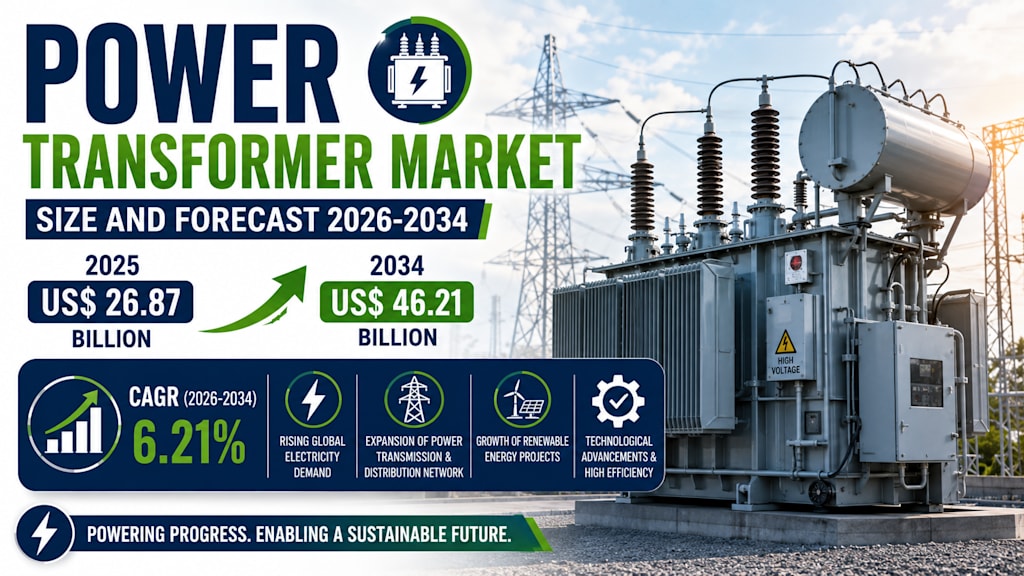
According to Renub Research, the global Power Transformer Market is expected to grow from US$26.87 billion in 2025 to US$46.21 billion by 2034, registering a compound annual growth rate (CAGR) of 6.21% between 2026 and 2034.
This growth reflects the increasing need for electricity worldwide and the critical role transformers play in delivering energy safely and efficiently to billions of people.
Understanding the Importance of Power Transformers
A power transformer is an electrical device that transfers electrical energy between circuits through electromagnetic induction. Its primary purpose is to increase or decrease voltage levels, enabling efficient transmission and distribution of electricity.
Electricity generated at power plants must travel long distances before reaching homes, businesses, and industries. Transmitting electricity at high voltage minimizes energy losses during transportation.
Power transformers perform the crucial task of stepping voltage up for long-distance transmission and stepping it down before electricity reaches consumers.
Without transformers, modern electrical networks would face severe efficiency challenges and significantly higher operating costs.
Power transformers are commonly installed in power plants, substations, industrial facilities, renewable energy projects, and commercial infrastructure developments. Their reliability directly affects the stability and performance of electrical grids.
As global energy demand continues to rise, transformers are becoming increasingly important components of modern infrastructure.
Global Electricity Consumption Continues to Rise
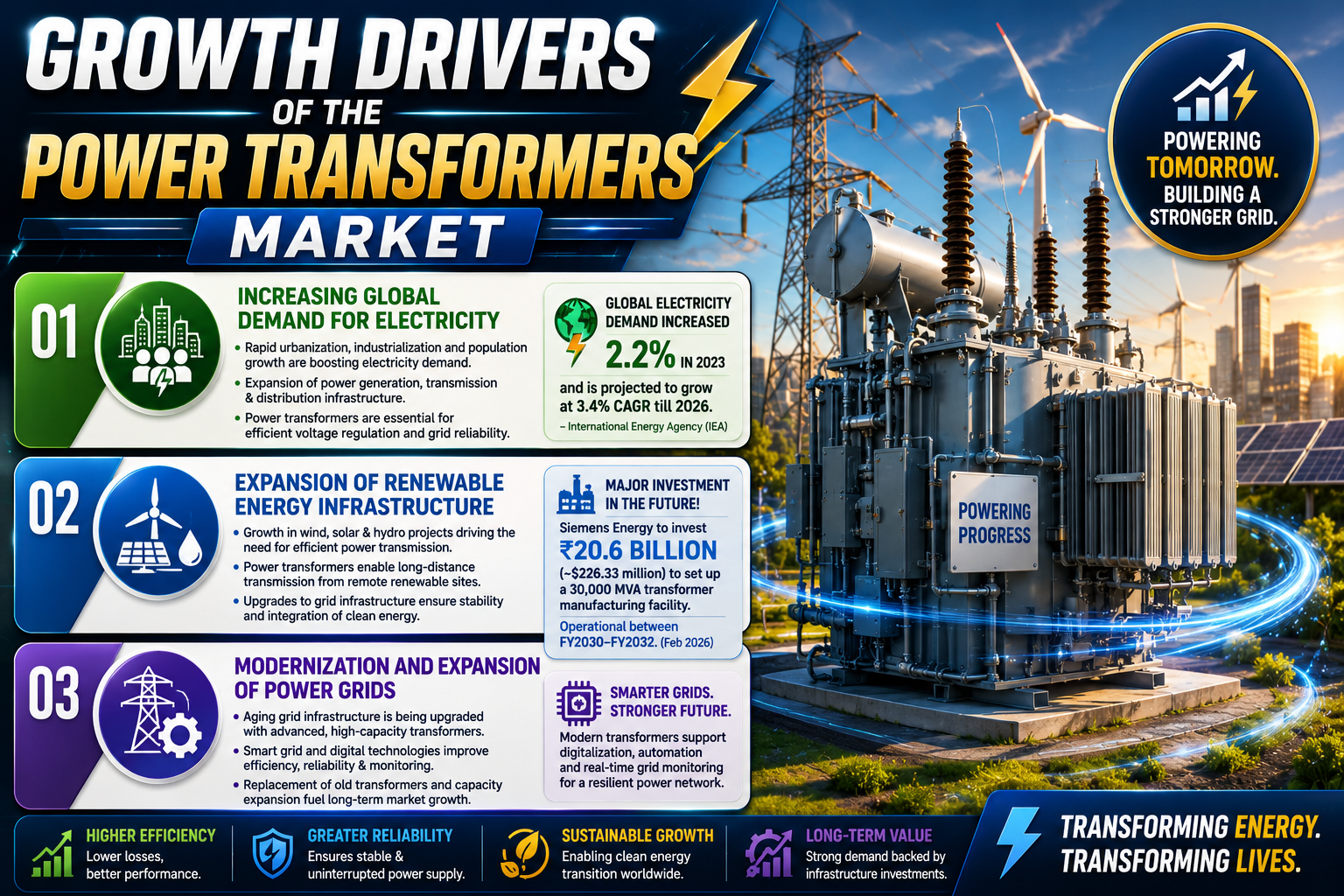
One of the strongest drivers of transformer market growth is the increasing demand for electricity worldwide.
Rapid urbanization, industrial development, population growth, and technological advancement are creating unprecedented energy requirements across both developed and developing nations.
Residential communities consume electricity for lighting, heating, cooling, appliances, and digital devices. Commercial buildings require power for offices, retail operations, hospitals, and educational institutions. Industrial facilities rely on electricity to operate manufacturing processes and production equipment.
As economies expand, energy consumption naturally increases.
According to the International Energy Agency (IEA), global electricity demand increased by 2.2% in 2023 and is expected to continue growing in the coming years. This trend is prompting governments and utility providers to invest heavily in power infrastructure upgrades and expansion projects.
Every new transmission line, substation, industrial zone, and urban development project requires transformers capable of managing growing electricity loads.
As a result, transformer manufacturers are benefiting from a sustained increase in infrastructure investments worldwide.
Renewable Energy Is Transforming the Industry
The global transition toward cleaner energy sources has become one of the most important growth catalysts for the power transformer market.
Countries across the world are investing heavily in renewable energy projects to reduce carbon emissions and improve energy sustainability. Solar farms, wind parks, hydroelectric facilities, and other renewable energy installations continue expanding at an unprecedented pace.
However, renewable energy generation often occurs far from population centers.
Large solar facilities may be located in deserts, while wind farms are frequently constructed in remote coastal or rural regions. Efficiently transmitting this electricity to consumers requires sophisticated power transmission infrastructure.
Power transformers play a vital role in integrating renewable energy into national power grids.
They regulate voltage levels, facilitate efficient energy transfer, and help maintain grid stability despite fluctuations in renewable power generation.
As renewable energy deployment accelerates globally, demand for advanced transformer technologies is expected to increase significantly.
Grid Modernization Is Creating New Opportunities
Many of the world's electrical grids were constructed decades ago and were not designed to accommodate today's energy demands.
Aging infrastructure has become a major concern for governments, utility companies, and energy providers.
Older transformers often operate less efficiently, contribute to energy losses, and may struggle to support modern electricity consumption patterns.
To address these challenges, countries are investing heavily in grid modernization initiatives.
Grid modernization involves upgrading transmission networks, replacing outdated equipment, integrating renewable energy sources, and implementing advanced monitoring technologies.
Modern transformers are central to these efforts.
New-generation power transformers offer improved efficiency, enhanced reliability, better load management capabilities, and compatibility with smart-grid systems.
By replacing aging infrastructure with advanced transformer technology, utilities can reduce energy losses, improve operational efficiency, and enhance grid resilience.
These modernization projects are expected to remain a major source of market growth throughout the coming decade.
The Rise of Smart Grids
Smart grid technology is revolutionizing the way electricity networks operate.
Traditional power grids were designed for one-way electricity flow—from power plants to consumers. Modern energy systems are becoming far more complex due to distributed energy generation, renewable energy integration, electric vehicles, and energy storage technologies.
Smart grids use digital technologies, sensors, automation systems, and real-time monitoring tools to optimize electricity distribution.
Power transformers designed for smart-grid environments must support advanced communication and monitoring capabilities while maintaining exceptional reliability.
Utilities increasingly seek transformers that can provide performance data, facilitate predictive maintenance, and integrate seamlessly with broader digital infrastructure.
The growing adoption of smart grids is creating demand for highly sophisticated transformer solutions capable of supporting next-generation energy systems.
Shell-Type Transformers Gain Attention
Among various transformer designs, shell-type transformers continue gaining popularity for high-performance applications.
Unlike conventional transformer designs, shell-type transformers place the core around the windings, providing enhanced magnetic field control and improved mechanical protection.
This design offers several advantages, including reduced energy losses, improved efficiency, and increased resistance to mechanical stress.
Shell-type transformers are widely used in power plants, substations, and industrial applications where performance and reliability are critical.
Their compact design also makes them attractive for installations where space constraints exist.
As infrastructure projects become increasingly complex, shell-type transformers are expected to maintain strong demand across multiple sectors.
Gas-Insulated Transformers Offer New Possibilities
Urbanization and environmental concerns are encouraging greater adoption of gas-insulated transformers.
Unlike traditional oil-filled transformers, gas-insulated systems use specialized gases as insulating and cooling mediums.
These transformers offer several important benefits.
First, they significantly reduce fire risks compared to oil-based systems. Second, they require less installation space, making them ideal for densely populated urban environments.
Gas-insulated transformers are increasingly deployed in commercial buildings, transportation hubs, industrial facilities, and metropolitan power infrastructure projects.
As cities continue expanding and land availability becomes more limited, demand for compact and environmentally friendly transformer technologies is expected to rise.
Single-Phase Transformers Continue Supporting Rural Electrification
While large-scale transmission projects often receive the most attention, single-phase transformers remain essential components of electrical infrastructure.
Single-phase transformers are widely used in residential areas, rural communities, agricultural operations, and small commercial facilities.
Their relatively simple design and lower installation costs make them practical solutions for localized electricity distribution.
Many developing nations continue investing in rural electrification programs aimed at expanding access to reliable electricity.
Single-phase transformers play a crucial role in these initiatives by enabling efficient power delivery to underserved regions.
As global efforts to improve energy access continue, demand for single-phase transformer solutions is expected to remain stable.
High-Capacity Transformers Power Large Infrastructure Projects
Power transformers with capacities ranging from 501 MVA to 800 MVA are becoming increasingly important as energy demands grow.
These high-capacity units are commonly used in power plants, high-voltage substations, and major transmission projects.
Large renewable energy facilities also rely on high-capacity transformers to efficiently transfer generated electricity into transmission networks.
As countries build larger energy projects and expand national grids, demand for transformers capable of handling substantial power loads continues increasing.
These specialized products represent one of the most critical segments within the broader transformer market.
Commercial Infrastructure Fuels Demand
Commercial development is another major contributor to transformer market expansion.
Modern office complexes, shopping centers, hospitals, hotels, educational institutions, airports, and data centers require reliable and uninterrupted electricity supplies.
Commercial transformers help regulate voltage and ensure stable power delivery within these facilities.
The rapid growth of data centers deserves particular attention.
As cloud computing, artificial intelligence, and digital services expand globally, demand for large-scale data infrastructure is rising. Data centers require enormous amounts of electricity and depend heavily on advanced power management systems.
This trend is creating significant opportunities for transformer manufacturers serving commercial markets.
Challenges Facing the Industry
Despite strong growth prospects, the power transformer industry faces several challenges.
One of the most significant barriers is the high cost associated with manufacturing, transportation, and installation.
Power transformers are complex pieces of equipment that require large quantities of copper, electrical steel, insulation materials, and specialized components.
The size and weight of many transformers also create logistical challenges during transportation and installation.
For developing countries with limited infrastructure budgets, these costs can delay projects and affect deployment schedules.
Manufacturers must continually balance performance requirements with affordability to remain competitive.
Supply Chain Pressures Remain a Concern
Supply chain disruptions and raw material price volatility continue affecting the transformer industry.
Transformer production depends heavily on materials such as copper, aluminum, electrical steel, and insulating oils. Fluctuations in commodity prices can significantly impact manufacturing costs and profitability.
Global supply chain disruptions may also create delays in obtaining essential components.
At the same time, competition for raw materials is increasing due to demand from renewable energy, electric vehicle, and electronics industries.
These pressures highlight the importance of supply chain resilience and strategic sourcing for transformer manufacturers.
Regional Markets Show Strong Momentum
The United States continues investing heavily in grid modernization, renewable energy integration, and infrastructure upgrades. Aging grid systems and increasing electricity consumption support long-term transformer demand.
The United Kingdom is expanding renewable energy capacity through offshore wind and solar projects while modernizing transmission networks to improve reliability.
India represents one of the fastest-growing transformer markets globally. Rapid industrialization, urbanization, population growth, and renewable energy expansion are driving substantial infrastructure investments.
Saudi Arabia is investing heavily in new cities, industrial zones, transportation projects, and renewable energy developments. These initiatives require advanced power infrastructure capable of supporting future economic growth.
Together, these markets illustrate the truly global nature of transformer demand.
Final Thoughts
Power transformers may not attract the same public attention as renewable energy technologies or electric vehicles, but they remain indispensable to the modern energy ecosystem.
Every megawatt generated by a power plant, wind farm, or solar facility must pass through transformers before reaching homes, businesses, and industries. Their role in voltage regulation, transmission efficiency, and grid reliability makes them fundamental to global energy infrastructure.
As electricity demand continues rising and nations invest in cleaner, smarter, and more resilient energy systems, transformer technology will become even more important.
With the market projected to grow from US$26.87 billion in 2025 to US$46.21 billion by 2034, power transformers are positioned to remain one of the most critical components supporting the future of global electrification.
The energy transition may be powered by innovation, but it will be delivered through infrastructure—and power transformers will continue standing at the center of that transformation.a
About the Creator
Enjoyed the story? Support the Creator.
Subscribe for free to receive all their stories in your feed.
Comments
There are no comments for this story
Be the first to respond and start the conversation.