
PHP-ocalypse: How Two Critical Bugs Almost Brought Down the Internet
A Quiet Crisis Unfolds The Scope of the Threat From Discovery to Disclosure Early Exploitation and Escalating Risk Why It Matters for the Entire Web The Future: Legacy Code in an AI Era Lessons Learned and the Road Ahead

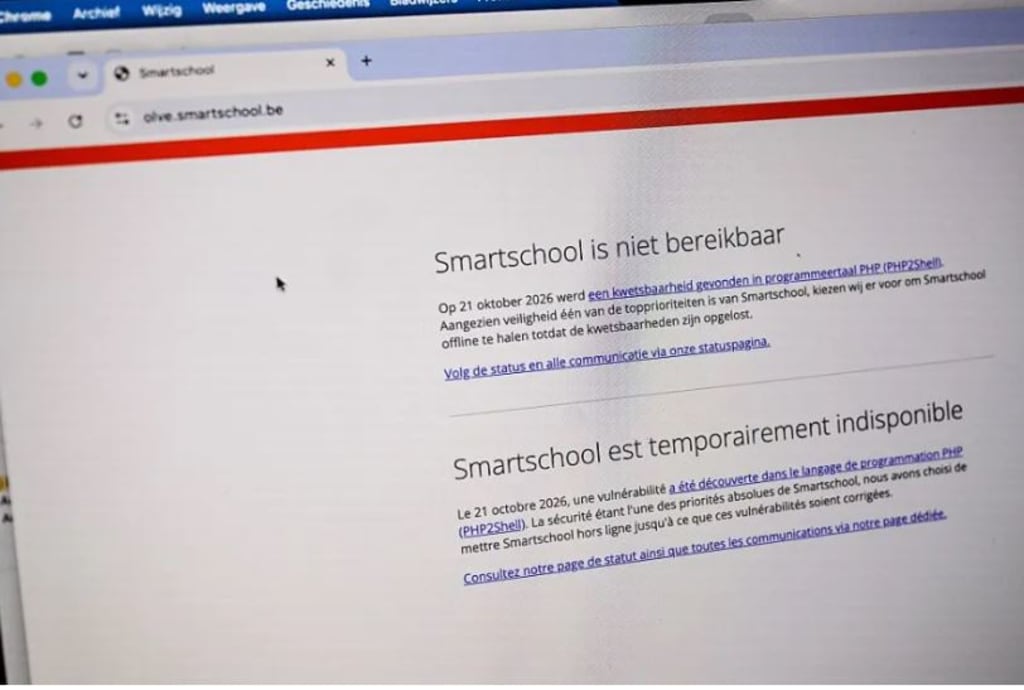
For a few tense hours on Wednesday, October 21, the global internet faced one of the most serious threats in its history. Two long-dormant vulnerabilities in PHP, the ubiquitous, decades-old programming language that powers roughly 70% of all websites, were publicly disclosed. Dubbed PHP2Shell and assigned the identifiers CVE-2026-109618 and CVE-2026-109619, these flaws could allow attackers to seize full control of unpatched servers remotely, without a password or any user interaction. Banks, hospitals, retailers, and government agencies rushed to take systems offline and apply fixes. Thanks to coordinated industry action, mass catastrophe was averted, but the danger is far from over, and the incident exposes deep, systemic risks buried in the internet’s foundational code.
A Quiet Crisis Unfolds
The crisis began not with an attack, but with an audit. Security researchers at Calif discovered the bugs during a code review conducted as part of an initiative backed by OpenAI and cloud security firm Wiz. The flaws had existed for years, having been identified in an earlier audit by the Open Source Technology Improvement Fund but dismissed as unexploitable at the time. Recent breakthroughs changed that: researchers found a reliable method to weaponise them, turning dormant weaknesses into fully functional exploits. Under strict embargo, the PHP Foundation prepared patches while sharing advance details with major cloud providers and internet companies to give them a head start on securing their systems.
Even before the official release, however, there were warning signs. Amazon’s threat intelligence team detected suspicious activity consistent with exploitation as early as October 17, four days before the scheduled disclosure. By the end of the week, confirmed compromises were appearing in the wild, and Cloudflare reported an exponential surge in exploit attempts. The scramble to patch had become a race against attackers.
The Scope of the Threat
What made PHP2Shell uniquely terrifying was its simplicity and reach:
Unauthenticated remote code execution: no account, no password, no user action required. Just send a specially crafted request, and the system is yours.
Universal applicability: PHP runs on servers, routers, storage devices, firewalls, and embedded systems, not just websites.
Massive footprint: WordPress, Drupal, Joomla, MediaWiki, and millions of custom-built platforms all depend on it. An estimated 70% of web-facing sites rely on PHP in some form.
This was not a niche problem affecting one platform or one vendor; it was a flaw in the bedrock of the web. A successful exploit could install malware, steal data, or establish persistent access for later return, all while remaining invisible to ordinary users.
From Discovery to Disclosure
The process moved with unusual speed and secrecy. Once the bugs were confirmed exploitable, coordination began across cloud providers, hosting companies, and security teams. Patches were finalised and held under strict confidentiality. In the final hours, the PHP Foundation released fixes slightly ahead of schedule, a precaution that may have limited exposure but could also have tipped off watchful adversaries scanning the open-source code repository for changes.
Public agencies, including CISA, issued urgent alerts. Organisations large and small took sites offline: educational platforms, healthcare providers, financial institutions, and government portals all paused services to apply updates. It was an unprecedented show of collective action and a reminder of how fragile our shared infrastructure can be.
Early Exploitation and Escalating Risk
Despite these efforts, not everyone has caught up. Many smaller businesses, legacy systems, and under-resourced IT teams remain unpatched. The situation is evolving:
Proof-of-concept code has circulated, lowering the barrier for less sophisticated actors.
Compromise activity has been confirmed by multiple cybersecurity firms, including Palo Alto Networks’ Unit 42.
PHP is embedded not just in web servers but in countless appliances and third-party products, meaning patching will unfold in waves over months or years.
Attackers are refining their methods, making detection harder and faster.
The incident has laid bare a structural vulnerability at the internet’s core: much of what keeps the web running is aging, open-source, and under-resourced. PHP, like other foundational technologies, is maintained largely by volunteers who cannot afford continuous, comprehensive auditing, yet it is trusted by the largest companies and governments on Earth. Compounding this, PHP belongs to a category of “memory-unsafe” languages responsible for roughly two-thirds of all critical vulnerabilities, according to the U.S. National Security Agency.
At the same time, AI tools are accelerating the pace at which such flaws are found and weaponised. While Calif noted that human expertise remains essential, “No model is simply capable of unearthing ‘all bugs’ with simple prompts,” AI is making analysis faster and more accessible. The result: vulnerabilities will be discovered more often, and the window between disclosure and mass exploitation will shrink.
The Future: Legacy Code in an AI Era
PHP2Shell is unlikely to be the last such event. It joins a grim roll call: Mirai in 2016, WannaCry in 2017, the CrowdStrike outage in 2024, each exposing how a single layer of the digital stack can threaten the whole system. The path forward involves:
Migration toward memory-safe languages such as Rust, Python, and Swift, which eliminate entire classes of flaws.
Sustained funding for critical open-source projects so they can support robust security practices.
Faster, more automated patching pipelines that reduce the time systems remain vulnerable.
Preparedness for an AI-augmented threat landscape, where discovery and deployment of exploits happen at machine speed.
Lessons Learned
For now, the internet has dodged catastrophe, but only just. The fact that mass exploitation has not yet materialised offers breathing room, not complacency. Systems still running unpatched versions remain at severe risk, and the full ripple effects will unfold over months.
The real lesson of PHP2Shell is clear: we cannot build a secure future on an aging foundation. The work of securing the web happens not just in data centres or boardrooms, but in the quiet maintenance of code written years ago and in choosing to build tomorrow’s tools on safer ground. For every administrator still applying updates and every developer weighing which language to learn next, the message is the same: the next crisis is already waiting to be found. Let’s be ready.
About the Creator
Mark Lim
Hi I am mark an automotive student and a car, tech and food enthusiast ! Im gonna try and post daily & hope you enjoy what I write and do share my page with people you know. I would gladly appreciate it! Cheers
Enjoyed the story? Support the Creator.
Subscribe for free to receive all their stories in your feed.
Comments
There are no comments for this story
Be the first to respond and start the conversation.