
Pangu Isn’t Trash. It’s Just Playing a Different Game.
Huawei’s model loses on leaderboards. That was never the scoreboard it was built for.
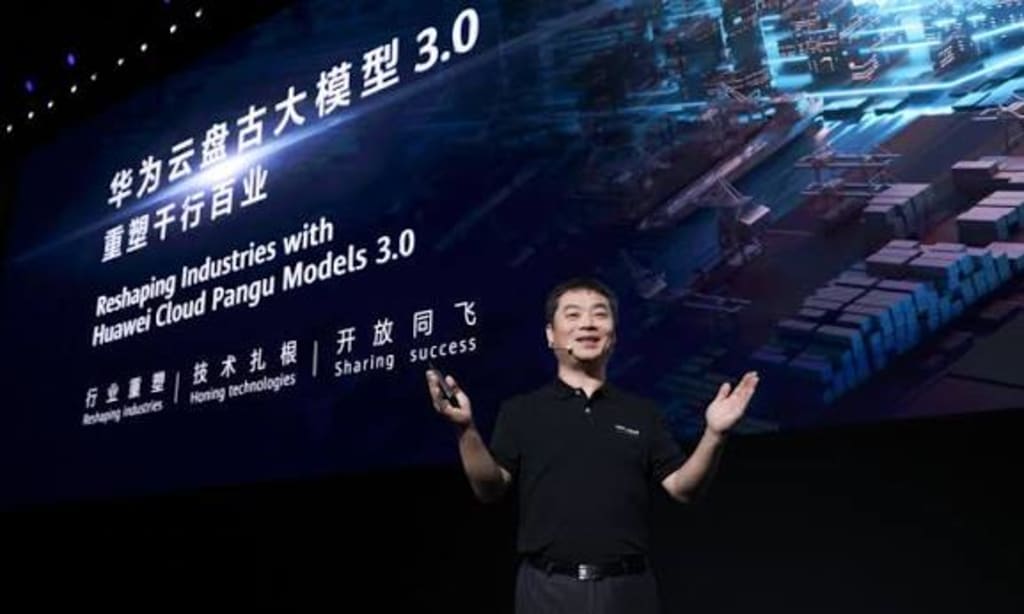
Start with the uncomfortable part: if you judge Pangu by chat quality and benchmark scores, it does not look good next to the first tier. That judgment is correct. It is also only half the story.
1. The criticism has evidence behind it
Community complaints are not invented. Some users say Pangu’s NLP models “have always been bad,” and that early experiences were full of “random nonsense.” In public benchmark comparisons, Pangu 2.0-Pro scored 87.9 on GPQA-Diamond. Kimi K3 scored 93.5. GLM-5.2 scored 91.2. On BrowseComp, Pangu scored 65.7 while Kimi K3 reached 91.2. Against small Qwen models that run on consumer GPUs, Pangu also struggles on cost and ease of use.
The timeline makes the gap harder to ignore. Pangu started in 2020, which made Huawei one of the earliest large-model players in China. During the years when DeepSeek and Qwen used open source to build developer communities, Pangu stayed closed and SaaS-only. By the time it opened up, competitors had already built moats with free access, commercial licenses, and active communities. When critics say Pangu “wastes GPUs” and that “the cards should have gone to DeepSeek,” they are making a simple resource argument: domestic compute is scarce, so use it where it pays off.
That argument deserves a serious answer. But it splits into two questions. How good is Pangu as a model product? And what job does Pangu do inside Huawei?
2. Most people skip the sentence that explains the job
When Huawei open-sourced Pangu’s code, it said openPangu is meant to give the industry a working reference for using Ascend, through Ascend-native training and inference.
That sentence gets lost in leaderboard chatter. It should not. It explains the technical choices behind Pangu. The label that matters most for Pangu Ultra MoE, a 718 billion parameter model, is not its rank on some public chart. The label that matters is this: it was trained end to end on Ascend AI computing platforms. Pretraining, SFT, and RL all ran on Ascend. The code is open.
Every score Pangu posts is also evidence about Ascend hardware. A customer thinking about buying an Ascend cluster asks one direct question: if I buy your cards, what kind of model can I train? Pangu is one answer. It does not have to be the best model in the world. It has to be a model trained from scratch on Ascend that can compete. That threshold is different from the threshold a chat product manager uses for “easy to use.”
Nvidia’s Nemotron open models follow a similar logic. Nvidia did not release them to beat GPT on Chatbot Arena. It released them to show customers what their stack can train. Pangu plays that role for Ascend.
3. “Give the cards to DeepSeek” misses one cost
The criticism that the cards should have gone to DeepSeek assumes one kind of return: the same compute should produce the strongest model. That logic works inside a model race. It ignores what Huawei was buying.
DeepSeek used compute to push model capability forward. That work matters. It lowered costs for the whole industry. Huawei used compute to validate Ascend. If Ascend cannot prove it can train large models, China’s AI industry still depends on someone else’s compute stack. A CUDA moat does not disappear because one model gets stronger. You need a closed loop across hardware, framework, model, and toolchain. Pangu is the model link in that loop.
Early Pangu work on Ascend did waste compute in places. Reports about tokenizer inefficiency and similar problems are fair targets for criticism. But calling the act of training large models on Ascend waste is different. That argument asks Huawei to stop validating its own compute base. You cannot settle that account with a leaderboard.
Ascend also sells well. Pangu works like a manual for the shovel. Its value does not show up as direct revenue. It shows up by making the shovel easier to sell and easier to use. An open, end-to-end Ascend training example is useful to developers and enterprise buyers.
4. It is not trash. It is not first tier either
Return to the first question. If you look only at chat quality and benchmark scores, Pangu has not proved itself as a competitive model product against DeepSeek, Kimi, GLM, and Qwen. Huawei’s return on that battlefield does not look good. Critics can demand better. They can also ask whether the window for switching from closed to open source has already closed.
But Pangu’s first job was never to win a leaderboard. Its job is closer to a native reference implementation for Ascend. It proves a domestic compute platform can train a near-trillion-parameter MoE from scratch. It opens the full process so later teams can avoid detours. It gives Ascend a public answer to the usability question. As long as Huawei keeps pushing Ascend, someone has to do that job.
So the fair judgment is narrower. Pangu faces competitive pressure as a model product. Its strategic value as an ecosystem test bed explains why Huawei keeps paying for it. It may never be the best model. In the Ascend story, it is a necessary piece. Whether that piece ever turns into a top-tier model product is a separate question, and the answer is not in yet. For now, “roadside trash” closes the book too early.
About the Creator
Jin
Writer of reamstories
https://reamstories.com/jin
Enjoyed the story? Support the Creator.
Subscribe for free to receive all their stories in your feed. You could also become a paid subscriber, letting them know you appreciate their work.
Comments
There are no comments for this story
Be the first to respond and start the conversation.