
Outdoor Wood Burner to Heat House
Is It Right for You?

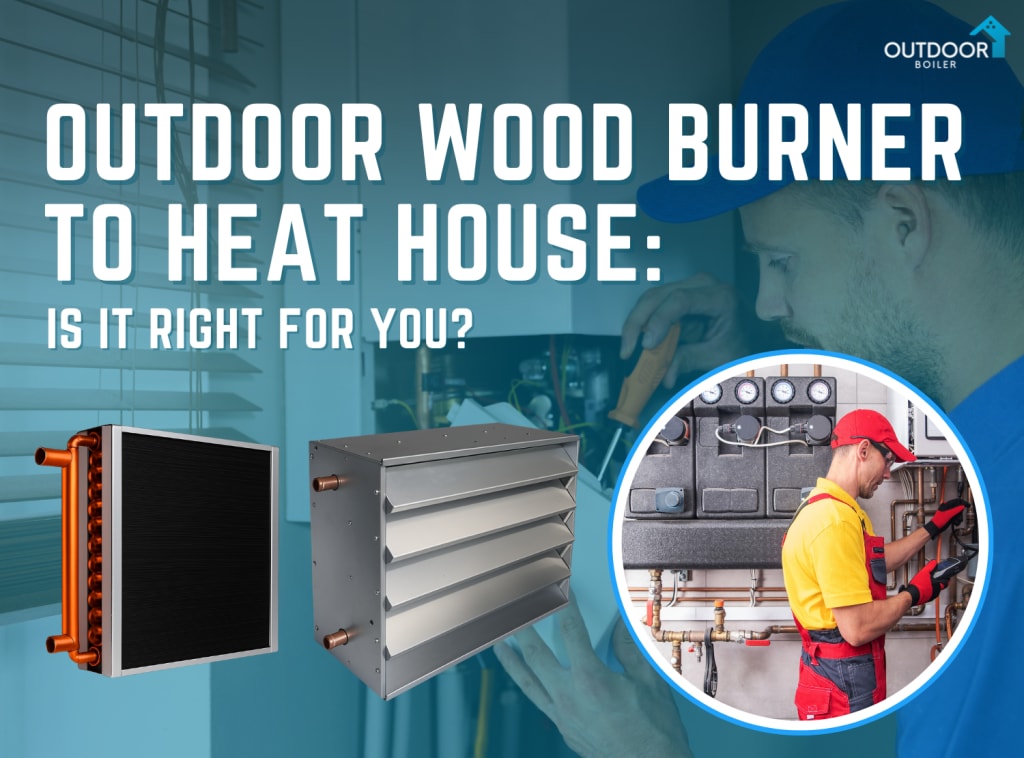
Sick of seeing your heating bills soar each winter and dreaming about a more sustainable method for heating your home? The siren song of a crackling wood fire and the prospect of energy independence can be powerful. Enter the outdoor wood burner (OWB), a system that delivers heat to your home by burning wood in a unit located outside and then transferring that heat inside. These systems provide a new solution for heating one’s home, but any major investment is something on which to be careful and deliberate.
Which leads us to the question: would an outdoor wood burner to heat house work for your home and lifestyle? In this blog post, we explore the cost savings of these systems, the ability to go smaller and off-grid, and other benefits offered by this technology. Yet we’ll also examine the realities and potential downsides, from upfront costs and maintenance demands to environmental considerations. Through these factors and essential self-assessment questions, our focus is to help you sift through whether the warmth and autonomy of an outdoor wood stove best reaffirm your unique circumstances.
The “Pros” of Outdoor Wood Burners
There are quite a few compelling reasons that attract homeowners seeking alternative heating solutions to outdoor wood burners:
Efficiency and Cost Savings: One of the main attractions of OWBs is their ability to save on heating costs dramatically. If you have a sustainable and affordable source of wood available to you, wood can be one of the cheapest fuels around, far less than oil, propane, or even electricity. And, because you pine for your wood heat and transfer all the sorted wood-fuel category heat into your home to burn efficiently outdoors, you cut down on these often dancing products once again, leading to lower bills monthly and the whole destruction of financial pain associated with your home comfort.
Off-Grid Potential/Reduced Reliance: For individuals desiring increased autonomy or residing in regions vulnerable to power disruptions, OWBs provide a useful level of self-reliance. From a little demand of utility companies and their infrastructure, because wood is their primary fuel. This can be especially attractive in rural locations or for those who value resilience and being able to heat a home even when the grid is down. If you cut and split your firewood, that can enhance this independence, but you have to be committed to putting in the time and effort required.
Less Indoor Mess: One of the most significant benefits of owning an outdoor wood burner is the lack of mess that comes along with an indoor wood stove or fireplace. It leaves smoke, ash, and wood debris outside and makes your living space cleaner and more habitable indoors. This is a big advantage for those who like to keep a clean home and avoid the never-ending cleaning that must take place in conjunction with heating your home with an indoor wood heating appliance.
Heating Multiple Buildings: Many OWB units are built with the ability to heat more than your primary residence. With good installation practice and insulated underground lines, you can extend the heat into detached garages, workshops, greenhouses, or even pools. This versatility means OWBs can be an attractive solution for property owners who have multiple structures they’d like to keep warm, providing the ability to consolidate systems and further maximize efficiency.
Environmental Considerations (Potential): To be fair, it is a scene more intricate; again, timber can be treated as an occasional turning point, being an inexhaustible source, as long as it comes from enduring forests. This makes burning wood considered carbon neutral over long periods because the carbon released when wood combusts is roughly equal to the amount of carbon absorbed while the tree was alive. But it is important to highlight this “potential.” The environmental advantages are stringent on using responsible wood harvesting, the OWB model efficiency, and burning techniques to limit smoke and particulate emissions. EPA-certified recent versions are crucial to maximizing the environmental benefits.
The “Cons” of Outdoor Wood Burners
Although the benefits of outdoor wood burners may be enticing, it is important to evaluate the significant realities and potential disadvantages of these systems:
Initial Investment Cost: The cost of purchasing and installing an outdoor wood burner can be high. That is for the unit itself, which can cost anywhere from several thousand to tens of thousands of dollars based on size, features, brand, etc. Installation costs can also be quite significant, you will need a base put down for your ground array to sit on top of, insulated underground lines to your home, connection to your existing heating system (or new heat exchanger), and possibly electrical work. The upfront financial investment is a significant consideration and must be budgeted for accordingly.
Maintenance and Labor: An OWB is not a set-it-and-forget-it heating option. It requires maintenance from time to time, as well as a pronunciation-intensive time and labor cost. This includes the ongoing work of securing firewood, which may mean cutting, splitting, and stacking wood — labor-intensive work. Throughout the heating season, the firebox must be loaded regularly. In addition, it is also necessary to periodically remove ash from the unit for it to work efficiently and avoid damage. The awfulness of these tasks is highly time-consuming and physically arduous requiring only the need for the homeowner's commitment and physical capability.
For maintenance, you can check out the Outdoor Boiler Cleaning Supplies and Tools.
Space Requirements: Outdoor wood burners need a lot of outdoor space. You will need a proper space for the unit itself, keeping it a safe distance from buildings and other combustible materials as specified by the manufacturer and local rules. You will also need a good amount of space for storing plenty of firewood, preferably out of the rain, so that you have dry wood, ready for use. The footprint of the OWB and wood storage will take up considerable space that must be included in your property plan.
Environmental Concerns (Potential Drawbacks): Even though wood can be renewable, the use of outdoor wood burners can have potential social consequences if not properly managed. Older or inefficient models can generate heavy smoke and particulate matter that pollutes the air and can affect your health and that of your neighborhood. Renewed logic applies to newer, more efficient EPA-certified models, although proper burning habits (seasoned wood, too), adequate airflow, and all are vital to emissions reduction. It’s also useful to consider any neighborhood smoke etiquette.
Regulations and Permits: You must research the ordinances and regulations before you even think about an OWB. Many municipalities have local rules in place concerning the placement and use of outdoor wood burners, which may include such things as how far the burner must be from the property line and other buildings, how high the chimney can be, and even bans in certain areas due to air quality concerns. Failure to comply can lead to fines or the ordered removal of your unit. This is the most important step in the process; you need to get the required permits before installation.
Heat Loss and Efficiency Considerations: OWBs can be efficient wood-burning systems, but heat can be lost as hot water or air travels from an outdoor unit to your home through underground lines. The type of insulation used on these lines is very important to mitigate the loss. In addition to the above, the overall efficiency of the system depends on the model of OWB, the quality of the wood that is being burned, and proper maintenance of the unit. Inefficient operation can also counteract some of the potential cost savings and environmental benefits.
Key Considerations: Is an OWB Right for You?
Whether an outdoor wood burner is the right heating solution for you is a question that requires you to take a long, hard look in the mirror and assess your situation. Ask yourself the following questions to help guide your decision:
Your Climate and Heating Needs: How cold does your wintertime get, typically, and for how many hours? How big is your home, and how well insulated is it? Homes in extremely cold climates or larger, poorly insulated homes will need a more powerful OWB and more wood usage, affecting cost and labor. Evaluate your average heating fuel usage and decide whether an OWB will realistically fulfill those needs.
Your Budget: Apart from the chance for a hefty initial price on the unit and installation, have you budgeted for upkeep? And even if you can get your hands on some "free" wood, think of the cost of equipment (such as a chainsaw, splitter, truck/trailer), the fuel for that equipment, and the value of your time spent sourcing and processing the wood. Will the long-term fuel cost savings compensate for this upfront and indirect expense over time in a reasonable timeframe for you?
Your Physical Capabilities and Time Commitment: Are you ready for the physically demanding job of owning an OWB? This involves frequent lifting and moving of heavy logs, splitting wood (if required), loading the firebox several times a day during colder spans, and constantly removing ash. Committing the time needed for these things is all of your free time in your schedule for the heating season. Have a reasonable perspective on your capabilities and how much time you can dedicate.
Your Property Size and Layout: Do you have enough outdoor space not just for the OWB unit itself and the required clearances, but for storing a large amount of firewood? Think about access for wood delivery, or your own wood-gathering expeditions. Does it allow you to run insulated lines to your home with relative ease and without too much added heat loss?
Local Regulations and Neighbors: Have you researched local laws and permit needs for outdoor wood burners? Are they even legal where you live? In addition, think of your neighbors and how smoke might affect them. Some smoke is unavoidable even with efficient models and proper burning. Have you thought about the impact all this will then have on your interactions with that resident in the area?
Your Environmental Priorities: How much does caring about the environment matter to you? Do you pledge to source your wood responsibly, by either harvesting it on your land or buying from reputable suppliers? Would you be willing to purchase a new, more efficient EPA-certified OWB model and regularly burn properly to minimize emissions? If environmental impact is an important factor, consider the potential cons versus the pros.
Conclusion
To sum up, outdoor wood burners can be an attractive option for heating your home due to their potential for lower costs, increased energy independence, and less mess to clean up in your home. They can be especially attractive for people with access to cheap wood and the need to provide heat to multiple buildings. That said, this attractiveness has to be weighed with the very high initial capital investments, the recurring maintenance and operational efforts, considerable space requirements, inherent environmental issues if not managed properly, and the absolute necessity of complying with local regulations.
Ultimately, deciding if an outdoor wood burner is right for you is very much a personal decision. OWBs can work as an ideal heating option for anyone with the means, physical capability, and real estate capacity to be an efficient and manageable setup, as well as for those wishing to achieve energy independence and possibly lower-cost, long-term fuel. But it’s really important to weigh the pros and cons carefully in the context of your particular climate, your budget, your lifestyle, and your environmental values. We recommend you do your research regarding local codes, various OWB styles, and even ask local owners in your area before committing. This guide will allow you to make an intelligent decision about what will give you the best chance of a comfortable and sustainable deal on heating in the future.
FAQs
How does an outdoor wood burner heat a house?
Inside that, heat converts wood into syngas, a hydrogen- and carbon-rich gas, which is combusted to heat water. The hot water is sent to exchange units throughout your house to provide heat whenever and wherever you need it.
Can you use a wood-burning stove to heat a house?
Yes, you can heat your home with wood — wood stoves, fireplaces, or wood furnaces. Wood: Low-cost or free wood can be an efficient, renewable home-heating option. Install and maintain your heating system correctly to maintain maximum safety and efficiency.
Can a wood-burning insert heat a house?
A wood-burning fireplace can heat a whole house, but it may not be to the liking of a lot of folks. You have to give it quite a bit of thought. Cannot simply set the thermostat and forget it. It helps that it’s got a good home layout for it, and you give some thought to the airflow.
Can I put a wood burner outside?
For burning wood on any outdoor log burner, you must buy a DEFRA-approved multi-fuel stove. Some rules address what fuel you can burn and how often it may be burned. You might also have to make sure you live in a smoke control area.
About the Creator
Genesa Pable
Voice That Connects, Words That Resonate
I'm Genesa Mae—a voice that connects and a tone that resonates. From heartfelt to high-energy, I bring words to life with clarity, warmth, and impact. Let’s make your message unforgettable.
Enjoyed the story? Support the Creator.
Subscribe for free to receive all their stories in your feed.
Comments
There are no comments for this story
Be the first to respond and start the conversation.