
Outdoor LED Lighting Is Illuminating the Future of Smart and Sustainable Cities
Energy Efficiency, Smart Infrastructure, and Urban Development Are Driving Unprecedented Growth in the Global Outdoor LED Lighting Market

The transformation of modern cities is increasingly visible after sunset. Streets are brighter, public spaces feel safer, highways are more efficient, and architectural landmarks are becoming visually striking through advanced lighting technologies. At the center of this transformation is outdoor LED lighting, a technology that is rapidly replacing conventional lighting systems worldwide.
As governments and businesses seek solutions that reduce energy consumption while improving performance, LED lighting has emerged as one of the most impactful innovations in the infrastructure sector. Unlike traditional incandescent and fluorescent lighting systems, LEDs consume significantly less electricity, last substantially longer, and require minimal maintenance. These advantages are making them the preferred choice for municipalities, commercial developers, and urban planners around the globe.
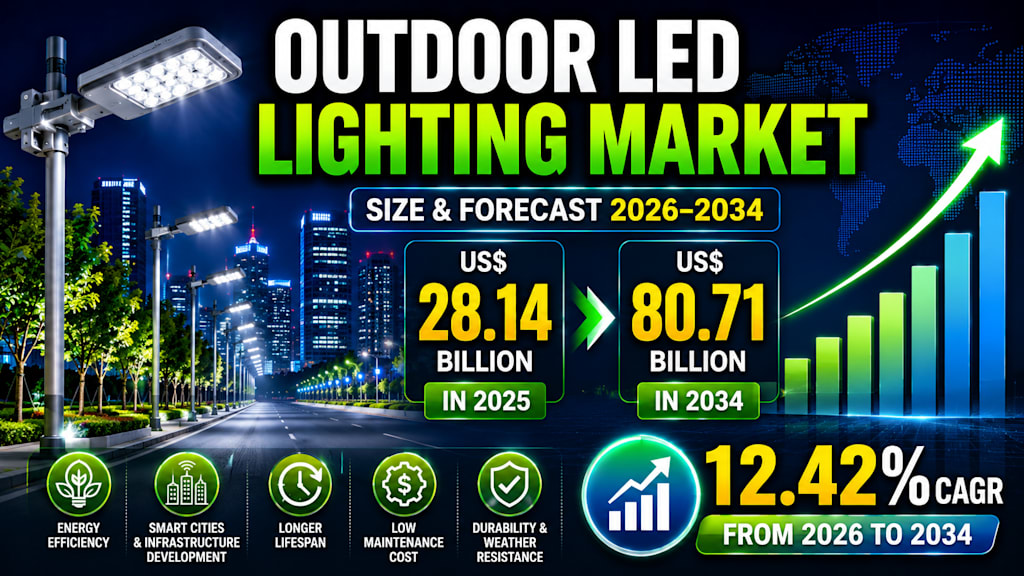
According to Renub Research, the global Outdoor LED Lighting Market is expected to increase from US$ 28.14 billion in 2025 to US$ 80.71 billion by 2034, registering an impressive compound annual growth rate (CAGR) of 12.42% from 2026 to 2034. The market's strong growth is driven by increasing demand for energy-efficient products, smart city development, infrastructure modernization, and continuous improvements in LED technology.
The rapid expansion of outdoor LED lighting demonstrates how cities and communities are embracing sustainable solutions that improve quality of life while reducing long-term operating costs.
Why Outdoor LED Lighting Has Become a Global Priority
Outdoor lighting plays a crucial role in modern society. It enhances visibility, improves road safety, supports economic activity, and contributes to public security. Whether installed along highways, in parks, around commercial buildings, or within residential communities, lighting is essential to the functioning of urban environments.
Historically, outdoor lighting systems relied heavily on incandescent, fluorescent, and high-pressure sodium lamps. While effective, these technologies consume large amounts of electricity and require frequent replacement. Rising energy costs and growing environmental concerns have prompted governments and organizations to search for more sustainable alternatives.
LED technology has emerged as the ideal solution because it addresses many of the shortcomings associated with traditional lighting systems. LEDs offer superior brightness, longer operational lifespans, and significantly lower energy consumption. Their durability also allows them to perform effectively in harsh weather conditions, making them highly suitable for outdoor applications.
As sustainability becomes a global priority, the transition toward LED lighting continues to accelerate.
Energy Efficiency Is Driving Massive Adoption
One of the primary reasons behind the rapid growth of outdoor LED lighting is its remarkable energy efficiency.
Compared with conventional lighting technologies, LEDs consume significantly less electricity while delivering equal or greater illumination. This reduction in power consumption translates into substantial cost savings for municipalities, businesses, and property owners.
Governments worldwide are actively encouraging the adoption of energy-efficient technologies through regulations, incentives, and infrastructure programs. Many cities have already replaced traditional streetlights with LED alternatives as part of broader sustainability initiatives.
The environmental benefits are equally important. Lower energy consumption reduces carbon emissions and supports national and international climate goals. As countries work toward reducing their environmental footprint, LED lighting has become an essential component of sustainable development strategies.
Organizations also appreciate the long lifespan of LED products. Some modern LED solutions can operate for tens of thousands of hours before requiring replacement, significantly reducing maintenance expenses.
This combination of economic and environmental benefits continues to fuel market growth across both developed and emerging economies.
Smart Cities Are Creating New Opportunities
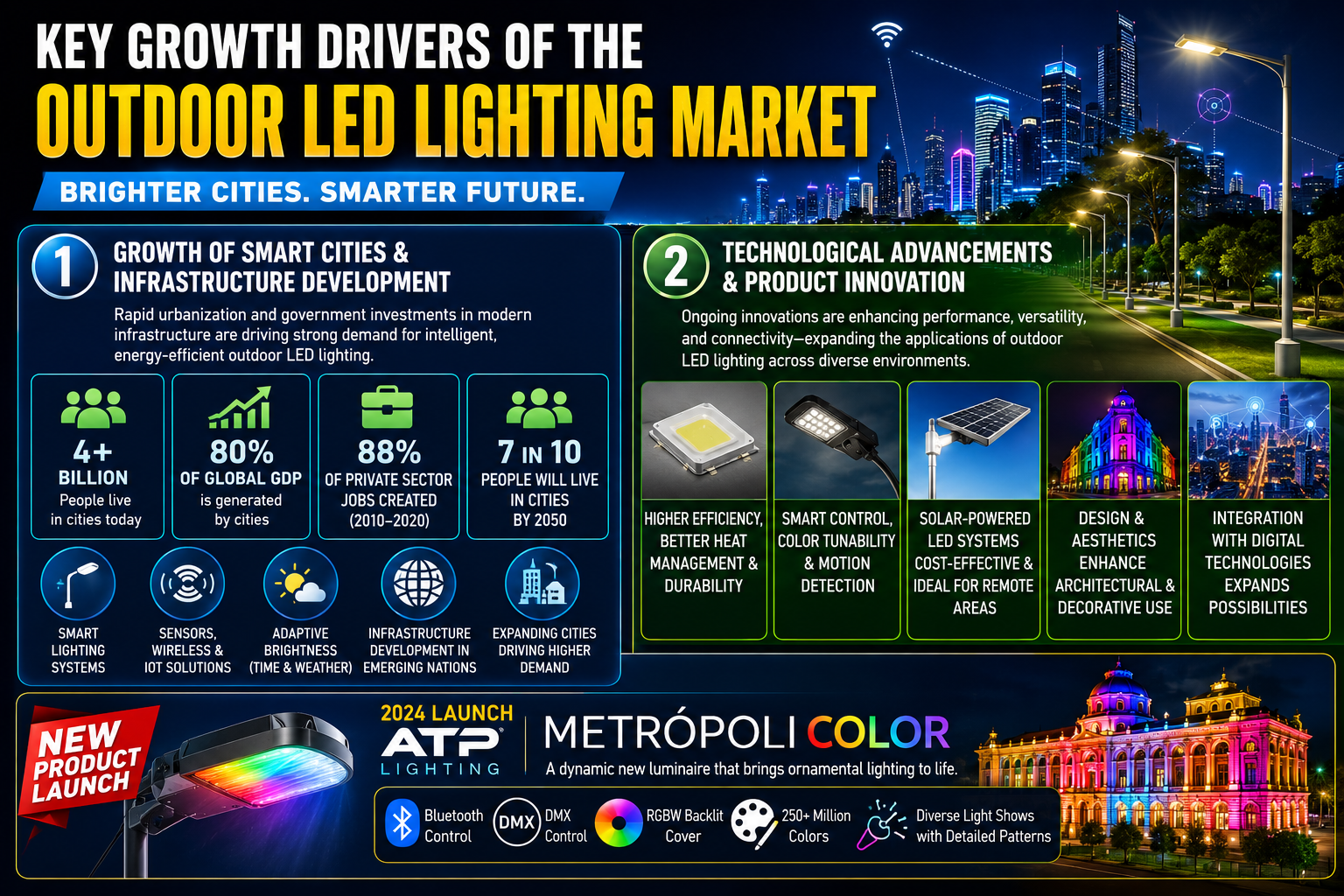
The rise of smart city initiatives represents another powerful growth driver for the outdoor LED lighting market.
Cities around the world are investing heavily in intelligent infrastructure designed to improve efficiency, sustainability, and quality of life. Smart lighting systems have become a fundamental element of these initiatives.
Unlike traditional lighting systems, smart LED networks can communicate through sensors, wireless networks, and Internet of Things (IoT) technologies. These systems can automatically adjust brightness levels based on traffic conditions, weather patterns, pedestrian activity, and time of day.
This capability allows cities to optimize energy usage while maintaining public safety and visibility.
Smart lighting systems also provide valuable operational data that helps municipalities monitor infrastructure performance, detect faults, and schedule maintenance more effectively.
As urban populations continue to grow, the demand for intelligent lighting solutions is expected to increase dramatically.
Technological Innovation Is Expanding Possibilities
Innovation continues to play a crucial role in the development of the outdoor LED lighting industry.
Manufacturers are introducing increasingly sophisticated products featuring improved luminous efficiency, enhanced durability, advanced heat management systems, and customizable lighting controls.
Modern LED systems can now support color-changing capabilities, motion detection, remote management, and programmable lighting schedules. These features enable municipalities and businesses to create more dynamic and responsive environments.
Solar-powered LED lighting is also gaining popularity, particularly in remote regions where traditional electrical infrastructure may be limited. These systems combine renewable energy generation with efficient lighting technology, creating highly sustainable solutions.
Architectural lighting applications have benefited significantly from these innovations. Buildings, monuments, bridges, and public landmarks increasingly utilize LED systems to create visually appealing nighttime environments that support tourism and cultural identity.
The continued evolution of LED technology is expected to unlock even more opportunities in the years ahead.
Public Spaces Are Benefiting From Advanced Lighting Solutions
Public spaces are among the largest users of outdoor LED lighting systems.
Parks, plazas, transportation hubs, airports, railway stations, and recreational areas all depend on reliable lighting to ensure safety and accessibility. LED technology provides an ideal solution due to its efficiency, durability, and performance.
Modern LED systems can improve visibility while minimizing energy consumption. Intelligent lighting controls further enhance efficiency by adjusting illumination based on occupancy and environmental conditions.
In addition to functionality, lighting aesthetics have become increasingly important. Attractive lighting designs can enhance the visual appeal of public spaces, encourage tourism, and create more welcoming urban environments.
As governments continue investing in urban development and public infrastructure, demand within this segment is expected to remain strong.
Roadway Lighting Remains a Key Market Segment
Roadway lighting represents one of the most important applications for outdoor LED technology.
Streetlights and highway illumination systems are essential for road safety, particularly during nighttime hours. LED lighting provides superior brightness and visibility compared to many traditional alternatives.
Improved illumination helps reduce accidents, enhances driver confidence, and supports safer transportation networks.
Many governments are actively replacing conventional roadway lighting systems with LED solutions as part of broader modernization programs. Smart roadway lighting systems can also adapt to traffic conditions, reducing unnecessary energy consumption during low-traffic periods.
As transportation infrastructure continues to expand globally, roadway lighting will remain a major contributor to market growth.
Final Thoughts
Outdoor LED lighting is transforming the way cities, businesses, and communities illuminate their environments. What began as an energy-saving alternative has evolved into a sophisticated technology platform supporting smart cities, sustainable development, public safety, and architectural innovation.
According to Renub Research, the Outdoor LED Lighting Market is projected to grow from US$ 28.14 billion in 2025 to US$ 80.71 billion by 2034, reflecting strong global demand and significant investment in modern infrastructure.
As urbanization accelerates and sustainability becomes a global priority, outdoor LED lighting will continue playing a vital role in shaping smarter, safer, and more energy-efficient communities. The future of illumination is no longer simply about brightness—it is about intelligence, efficiency, and creating better environments for generations to come.
About the Creator
Enjoyed the story? Support the Creator.
Subscribe for free to receive all their stories in your feed.
Comments
There are no comments for this story
Be the first to respond and start the conversation.