
OpenAI Just Offered to Give Away 5% of Itself to Keep the Government Happy
Sam Altman is proposing a donation to a U.S. sovereign wealth fund. It's not charity. It's the most expensive insurance policy in tech history. And it might actually be a smart move.

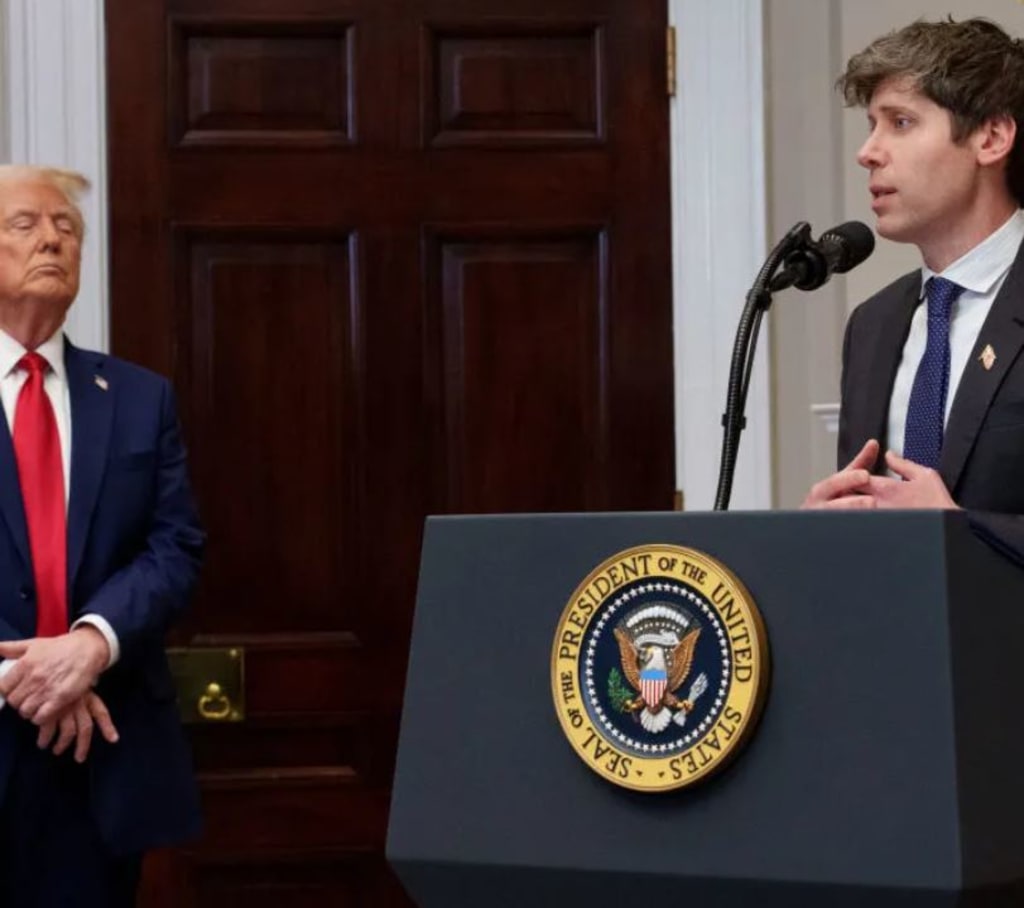
Sam Altman just did something that sounds generous until you actually think about it.
OpenAI is proposing to donate 5% of its equity to a U.S. sovereign wealth fund. Other AI companies would do the same. The idea is to "secure good relations with the administration and address political blowback."
Translation: OpenAI is betting that giving away a slice of itself is cheaper than fighting Congress.
And they're probably right.
The Political Calculation (And Why It's Necessary)
Let's be clear about what's actually happening here: this is corporate appeasement dressed up as public benefit.
OpenAI is worth somewhere in the tens of billions of dollars (the exact number is murky because they're still private, but estimates put it at $80-100 billion). Giving away 5% is worth billions of dollars.
That's a lot of money to just hand over. Why would they do it?
Because Congress is angry. Because regulators are skeptical. Because the Trump administration is making noise about AI policy. Because the public is nervous about who controls the most powerful AI systems in the world.
In other words, OpenAI is getting squeezed. Not legally, not yet. But politically. And they're smart enough to know that when politicians start looking at you, it's cheaper to give them something than to fight them.
So Sam Altman went to the Trump administration and essentially said: "What if we gave some of our value to the American people? That way, everyone wins."
The History (How We Got Here)
This isn't a new idea. Back in June, CNBC reported that Altman was already having discussions with the Trump administration about giving equity stakes to the American public. Trump confirmed those talks, saying he'd discussed "concepts where pieces could be given to the American public, where the American public essentially becomes a partner with the companies."
So this has been in development for months. The 5% number is just the first concrete proposal.
OpenAI has been getting increasingly specific about what a "public AI fund" would look like. In April, they released a policy paper called "Industrial Policy for the Intelligence Age" that proposed how a public wealth fund could work.
The idea: the government takes equity from AI companies. The fund invests it. The returns get distributed to citizens. Everyone participates in AI's upside.
Sounds nice. And on a philosophical level, it kind of makes sense. AI is being built with taxpayer-funded research, on taxpayer-funded electricity infrastructure, in a society with taxpayer-funded education that trained the engineers. Why shouldn't the public share in the gains?
The Bernie Sanders Version (How Aggressive This Could Get)
Then Bernie Sanders showed up with a much more aggressive proposal.
The American AI Sovereign Wealth Fund Act would impose a one-time 50% tax on AI company stock. All the shares get put into a public wealth fund. The returns get distributed to citizens.
That's not a donation. That's expropriation with a friendly name.
Sanders' bill applies to "systemically important" AI companies, basically OpenAI, Google's AI division, and anyone else in the AI infrastructure space. Companies like Google that do AI as part of a bigger business would be allowed to spin off their AI division to avoid the tax.
It's aggressive. It's politically unlikely to pass. But it's on the table.
Which means Altman's 5% proposal is actually a preemptive strike. By offering 5% voluntarily, he's trying to head off a scenario where Congress forces him to give away 50%.
It's classic regulatory judo: give a little before they take a lot.
Why This Actually Might Work
Here's what's brilliant about Altman's strategy:
It makes him look like the reasonable guy. OpenAI is voluntarily sharing its wealth with the public. Meanwhile, Bernie Sanders is asking for confiscatory taxation. Politicians can point to OpenAI's proposal and say, "See, we don't need Sanders' aggressive approach; companies will do this voluntarily."
OpenAI gets political cover. The Trump administration gets to look like they're representing "the people." Citizens get some theoretical participation in AI's upside. And Altman keeps control of OpenAI while looking generous.
It's a win-win-win.
Except for one thing: this still requires congressional approval. Which means it has to survive political scrutiny, legal challenges, and the inevitable debates about how the fund would actually work.
The proposal is preliminary. The details are fuzzy. And there's a big difference between "we're proposing this" and "Congress is actually going to approve this."
The Unspoken Part (What This Really Reveals)
What's actually happening here is that OpenAI is acknowledging something they've been dancing around for years:
They control one of the most powerful AI systems in the world. They've made enormous amounts of money. The public had no say in how that happened. And now there's political pressure to share the gains.
Instead of fighting that pressure (which would be legally risky and politically unpopular), Altman is trying to negotiate. To set the terms. To make the public wealth-sharing scenario on OpenAI's terms rather than Congress's.
It's smart. It's also revealing about how much political pressure OpenAI is actually under.
You don't offer to give away billions in equity unless you're worried about something much worse happening.
The Reality Check
Here's what probably happens:
OpenAI's 5% proposal gets introduced. It generates headlines about how generous the company is. Bernie Sanders points out it's not aggressive enough. The Trump administration either accepts it as a win or pushes for more. Congress debates it. Lawyers get involved. Some version of a public AI fund gets created, but with tons of caveats and limits.
By the time it's actually implemented, it's probably a much smaller deal than anyone expected. But OpenAI has bought itself political credibility and probably headed off worse outcomes.
Is it fair? Not really. OpenAI shouldn't need to buy political goodwill by giving away equity. But that's the world we live in.
And from Altman's perspective, 5% of a company he controls is a small price to pay for stability and regulatory certainty.
Sam Altman proposed donating 5% of OpenAI's equity to a U.S. sovereign wealth fund. The stated goal is "securing good relations with the administration and addressing political blowback."
This is corporate appeasement. It's also a potentially smart strategy.
By offering to voluntarily share wealth with the public, OpenAI is trying to head off more aggressive congressional proposals (like Bernie Sanders' 50% tax). It buys political cover. It makes Altman look reasonable. It probably prevents worse outcomes.
Whether it's actually fair or good policy is a different question.
But from a pure strategic standpoint, it's brilliant.
OpenAI gets to look generous while keeping control. The government gets to look like they're representing the people. And everyone can pretend that corporate volunteerism solved a problem that might have required actual regulation.
That's how you navigate political pressure in 2026.
With money that was never going to be distributed fairly anyway.
About the Creator
Mark Lim
Hi I am mark an automotive student and a car, tech and food enthusiast ! Im gonna try and post daily & hope you enjoy what I write and do share my page with people you know. I would gladly appreciate it! Cheers
Enjoyed the story? Support the Creator.
Subscribe for free to receive all their stories in your feed.
Comments
There are no comments for this story
Be the first to respond and start the conversation.