
OpenAI Deploys "textGrain" Invisible Watermark in the EU, Highlighting the Fragility of AI Text Provenance
While the new statistical watermarking system aims to meet stringent European transparency mandates, OpenAI acknowledges its vulnerability to minor edits, raising broader questions about the long-term viability of text-based AI detection in an increasingly mutable digital landscape.

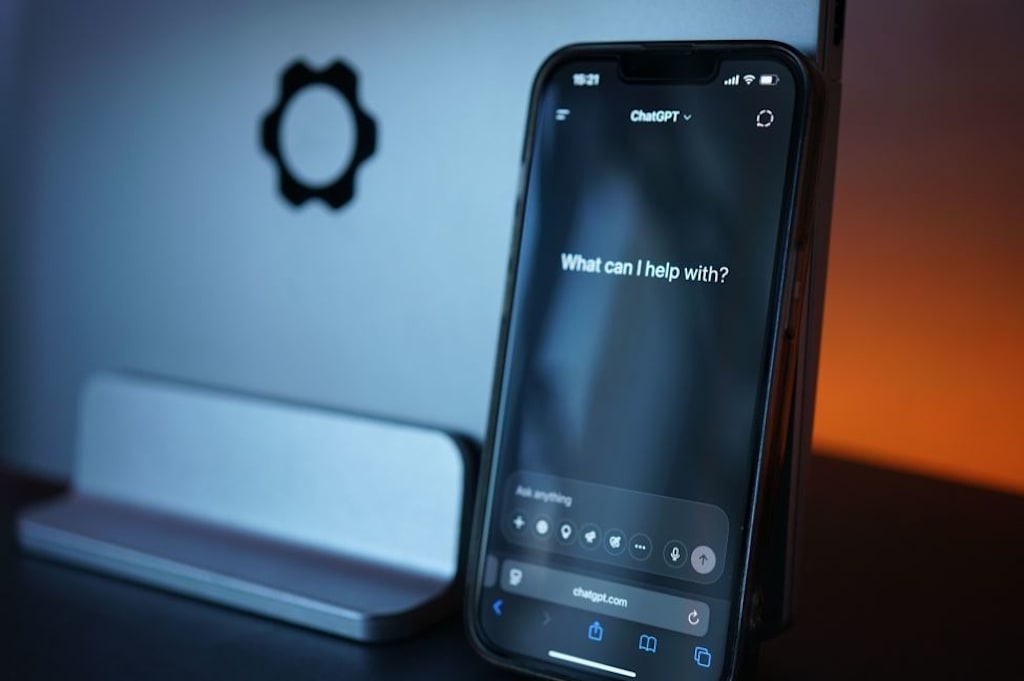
OpenAI is set to roll out an invisible watermark for text generated by ChatGPT and Codex, marking a significant, albeit geographically limited, step toward compliance with the European Union’s stringent AI transparency regulations. Announced this week, the initiative introduces a system dubbed "textGrain," which subtly alters a model’s word choices to embed a detectable statistical pattern. However, the rollout is initially default only for users within the European Union, creating a stark regulatory divide: a student in Munich using ChatGPT will generate text carrying this hidden signature, while a student in Petaling Jaya using the exact same prompt will not, unless their developer explicitly opts into the feature via API.
The Mechanics of "textGrain"
Unlike visible watermarks or metadata tags that can be easily stripped away, textGrain operates at the foundational level of the language model’s output. It uses a secret cryptographic key to subtly bias the model’s next-word predictions. While these micro-adjustments are imperceptible to human readers and do not meaningfully degrade the model’s performance or coherence, they accumulate across a passage to form a distinct statistical signal. Because the watermark is woven into the text itself, it inherently survives basic copy-and-paste actions, traveling with the content wherever it goes. OpenAI has also clarified that the watermark does not identify the specific user who generated the text, preserving a layer of privacy while attempting to establish provenance.
The Achilles’ Heel of Text Watermarking
Despite the technical ingenuity, OpenAI is candid about the system’s limitations, acknowledging that text is a highly mutable medium. In internal testing, the fragility of the watermark became immediately apparent. When just 10% of the words in a 400-token passage were replaced with synonyms, the detector’s accuracy plummeted from 92% to 66%. If 25% of the words were swapped, detection rates crashed to a mere 17%.
Furthermore, the system struggles with specific use cases. Short passages, mathematical answers, and translated text present significant blind spots for the detector, which flags only about 80% of 200-token passages compared to 95% of longer 400-token ones. Citing these inherent vulnerabilities, OpenAI is initially restricting access to the detection tool exclusively to approved researchers and expert organizations. Educators, students, and the general public will not be able to independently verify text for now, a decision that underscores the risk of false positives and the potential for the tool to be misused or misunderstood.
The Limits of Digital Proof
OpenAI has also issued crucial caveats regarding what the watermark can and cannot prove. The absence of a watermark does not guarantee human authorship; the text may simply be too short, heavily edited, translated, or generated by a competing AI model. Conversely, the presence of a watermark only indicates that an OpenAI system generated or processed part of the passage. It offers no insight into the degree of human judgment, editing, or creative direction that shaped the final output. In an era of hybrid human-AI workflows, binary classifications of "human" versus "AI" are increasingly obsolete.
A Fragmented Industry Landscape
OpenAI’s move is part of a broader, albeit fragmented, industry scramble to establish AI provenance standards ahead of regulatory deadlines. Google has already embedded its SynthID watermark across text, images, audio, and video, while Meta utilizes its own Content Seal. Microsoft and Adobe have championed the C2PA Content Credentials standard, which attaches cryptographic metadata at the point of file creation.
Notably, Anthropic announced in August that it would implement worldwide text watermarking for Claude, a move that sparked immediate backlash from users who argued that they provided the core instructions, context, and creative decisions, rendering the AI a mere tool rather than the primary author.
Furthermore, these proprietary, walled-garden solutions leave a massive loophole: open-source models. Any developer can download and run an unaligned, open-weight model locally, generating unlimited unwatermarked text that will bypass all commercial detectors. Additionally, each company’s detector is generally designed to recognize only its own specific cryptographic mark, creating a Tower of Babel scenario for AI verification.
The deployment of textGrain in the EU is a necessary and pragmatic response to the August 2 enforcement of the EU AI Act’s transparency rules. It demonstrates OpenAI’s willingness to collaborate with regulators and establish baseline provenance tools. However, it also serves as a stark reminder that text-based watermarking is a game of cat-and-mouse. As long as the watermark relies on statistical nudges that can be undone by a simple thesaurus swap or a round of human editing, it will remain a probabilistic guess rather than a definitive proof. For now, "textGrain" is a valuable tool for researchers studying AI behavior, but it is far from a silver bullet for the complex, evolving challenge of AI authenticity.
About the Creator
Mark Lim
Hi I am mark an automotive student and a car, tech and food enthusiast ! Im gonna try and post daily & hope you enjoy what I write and do share my page with people you know. I would gladly appreciate it! Cheers
Enjoyed the story? Support the Creator.
Subscribe for free to receive all their stories in your feed.
Comments
There are no comments for this story
Be the first to respond and start the conversation.