
Online Course Platform Development
Explore what goes into building an online course platform, from shaping the business model and user experience to choosing the right architecture for growth.

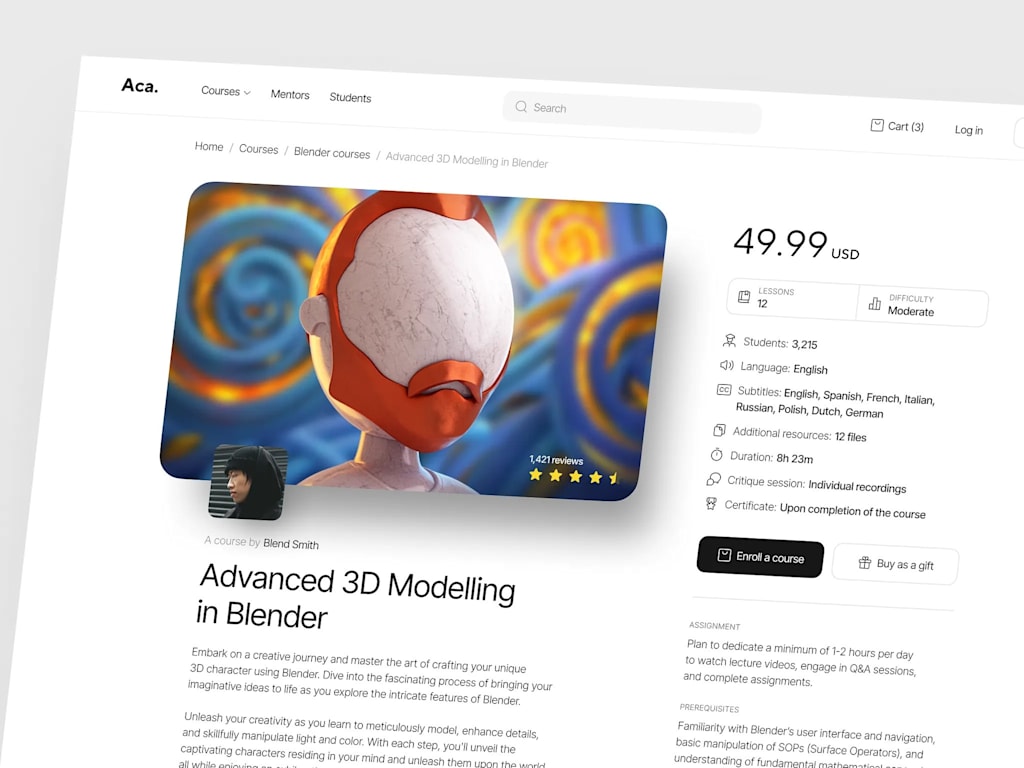
At first glance, launching an digital education business appears straightforward: record video lectures, upload resources, integrate payment gateways, and launch marketing campaigns. However, as the venture scales, the technical infrastructure ceases to be merely a utility and becomes integral to the product identity. The platform dictates how students find content, engage with materials, complete transactions, and decide whether to return for further education.
Consequently, many independent creators, emerging startups, and established training firms eventually outgrow third-party marketplaces in favor of bespoke platform development. While off-the-shelf solutions offer a low barrier to entry, they impose significant constraints: restricted brand customization, limited access to user analytics, rigid revenue models, and minimal flexibility in designing the student journey. For those aiming to construct a sustainable education enterprise rather than simply hosting files, these restrictions quickly become impediments. Teams with expertise in eLearning or SaaS product development often find that owning their technology stack provides a strategic advantage.
This overview dissects the subject into actionable components. We will examine the mechanics of course platforms, identify critical features, explore revenue strategies, outline the typical development lifecycle, and highlight common pitfalls during scaling phases. Many of these technical and product considerations are equally relevant for those building scalable edtech SaaS solutions.
Defining the Online Course Platform
An online course platform is a comprehensive system designed to publish, administer, and monetize educational material. It allows creators to transform disparate assets—such as video modules, written guides, assessments, and downloadable resources—into a cohesive, purchasable curriculum. Similarly, organizations utilize these systems to streamline corporate training, manage user access, and centralize operations, avoiding the complexity of integrating multiple disparate tools.
The primary function of such a system is operational efficiency. It enables administrators to build curricula, structure lessons, manage media libraries, and update content seamlessly. For the end-user, it provides a personalized dashboard, secure access to purchased materials, and a guided learning pathway, replacing the chaos of unorganized file folders with a structured educational experience.
Secondly, the platform handles content delivery. It must ensure that materials are accessible and engaging, whether through video streaming, interactive text, quiz interfaces, or resume capabilities for incomplete modules. A cumbersome user interface can degrade the perceived quality of even the most excellent educational content.
Thirdly, the platform serves as a commercial engine. Beyond teaching, it facilitates business operations by supporting various monetization strategies, including single purchases, recurring subscriptions, bundled packages, and membership tiers. It manages transaction processing, access rights, and advanced features like promotional discounts, upselling opportunities, and enterprise-level team licenses.
Ultimately, an online course platform is not just a repository for lessons; it is the central hub for managing the entire educational business.
Categories of Course Platforms
These systems are tailored to distinct operational models. Some are designed for single entities selling proprietary content, others function as multi-vendor marketplaces, and some are engineered for internal corporate training. While their interfaces may appear similar, their underlying architectural logic differs significantly.
Independent (Standalone) Platforms
These systems are dedicated to a single brand or organization. All content resides under one owner, and the user experience is customized to align with specific business goals. This model is popular among individual experts, private institutions, and startups that wish to maintain full autonomy over pricing, branding, student communication, and pedagogical design without adhering to marketplace regulations.
Educational Marketplaces
Marketplaces host content from numerous instructors, with the platform operator managing the infrastructure while creators populate the catalog. This model introduces greater complexity, requiring distinct interfaces for students and teachers, along with systems for content moderation, search optimization, peer reviews, instructor payouts, and ecosystem administration. Understanding the structural nuances of multi-vendor environments is crucial for this approach.
Enterprise and Corporate Learning Systems
These platforms focus on internal or B2B training, such as employee onboarding, compliance certification, or partner education. Unlike consumer-facing platforms that prioritize sales conversion, corporate systems emphasize security, detailed analytics, hierarchical user management, and scalability. They function more like traditional Learning Management Systems (LMS), prioritizing administrative control and reporting over marketing flair.

Fundamental Architecture
Regardless of the specific business model, every robust educational platform relies on a shared foundational infrastructure.
- Content Administration: This module empowers instructors and administrators to construct curricula, organize modules, upload assets, and revise materials autonomously. It eliminates the need for constant developer intervention for routine content updates.
- Media Infrastructure: Given that video is the primary medium for modern eLearning, reliable hosting and delivery are critical. The system must ensure seamless playback, rapid loading times, and consistent performance across various devices and network conditions.
- Identity and Access Management (IAM): This layer handles user registration, authentication, profile management, and permission settings. Its primary role is to enforce security by ensuring that only authorized users can access specific paid or restricted content.
- Commerce Engine: This component transforms the platform into a revenue-generating entity. It manages transaction processing, subscription billing, promotional discounts and automatically grants or revokes access based on payment status.
- Business Intelligence: Post-launch, analytics dashboards provide visibility into platform health. They track key metrics such as conversion rates, student retention, content performance, and churn points, enabling data-driven improvements.
In essence, even a minimalist course platform is not merely a static website with uploaded files; it is a dynamic ecosystem integrating content management, user identity, financial transactions, and operational logic.
Essential Functionalities
While the basic requirements of an online course platform seem straightforward—upload content, sell access, and stream media—the devil is in the details. A platform may possess all standard features yet fail if the user experience is cumbersome, video quality is inconsistent, or checkout processes are friction-heavy.
Course Construction and Administration
The backend interface must streamline the creation and maintenance of educational products. Administrators should be able to build course structures, add lessons, modify descriptions, rearrange content sequences, and publish updates without technical assistance.
Furthermore, the system must support multimodal content. While video is dominant, effective courses often integrate PDFs, downloadable resources, interactive quizzes, and text-based modules. A platform restricted solely to video uploads forces content teams to develop workarounds, leading to inefficiencies and a fragmented user experience.
Video Streaming and Performance
Video delivery is often the most sensitive aspect of the user experience. Latency, buffering, or poor mobile optimization can immediately degrade perceived value, regardless content quality.
To mitigate this, platforms should employ adaptive bitrate streaming. This technology adjusts video quality in real-time based on the user’s internet connection, ensuring smooth playback rather than forcing a uniform high-resolution stream that may cause interruptions. For video-centric learning models, this reliability is non-negotiable.
Monetization and Access Logic
The platform must align with the business’s revenue strategy, whether through one-time purchases, recurring subscriptions, or bundled offerings.
Crucially, the system must tightly couple payment events with access control. When a transaction is completed, access must be granted instantly; when a subscription lapses, access must be revoked automatically. Bundled purchases should trigger appropriate permissions for all included items without manual administrative oversight. This requires robust integration with payment gateways to handle these logic flows seamlessly behind the scenes.
Student Engagement and Retention
Acquiring a student is distinct from retaining them. Many platforms suffer from high dropout rates not due to poor content, but because the product fails to incentivize continued engagement.
- Progress Tracking: Visual indicators of completion status, remaining modules, and current position within a course are essential. Without clear progress markers, the learning journey feels disjointed and overwhelming.
- Gamification Elements: When applied judiciously, features like badges, streak counters, points, and completion certificates can boost motivation. While they cannot compensate for weak instructional design, they add a layer of interactivity that encourages consistency, particularly in long-term programs.
- Communication and Notifications: Automated reminders for unfinished lessons, new content releases, upcoming live sessions, or deadlines help re-engage dormant users. Advanced platforms leverage AI to personalize these interactions, tailoring recommendations and study paths based on individual user behavior patterns.
Data Analytics and Reporting
Once operational, the platform must provide actionable insights. Without comprehensive data, strategic decisions are made in the dark.
- Course-Level Metrics: Track enrollments, completion rates, specific drop-off points within lessons, assessment scores, and revenue per cohort.
- User-Level Insights: Analyze navigation paths, identify where interest wanes, determine which resources are ignored, and understand triggers for return visits.
These insights drive both product refinement and business strategy. For instance, if many students abandon a course at a specific lesson, it signals a content or usability issue. If certain pricing tiers outperform others, the sales strategy can be adjusted accordingly. Integrating a robust analytics layer early in the custom development process—rather than treating it as an afterthought—transforms the platform from a passive content repository into an optimizable business asset.
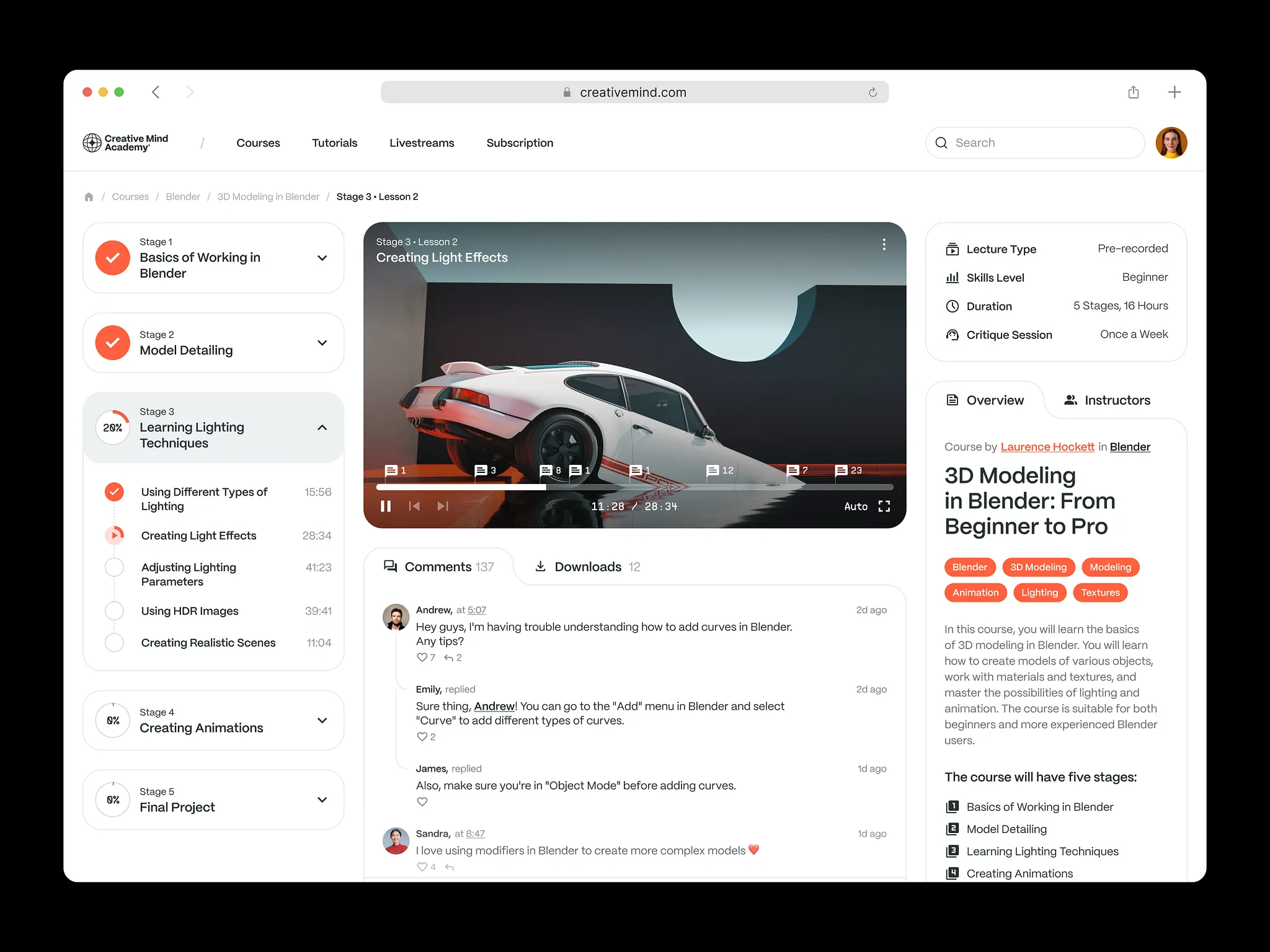
The Development Lifecycle of an Online Course Platform
To an outsider, building an educational platform seems linear: select a template, upload content, integrate payments, and go live. In reality, the most critical architectural and strategic decisions occur long before code is written. The development team must define the business model, map user journeys, and select a technical foundation that supports scalability without creating technical debt in the near future.
1. Strategic Planning and Business Model Definition
Development begins with strategy, not syntax. The core objective is to define the platform’s identity and operational logic.
- Subscription Models: Ideal for libraries of continuously updated content, focusing on recurring revenue and retention.
- Marketplace Models: Require complex multi-sided logic, managing both learners and instructors. This involves payout systems, content moderation, catalog curation, and distinct user roles.
- B2B/Enterprise Models: Focus on organizational needs rather than individual consumers. Key features include team licensing, hierarchical admin controls, detailed reporting, and bulk account management.
These distinctions are fundamental. The chosen business model dictates the database schema, user permission structures, payment workflows, and analytics requirements. Ambiguity at this stage often leads to costly refactoring later, as the software must be reshaped to fit the actual business needs.
2. UX/UI Design Optimized for Learning
Once the logical framework is established, interface design takes precedence. In eLearning, usability directly impacts completion rates.
The user experience must be intuitive. Learners should effortlessly locate their purchased courses, resume from their last position, and understand their progress trajectory. Navigation should be minimalistic and dashboards uncluttered.
From a business perspective, the interface drives conversion and retention. Pricing pages, checkout flows, onboarding sequences, and course previews must be optimized to reduce friction. Post-purchase, a confusing interface can lead to churn even if the educational content is high-quality. Consequently, robust frontend development (often using frameworks like React) is essential, as the UI is not merely aesthetic—it embodies the product’s functional logic.
3. Selecting the Technology Stack
The technology stack should serve the product requirements, not dictate them. Most course platforms share common foundational needs: user authentication, access control, payment processing, progress tracking, and content management. The goal is to choose a stack that ensures developer efficiency and long-term maintainability.
Backend:
- Python (e.g., FastAPI/Django): Preferred for its clean API structure, readability, and strong data handling capabilities.
- Node.js: Ideal for teams leveraging JavaScript across the full stack, particularly for applications with heavy real-time web interactions.
- Ruby on Rails: Suitable for rapid prototyping and MVPs, allowing teams to launch quickly with less boilerplate code.
Frontend:
- React: The industry standard for complex interfaces with multiple states (dashboards, filters, admin panels).
- Vue.js: A viable alternative offering similar flexibility.
- Selection Criteria: The choice usually depends on team expertise and long-term maintenance capacity rather than technological superiority.
Database:
- PostgreSQL: The default choice for structured data such as user profiles, enrollments, transactions, and quiz results.
- MongoDB: Occasionally used for flexible, unstructured data models, though rarely necessary for standard course platforms.
Infrastructure:
- Docker: Essential for consistent development and deployment environments.
- Kubernetes: Typically reserved for later stages when the system becomes distributed and requires advanced orchestration. Premature adoption adds unnecessary complexity.
The optimal stack is one that allows the team to build, launch, and iterate efficiently without turning maintenance into a bottleneck.
4. System Architecture and Scalability
Architecture determines stability under load. While invisible to users, it dictates how the platform handles concurrent connections, data retrieval, and media streaming.
As the user base grows, the system must manage increased login requests, transaction volumes, and progress updates without performance degradation. Video delivery, being resource-intensive, requires specialized handling (e.g., CDNs) to ensure smooth playback.
Scalable architecture does not mean over-engineering from day one. It means designing modular systems that can expand to support more users, courses, and complex business logic as the product evolves from a simple content site to a robust SaaS platform.
5. Integrations and API Strategy
Modern course platforms operate within a broader ecosystem of third-party services.
- Payment Gateways: Critical for processing transactions and synchronizing access rights.
- Analytics Tools: Essential for tracking user behavior, conversion funnels, and content performance.
- Marketing Automation: Integrations with email platforms and CRM systems enable lead nurturing, retargeting, and automated communication.
APIs must be designed early to facilitate seamless connectivity. Poor integration planning leads to manual administrative workloads and data silos. Advanced platforms may require custom data pipelines to feed broader business intelligence systems, moving beyond simple dashboard widgets.
6. Quality Assurance and Testing
Reliability is paramount. Core workflows—registration, authentication, checkout, content access, progress saving, and subscription renewal—must function flawlessly.
Testing protocols should include:
- User Journey Testing: Verifying that new and returning users can navigate, purchase, and learn without friction.
- Admin Workflow Testing: Ensuring content updates do not disrupt course structure or user access.
- Performance Testing: Simulating high traffic loads to identify bottlenecks.
- Payment Logic Verification: Rigorous testing of billing cycles, failed payments, and access revocation to prevent revenue leakage and support burdens.
7. Deployment, Monitoring, and Maintenance
Launch is merely the beginning of the product lifecycle. Real-world usage reveals issues that testing environments cannot replicate, such as infrastructure weaknesses, slow page loads, or service failures under load.
Post-launch activities focus on:
- Monitoring: Continuous observation of system health and user behavior.
- Optimization: Addressing performance bottlenecks and scaling resources as demand increases.
- Maintenance: Regular updates to security patches, integrations, and content management tools.
A course platform requires ongoing stewardship. Without dedicated support and iterative development, technical issues accumulate, and the product stagnates. Long-term maintenance is an integral component of the development strategy, ensuring the platform remains secure, functional, and competitive.
Navigating Development Hurdles in EdTech
While the conceptual phase of building a course platform often appears deceptively simple—upload content, gate access, and expand—the true complexities emerge only when the system faces real-world usage. The initial prototype rarely accounts for the strain of scaling user bases and increasing data loads.
1. The Complexity of Video Infrastructure
Media delivery is frequently the most significant technical bottleneck. Managing a handful of video files is trivial; supporting a growing library with hundreds of concurrent users is not. The infrastructure must handle substantial storage requirements, ensure high-availability streaming, and adapt to varying network conditions and device capabilities. If learners experience buffering, latency, or playback errors—particularly on mobile devices—they typically attribute these failures to poor course quality rather than technical limitations, directly impacting brand reputation.
2. Retention and User Engagement
Acquiring customers is distinct from retaining them. High dropout rates after the initial lessons are a common industry challenge. While content quality plays a role, product design is often a contributing factor. Frictionful navigation, opaque progress tracking, subpar mobile experiences, and a lack of re-engagement triggers (such as notifications) accelerate churn. Consequently, many development teams are shifting toward a "mobile-first" philosophy, recognizing that learning often happens on handheld devices, rather than treating mobile support as an afterthought.
3. Monetization and Billing Logic
Revenue models tend to evolve in complexity faster than anticipated. While single transactions are straightforward, introducing subscriptions, bundled packages, free trials, promotional discounts, and tiered access levels creates intricate logical dependencies. The system must robustly handle edge cases such as failed renewals, prorated refunds, subscription upgrades/downgrades, and synchronized access control. Errors in this domain can lead to revenue leakage and significant administrative overhead.
4. Scalable Architecture
A system that performs flawlessly with a beta audience may crumble under production load. The challenge extends beyond surviving temporary traffic spikes; it involves designing an architecture that supports sustainable growth. The goal is to ensure that adding new features or expanding capacity does not introduce instability or require constant architectural refactoring.
The Strategic Value of Specialized Development Partners
It is common to underestimate the complexity of building an online course platform. Initially, the requirements appear straightforward: host content, process payments, and grant user access. However, as the platform scales, hidden complexities emerge. Effective content management, seamless video streaming, synchronized payment-and-access logic, and intuitive administrative tools become critical. The system must maintain stability and performance despite increasing volumes of users and educational materials.
This is where partnering with a development agency experienced in eLearning provides a distinct competitive advantage.
1. Scalable Architecture
Building a platform without anticipating growth often leads to technical debt. Issues may arise in performance, administrative efficiency, or the ability to integrate new features. An experienced team prioritizes scalable architecture from the outset, ensuring the foundation can support expansion without requiring costly re-engineering later.
2. Purpose-Driven UX/UI Design
In educational technology, design serves function, not just aesthetics. The interface must clearly guide users through their learning journey, clarifying access rights, progress status, and next steps. A cluttered or confusing interface can diminish the perceived value of high-quality content, leading to increased churn. Professional designers ensure the user experience reduces friction rather than creating it.
3. Accelerated Development Cycle
Teams with prior experience in similar projects deliver faster results not by cutting corners, but by leveraging established patterns. They avoid reinventing solutions for common challenges—such as progress tracking or subscription management—allowing them to focus on unique value propositions and custom features.
4. Sophisticated Monetization Logic
While selling a single course is simple, managing complex revenue models is not. Subscriptions, bundled offerings, tiered access levels, and enterprise licensing require intricate backend logic that synchronizes billing with user permissions. Experienced developers understand these financial workflows, ensuring that both the customer-facing checkout and the internal admin panels handle transactions accurately and efficiently.
Ultimately, the primary benefit of specialized partnership is risk mitigation. It enables businesses to avoid costly strategic errors during the early stages of development.
Conclusion
Success in the edtech sector relies on a clear hierarchy of priorities:
- Strategy First: Define your target audience, educational objectives, and value proposition before writing code.
- Platform as an Enabler: The technology should make content accessible for learners and manageable for administrators.
- Integrated Monetization: Revenue models (subscriptions, one-time purchases, bundles) must be deeply embedded in the product logic, not tacked on as an afterthought.
- Scalability as a Core Feature: As the business grows, infrastructure stability becomes a daily operational requirement, not just a technical consideration.
Three factors ultimately determine success:
- Content Quality: Technology cannot compensate for poor educational material.
- User Experience: Frictionless navigation and clear progress tracking are essential for retention.
- Technical Scalability: The platform must perform reliably for the first hundred users and the first hundred thousand, ensuring that growth does not compromise stability.
About the Creator
Shakuro
We are a web and mobile design and development agency. Making websites and apps, creating brand identities, and launching startups.
Enjoyed the story? Support the Creator.
Subscribe for free to receive all their stories in your feed.
Comments
There are no comments for this story
Be the first to respond and start the conversation.