
NVIDIA’s RTX Spark Wants to Put an AI Agent on Your Laptop. The 128GB Number Matters Most.
NVIDIA and Microsoft say the PC is becoming a teammate. The hardware is only half the pitch; trust is the other half.
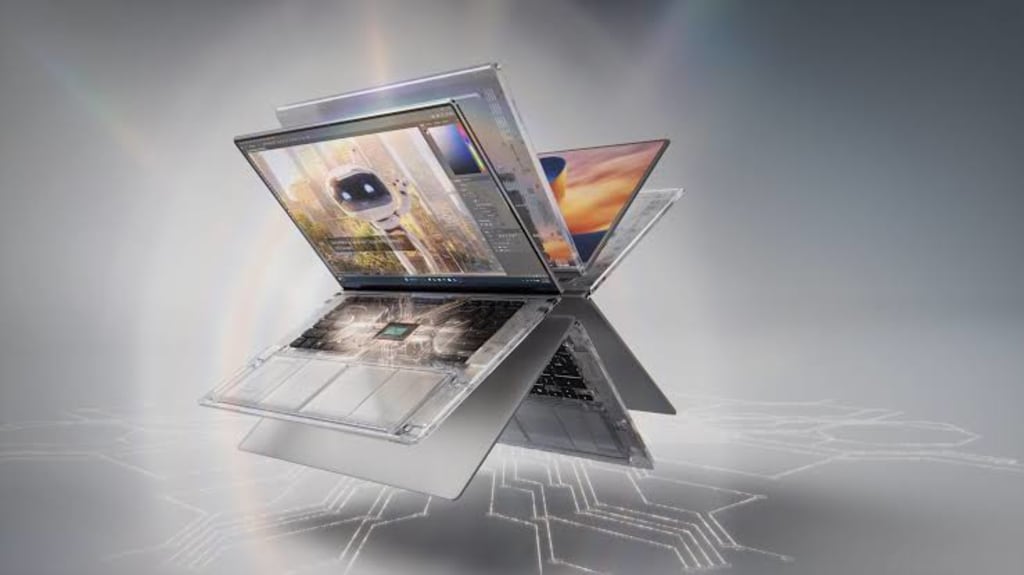
AI agents are moving faster than the devices meant to host them. Open-source projects such as OpenClaw and Hermes Agent have set records on GitHub and OpenRouter. They can reason across applications, call tools, generate content, write plug-ins, and search local files. The open question is whether ordinary users can run them safely and privately on a main PC. NVIDIA’s RTX Spark, announced at GTC Taipei, and a Windows platform co-developed with Microsoft, try to answer that question. The pitch is a shift in what a PC is for.
Cloud agents have limits. The files, app states, and daily habits that make an agent useful to one person mostly live on a local PC. An agent that helps with useful work must touch that context without handing every privacy decision to a remote service. Run everything locally and model capability and memory often fall short. Run everything in the cloud and privacy, latency, and user control become hard to guarantee.
OpenClaw and Hermes Agent show demand for local agents. The missing piece is a system-level runtime with enough compute, plus identity, isolation, policy control, and redaction. RTX Spark targets that gap. Jensen Huang’s line is direct: “The PC is being redefined… With RTX Spark and Microsoft Windows, you ask, and the PC does the rest.” The claim is a move from app launcher to intent executor.
RTX Spark combines a Blackwell RTX GPU with 6,144 CUDA cores and fifth-generation Tensor Cores supporting FP4, linked through NVLink-C2C to a 20-core Grace CPU. MediaTek co-designed the Arm SoC for efficiency, performance, and connectivity. The number that matters most for local agents is 128GB of unified memory, paired with 1 Petaflop of AI performance.
Local agent work is not single-shot inference. Model weights, long context, tool-call state, workflow state, and file indexes must coexist. Memory capacity and bandwidth often hit the ceiling before peak compute does. 128GB lets the device host larger models or run several agent tasks at once. 1 Petaflop gives headroom for image generation, video processing, semantic search, and 120B-parameter models with context up to one million tokens. That last figure matters for agents that read long documents and reason across apps.
RTX Spark is built for thin Windows laptops with all-day battery life and small desktops. NVIDIA cannot shrink a data-center design and call it done. Tight Grace-Blackwell coupling through NVLink-C2C, plus MediaTek’s Arm SoC work, points to trade-offs in interconnect power and platform efficiency. Battery life, thermals, and sustained performance remain unproven until devices ship.
Hardware decides whether a local agent can run. Security decides whether people will use it. NVIDIA and Microsoft built the platform on two layers: new Windows security primitives and the NVIDIA OpenShell runtime. Windows primitives provide identity, isolation, policy control, and end-to-end security for agents built for Windows. An agent stops being an ordinary app with the user’s full permissions. It sits inside a system-level identity and permission framework. OpenShell adds finer policy control. Users can define what an agent may do, route requests to local models under a privacy policy, and redact personal information before a request goes to a cloud model.
This addresses the practical worry about an agent that reads files, operates apps, and calls external services. Where is the permission boundary? How does the user know what it did? Which data stayed local? Which data left the machine? OpenShell’s policy control and redaction turn those questions from user caution into system constraints.
Vincent Koc of the OpenClaw Foundation said the foundation supports safe deployment of agents such as OpenClaw into Windows, and that OpenShell and Microsoft security primitives on RTX Spark let users run private personal agents on a fully integrated stack. Hermes Agent and OpenClaw are adopting this layer in new Windows apps. Dillon Rolnick of Nous Research said more tasks will move to local execution as personal agents improve, and that RTX Spark and OpenShell provide a secure environment for Hermes users. NVIDIA is defining the runtime with agent developers, not shipping a chip and hoping apps appear. That coordination across chip, OS, and agent will shape daily use more than raw compute.
People still buy PCs for concrete reasons. RTX Spark extends the RTX stack across creation, AI development, and gaming. Announced capabilities include rendering 3D scenes above 90GB with OptiX and DLSS, editing 12K 4:2:2 video with the Blackwell decoder, running 120B-parameter models with one million tokens of context, and playing AAA games at 1440p above 100 FPS with ray tracing, DLSS, and Reflex. DLSS 4.5 ray reconstruction with a second-generation Transformer model comes to Blender 5.3 and dozens of games. RTX Video with 4x frame generation comes to ComfyUI. These updates put AI into workflows creators already use.
Adobe is the key partner. NVIDIA and Adobe rebuilt Premiere and Photoshop for RTX Spark. Firefly-powered Generative Fill in Photoshop and Generative Extend in Premiere are part of hundreds of accelerated tools. NVIDIA claims up to 2x faster AI, editing, color, and effects processing. Shantanu Narayen of Adobe described the work as AI-native creative experiences with the performance, intelligence, and responsiveness creators need. A local agent that understands assets, calls tools, and runs multi-step operations inside Premiere or Photoshop is more useful than a chat box. RTX Spark’s memory and compute give that workflow room.
Gaming remains RTX’s home. More than 1,000 games and apps use RTX technologies. More than 100 Windows software providers, including Adobe, Blackmagic Design, Blender, CapCut, ComfyUI, and OTOY, plus game developers such as KRAFTON, NetEase, Remedy Entertainment, Riot Games, and XBOX, support the platform. This part is familiar. It also keeps an AI PC from becoming a developer-only machine.
Three variables will decide whether RTX Spark becomes a product category or a demo. First, thermals and battery life. 128GB of unified memory and 1 Petaflop in thin laptops and small desktops is a serious engineering claim. Sustained performance data are not public. Second, price. NVIDIA has not announced it. Price decides whether this is a developer toy or a mainstream device. Third, launch apps. OpenClaw and Hermes Agent will integrate OpenShell and Windows security primitives into new Windows apps. A demo and daily use are different tests. Users must build a trust habit: let an agent read context, operate apps, and ask for confirmation when needed.
Huang says users will state a need and let the PC do the rest. Nadella says the goal is unlimited intelligence on every Windows desk. Those lines describe a direction, not a shipped product. RTX Spark answers the hardware and system questions. The next test is ecosystem execution. Can the personal AI computer earn the same everyday trust as the tool it is meant to replace?
About the Creator
Jin
Writer of reamstories
https://reamstories.com/jin
Enjoyed the story? Support the Creator.
Subscribe for free to receive all their stories in your feed. You could also become a paid subscriber, letting them know you appreciate their work.
Comments
There are no comments for this story
Be the first to respond and start the conversation.