
Nvidia Is Sending GPUs to the Moon to Power the Next Generation of Lunar Exploration
Space exploration

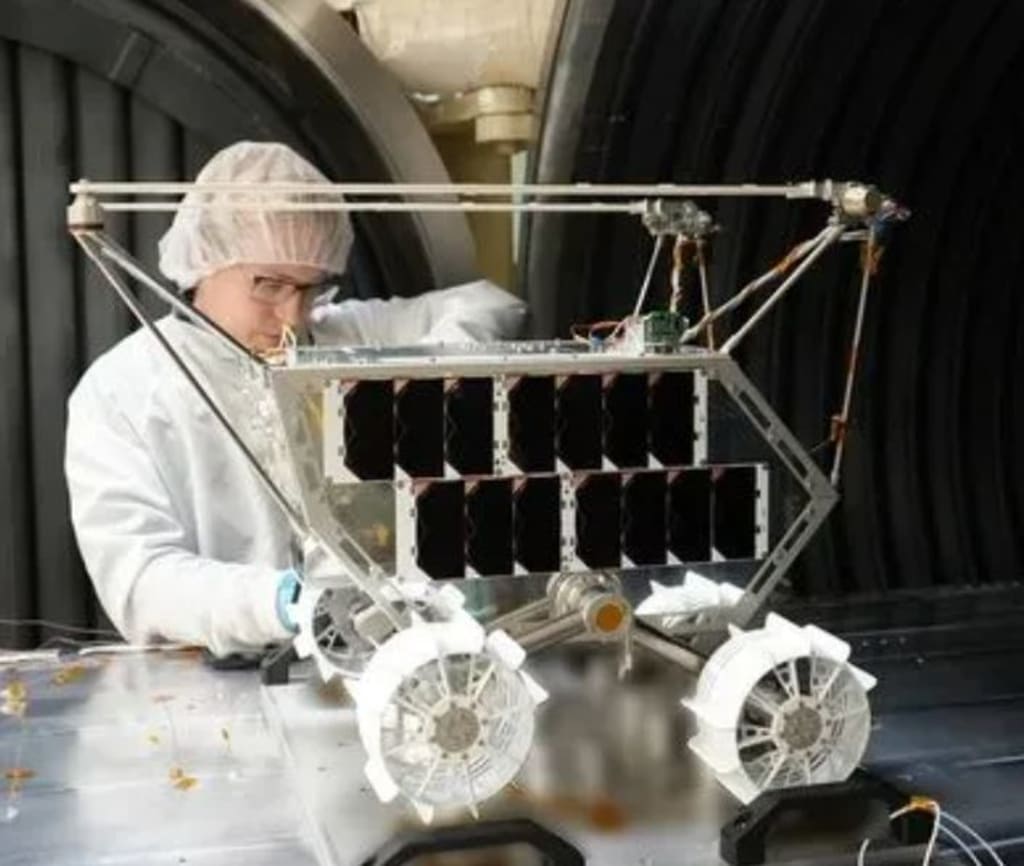
Nvidia's graphics processing units (GPUs) have become the driving force behind artificial intelligence, powering everything from ChatGPT to autonomous robots. Now, the company is setting its sights somewhere even more ambitious the Moon.
Space robotics startup Lunar Outpost has announced that its next lunar rover will use Nvidia's Jetson platform to power its lidar (Light Detection and Ranging) system. If the mission is successful, it will likely become the first GPU ever to operate on the lunar surface, marking another milestone in both space exploration and AI technology.
The project demonstrates how AI hardware is expanding beyond Earth, helping robots navigate some of the harshest environments known to humanity.
Bringing AI Computing to the Moon
Unlike Nvidia's massive Blackwell or Vera Rubin AI processors used in data centres, the Jetson platform is designed for compact, low-power devices.
Jetson chips are commonly found inside robots, drones, autonomous vehicles, and industrial machines because they can process large amounts of sensor data locally without relying on cloud computing.
For Lunar Outpost, that capability is essential.
The company's upcoming rover will use Jetson chips to analyze information collected by its lidar system, allowing the vehicle to understand its surroundings, avoid obstacles, and make navigation decisions in real time.
According to Lunar Outpost CEO Justin Cyrus, the company is comparing Nvidia's Jetson platform against its existing flight computer to determine whether GPU-powered systems can become a permanent part of future space missions.
The goal isn't simply to add more computing power; it's to make lunar robots smarter and more autonomous.
NASA's Bigger Plan for the Moon
The rover is part of NASA's broader effort to establish a long-term human presence on the Moon.
Through its Commercial Lunar Payload Services (CLPS) program, NASA is paying private companies to develop robotic missions capable of exploring the lunar surface ahead of future astronaut landings.
Rather than building every spacecraft itself, NASA is partnering with commercial companies, much like it did with SpaceX for cargo and crew transportation.
These robotic missions are designed to study lunar terrain, search for valuable resources such as water ice, and gather scientific data that could support future Moon bases.
NASA is targeting a return of astronauts to the lunar surface as early as 2028, making autonomous exploration more important than ever.
Exploring Places Humans Can't Easily Reach
Lunar Outpost's next rover will travel aboard a lunar lander built by Intuitive Machines, another company focused on Moon exploration.
Once it lands, the rover will venture into craters and other difficult-to-access locations that orbiting spacecraft cannot examine closely.
Its following mission is even more intriguing.
The rover is scheduled to explore Reiner Gamma, a mysterious region of the Moon known for its unusual magnetic properties. Scientists have studied the area for decades but still don't fully understand why it behaves differently from the surrounding lunar surface.
Both missions are expected to launch aboard SpaceX Falcon 9 rockets before the end of the year.
Nvidia Expands Its Presence in Space
The Lunar Outpost project isn't Nvidia's only venture beyond Earth.
The company recently partnered with Firefly Aerospace, which became the first private company to successfully land a robotic spacecraft on the Moon.
In that collaboration, Nvidia's Jetson platform will power a satellite orbiting the Moon, processing images that help scientists create detailed lunar maps while also monitoring the growing number of robotic missions operating on the surface.
Together, these partnerships show that Nvidia is becoming an important technology supplier not only for AI companies on Earth but also for the emerging space economy.
Why the Moon Is a Tough Place for Computers
Running advanced computer hardware on Earth is challenging enough. Operating it on the Moon is far more difficult.
Unlike satellites orbiting close to Earth, lunar equipment receives little protection from harmful cosmic radiation. Temperatures also swing dramatically between scorching daytime heat and freezing lunar nights.
These extreme conditions can damage sensitive electronics and significantly reduce their lifespan.
Power is another major challenge.
Lunar vehicles must survive long periods with very limited electricity, particularly during the two-week-long lunar night when solar panels cannot generate energy.
Because of these harsh conditions, engineers must carefully balance computing performance with reliability and energy efficiency.
Lunar Outpost believes Nvidia's Jetson platform could offer enough processing power while remaining efficient enough for long-duration missions.
Smarter Robots for Future Moon Bases
Today's lunar robots largely rely on carefully programmed instructions to perform specific tasks.
However, advances in artificial intelligence are allowing machines to become more adaptable.
According to Justin Cyrus, Lunar Outpost's autonomy software has evolved significantly over the past five years. The company now combines traditional deterministic programming with what it calls "physical AI" AI systems capable of interpreting complex environments and responding dynamically.
Instead of following rigid instructions, future lunar robots could recognize unfamiliar terrain, choose safer routes, identify scientific targets, and perform tasks with far less human intervention.
This level of autonomy will be essential if humans hope to establish permanent settlements on the Moon.
Building a Sustainable Lunar Workforce
Lunar Outpost's ambitions extend well beyond exploration.
The company ultimately wants to help build a sustainable human presence on the Moon by creating fleets of robotic workers capable of constructing infrastructure before astronauts arrive.
These robots could transport equipment, inspect habitats, maintain power systems, and even assist with mining operations.
According to Cyrus, combining traditional robotics with AI-powered decision-making could dramatically expand what autonomous systems can accomplish in space.
Rather than replacing astronauts, these intelligent machines would handle many of the dangerous and repetitive tasks required to keep a lunar base operational.
Bigger Rockets Still Hold the Key
Despite rapid progress in robotics and AI, one major challenge remains: transportation.
Lunar Outpost is also developing a much larger rover called Pegasus, designed to carry astronauts across the Moon's surface.
However, Pegasus depends on Blue Origin's future lunar rocket to reach the Moon.
That launch vehicle recently experienced a technical anomaly, leaving its flight schedule uncertain.
For now, Lunar Outpost expects to remain on track for a potential 2028 mission, although final launch dates will depend on both NASA's plans and Blue Origin's progress.
A New Chapter for AI Beyond Earth
Nvidia's entry into lunar exploration highlights how artificial intelligence is becoming an increasingly important part of space technology.
What began as GPUs built for gaming has evolved into processors capable of powering autonomous vehicles, industrial robots, advanced AI systems, and soon, lunar explorers.
If Lunar Outpost's mission succeeds, Nvidia's Jetson chips could become the first GPUs to operate on the Moon, opening the door for more intelligent robots that can explore, build, and eventually support a permanent human presence beyond Earth.
As humanity prepares for its next era of space exploration, AI may prove just as essential as rockets, helping robotic pioneers lay the groundwork for future astronauts before they ever set foot on the lunar surface.
About the Creator
Mark Lim
Hi I am mark an automotive student and a car, tech and food enthusiast ! Im gonna try and post daily & hope you enjoy what I write and do share my page with people you know. I would gladly appreciate it! Cheers
Enjoyed the story? Support the Creator.
Subscribe for free to receive all their stories in your feed.
Comments
There are no comments for this story
Be the first to respond and start the conversation.