
North America Silicone Market to Reach US$ 9.22 Billion by 2033 as Demand Accelerates Across Healthcare, Electronics, and Construction
Rising adoption of silicone in medical devices, electric vehicles, renewable energy, and sustainable construction is reshaping the North American industrial materials landscape

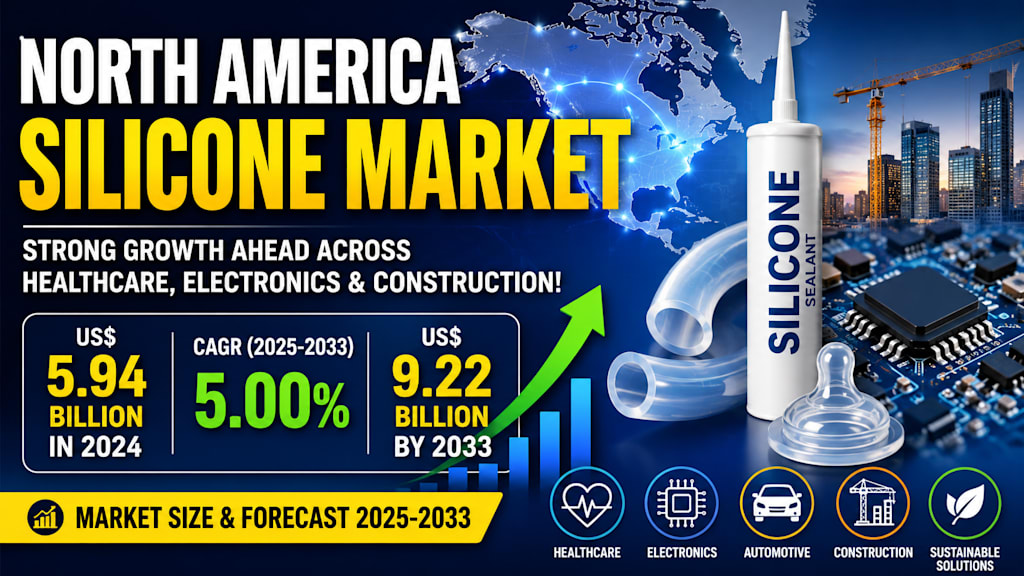
The North America Silicone Market is entering a transformative growth phase as industries increasingly adopt high-performance and sustainable materials to meet evolving technological and environmental demands. According to Renub Research, the North America Silicone Market is projected to grow from US$ 5.94 billion in 2024 to US$ 9.22 billion by 2033, expanding at a CAGR of 5.00% during the forecast period from 2025 to 2033.
Silicone has become one of the most versatile and essential materials across industries due to its flexibility, heat resistance, durability, chemical stability, and biocompatibility. From healthcare and electronics to construction, automotive, and renewable energy, the material is increasingly becoming indispensable for manufacturers seeking long-lasting and energy-efficient solutions.
As North America intensifies investments in smart infrastructure, semiconductor manufacturing, electric vehicles, and advanced healthcare technologies, silicone demand is expected to witness steady and sustainable expansion throughout the next decade.
Why Silicone Is Becoming a Strategic Industrial Material
Silicone stands apart from traditional polymers because it combines elasticity with extreme thermal and environmental resistance. Unlike many synthetic alternatives, silicone performs effectively under high temperatures, moisture, UV exposure, and harsh chemical environments.
This makes silicone particularly valuable in modern industrial applications where reliability, safety, and longevity are critical.
Industries increasingly rely on silicone for:
- Sealants and adhesives
- Electrical insulation
- Medical tubing and implants
- Automotive gaskets and components
- Coatings and encapsulants
- Personal care formulations
Renewable energy systems
The growing emphasis on sustainability is also contributing to market momentum. Silicone’s durability, low toxicity, and recyclability align with corporate ESG initiatives and environmental regulations across North America.
Construction Sector Driving Significant Demand
One of the strongest contributors to silicone consumption in North America remains the construction industry. As governments and private developers focus on energy-efficient infrastructure, silicone-based products are becoming increasingly vital in modern building systems.
Silicone sealants and adhesives are widely used in:
- Structural glazing
- Weatherproofing
- Waterproof coatings
- Thermal insulation
- Window and façade systems
The material’s ability to withstand temperature fluctuations, UV radiation, and moisture makes it especially effective for long-term construction applications.
Green building trends are further accelerating adoption. Energy-efficient commercial buildings and smart residential infrastructure require durable materials capable of minimizing maintenance and improving insulation performance.
As urbanization and infrastructure modernization continue across the United States, Canada, and Mexico, the demand for silicone in construction applications is expected to rise steadily.
Healthcare Innovations Reshaping Silicone Consumption
Healthcare has emerged as one of the fastest-growing application segments for silicone products in North America.
Silicone’s exceptional biocompatibility makes it highly suitable for:
- Catheters
- Prosthetics
- Wound care products
- Medical tubing
- Implants
Wearable medical devices
The aging population across North America is significantly increasing demand for advanced medical solutions and minimally invasive procedures. Silicone materials are central to many next-generation healthcare devices because they are flexible, non-reactive, and durable.
Wearable medical technology is another major growth catalyst. Products such as glucose monitors, fitness trackers, insulin pumps, and cardiac monitoring systems increasingly depend on silicone components for skin-safe, long-lasting performance.
Regulatory confidence also supports market growth. Organizations such as the U.S. Food and Drug Administration continue to approve silicone-based materials for numerous healthcare applications, strengthening trust among manufacturers and consumers alike.
Electronics and Semiconductor Expansion Creating New Opportunities
The electronics sector is becoming one of the most lucrative growth areas for silicone manufacturers.
Silicone materials play a crucial role in:
- Printed circuit boards
- Semiconductor insulation
- LED displays
- Thermal interface materials
- Electrical encapsulation
- Wire and cable insulation
The increasing complexity of electronic devices requires materials capable of managing heat while maintaining electrical reliability. Silicone fulfills both requirements effectively.
North America’s semiconductor manufacturing expansion is creating particularly strong momentum for the market. Following the CHIPS and Science Act in the United States, major technology firms announced investments exceeding US$ 50 billion in domestic semiconductor production facilities.
As chip manufacturing capacity increases, silicone demand is expected to rise significantly due to its importance in protecting and insulating sensitive electronic components.
The electric vehicle revolution is also contributing heavily to market growth. EV batteries, charging systems, sensors, and thermal management systems rely extensively on advanced silicone solutions.
Automotive Industry Accelerating Silicone Applications
The automotive industry continues to be a major consumer of silicone materials across North America.
Modern vehicles require silicone for:
- Gaskets
- Seals
- Wiring insulation
- Lubricants
- Airbag coatings
- Thermal management systems
The shift toward electric mobility is further expanding application opportunities. EVs generate higher thermal demands than traditional combustion vehicles, making heat-resistant silicone materials increasingly important.
According to the data included in the report, the United States produced approximately 9.1 million vehicles in 2021, representing a 4% increase compared to the previous year.
Automakers are also prioritizing lightweight and durable materials to improve energy efficiency and vehicle lifespan. Silicone’s performance characteristics align well with these goals, supporting broader adoption throughout the automotive supply chain.
Technological Advancements Fueling Market Expansion
Continuous innovation in silicone chemistry and manufacturing technology is reshaping the competitive landscape.
Manufacturers are developing next-generation silicone formulations with:
- Higher thermal stability
- Better mechanical strength
- Improved electrical insulation
- Enhanced flexibility
- Greater environmental resistance
These advancements are unlocking new applications in aerospace, healthcare, renewable energy, and advanced electronics.
Silicone additive manufacturing, including 3D printing technologies, is also creating new opportunities. Manufacturers can now produce complex customized silicone components with greater precision and efficiency.
In renewable energy applications, high-performance silicone materials are increasingly used in:
- Solar panel encapsulation
- Wind energy systems
- Battery storage technologies
These innovations are expected to broaden the market’s industrial relevance and drive long-term revenue growth.
Market Challenges Continue to Impact Industry Dynamics
Despite strong growth prospects, the North America Silicone Market faces several important challenges.
Raw Material Price Volatility
One of the biggest concerns is fluctuating silicon metal prices. Since silicon metal is a primary raw material in silicone production, disruptions in global supply chains can significantly affect manufacturing costs.
Factors contributing to price volatility include:
- Energy price fluctuations
- Geopolitical tensions
- Trade restrictions
- Environmental regulations
- Supply-demand imbalances
Manufacturers are increasingly focusing on sustainable sourcing strategies and supply chain diversification to reduce exposure to pricing instability.
Saturation in Mature Industries
Certain traditional end-use industries, particularly construction and automotive, are becoming relatively mature markets for silicone products.
As competition intensifies, manufacturers must develop:
- Specialized silicone formulations
- High-value niche applications
- Sustainable alternatives
- Performance-enhancing innovations
Without continued innovation, growth in mature sectors may gradually slow over time.
United States Leads the Regional Silicone Market
The United States remains the dominant force in the North America Silicone Market due to its massive industrial base and technological leadership.
Key growth sectors include:
- Healthcare
- Semiconductor manufacturing
- Automotive
- Aerospace
- Construction
- Consumer electronics
The country’s strong research and development ecosystem continues to accelerate silicone innovation.
A major recent development came in January 2023 when Dow Inc. introduced the SILASTIC SA 994X LSR series, a new line of liquid silicone rubbers designed for transportation and mobility applications.
These advanced materials offer:
- Self-lubrication
- Primer-less adhesion
- Self-adhesive capabilities
The innovation demonstrates how manufacturers are responding to growing demand for high-performance and production-efficient silicone solutions.
Canada and Mexico Emerging as Important Growth Markets
Canada’s silicone market continues to expand steadily due to increasing demand in healthcare, electronics, automotive, and sustainable infrastructure.
The country’s focus on environmentally responsible manufacturing and advanced medical technologies is supporting broader adoption of silicone materials.
Meanwhile, Mexico is becoming an increasingly important manufacturing hub for automotive and electronics industries. This industrial expansion is driving rising demand for silicone adhesives, sealants, encapsulants, and thermal interface materials.
Mexico’s growing role in North American supply chains is expected to create additional long-term opportunities for silicone manufacturers operating across the region.
Competitive Landscape Remains Highly Dynamic
Leading companies are investing aggressively in:
- Product innovation
- Capacity expansion
- Sustainable manufacturing
- Strategic partnerships
- Research and development
Major companies operating in the North America Silicone Market include:
- Kaneka Corporation
- Shin-Etsu Chemical Co., Ltd.
- Dow Inc.
- Evonik Industries AG
- Wacker Chemie AG
- Kemira Oyj
- Illinois Tool Works Inc.
These firms continue to focus on high-performance silicone technologies capable of serving rapidly evolving industrial requirements.
Recent Developments in the North America Silicone Industry
1. Dow Introduced SILASTIC SA 994X LSR Series
Dow Inc. launched advanced liquid silicone rubbers tailored for transportation and mobility applications, featuring self-adhesive and self-lubricating properties.
2. Shin-Etsu Expanded Semiconductor Silicone Solutions
Shin-Etsu Chemical Co., Ltd. increased focus on high-purity silicone materials designed for semiconductor manufacturing and advanced electronics.
3. Wacker Increased Specialty Silicone Production
Wacker Chemie AG expanded its specialty silicone capabilities to support renewable energy and healthcare applications.
4. Evonik Accelerated Sustainable Silicone Innovation
Evonik Industries AG invested in eco-friendly silicone technologies aligned with circular economy initiatives.
5. Kaneka Advanced Medical Silicone Development
Kaneka Corporation strengthened its focus on medical-grade silicone materials for healthcare devices and implants.
6. Semiconductor Investments Increased Silicone Demand
The CHIPS and Science Act triggered billions of dollars in U.S. semiconductor investments, significantly benefiting silicone suppliers serving electronics manufacturing.
7. Electric Vehicle Growth Expanded Silicone Applications
Automakers across North America accelerated adoption of silicone thermal management and insulation solutions for EV platforms.
8. Silicone 3D Printing Technologies Advanced
Manufacturers introduced new silicone additive manufacturing techniques for customized industrial and healthcare applications.
9. Renewable Energy Sector Boosted Silicone Consumption
Silicone materials gained increased adoption in solar panel encapsulation and wind energy systems due to durability advantages.
10. Sustainable Construction Increased Silicone Usage
Growing green building initiatives across North America drove demand for energy-efficient silicone sealants and insulation materials.
Final Thoughts
The North America Silicone Market is entering a period of sustained transformation driven by healthcare innovation, semiconductor expansion, electric mobility, renewable energy investments, and sustainable infrastructure development.
With the market expected to surpass US$ 9.22 billion by 2033, silicone is becoming far more than just an industrial material—it is emerging as a foundational technology enabler across modern economies.
As industries prioritize durability, safety, efficiency, and sustainability, silicone manufacturers that continue investing in advanced formulations and next-generation applications are likely to lead the competitive landscape throughout the forecast period.
About the Creator
Enjoyed the story? Support the Creator.
Subscribe for free to receive all their stories in your feed.
Comments
There are no comments for this story
Be the first to respond and start the conversation.