
North America Plug-in Hybrid Electric Vehicle Market Set to Reach US$ 84.24 Billion by 2033 Amid Green Mobility Push
Government Incentives, Expanding Charging Infrastructure, and Rising Consumer Demand Accelerate PHEV Adoption Across the United States, Canada, and Mexico

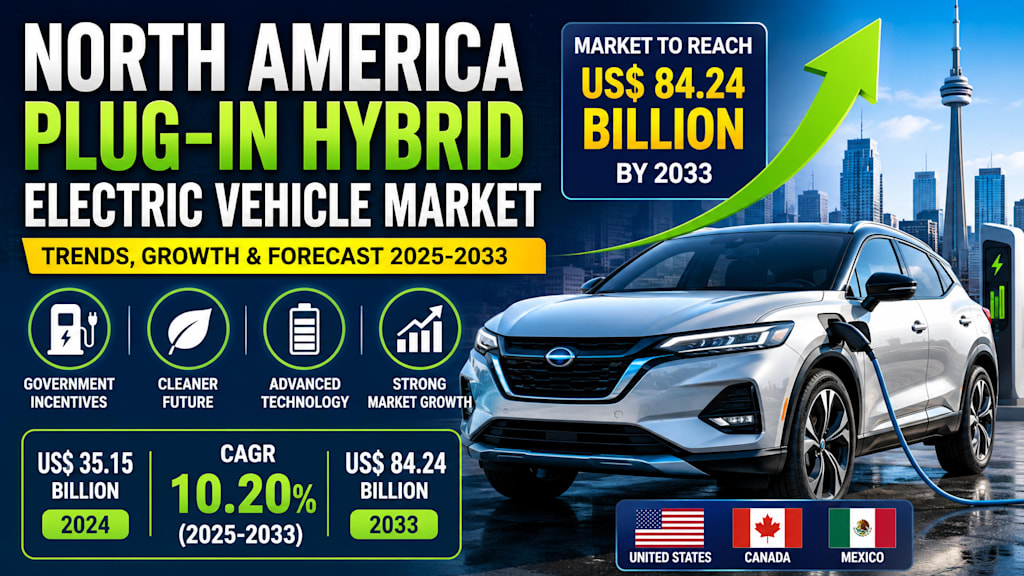
The North American automotive industry is undergoing a dramatic transformation as consumers, governments, and automakers increasingly prioritize cleaner and more sustainable transportation solutions. Among the biggest beneficiaries of this shift are plug-in hybrid electric vehicles (PHEVs), which combine electric mobility with the reliability of traditional fuel-powered engines. According to Renub Research, the North America Plug-in Hybrid Electric Vehicle Market is projected to rise from US$ 35.15 billion in 2024 to US$ 84.24 billion by 2033, growing at a CAGR of 10.20% between 2025 and 2033.
This remarkable growth highlights the increasing role of PHEVs in the region’s transition toward low-emission transportation. Consumers are becoming more environmentally conscious, governments are introducing stricter emission regulations, and automakers are aggressively expanding their electrified vehicle portfolios. Together, these factors are reshaping the future of mobility across North America.
Understanding Plug-in Hybrid Electric Vehicles
Plug-in hybrid electric vehicles represent a middle ground between conventional gasoline-powered automobiles and fully electric vehicles. Unlike standard hybrid vehicles, PHEVs can recharge their batteries using external charging sources while also relying on an internal combustion engine when necessary. This dual-power capability offers consumers greater flexibility, especially for long-distance driving.
PHEVs can operate entirely on electric power for short trips, helping reduce fuel consumption and greenhouse gas emissions. When the battery charge runs low, the vehicle automatically switches to gasoline power, eliminating the range anxiety commonly associated with fully electric vehicles.
The technology has become increasingly appealing to consumers who want the environmental benefits of electric mobility without completely depending on charging infrastructure.
Government Incentives Continue to Drive Market Growth
One of the most significant catalysts behind the North American PHEV market expansion is strong government support. Federal and regional authorities across the United States, Canada, and Mexico are actively encouraging the adoption of low-emission vehicles through financial incentives and policy initiatives.
Tax credits, purchase rebates, reduced registration fees, and subsidies have lowered the overall ownership cost of PHEVs, making them more accessible to mainstream consumers. In the United States, federal EV tax incentives continue to support buyers transitioning toward cleaner transportation.
Canada has also emerged as a major supporter of electric mobility through its Incentives for Zero-Emission Vehicles (iZEV) program. Provinces such as British Columbia and Quebec offer additional incentives, further accelerating adoption rates.
Mexico is witnessing similar momentum as urban authorities encourage cleaner transportation alternatives to combat air pollution and reduce dependence on fossil fuels. Government-backed initiatives, combined with growing environmental awareness, are helping stimulate PHEV demand across major metropolitan areas.
Environmental Awareness Influences Consumer Decisions
Environmental sustainability is becoming a major factor influencing automotive purchasing decisions. Consumers are increasingly aware of the environmental impact associated with traditional gasoline-powered vehicles, particularly concerning carbon emissions and air pollution.
PHEVs provide a practical solution for environmentally conscious drivers who are not yet ready to transition fully to battery-electric vehicles. By allowing short-distance electric driving while maintaining conventional fuel capabilities for longer journeys, PHEVs strike a balance between sustainability and convenience.
This trend is particularly strong among urban consumers seeking cleaner transportation options without sacrificing flexibility. As climate concerns continue to shape public opinion, the demand for hybrid and electrified vehicles is expected to rise steadily across North America.
Charging Infrastructure Expansion Strengthens Consumer Confidence
The expansion of charging infrastructure is another key factor accelerating PHEV adoption. Governments and private companies are investing heavily in EV charging networks across highways, residential communities, shopping centers, and commercial areas.
Improved access to charging stations is reducing consumer concerns regarding electric driving limitations. Drivers now feel more confident purchasing electrified vehicles knowing that charging facilities are becoming increasingly available and reliable.
Automakers are also collaborating with energy companies and charging network providers to improve charging accessibility and convenience. These developments are making plug-in hybrid ownership more practical for everyday consumers.
Automakers Expand PHEV Lineups Across Multiple Vehicle Categories
Automotive manufacturers are rapidly expanding their PHEV offerings to meet growing consumer demand. Today’s market includes a broad selection of sedans, SUVs, compact cars, luxury vehicles, and even trucks equipped with plug-in hybrid technology.
This diversification is critical because it enables automakers to attract a wider customer base. Families seeking spacious SUVs, professionals preferring luxury sedans, and environmentally conscious urban commuters can all find PHEV models suited to their needs.
Manufacturers are also targeting different price segments by introducing affordable entry-level models alongside premium luxury vehicles. This strategy is helping accelerate market penetration and making electrified transportation accessible to more consumers.
Competition from Fully Electric Vehicles Creates Challenges
Despite strong market growth, the PHEV industry faces increasing competition from fully electric vehicles (EVs). Battery-electric vehicles are gaining popularity due to their zero tailpipe emissions, expanding driving ranges, and rapidly improving battery technology.
Many consumers now view EVs as the ultimate long-term solution for sustainable transportation. Governments are also increasingly prioritizing fully electric mobility as part of broader climate goals.
As charging infrastructure improves and battery costs decline, some consumers may choose EVs over PHEVs because they offer completely emission-free driving. This competitive pressure may challenge long-term PHEV market expansion, particularly in regions with advanced charging networks.
However, many analysts believe PHEVs will continue playing an important transitional role in the automotive electrification journey, especially in areas where charging infrastructure is still developing.
Limited Electric-Only Range Remains a Concern
Another challenge facing the PHEV market is the limited electric-only driving range compared to fully electric vehicles. While PHEVs can operate on electric power alone, the battery range is generally shorter than that of EVs.
Drivers with long daily commutes may still rely heavily on gasoline power, reducing the environmental advantages of the technology. In some cases, consumers may hesitate to invest in PHEVs if they believe the electric range does not fully meet their lifestyle requirements.
Automakers are actively working to improve battery efficiency and extend electric driving capabilities to address these concerns.
United States Leads Regional Market Expansion
The United States remains the largest market for plug-in hybrid electric vehicles in North America. Strong government support, rising environmental awareness, and increasing model availability continue to drive consumer demand.
American consumers are increasingly attracted to PHEVs because they offer reduced emissions without compromising driving range or performance. SUVs and midsize vehicles equipped with plug-in hybrid technology are particularly popular among U.S. buyers.
Automakers are heavily investing in electrification strategies across the country, launching new PHEV models while expanding manufacturing capabilities and charging partnerships.
Canada Emerges as a Fast-Growing PHEV Market
Canada is also experiencing rapid growth in plug-in hybrid adoption. Provincial and federal incentives have made electrified vehicles more affordable, particularly in regions with strong sustainability policies.
British Columbia and Quebec remain among the leading provinces driving EV and PHEV adoption due to favorable incentives and environmental initiatives. Canadian consumers are increasingly prioritizing fuel efficiency and lower emissions when purchasing vehicles.
The country’s commitment to reducing greenhouse gas emissions is expected to further strengthen PHEV demand over the coming years.
Mexico Witnesses Rising Adoption of Sustainable Mobility
Mexico’s PHEV market is developing steadily as consumers and policymakers embrace cleaner transportation alternatives. Urban pollution concerns and fuel efficiency requirements are encouraging drivers to consider hybrid and electric vehicles.
Government incentives, tax benefits, and exemptions from driving restrictions in certain cities are helping boost adoption. At the same time, international automakers are introducing more PHEV models tailored to the Mexican market.
As infrastructure continues to improve, Mexico is expected to become an increasingly important contributor to regional market growth.
SUVs Dominate Consumer Preferences
Among vehicle categories, SUVs are emerging as one of the most popular PHEV segments in North America. Consumers increasingly prefer SUVs because of their spacious interiors, versatility, and advanced safety features.
Automakers are responding by introducing electrified SUV models across multiple price ranges. Luxury brands are also aggressively expanding their premium PHEV SUV offerings to meet growing demand among affluent buyers.
Small and compact PHEVs continue gaining traction in urban areas where consumers prioritize efficiency and lower operating costs.
Luxury Segment Gains Momentum
The luxury PHEV segment is witnessing particularly strong growth as premium automakers invest heavily in electrification. Consumers in the luxury market are increasingly seeking environmentally responsible vehicles without sacrificing performance, comfort, or technology.
Luxury plug-in hybrids now offer advanced infotainment systems, extended electric driving capabilities, and premium interiors that appeal to high-income buyers looking for sustainable prestige vehicles.
10 Recent Developments by Major Companies
1. Tesla
Tesla continues expanding its North American charging infrastructure while increasing investments in battery innovation and vehicle production capacity.
2. Ford Motor Company
Ford accelerated its electrification roadmap with expanded hybrid and electric vehicle production across multiple manufacturing facilities.
3. General Motors
General Motors announced additional investments in EV and hybrid technology development to strengthen its electrified vehicle lineup.
4. Toyota Motor North America
Toyota expanded its hybrid and plug-in hybrid portfolio with new SUV-focused electrified models aimed at mainstream consumers.
5. BMW Group
BMW introduced updated plug-in hybrid luxury vehicles featuring improved battery performance and extended electric range.
6. Mercedes-Benz USA
Mercedes-Benz expanded its electrified luxury portfolio with advanced hybrid technologies and premium sustainability initiatives.
7. BYD Company Ltd.
BYD increased its North American focus through strategic partnerships and expanded electric mobility initiatives.
8. Nissan North America
Nissan strengthened its regional electrification plans through enhanced hybrid technologies and charging ecosystem investments.
9. Toyota
Toyota announced additional battery development investments to support long-term electrified vehicle expansion globally.
10. BMW
BMW expanded digital connectivity and intelligent energy management features across its latest plug-in hybrid offerings.
Future Outlook for the North American PHEV Industry
The future of the North American plug-in hybrid electric vehicle market appears highly promising. Rising environmental concerns, stricter emission standards, expanding charging infrastructure, and growing consumer demand for sustainable transportation solutions are expected to fuel long-term market expansion.
While competition from fully electric vehicles will intensify, PHEVs are likely to remain an important transitional technology for consumers seeking flexibility, lower emissions, and fuel efficiency.
Automakers will continue investing heavily in battery innovation, electrification strategies, and diversified product portfolios to capture growing demand. Governments are also expected to strengthen clean transportation policies, further supporting industry growth.
Final Thoughts
The North American plug-in hybrid electric vehicle market is entering a transformative phase driven by technological innovation, sustainability goals, and changing consumer preferences. With the market projected to surpass US$ 84.24 billion by 2033, PHEVs are becoming a critical component of the region’s clean mobility future.
As automakers expand electrified vehicle offerings and governments continue supporting low-emission transportation, PHEVs are positioned to bridge the gap between traditional gasoline vehicles and fully electric mobility. The coming decade will likely determine how successfully North America accelerates its journey toward a cleaner and more sustainable transportation ecosystem.
About the Creator
Enjoyed the story? Support the Creator.
Subscribe for free to receive all their stories in your feed.
Comments
There are no comments for this story
Be the first to respond and start the conversation.