
Nebulizer Market Set for Robust Growth as Home Healthcare and Smart Respiratory Devices Transform Patient Care
Rising respiratory diseases, portable smart nebulizers, and expanding home healthcare adoption are driving the global nebulizer market toward strong growth through 2033.

Respiratory diseases are becoming one of the most significant healthcare challenges across the globe, and the demand for effective treatment devices is rising rapidly. Among the essential respiratory care technologies gaining momentum is the nebulizer — a device widely used to deliver medication directly into the lungs for patients suffering from asthma, chronic obstructive pulmonary disease (COPD), cystic fibrosis, and other respiratory illnesses.
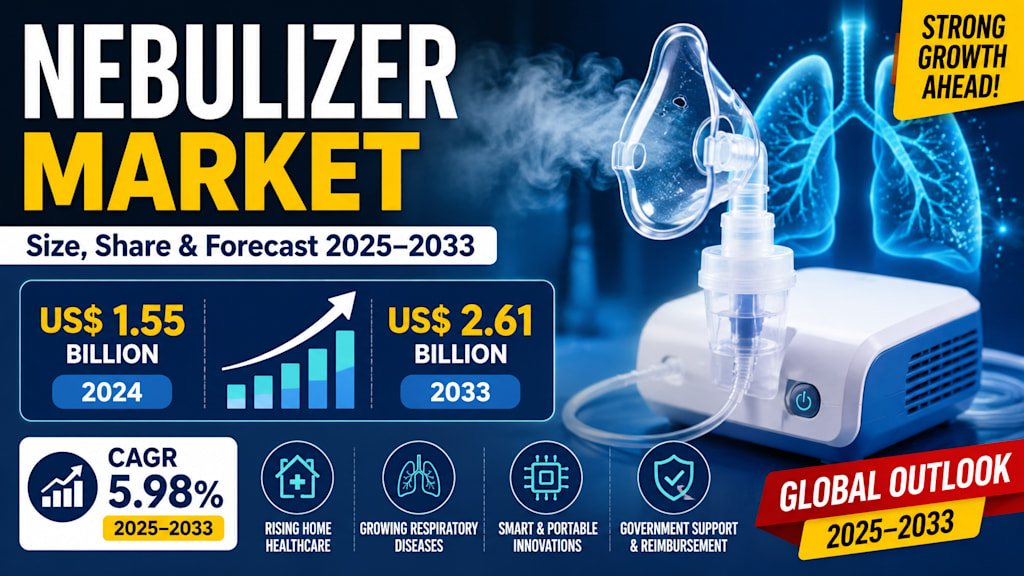
The global nebulizer market is witnessing substantial expansion as healthcare systems increasingly prioritize respiratory disease management, home healthcare, and advanced patient-centric treatment solutions. According to Renub Research, the Global Nebulizer Market is projected to rise from US$ 1.55 billion in 2024 to US$ 2.61 billion by 2033, growing at a CAGR of 5.98% during the forecast period from 2025 to 2033.
The growing elderly population, increasing pollution levels, rising smoking rates, and technological innovations in portable nebulizers are all contributing to the strong market momentum.
Growing Burden of Respiratory Diseases Accelerating Market Expansion
One of the biggest growth drivers for the nebulizer industry is the increasing prevalence of respiratory disorders worldwide. Diseases such as asthma, COPD, bronchitis, and pulmonary infections continue to affect millions of people annually, creating a sustained need for effective inhalation therapy solutions.
According to data highlighted in the report, the World Health Organization estimated COPD caused approximately 3.23 million deaths globally in 2019. Meanwhile, smoking and secondhand smoke exposure remain major contributors to respiratory illnesses worldwide.
Environmental concerns are also intensifying the issue. Rising air pollution in urban areas, industrial emissions, and occupational exposure to harmful particles are increasing respiratory complications among both adults and children. As respiratory conditions become more widespread, demand for nebulizer-based therapies is expected to rise significantly.
Healthcare providers increasingly prefer nebulizers because they offer efficient medication delivery directly to the lungs, ensuring faster relief and improved treatment effectiveness compared to some oral therapies.
Home Healthcare Revolution Changing the Industry Landscape
The rapid shift toward home healthcare is transforming the nebulizer market globally. Patients increasingly prefer receiving treatment at home rather than visiting hospitals frequently, especially for chronic respiratory management.
Modern nebulizers are now lightweight, portable, battery-operated, and highly user-friendly. This convenience allows elderly patients and individuals with chronic diseases to maintain regular treatment schedules from the comfort of their homes.
The COVID-19 pandemic also accelerated the adoption of home healthcare devices worldwide. During the pandemic, patients became more comfortable using remote healthcare technologies and self-administered respiratory therapies.
Home healthcare not only improves patient convenience but also reduces healthcare expenses associated with hospital visits and long-term admissions. As healthcare systems continue emphasizing decentralized care delivery, nebulizer adoption is expected to increase further.
Smart Nebulizers and Technological Innovation Driving New Opportunities
Technological advancements are reshaping the nebulizer industry at an impressive pace. Traditional bulky devices are gradually being replaced by smart, compact, and highly efficient systems equipped with advanced monitoring capabilities.
Smart nebulizers integrated with Artificial Intelligence (AI) and Internet of Things (IoT) technologies are gaining strong popularity. These devices can monitor patient adherence, track treatment progress, and provide real-time usage data to healthcare professionals.
Mesh nebulizers are particularly emerging as a preferred solution due to their quieter operation, faster drug delivery, portability, and greater efficiency. Compared to traditional jet nebulizers, mesh systems provide better patient comfort and improved treatment outcomes.
One major example mentioned in the report is Medline’s launch of the Hudson RCI TurboMist nebulizer in May 2024. The device was designed to deliver medication in as little as three minutes while significantly improving medicine delivery efficiency compared to conventional nebulizers.
The integration of digital healthcare technologies is expected to open entirely new opportunities for manufacturers over the next decade.
Aging Population Fueling Demand for Respiratory Care
The expanding elderly population globally is another critical factor boosting the nebulizer market. Older adults are more susceptible to respiratory diseases due to weakened immunity, declining lung function, and increased exposure to chronic conditions.
Countries such as the United States, Germany, Japan, and China are witnessing rapid growth in aging populations, which is creating long-term demand for respiratory support devices.
Elderly patients often require frequent inhalation therapies, making nebulizers a preferred solution because they are easier to use than some inhalers, especially for patients with limited coordination or severe respiratory complications.
As life expectancy rises globally, healthcare systems are expected to invest further in respiratory disease management technologies.
Government Support and Favorable Reimbursement Policies Supporting Growth
Government initiatives and healthcare reimbursement programs are playing an increasingly important role in the expansion of the nebulizer market.
Many governments now recognize respiratory diseases as a major public health concern and are introducing programs that improve patient access to respiratory care devices. Insurance coverage, reimbursement benefits, subsidies, and chronic disease management initiatives are helping patients afford nebulizer therapies.
Several countries are also strengthening telemedicine and home healthcare policies, which further supports nebulizer usage outside hospital settings.
These supportive healthcare frameworks are encouraging physicians to prescribe nebulizer-based treatments more frequently, especially for chronic disease patients requiring long-term respiratory care.
Portable Devices Becoming the Future of Respiratory Treatment
Portable nebulizers are becoming increasingly popular among patients and healthcare professionals due to their convenience and mobility advantages.
Unlike traditional tabletop systems, portable devices are compact and can easily fit into daily lifestyles. Patients can use them during travel, at work, or while performing routine activities without major disruptions.
Battery-powered nebulizers are particularly attractive for pediatric and elderly patients who require flexibility in treatment schedules.
As consumers increasingly prioritize convenience and user-friendly healthcare technologies, portable nebulizers are expected to dominate future market demand.
Market Challenges Continue to Impact Industry Growth
Despite strong growth prospects, the nebulizer market still faces several challenges.
One major concern is the relatively high cost of advanced nebulizers, especially smart and portable devices. Technologies involving IoT connectivity, AI integration, and advanced mesh systems often increase device pricing substantially.
This creates affordability issues in lower-income regions and developing nations where healthcare budgets remain limited.
Another major challenge comes from competition with alternative respiratory treatment devices such as metered-dose inhalers (MDIs) and dry powder inhalers (DPIs). These alternatives are often cheaper, easier to carry, and require less maintenance.
While nebulizers remain highly effective for severe respiratory cases, many patients still prefer inhalers due to their affordability and simplicity.
Manufacturers must therefore continue improving affordability, accessibility, and efficiency to maintain competitive advantages.
Regional Markets Showing Strong Momentum
United States Leading Innovation and Adoption
The United States continues to dominate the nebulizer market due to high respiratory disease prevalence, advanced healthcare infrastructure, and strong adoption of home healthcare technologies.
Asthma remains a major concern across the country. According to the Asthma and Allergy Foundation of America, more than 28 million Americans suffer from asthma.
The U.S. market is also benefiting from partnerships between healthcare organizations and respiratory technology companies aimed at improving respiratory health awareness and treatment accessibility.
Germany Strengthening European Respiratory Care Market
Germany is emerging as a major European market for nebulizers due to its strong healthcare system, aging population, and rising respiratory disease incidence.
The country’s emphasis on home healthcare and patient-centered treatment approaches is supporting higher nebulizer adoption. Government reimbursement policies are also helping improve device accessibility for patients.
China Experiencing Rapid Expansion
China’s nebulizer market is witnessing strong growth due to rising pollution levels, increasing respiratory disorders, and expanding healthcare awareness.
Urbanization and industrialization continue contributing to worsening air quality, which has increased respiratory health concerns significantly. The country’s large aging population is also supporting market growth.
Technological innovation and healthcare modernization initiatives are expected to strengthen China’s position in the global respiratory device industry.
Saudi Arabia Emerging as a Growing Opportunity
Saudi Arabia is steadily becoming an important market for respiratory care technologies due to rising asthma and COPD cases.
Government healthcare investments, increasing awareness about respiratory diseases, and improving healthcare infrastructure are supporting nebulizer adoption across the country.
The growing demand for advanced respiratory therapies in Middle Eastern nations is expected to create new business opportunities for manufacturers over the coming years.
Competitive Landscape Intensifying Globally
The nebulizer industry remains highly competitive, with leading companies focusing on innovation, strategic collaborations, acquisitions, and new product launches to strengthen their market positions.
Major players operating in the global nebulizer market include:
OMRON Corporation
GE Healthcare
Boston Scientific Corporation
Koninklijke Philips N.V.
Vectura Group Plc.
Aerogen
DeVilbiss Healthcare LLC
Beurer GmbH
These companies are heavily investing in smart respiratory technologies, portable device innovations, and digital healthcare integration.
10 Recent Developments in the Nebulizer Industry
Medline introduced the Hudson RCI TurboMist nebulizer with significantly faster medication delivery capabilities in 2024.
OMRON Healthcare expanded its smart respiratory care portfolio with connected nebulizer technologies focused on home healthcare users.
Philips continued investing in digital respiratory monitoring systems integrated with nebulizer platforms.
Aerogen strengthened hospital respiratory care solutions through advanced aerosol drug delivery technologies.
GE Healthcare increased focus on AI-enabled respiratory monitoring and connected healthcare ecosystems.
DeVilbiss Healthcare expanded portable nebulizer offerings targeting elderly and pediatric patient segments.
Beurer GmbH enhanced its consumer respiratory care product range with compact and travel-friendly nebulizer systems.
Vectura Group Plc. advanced inhalation technology research for improved respiratory drug delivery efficiency.
Healthcare companies globally increased investments in telehealth-compatible respiratory devices following rising home healthcare demand.
Manufacturers accelerated development of quieter mesh nebulizers designed for improved patient comfort and treatment adherence.
Future Outlook Remains Highly Positive
The future of the nebulizer market appears highly promising as respiratory diseases continue increasing globally and healthcare systems prioritize patient-centered care models.
Advancements in AI, IoT integration, digital monitoring, and portable technologies are expected to reshape respiratory care significantly over the next decade.
Growing awareness about respiratory health, rising demand for home healthcare, expanding aging populations, and government healthcare support will continue fueling long-term market expansion.
As innovation accelerates and accessibility improves, nebulizers are likely to become even more integrated into modern respiratory disease management worldwide.
Final Thoughts
The global nebulizer market is entering a transformative growth phase driven by technological innovation, increasing respiratory disease prevalence, and the rapid rise of home healthcare solutions. Portable smart nebulizers, AI-powered monitoring systems, and advanced mesh technologies are redefining how respiratory therapies are delivered across the world.
Although affordability and competition from alternative inhalation devices remain ongoing challenges, the industry’s long-term outlook remains exceptionally strong. With governments, healthcare providers, and manufacturers focusing heavily on respiratory care improvements, nebulizers are expected to play an increasingly vital role in modern healthcare systems through 2033 and beyond.
About the Creator
Enjoyed the story? Support the Creator.
Subscribe for free to receive all their stories in your feed.
Comments
There are no comments for this story
Be the first to respond and start the conversation.