
Museums Are Dying: Immersive Experiences Are Bringing Them Back
AI, augmented reality, and experiential innovation are transforming museum visits, and the attendance numbers demonstrate that it's effective.

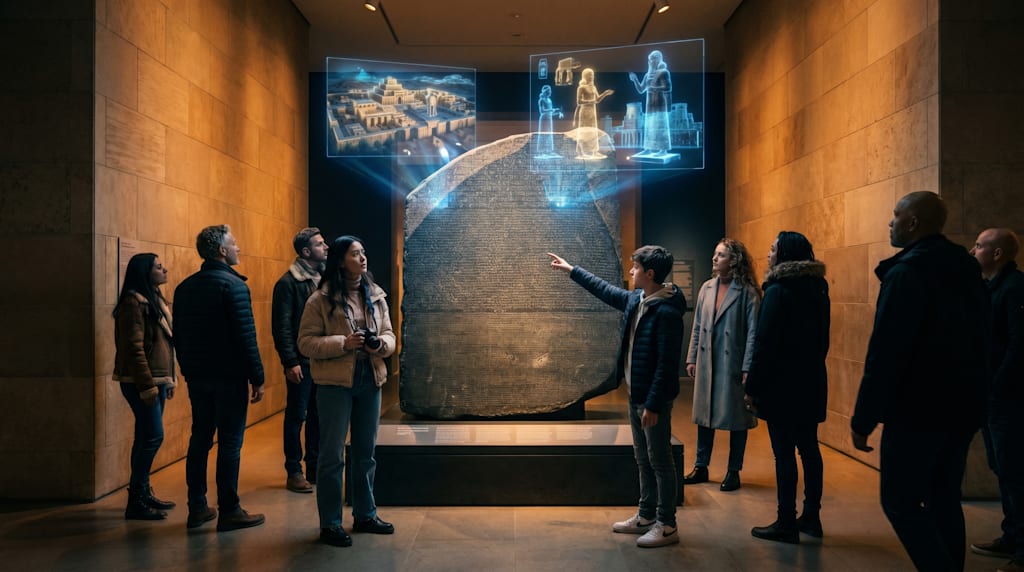
Museum attendance has been declining for decades. The Pew Research Center documented the trend years before the pandemic accelerated it. Today, competing with smartphones, streaming platforms, and on-demand entertainment, museums face a harder question than ever: why should someone leave their house?
The answer institutions are finding isn't about marketing harder. It's about becoming something worth showing up for.
That shift has a name: immersive experiences. And the data behind it is hard to argue with.
The Engagement Gap Is Real
Walk into most traditional museums today and the format is familiar. Objects sit behind glass. Plaques explain what you're looking at. You move from room to room. You leave.
That format worked for a century. It doesn't work as well now, especially for visitors under 30.
Gen Z grew up with interactive everything. Passive observation isn't a natural mode for them. Studies show that immersive museum technology — including AR overlays, VR environments, and interactive digital kiosks — can increase museum attendance by up to 170%. That's not a marginal improvement. That's a structural shift in how people relate to physical spaces.
The Smithsonian Institution has been tracking this. Their digital strategy reports show that visitors who engage with interactive elements spend more time on-site and report higher satisfaction scores than those who experience static displays alone.
What Immersive Technology Actually Does
The term "immersive" gets used loosely. It's worth being specific about what these technologies do in practice.
Augmented reality layers digital content onto physical objects. A visitor points a device at a 2,000-year-old artifact and sees it as it looked when it was new — with color, context, and sound. The object doesn't change. The experience of it does.
Virtual reality removes physical constraints entirely. A museum in London can take a visitor inside the Colosseum as it stood in 80 AD. A natural history museum can place someone inside a prehistoric ecosystem. This is experiential storytelling at a scale that no physical exhibit can match.
3D digital archives and projection mapping solve a different problem — storage. The average museum displays less than 10% of its collection at any time. The rest sits in climate-controlled storage, inaccessible to the public. Digital kiosks and 3D models make those collections available. Visitors explore what was previously invisible.
None of this replaces the original artifact. It extends access to it.
AI Makes It Personal
AI-powered immersive experiences go further than fixed technology installs. They adapt.
Traditional exhibits deliver the same experience to every visitor. AI-driven systems change that. They track how visitors move through a space, what they stop at, and what they skip. They use that data to adjust recommendations, suggest related content, and build what researchers call "tailored visitor journeys."
A child visiting a natural history museum and a doctoral candidate studying paleontology can stand in front of the same fossil. The AI-driven interface serves them different information, different depth, and different formats. Both leave having learned something relevant to them.
This is where AI-powered digital experience solutions shift from novelty to utility. Personalization at scale — applied to education and culture — produces measurable outcomes: longer visits, higher return rates, and stronger learning retention.
Companies offering digital experience solutions — like ViitorCloud, which specializes in this space — are building these systems for institutions that don't have the internal technical capacity to do it alone. A digital experience consulting company working in the museum sector has to understand both the technology and the curatorial priorities of the institution. Those two things don't always naturally align, and that's where expertise becomes the differentiator.
Experiential Innovation Isn't Optional Anymore
Some institutions treat immersive technologies as a budget line to reconsider when funding gets tight. That's a short-term calculation with long-term consequences.
The museums gaining attendance right now are investing in experiential innovation. They're treating their physical space as a platform — one that delivers personalized, interactive, and emotionally engaging experiences that digital-only alternatives can't replicate.
The American Alliance of Museums reported that institutions with significant digital engagement programs recovered faster post-pandemic and reported stronger year-over-year attendance growth. The correlation between investment in interactive technology and audience growth is consistent across institution type and size.
The museums losing ground are the ones waiting for visitors to come back on their own.
What This Means for the Sector
The argument for immersive technology in museums is no longer speculative. The evidence exists. The tools exist. The frameworks for implementing them — from AR content creation to AI-driven visitor analytics — are available through partners with deep experience in digital experience consulting and services.
What's left is institutional will.
Museums that understand their role as active, evolving environments — rather than static archives — will attract new audiences, retain existing ones, and remain relevant. Those who don't will continue to watch attendance slip.
The technology isn't the hard part anymore. Deciding to use it is.
About the Creator
ViitorCloud Technologies
As a leading software development company, we’ve empowered 500+ startups, SMBs, and enterprises to transform their operations. Upgrade your business with our AI-First Software and Platforms that automate and scale, keeping you future-ready.
Enjoyed the story? Support the Creator.
Subscribe for free to receive all their stories in your feed.
Comments
There are no comments for this story
Be the first to respond and start the conversation.