
More Than Just a Seat: How Automotive Seating Is Driving the Future of Comfort, Safety, and Smart Mobility
As vehicle technology evolves, automotive seats are becoming intelligent comfort systems that enhance safety, wellness, and driving experiences across traditional, electric, and autonomous vehicles.

When most people think about vehicle innovation, they tend to focus on engines, batteries, autonomous driving systems, or infotainment technologies. Yet one of the most important components influencing driver and passenger experience often receives far less attention: the automotive seat.
Far more than a simple place to sit, modern automotive seats have evolved into sophisticated systems that combine comfort, safety, ergonomics, connectivity, and advanced technology. Today's vehicle seats can adjust automatically, monitor posture, provide heating and cooling, offer massage functions, and even contribute to accident protection.
As consumer expectations continue rising and automotive technology advances rapidly, seating systems are becoming a key differentiator for vehicle manufacturers worldwide.
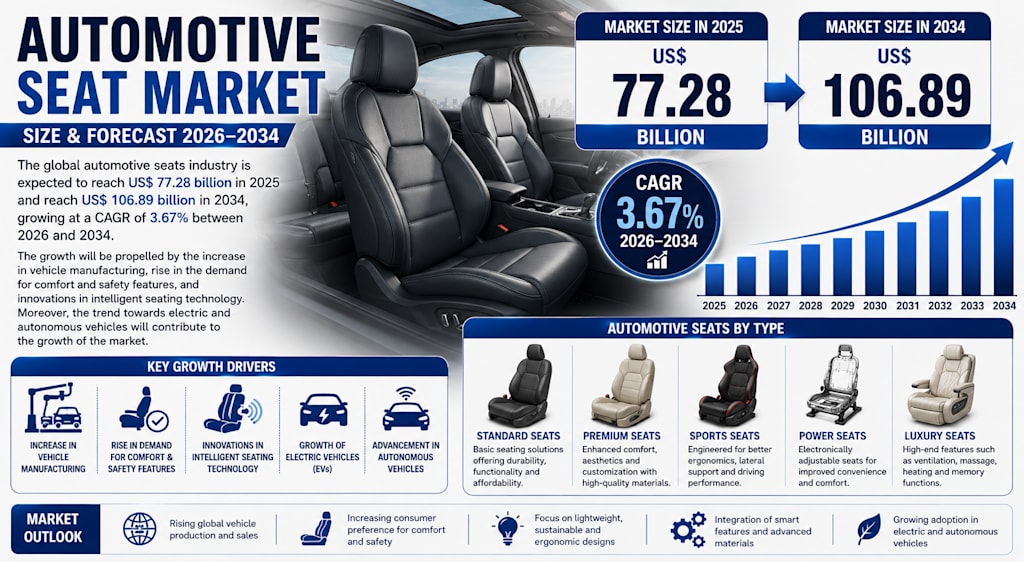
This growing importance is reflected in market projections. According to Renub Research, the Global Automotive Seat Market is expected to grow from US$ 77.28 billion in 2025 to US$ 106.89 billion by 2034, expanding at a compound annual growth rate (CAGR) of 3.67% between 2026 and 2034. Rising vehicle production, increasing demand for comfort and safety features, and advancements in intelligent seating technologies are among the primary factors driving market growth.
As vehicles become smarter, more connected, and increasingly autonomous, automotive seats are emerging as one of the most innovative areas within the transportation industry.
The Evolution of Automotive Seating
The role of automotive seats has changed dramatically over the years.
Traditional vehicle seats were designed primarily to provide basic support and comfort. Today, they serve multiple functions simultaneously.
Modern automotive seats are engineered to improve comfort, reduce fatigue, enhance posture, support safety systems, and integrate seamlessly with vehicle electronics.
They typically combine lightweight structural frames, advanced cushioning materials, sophisticated upholstery systems, and embedded technologies that interact with drivers and passengers in real time.
Automotive seats also play an important role in safety. Working alongside seatbelts, airbags, and vehicle restraint systems, seats help protect occupants during collisions by maintaining proper positioning and reducing injury risks.
The growing emphasis on occupant well-being has transformed seating from a simple component into a sophisticated technology platform.
Consumers Are Demanding Greater Comfort
One of the strongest growth drivers in the automotive seat market is rising consumer demand for comfort and luxury.
Modern drivers spend significant amounts of time commuting, traveling, and sitting in traffic. As a result, comfort has become a major purchasing consideration.
Consumers increasingly expect features such as:
- Adjustable lumbar support
- Multi-position seat controls
- Heated seating
- Ventilated seating
- Massage functions
- Memory settings
- Ergonomic designs
These features were once limited to premium luxury vehicles. Today, they are becoming increasingly common across mid-range and even entry-level vehicle segments.
Automakers are responding by investing heavily in seating innovation.
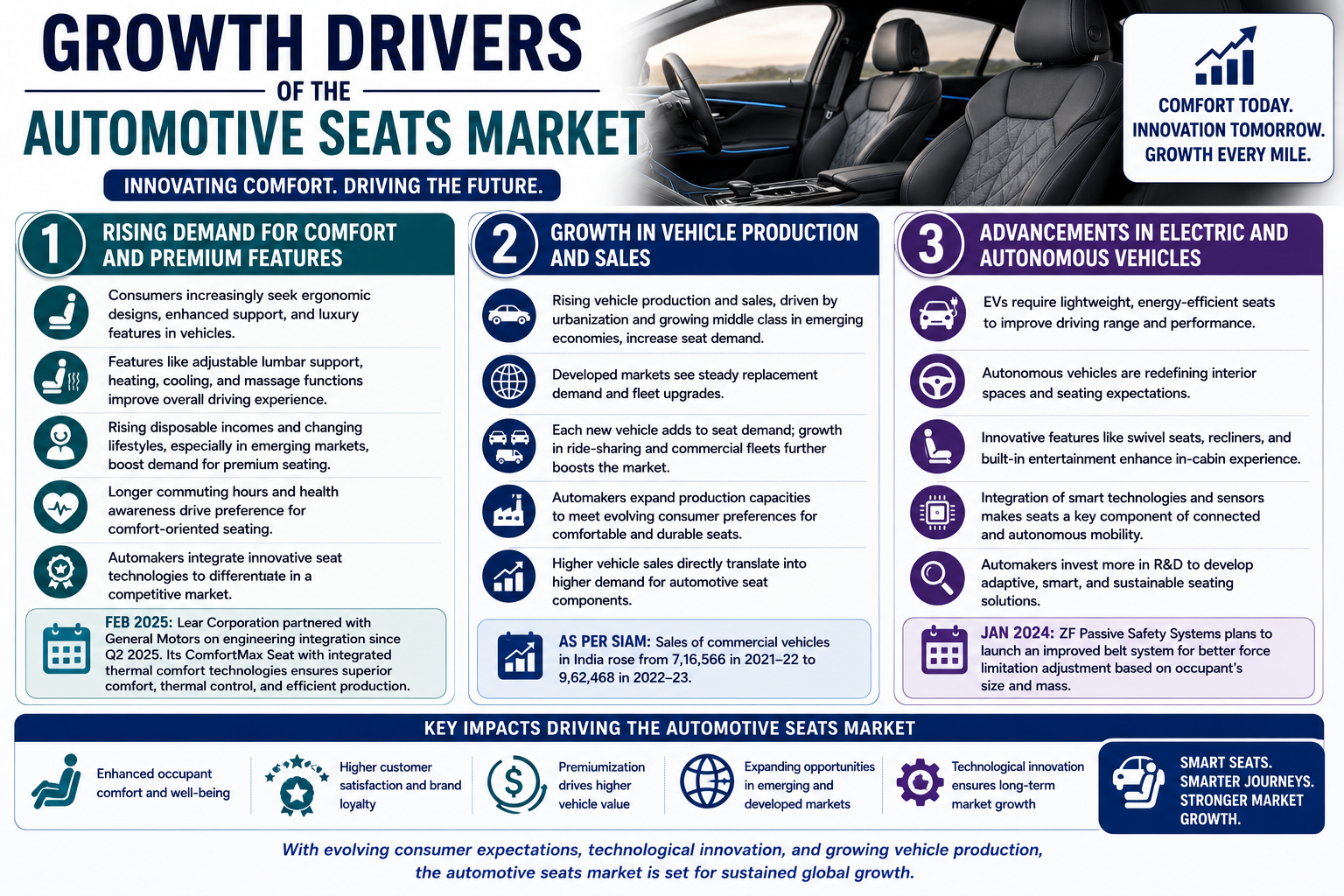
A notable example occurred in February 2025 when Lear Corporation partnered with General Motors to integrate its ComfortMax seating technology, which incorporates advanced thermal comfort systems directly into seat trim designs to enhance occupant comfort and temperature control.
As disposable incomes rise globally and consumer expectations continue evolving, demand for premium seating experiences is expected to increase.
Vehicle Production Growth Continues to Support Demand
Another major factor driving market expansion is the continued growth of global vehicle production.
Every newly manufactured vehicle requires seating systems, making automotive seats an essential component of the transportation industry.
Rapid urbanization, economic development, and expanding middle-class populations are increasing vehicle ownership across many emerging markets.
Regions such as Asia-Pacific, Latin America, and parts of Africa continue experiencing strong demand for passenger vehicles and commercial transportation.
The commercial vehicle segment is also expanding due to growing logistics, e-commerce, and infrastructure activities.
According to data cited in the report, commercial vehicle sales in India increased from approximately 716,566 units during 2021–22 to 962,468 units during 2022–23, illustrating the strong momentum within transportation markets.
As vehicle production continues rising globally, demand for seating systems will remain strong.
Electric Vehicles Are Redefining Seat Design
The rapid growth of electric vehicles (EVs) is creating new opportunities for automotive seat manufacturers.
Unlike traditional vehicles, EVs place greater emphasis on efficiency and weight reduction.
Because seat systems contribute significantly to overall vehicle weight, manufacturers are investing in lightweight materials and innovative structural designs.
Advanced composites, carbon-fiber components, recycled materials, and sustainable fabrics are becoming increasingly common in EV seating systems.
At the same time, EV buyers often expect premium technological experiences.
As a result, electric vehicles frequently feature advanced seating technologies such as climate-controlled seats, massage functions, smart memory settings, and personalized comfort controls.
Environmental sustainability is also influencing material selection.
Many EV manufacturers are replacing traditional leather with vegan, recycled, or bio-based alternatives.
For example, Tesla has continued expanding the use of vegan leather seating across its vehicle lineup, reflecting broader industry trends toward sustainable mobility solutions.
The continued expansion of electric mobility is expected to accelerate innovation throughout the automotive seating industry.
Autonomous Vehicles Could Transform Seating Forever
Autonomous driving technology may represent the most disruptive force shaping the future of automotive seats.
In conventional vehicles, seat positioning revolves around driver visibility and vehicle control.
However, fully autonomous vehicles may fundamentally change how occupants interact with vehicle interiors.
Future seating systems could include:
- Swivel seats
- Reclining lounge configurations
- Face-to-face seating arrangements
- Integrated entertainment systems
- Workstation-style environments
- Wellness-focused seating designs
These possibilities are encouraging manufacturers to rethink seat architecture entirely.
Seats are increasingly being viewed as central elements of the passenger experience rather than merely functional components.
As autonomous vehicle technology advances, automotive seating innovation is expected to accelerate significantly.
Powered Seats Are Becoming Mainstream
Powered seating systems have become one of the fastest-growing segments within the market.
Electronic seat adjustment enables drivers and passengers to customize seating positions precisely according to personal preferences.
Modern powered seats can offer:
- Automatic height adjustment
- Lumbar support control
- Recline settings
- Memory positioning
- Massage functionality
- Ventilation systems
Integration with smartphones and voice-control systems is becoming increasingly common.
As technology costs decline and consumer expectations rise, powered seats are expanding beyond luxury vehicles into broader market segments.
In 2024, Lear Corporation introduced new smart seating systems featuring enhanced digital functionality and intelligent adjustment capabilities.
This trend is expected to continue throughout the forecast period.
Ventilated Seats Are Gaining Popularity
Ventilated seating systems have become increasingly popular, particularly in regions with warm climates.
These systems use integrated airflow technology to remove heat and moisture, significantly improving passenger comfort during hot weather.
Previously limited to luxury vehicles, ventilated seats are now appearing in a growing number of mid-range models.
Consumer demand for enhanced comfort continues encouraging broader adoption.
The trend is especially important for electric vehicles, where efficient climate-control solutions can help reduce overall energy consumption.
Toyota's introduction of ventilated seating in several mid-range vehicle models illustrates how quickly this feature is moving into mainstream automotive segments.
As comfort expectations rise, ventilated seating is likely to become increasingly common.
Bucket Seats Continue to Attract Performance Enthusiasts
Bucket seats remain a popular choice within sports cars, luxury performance vehicles, and premium SUVs.
Unlike conventional seats, bucket seats provide enhanced lateral support, helping occupants remain stable during aggressive driving maneuvers.
Modern bucket seats increasingly incorporate lightweight materials such as carbon fiber and advanced composites to improve both performance and efficiency.
Manufacturers are also balancing sporty aesthetics with ergonomic comfort to appeal to a broader customer base.
As interest in performance-oriented vehicles remains strong, bucket seat demand is expected to continue growing steadily.
Sustainability Is Influencing Material Choices
Environmental concerns are increasingly shaping automotive seat design and manufacturing.
Consumers, regulators, and automakers are placing greater emphasis on sustainable production methods and eco-friendly materials.
Manufacturers are exploring alternatives such as:
- Recycled fabrics
- Bio-based foams
- Vegan leather
- Recycled polyurethane materials
- Renewable composite structures
These innovations help reduce environmental impact while maintaining comfort, durability, and aesthetic appeal.
A significant example occurred in November 2024 when Jaguar Land Rover successfully developed technology capable of recycling polyurethane seat foam from end-of-life vehicles into new seating systems.
Such developments highlight the industry's commitment to circular economy principles and sustainable manufacturing.
Challenges Continue to Affect the Industry
Despite positive growth prospects, several challenges remain.
One major concern involves the high cost of advanced seating technologies.
Features such as electronic controls, heating, ventilation, memory systems, and integrated digital technologies significantly increase production costs.
Manufacturers must balance innovation with affordability, particularly within price-sensitive vehicle segments.
Supply chain disruptions also continue affecting the market.
Automotive seating systems rely on numerous raw materials and components, including metals, foams, fabrics, electronics, and semiconductors.
Geopolitical tensions, logistics challenges, raw material shortages, and semiconductor constraints can all impact production schedules and profitability.
Managing these risks remains a key priority for industry participants.
Regional Markets Driving Growth
The United States remains a major automotive seating market due to strong consumer demand for advanced comfort and safety features.
Luxury seating systems, intelligent seat controls, and innovative child safety technologies continue gaining popularity. The launch of Chicco's Fit360 ClearTex Rotating Convertible Car Seat in 2024 reflects growing attention to safety-focused seating innovation.
Germany continues leading technological innovation through premium automotive brands such as BMW, Mercedes-Benz, and Audi. Manufacturers are increasingly integrating artificial intelligence, health monitoring systems, and sustainable materials into seating designs. In December 2024, Proma Group acquired Recaro Automotive to support future expansion and innovation.
India represents one of the fastest-growing markets due to rising vehicle production, urbanization, and increasing consumer expectations regarding comfort and quality.
The United Arab Emirates remains an important market for luxury seating technologies due to strong demand for premium and high-performance vehicles equipped with advanced climate-control features.
Final Thoughts
Automotive seats are no longer passive vehicle components. They have evolved into sophisticated systems that combine comfort, safety, connectivity, sustainability, and intelligent design.
As vehicle technology continues advancing, seating systems are becoming central to the overall driving and passenger experience.
The rise of electric vehicles, autonomous mobility, premium comfort features, and sustainable manufacturing practices is creating new opportunities for innovation throughout the automotive seating industry.
With the global automotive seat market projected to grow from US$ 77.28 billion in 2025 to US$ 106.89 billion by 2034, the future appears highly promising.
In the years ahead, automotive seats will do far more than provide a place to sit—they will actively contribute to occupant wellness, safety, entertainment, and personalized mobility experiences, making them one of the most important innovations shaping the future of transportation.
About the Creator
Enjoyed the story? Support the Creator.
Subscribe for free to receive all their stories in your feed.
Comments
There are no comments for this story
Be the first to respond and start the conversation.