
Mexico Point of Care Diagnostics Market Set for Strong Growth as Demand for Rapid Healthcare Solutions Accelerates
Rising Chronic Diseases, Government Healthcare Initiatives, and Technological Innovation Are Transforming Mexico's Diagnostic Landscape

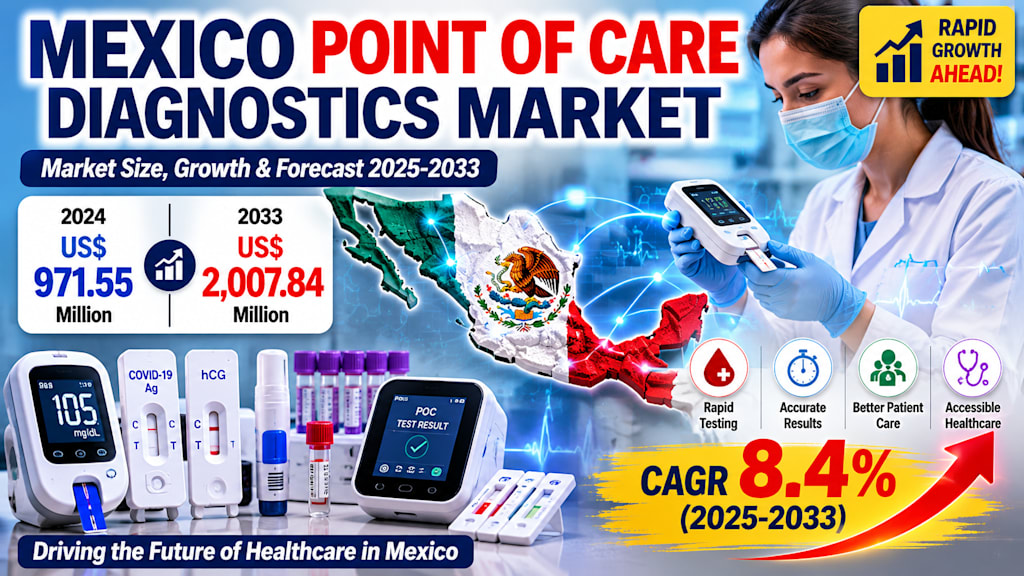
Mexico Point of Care Diagnostics Market Poised for Significant Expansion
Healthcare systems around the world are undergoing a major transformation, and Mexico is no exception. The increasing demand for faster, more accessible, and cost-effective diagnostic solutions is reshaping how healthcare providers diagnose and manage diseases. At the center of this transformation is the Point of Care (POC) Diagnostics market, a rapidly growing segment that enables healthcare professionals to conduct diagnostic tests near patients and receive immediate results.
According to Renub Research, the Mexico Point of Care Diagnostics Market is projected to grow from US$ 971.55 million in 2024 to US$ 2,007.84 million by 2033, expanding at a robust CAGR of 8.4% during 2025–2033. This impressive growth reflects the increasing importance of rapid diagnostic technologies in improving healthcare accessibility and patient outcomes across the country.
As healthcare providers continue seeking efficient diagnostic solutions, Point of Care Diagnostics is emerging as a critical component of Mexico’s healthcare ecosystem.
Understanding Point of Care Diagnostics
Point of Care Diagnostics refers to medical testing performed at or near the site of patient care rather than in centralized laboratories. These diagnostic tools provide immediate results, enabling healthcare professionals to make timely treatment decisions.
Common examples include:
Blood glucose monitoring systems
Infectious disease testing kits
Pregnancy and fertility tests
Cholesterol monitoring devices
Urinalysis testing kits
Cardiometabolic monitoring systems
These solutions reduce waiting times, improve patient convenience, and support faster medical interventions, making them increasingly valuable in both urban and rural healthcare settings.
Growing Burden of Chronic Diseases Driving Market Growth
One of the most significant drivers behind the expansion of Mexico's Point of Care Diagnostics market is the increasing prevalence of chronic diseases.
Mexico continues to face rising cases of diabetes, hypertension, cardiovascular diseases, obesity, and metabolic disorders. These conditions require regular monitoring and timely diagnosis to prevent complications and improve patient outcomes.
Cardiovascular diseases remain among the leading causes of death in Mexico, creating a growing need for continuous patient monitoring and preventive healthcare strategies. Patients living with chronic illnesses often require frequent testing, making Point of Care diagnostic devices essential tools for disease management.
Glucose monitoring kits, cholesterol test strips, and cardiometabolic monitoring devices have become indispensable in helping patients and healthcare providers track health conditions in real time. The ability to obtain immediate results allows for rapid treatment adjustments and improved long-term disease management.
As healthcare providers increasingly prioritize preventive care and early intervention, demand for Point of Care testing solutions is expected to continue rising throughout the forecast period.
Government Initiatives Strengthening Healthcare Access
The Mexican government has been actively investing in healthcare infrastructure and disease surveillance programs, creating favorable conditions for Point of Care Diagnostics adoption.
Healthcare accessibility remains a major priority, particularly in underserved rural regions where laboratory facilities may be limited. Government initiatives aimed at expanding healthcare coverage and improving early disease detection are encouraging the deployment of portable and rapid diagnostic solutions.
Programs designed to strengthen primary healthcare services are increasing the availability of diagnostic tools in community clinics, public hospitals, and remote healthcare centers.
Additionally, lessons learned from the COVID-19 pandemic have reinforced the importance of rapid testing technologies. Policymakers now recognize the critical role that Point of Care Diagnostics can play during public health emergencies by enabling quick identification, monitoring, and containment of infectious diseases.
These investments are expected to contribute significantly to long-term market growth.
Increasing Demand for Rapid and Decentralized Testing
Modern healthcare consumers increasingly expect quick and convenient medical services. Traditional laboratory testing often requires multiple visits and extended waiting periods for results, which can delay diagnosis and treatment.
Point of Care Diagnostics addresses these challenges by delivering immediate results directly at the patient's location.
This capability is particularly valuable in:
Emergency departments
Outpatient clinics
Rural healthcare centers
Home care environments
Mobile healthcare units
The demand for decentralized testing has grown substantially in recent years, especially in regions where access to centralized laboratories remains limited.
Rapid diagnostic testing not only improves patient satisfaction but also reduces healthcare costs by minimizing unnecessary hospital visits and shortening treatment initiation times.
As healthcare systems continue shifting toward patient-centered care models, the adoption of Point of Care testing technologies is expected to accelerate across Mexico.
Telemedicine and Digital Health Integration Creating New Opportunities
The rapid expansion of telemedicine and digital health services is creating new opportunities for Point of Care Diagnostics providers.
Patients increasingly rely on remote healthcare consultations, particularly for routine disease monitoring and follow-up care. Point of Care diagnostic devices enable patients to conduct tests from home and share results with healthcare providers in real time.
This integration supports:
Remote patient monitoring
Virtual consultations
Chronic disease management
Preventive healthcare programs
Improved patient engagement
Digital connectivity enhances the value of diagnostic devices by enabling healthcare professionals to track patient health trends and intervene when necessary.
As telehealth adoption continues growing throughout Mexico, Point of Care Diagnostics solutions are expected to become an essential component of connected healthcare ecosystems.
Technological Advancements Transforming Diagnostic Accuracy
Innovation remains a key factor driving market growth. Manufacturers are continuously developing more sophisticated diagnostic devices that offer greater accuracy, portability, and ease of use.
Advancements in biosensor technologies, molecular diagnostics, and artificial intelligence are helping improve test sensitivity and reliability.
Modern Point of Care systems now provide:
Faster test results
Enhanced diagnostic precision
Wireless connectivity
Cloud-based data management
User-friendly interfaces
The integration of smart technologies is making diagnostic testing more accessible to healthcare providers and patients alike.
These innovations are expanding the applications of Point of Care Diagnostics beyond traditional settings and opening new growth opportunities across various healthcare sectors.
Product Segments Driving Market Expansion
Several product categories are contributing to market growth.
Glucose Monitoring Kits
With diabetes prevalence continuing to rise, glucose monitoring devices represent one of the largest segments within the market. These tools enable patients to monitor blood sugar levels regularly and support effective disease management.
Infectious Disease Testing Kits
Rapid testing for infectious diseases remains a major growth area, particularly following the increased focus on disease surveillance and outbreak preparedness.
Pregnancy and Fertility Testing Kits
These products continue to gain popularity due to their convenience, accessibility, and growing consumer awareness regarding reproductive health.
Cardiometabolic Monitoring Devices
The increasing incidence of cardiovascular diseases and metabolic disorders is boosting demand for cardiometabolic testing solutions across healthcare facilities.
Urinalysis and Cholesterol Testing Solutions
Routine health screenings and preventive healthcare programs are driving increased adoption of these diagnostic tools.
Home Healthcare Emerging as a Major Growth Segment
The shift toward home-based healthcare is transforming the Point of Care Diagnostics industry.
Patients increasingly prefer diagnostic solutions that allow them to monitor their health without frequent visits to hospitals or clinics. Home testing devices provide convenience, cost savings, and greater control over personal health management.
The aging population and growing prevalence of chronic diseases further support the demand for home-based diagnostic solutions.
Manufacturers are responding by developing easy-to-use devices specifically designed for non-professional users. These products empower patients while reducing pressure on healthcare facilities.
As consumer awareness grows, home healthcare is expected to become one of the fastest-growing end-user segments in Mexico's Point of Care Diagnostics market.
Challenges Facing the Industry
Despite strong growth prospects, several challenges continue to affect market development.
Limited Awareness and Education
Many healthcare professionals and patients remain unfamiliar with the latest Point of Care technologies and their benefits.
Lack of awareness can slow adoption rates and limit integration into routine clinical workflows. Educational initiatives will be critical for improving understanding and encouraging broader use of these solutions.
Insufficient Training for Healthcare Providers
Effective use of Point of Care devices requires proper training. In some healthcare settings, particularly in underserved regions, providers may lack the technical expertise needed to operate advanced diagnostic systems.
Comprehensive training programs and ongoing professional development will be essential for maximizing the effectiveness of these technologies.
Regulatory and Cost Considerations
Regulatory approval processes and healthcare budget constraints may also create barriers for market participants. Manufacturers must balance innovation with affordability to ensure widespread adoption.
Competitive Landscape
The Mexico Point of Care Diagnostics market features strong competition among global healthcare technology leaders focused on innovation, product development, and strategic partnerships.
Major companies operating in the market include:
Abbott Laboratories
Becton Dickinson and Company
Danaher Corporation
F. Hoffmann-La Roche Ltd
Thermo Fisher Scientific Inc.
Sysmex Corporation
Quidel Diagnostics
Bio-Rad Laboratories Inc.
These organizations continue investing heavily in research and development to expand their diagnostic portfolios and strengthen market presence.
10 Recent Developments Among Leading Companies
1. Abbott Laboratories
Expanded digital diabetes management capabilities through enhanced connectivity features for glucose monitoring systems.
2. Roche
Continued investments in molecular Point of Care diagnostic platforms to improve rapid infectious disease detection.
3. Thermo Fisher Scientific
Strengthened diagnostic testing capabilities through ongoing innovation in molecular diagnostic technologies.
4. Danaher Corporation
Expanded healthcare diagnostics offerings through strategic investments across its life sciences and diagnostics businesses.
5. Becton Dickinson (BD)
Focused on advancing rapid diagnostic solutions and healthcare workflow efficiency technologies.
6. Sysmex Corporation
Enhanced hematology and clinical diagnostic platforms to improve diagnostic precision and laboratory integration.
7. Quidel Diagnostics
Expanded rapid testing capabilities for infectious disease detection and monitoring.
8. Bio-Rad Laboratories
Introduced advanced quality control and diagnostic testing solutions supporting healthcare providers.
9. Roche Diagnostics
Invested in digital health integration initiatives supporting remote patient monitoring.
10. Abbott Diagnostics
Continued development of portable diagnostic technologies designed for decentralized healthcare environments.
Final Thoughts
The Mexico Point of Care Diagnostics Market is entering a period of sustained growth driven by rising chronic disease prevalence, increasing healthcare accessibility, government initiatives, and rapid technological innovation.
With the market forecast to reach US$ 2.01 billion by 2033, Point of Care Diagnostics will play a vital role in transforming healthcare delivery across Mexico. Faster diagnosis, improved disease management, enhanced patient convenience, and expanding telehealth adoption are creating strong demand for these solutions.
As healthcare systems continue prioritizing efficiency and accessibility, Point of Care Diagnostics will remain at the forefront of Mexico's healthcare modernization efforts, providing significant opportunities for manufacturers, healthcare providers, and investors alike.
About the Creator
Enjoyed the story? Support the Creator.
Subscribe for free to receive all their stories in your feed.
Comments
There are no comments for this story
Be the first to respond and start the conversation.