
Meta’s Camera-Free ‘Luna’ Glasses to Address Privacy Backlash While Advancing AI Ambitions
As consumer resistance to wearable surveillance intensifies, Meta is reportedly developing a camera-less smart glasses model that prioritizes voice-based AI interaction over visual capture, a move that could redefine the product category by decoupling ambient intelligence from optical recording and addressing one of the most persistent barriers to mainstream adoption.

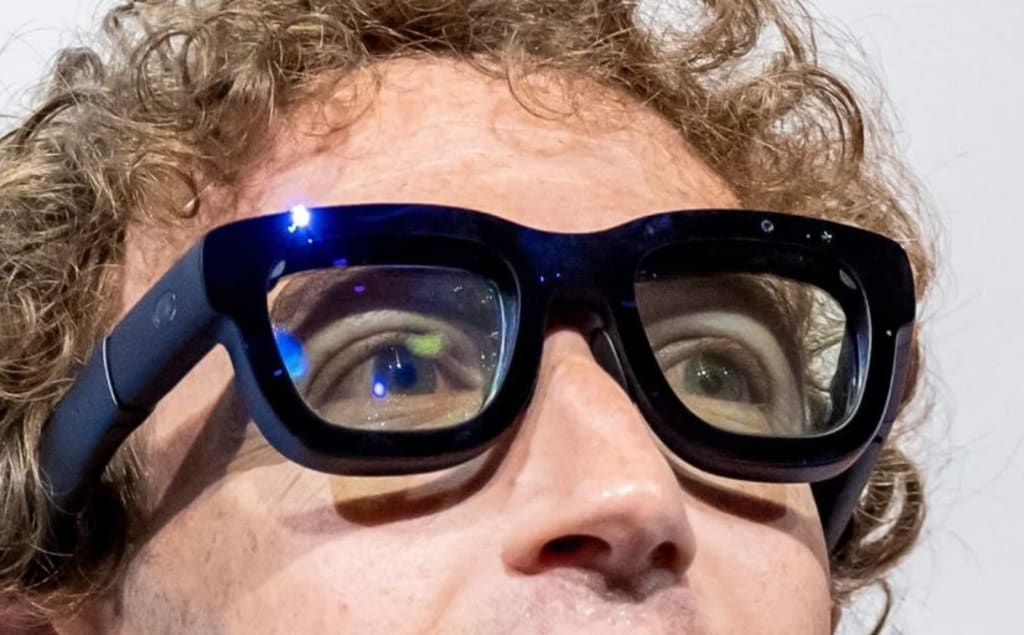
Meta’s Ray-Ban smart glasses have emerged as the commercial leader in the nascent wearables market, outselling competitors through sleek design, affordable pricing, and seamless integration with Instagram and Facebook. Yet their success has been shadowed by growing public unease over the normalization of always-on cameras in social spaces. Critics, privacy advocates, and even some early adopters have labeled the devices “pervert glasses,” citing incidents of non-consensual recording in gyms, restrooms, and private gatherings. This backlash has created a paradox: the very feature that makes the glasses technologically compelling, the ability to capture and share visual context, is also what deters a significant portion of potential users who value discretion and social trust. In response, Meta is now developing Luna, a new smart glasses variant that entirely omits integrated cameras while retaining six microphones and a dedicated side button for activating its AI chatbot and Muse agent. According to The Information, this model could be unveiled at Meta Connect next week, signaling a deliberate attempt to expand the addressable market by offering a socially acceptable alternative that still delivers core AI functionality.
The strategic rationale behind Luna extends beyond damage control; it reflects a maturing understanding of how ambient computing must evolve to gain cultural legitimacy. By removing the camera, Meta acknowledges that visual data collection is not a prerequisite for useful AI assistance. Voice-first interactions asking for directions, summarizing conversations, translating speech, or controlling smart home devices can be delivered effectively through audio alone, especially as on-device processing and low-latency cloud inference improve. The inclusion of six microphones suggests an emphasis on robust far-field voice pickup and noise cancellation, enabling reliable performance in noisy environments without relying on visual cues. The physical activation button further reinforces user agency, making AI engagement intentional rather than passive. This design philosophy aligns with emerging norms around consent and transparency in wearable tech, potentially opening doors to use cases previously off-limits: professional meetings, healthcare settings, educational institutions, and intimate social contexts where cameras are culturally or legally prohibited.
However, Luna also represents a calculated risk for Meta’s broader hardware strategy. Reality Labs continues to lose billions annually, and the company has staked much of its long-term vision on building an ecosystem where spatial awareness and multimodal input (sight + sound) enable richer AI experiences. Removing cameras may limit Luna’s utility for tasks like object recognition, real-time translation of text in the environment, or contextual memory augmentation capabilities that differentiate advanced wearables from conventional earbuds or watches. Moreover, if consumers perceive Luna as a diminished version of the flagship product, it could inadvertently reinforce the notion that camera-equipped glasses are inherently problematic, undermining confidence in Meta’s entire wearables lineup. There is also the question of whether a camera-free device can sustain premium pricing or justify continued R&D investment when its functional scope is narrower. Success will depend on whether Meta can position Luna not as a compromise, but as a distinct product category optimized for privacy-conscious users who prioritize conversational AI over visual documentation.
The timing of this pivot coincides with heightened regulatory scrutiny of wearable surveillance across Europe and North America, as well as growing corporate policies banning recording devices in workplaces and public venues. By proactively offering a compliant alternative, Meta may preempt stricter mandates and position itself as a responsible innovator rather than a defiant disruptor. Yet the deeper challenge remains cultural: convincing people that wearing technology on their face is compatible with social cohesion. Luna’s true test won’t be technical performance or sales volume, but whether it helps normalize wearables as tools of connection rather than instruments of observation. If Meta can demonstrate that meaningful AI assistance doesn’t require constant visual monitoring, it may unlock a path forward for the entire industry, one where innovation serves human comfort as much as computational capability. For now, Luna stands as both an admission of past missteps and a bet that the future of smart glasses lies not in seeing everything, but in listening better.
About the Creator
Mark Lim
Hi I am mark an automotive student and a car, tech and food enthusiast ! Im gonna try and post daily & hope you enjoy what I write and do share my page with people you know. I would gladly appreciate it! Cheers
Enjoyed the story? Support the Creator.
Subscribe for free to receive all their stories in your feed.
Comments
There are no comments for this story
Be the first to respond and start the conversation.