
Meta's $299 Smart Glasses Are a Direct Challenge to Everyone Else Building Wearables
A week after Snap's $2,195 AR glasses launch, Meta is positioning screen-less glasses as the practical entry point to wearable AI and dominating the market's cost structure in the process


Meta launched a new line of smart glasses called Meta Glasses on Tuesday at a starting price of $299, undercutting nearly every comparable wearable on the market and making a clear statement about where the company believes the smart glasses market actually has room to grow.
The timing is particularly pointed. Just a week after Snap unveiled its long-awaited consumer AR glasses at $2,195, Meta is essentially answering the market's unspoken question: what if smart glasses didn't require you to take out a small loan?

The Positioning: Practical Over Flashy
The Meta Glasses don't have a display, no augmented reality layer, no screen overlay showing notifications or information. Instead, they're built around a camera, personal speakers, and a dedicated button that triggers the Meta AI assistant (though you can customize it to launch other features). They're designed as a wearable input device paired with the Meta AI, rather than as a visual interface.
This is a fundamentally different product philosophy than the AR glasses Snap is pursuing. Meta's approach prioritizes accessibility and practical functionality over the more technically ambitious (and more expensive) goal of projecting digital information directly into your field of vision.
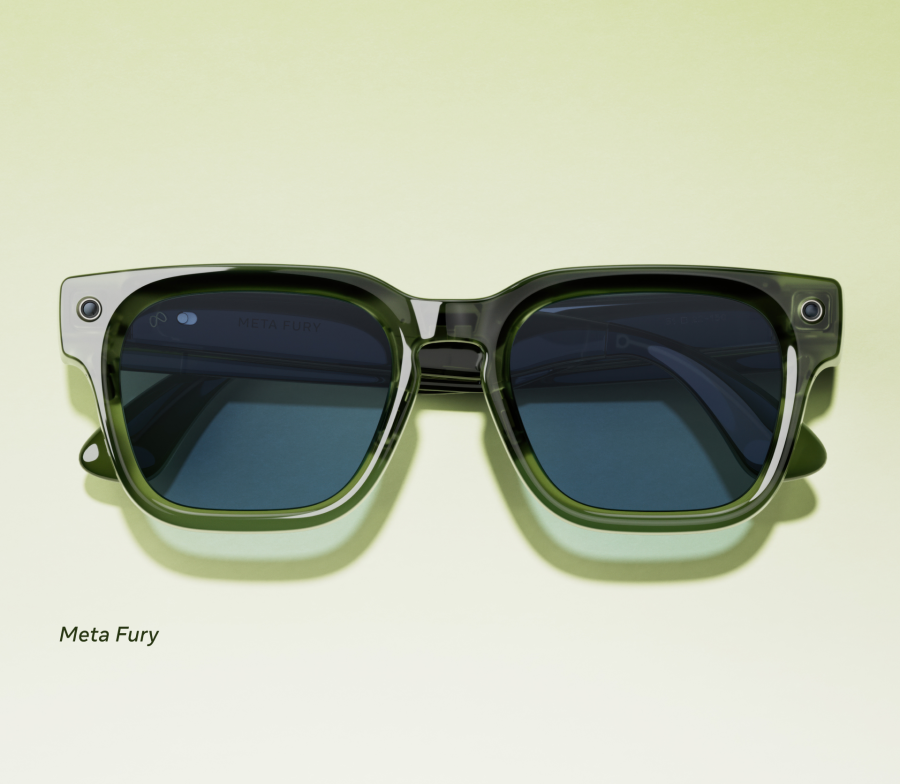
The glasses come in three distinct frame styles: the "Meta Adventurer," a rectangular design available in standard and large sizes; the "Meta Fury," a boxier frame designed to resemble popular men's eyewear; and the most notable collaboration, "Meta Glasses by Kylie," featuring a slim oval frame designed in partnership with model Kylie Jenner. That last option is a clear signal that Meta is treating these as fashion accessories, not just tech gadgets.
The Specifications That Make the Price Work
Eight hours of battery life per charge, with an additional 40 hours available through the included charging case, represents solid longevity for a wearable. The glasses can answer questions, understand what the wearer is looking at through the integrated camera, and assist with daily task management, all powered by Meta's AI assistant.
The company is positioning pedestrian navigation as a coming feature that will provide turn-by-turn directions for walking, useful enough to justify wearing glasses that constantly feed visual information to an AI model. Meta is also adding support for 14 new languages on the live translation feature, including Japanese, Mandarin Chinese, Hindi, and Korean, a move that directly addresses international markets and makes the glasses more valuable to non-English speakers.
Market Dominance Through Price
The broader context here is significant. Meta and EssilorLuxottica collectively control an estimated 80% market share in smart glasses, according to Counterpoint Research. Launching a sub-$300 product under the Meta brand itself rather than exclusively through Ray-Ban or Oakley partnerships signals a strategic pivot toward building a mass-market wearable category rather than confining smart glasses to premium, lifestyle-brand positioning.
Compare this to Snap's $2,195 Specs glasses, which offer actual AR capabilities with a display, but at a price point that immediately limits the addressable market to early adopters and professionals willing to pay for cutting-edge technology. Meta's strategy is the opposite: make smart glasses accessible enough that they become a default wearable category for everyday people, even if the initial feature set is narrower.
The AI Assistant as the Core Value Proposition
The dedicated button that triggers Meta's AI assistant represents the actual core of this product. These aren't glasses that augment your vision with digital information; they're glasses that listen, observe, and have an AI that can help you understand what you're seeing or answer questions in real-time. You point the camera at something, ask a question, and get an answer. You navigate by hearing directions rather than seeing them overlaid on the street.
It's a lower-friction entry into AI-powered wearables than AR glasses require, and the approach may actually be more useful for more people than the more technically sophisticated (and more expensive) Snap alternative.
What This Means for the Market
The divergence between Meta's affordable, screen-less approach and Snap's premium AR strategy suggests the smart glasses market isn't converging on a single form factor. Instead, it's fragmenting into cost and capability tiers just like smartphones did a decade ago. Snap is betting that AR glasses will eventually become mainstream, but is willing to serve the early adopter market at premium prices until that happens. Meta is betting that screenless smart glasses powered by capable AI will be useful enough to become truly mainstream, at which point price becomes the decisive factor.
Meta's 80% market share through EssilorLuxottica gives it the infrastructure and distribution to make a sub-$300 price point stick. Snap has to build that infrastructure from scratch while simultaneously justifying a price point that puts it in luxury watch territory.
The Kylie Jenner Factor
The collaboration with Kylie Jenner on a specific frame style is worth noting separately. It signals that Meta isn't treating these as pure tech products — it's treating them as fashion accessories that happen to be functional wearables. That positioning matters because it means adoption becomes tied to style and social cue-taking, not just utility. When a widely-followed model is wearing a specific frame style, it becomes aspirational, independent of the technology inside.
Meta's launch of $299 smart glasses without display screens represents a bet that the future of wearable AI isn't about augmented reality projected into your vision, it's about having an always-on camera and microphone paired with capable AI that understands context. It's a more pragmatic vision than the AR glasses future Snap is pursuing, and it's priced to actually reach mainstream adoption rather than serve as a luxury novelty.
Whether that bet pays off depends largely on whether AI assistants that observe and interpret your surroundings without showing you anything are actually useful enough that people will wear them daily. Meta seems confident enough to price these like consumer electronics rather than luxury items.
About the Creator
Mark Lim
Hi I am mark an automotive student and a car, tech and food enthusiast ! Im gonna try and post daily & hope you enjoy what I write and do share my page with people you know. I would gladly appreciate it! Cheers
Enjoyed the story? Support the Creator.
Subscribe for free to receive all their stories in your feed. You could also become a paid subscriber, letting them know you appreciate their work.
Comments
There are no comments for this story
Be the first to respond and start the conversation.