
Medical Gas Market Set to Reach US$ 28.61 Billion by 2033 as Home Healthcare and Respiratory Care Demand Accelerate
Rising Chronic Diseases, Aging Populations, and Advanced Medical Technologies Are Fueling Strong Global Growth in the Medical Gas Industry

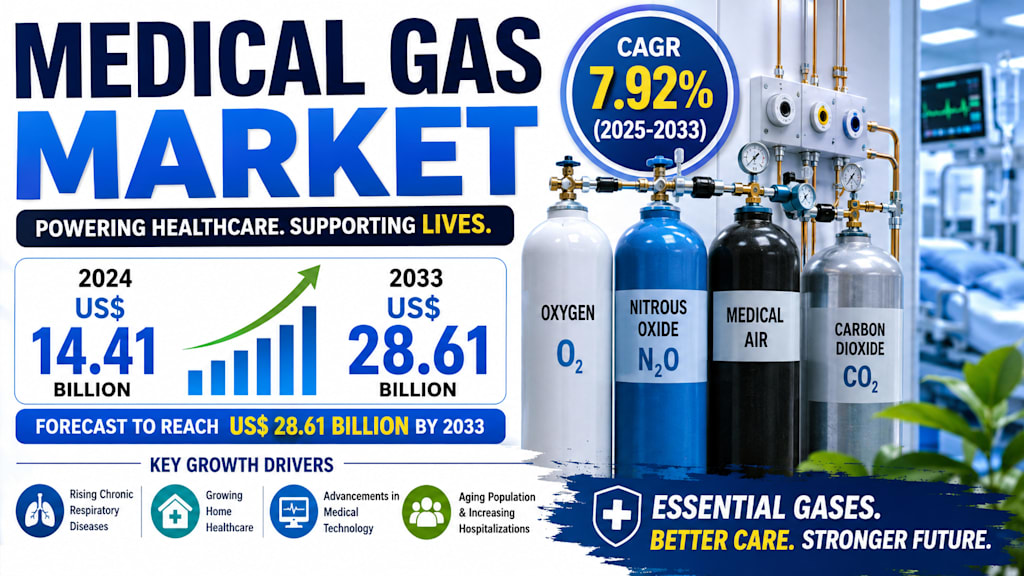
The global healthcare sector is rapidly evolving, and one of the most essential yet often overlooked components of modern patient care is the medical gas industry. From oxygen therapy in hospitals to respiratory support in home healthcare settings, medical gases have become indispensable across therapeutic, diagnostic, and emergency medical applications.
According to recent market analysis by Renub Research, the Global Medical Gas Market is projected to grow from US$ 14.41 billion in 2024 to an impressive US$ 28.61 billion by 2033, expanding at a CAGR of 7.92% during the forecast period from 2025 to 2033.
The growth reflects major changes in healthcare delivery worldwide. Increasing cases of chronic respiratory illnesses, rapid expansion of healthcare infrastructure, technological innovation, and rising demand for home-based medical services are all contributing to the strong momentum in the industry.
Why Medical Gases Are Becoming More Important Than Ever
Medical gases play a foundational role in patient treatment and healthcare operations. Essential gases such as oxygen, nitrous oxide, carbon dioxide, nitrogen, and medical air are used daily in hospitals, ambulatory surgery centers, diagnostic laboratories, and home healthcare settings.
Oxygen remains the most widely used medical gas globally due to its crucial role in respiratory therapy. Patients suffering from chronic obstructive pulmonary disease (COPD), asthma, sleep apnea, and cardiovascular diseases frequently rely on oxygen therapy to maintain stable blood oxygen levels.
Meanwhile, nitrous oxide continues to be widely utilized in anesthesia and pain management procedures, especially during surgeries and dental treatments. Carbon dioxide is extensively used in minimally invasive surgeries such as laparoscopy and endoscopy, where surgeons require a clear operating field for precise procedures.
The increasing importance of medical gases highlights how healthcare systems are moving toward more specialized, technology-driven, and patient-centric treatment models.
Chronic Respiratory Diseases Are Driving Massive Demand
One of the strongest growth drivers for the medical gas market is the increasing prevalence of chronic respiratory disorders worldwide.
Respiratory diseases such as asthma, COPD, and interstitial lung diseases continue to rise due to urban pollution, smoking habits, aging populations, and environmental factors. According to global health organizations, millions of people now require long-term respiratory support and oxygen therapy.
Asthma alone affects hundreds of millions of individuals worldwide. COPD remains one of the leading causes of death globally and continues to place enormous pressure on healthcare systems.
Patients suffering from respiratory conditions often require continuous oxygen support both inside hospitals and at home. This has significantly increased demand for portable oxygen concentrators, oxygen cylinders, and home oxygen delivery systems.
The growing burden of respiratory diseases is particularly noticeable in developing economies where urbanization and industrialization are contributing to worsening air quality.
Home Healthcare Is Transforming the Medical Gas Industry
One of the most important shifts reshaping the healthcare sector is the rise of home healthcare services. Patients increasingly prefer receiving treatment in the comfort of their homes instead of staying in hospitals for extended periods.
This trend has created enormous opportunities for the medical gas market.
Portable oxygen concentrators, home ventilators, and medical gas delivery systems are becoming more common among elderly patients and individuals suffering from chronic illnesses. Home healthcare offers greater convenience, reduced hospital costs, and improved quality of life for patients.
The expansion of telemedicine has further accelerated this transition. Doctors can now remotely monitor patients receiving oxygen therapy or respiratory support at home, improving healthcare accessibility in both urban and rural areas.
Governments and healthcare organizations are also supporting this transition through reimbursement policies and healthcare infrastructure investments. As healthcare systems continue focusing on patient-centered care, the role of medical gases in home treatment environments will continue growing rapidly.
Medical Technology Advancements Are Supporting Market Expansion
Technological innovation has significantly improved the efficiency, safety, and accessibility of medical gas systems.
Modern healthcare facilities are adopting advanced gas delivery systems that offer better monitoring, precision control, and improved patient safety. Smart medical gas management systems are helping hospitals reduce wastage while improving operational efficiency.
Innovations in minimally invasive surgical procedures have also increased demand for medical gases. Procedures such as laparoscopic surgeries rely heavily on carbon dioxide insufflation systems to create space within body cavities during operations.
Additionally, advanced respiratory care technologies, including portable oxygen concentrators and automated oxygen delivery devices, are improving treatment outcomes for patients suffering from chronic respiratory disorders.
Cryotherapy and dermatology applications are also contributing to market expansion through increased use of liquid nitrogen-based systems.
These technological developments are not only improving patient care but are also making medical gas systems more efficient, portable, and cost-effective.
Hospitals Continue to Dominate End-Use Demand
Hospitals remain the largest consumers of medical gases globally due to the massive volume of surgeries, emergency procedures, and respiratory treatments performed daily.
Medical gases are essential in intensive care units (ICUs), emergency rooms, operation theaters, neonatal care units, and respiratory therapy departments. The increasing number of hospital admissions and surgical procedures worldwide continues to strengthen market demand.
However, other healthcare segments are also witnessing rapid growth.
Ambulatory surgical centers are increasingly using medical gases for outpatient procedures and minimally invasive surgeries. Diagnostic laboratories and research institutes also require specialty gases for analytical and testing purposes.
Meanwhile, pharmaceutical and biotechnology companies depend on high-purity gases for manufacturing processes, laboratory research, and quality control operations.
North America Maintains Leadership Position
North America currently holds a significant share of the global medical gas market due to its advanced healthcare infrastructure, strong regulatory standards, and high prevalence of chronic diseases.
The United States remains a major contributor to regional growth. Rising cases of COPD, asthma, cardiovascular diseases, and sleep disorders continue driving demand for oxygen therapy and respiratory care systems.
The country also benefits from advanced healthcare technologies, high healthcare spending, and strong adoption of home healthcare services.
Additionally, strict regulatory frameworks ensure high standards for medical gas purity, storage, and distribution, supporting long-term market stability and patient safety.
Asia-Pacific Emerging as the Fastest Growing Region
While North America dominates the market today, the Asia-Pacific region is expected to witness the fastest growth during the forecast period.
Countries such as India, China, Japan, and South Korea are rapidly expanding healthcare infrastructure and investing heavily in modern medical technologies. Government healthcare initiatives and growing healthcare awareness are increasing demand for medical gas systems across hospitals and home healthcare settings.
India, in particular, is emerging as a key growth market due to rising respiratory diseases, improving healthcare accessibility, and government healthcare programs such as Ayushman Bharat.
The country’s growing middle-class population, urbanization, and increased healthcare investments are creating strong opportunities for both domestic and international medical gas suppliers.
Europe Continues to Invest in Sustainable Healthcare
European countries are also witnessing strong demand for medical gases, particularly due to aging populations and increasing respiratory care requirements.
Germany remains one of the leading European markets, supported by advanced hospital infrastructure and strong healthcare investments.
Sustainability is also becoming a major focus across Europe. Healthcare companies are increasingly working toward reducing carbon footprints associated with medical gas production and distribution.
Several hospitals and healthcare organizations across Europe are partnering with medical gas providers to implement environmentally sustainable healthcare practices.
Major Challenges Facing the Industry
Despite strong growth opportunities, the medical gas market faces several operational and regulatory challenges.
One major concern is strict regulatory compliance. Medical gases must meet extremely high purity and safety standards because they directly impact patient health. Manufacturers are required to follow complex regulations regarding production, packaging, transportation, and storage.
Compliance often involves significant investments in quality control systems, certifications, and specialized infrastructure.
Another major challenge is the high cost of production and storage. Medical gases require specialized compression systems, liquefaction technologies, temperature-controlled storage, and secure transportation systems.
Supply chain disruptions can also affect availability, particularly during healthcare emergencies or global crises.
However, despite these challenges, long-term industry fundamentals remain highly positive due to rising healthcare demand worldwide.
Competitive Landscape and Industry Leaders
The medical gas market remains highly competitive, with major international players investing in innovation, acquisitions, and strategic partnerships to strengthen their market presence.
Leading companies operating in the industry include:
Air Liquide
Linde PLC
Atlas Copco Group
INOX-Air Products Inc.
TAIYO NIPPON SANSO CORPORATION
MATHESON TRI-GAS, INC.
HORIBA Group
SOL India Private Limited
These companies are actively focusing on improving medical gas technologies, expanding healthcare partnerships, and strengthening global distribution networks.
10 Recent Developments in the Medical Gas Industry
Atlas Copco Group acquired Medi-teknique Ltd. in January 2025 to strengthen its medical gas maintenance operations in the United Kingdom.
Air Liquide partnered with 20 hospitals across Europe to reduce healthcare-related carbon emissions.
Increasing adoption of portable oxygen concentrators is improving home healthcare accessibility worldwide.
Smart gas monitoring systems are being integrated into modern hospitals for enhanced safety and operational efficiency.
Several healthcare providers are expanding telemedicine-linked oxygen therapy programs.
Growing investments in minimally invasive surgical technologies are increasing demand for carbon dioxide systems.
Medical gas suppliers are focusing on sustainable and energy-efficient production technologies.
Emerging economies are expanding hospital infrastructure to improve access to respiratory care.
Governments are strengthening reimbursement support for home oxygen therapy systems.
Advanced cryotherapy and dermatology applications are creating new commercial opportunities for specialty medical gases.
Final Thoughts
The global medical gas market is entering a transformative phase driven by rising healthcare demand, technological advancement, and the growing importance of respiratory care.
As chronic diseases continue increasing worldwide and healthcare systems shift toward home-based treatment models, medical gases will become even more essential to modern healthcare delivery.
From hospitals and ambulatory surgical centers to home healthcare and telemedicine platforms, the need for safe, efficient, and accessible medical gas systems is expected to rise steadily over the next decade.
With the market projected to surpass US$ 28.61 billion by 2033, the industry presents strong opportunities for healthcare providers, technology companies, manufacturers, and investors alike.
In the years ahead, innovation, sustainability, and patient-centered care will define the future direction of the global medical gas industry.
About the Creator
Enjoyed the story? Support the Creator.
Subscribe for free to receive all their stories in your feed.
Comments
There are no comments for this story
Be the first to respond and start the conversation.