
May Mobility Goes Public: A $1.4 Billion Bet on the Asset-Light Robotaxi Model
The autonomous vehicle startup’s SPAC merger marks a pivotal moment for pure-play robotaxi companies, testing whether Wall Street will reward a partnership-first strategy over vertical integration as the industry grapples with profitability and scale.

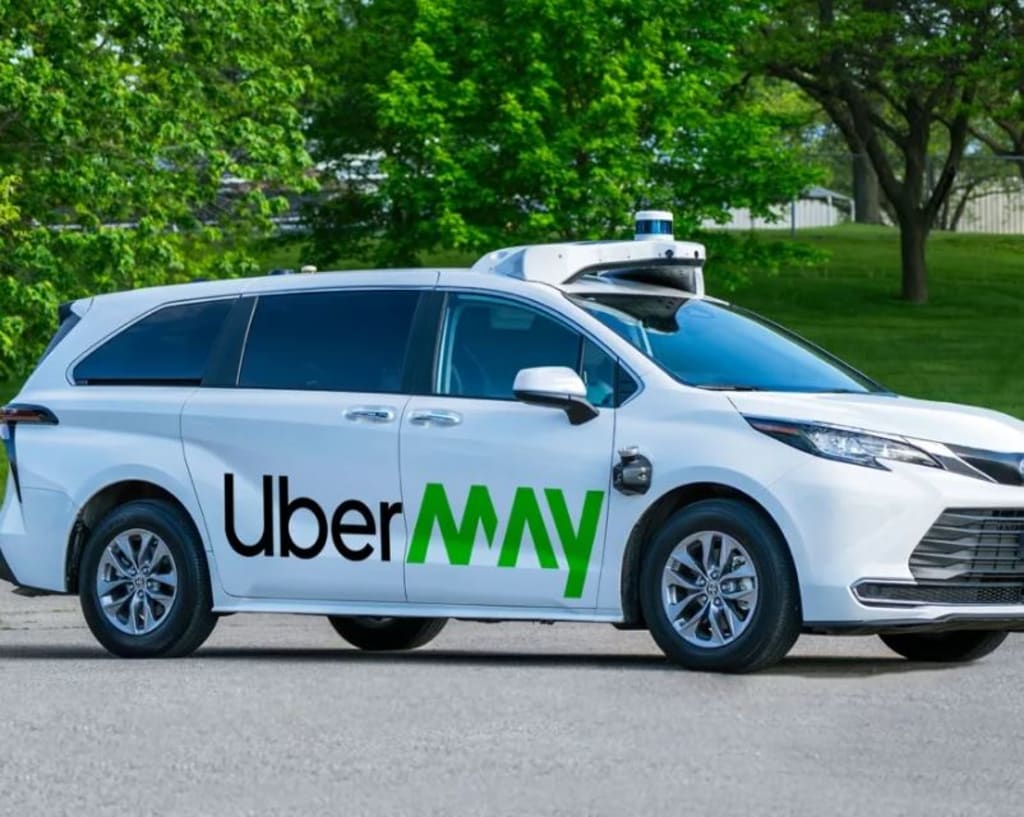
May Mobility is set to become the first publicly traded company in the United States focused exclusively on autonomous ride-hailing, following its announced merger with special purpose acquisition company (SPAC) ACP Holdings Acquisition Corp. The deal values the Ann Arbor-based startup at $1.4 billion and could raise more than $300 million in capital, comprising up to $217 million from the SPAC’s trust account and a $120 million private investment in public equity (PIPE). However, the final amount of cash reaching May Mobility remains uncertain, as SPAC shareholders retain the right to redeem their shares prior to closing, a mechanism that has significantly reduced proceeds for many recent de-SPAC transactions. Once complete, the merger will position May Mobility as a unique bellwether in the autonomous vehicle sector, distinguishing it from diversified giants like Tesla, Alphabet’s Waymo, and Rivian, as well as trucking-focused peers Aurora and Kodiak. Investors and analysts alike will be watching closely to determine whether the public markets have an appetite for a pure-play robotaxi venture that prioritizes strategic partnerships over asset ownership.
Central to May Mobility’s pitch is its “asset-light” and “partnership-first” business model, a deliberate departure from the capital-intensive vertical integration pursued by many competitors. Rather than owning and operating fleets of vehicles itself, May Mobility sells its autonomous Toyota Siennas to fleet partners while retaining control over the critical software stack, remote supervision infrastructure, and over-the-air updates. In exchange, the company generates revenue through fixed licensing fees or per-trip royalties. This approach aims to reduce balance sheet risk and accelerate geographic expansion by leveraging existing mobility operators’ local expertise, regulatory relationships, and customer bases. Currently, May Mobility operates in three U.S. locations, Eden Prairie and Grand Rapids, Minnesota, and Atlanta via a partnership with Lyft, and has completed over 550,000 paid rides covering more than one million miles. Last year, these deployments generated approximately $10 million in revenue against a cash burn of $93 million, underscoring both the traction and the significant path to profitability that lies ahead. The company is also expanding internationally, having launched a trial deployment in Japan and planning commercial operations in Arlington, Texas, with Uber by late 2026 or early 2027.
The capital raised through the SPAC merger is earmarked for two critical priorities: advancing full driverless operations and reducing hardware costs. Removing safety drivers remains the most significant technical and regulatory hurdle for any robotaxi operator; achieving this milestone is essential to unlocking unit economics that can support sustainable growth. Simultaneously, May Mobility plans to invest in supply-chain optimizations to lower its bill-of-materials costs, making its vehicles more affordable for fleet partners and improving margin potential. New geographic deployments are also expected to be announced later this year, signaling continued momentum despite the broader industry’s consolidation and retrenchment. Founded in 2017, May Mobility has navigated a tumultuous period for autonomous vehicles, surviving the collapse of numerous peers by maintaining disciplined execution and avoiding overextension. Its decision to go public now reflects confidence not only in its technology but in its differentiated go-to-market strategy one that bets on collaboration rather than conquest.
Ultimately, May Mobility’s public debut serves as a stress test for the entire autonomous ride-hailing thesis. Can a company that does not own its vehicles achieve the scale, data density, and operational excellence required to compete with vertically integrated behemoths? Will investors value recurring software revenue and partnership leverage over direct fleet ownership? And perhaps most importantly, can the asset-light model deliver a credible path to profitability before investor patience expires? The answers will shape not only May Mobility’s future but the trajectory of the entire robotaxi industry. As the company transitions from private startup to a public entity, it carries with it the hopes of a sector still searching for its definitive business model and the scrutiny of a market that has grown increasingly skeptical of promises unbacked by profits.
About the Creator
Mark Lim
Hi I am mark an automotive student and a car, tech and food enthusiast ! Im gonna try and post daily & hope you enjoy what I write and do share my page with people you know. I would gladly appreciate it! Cheers
Enjoyed the story? Support the Creator.
Subscribe for free to receive all their stories in your feed.
Comments
There are no comments for this story
Be the first to respond and start the conversation.