
Max Hodak and Science Corporation’s Bid to Redefine Human-Machine Interaction
At TechCrunch Disrupt 2026, the Neuralink co-founder will unveil early results from U.S. human trials of a biohybrid brain-computer interface, arguing that the next technological epoch will be defined not by better displays or faster processors, but by direct neural integration that restores function and adapts to human biology.

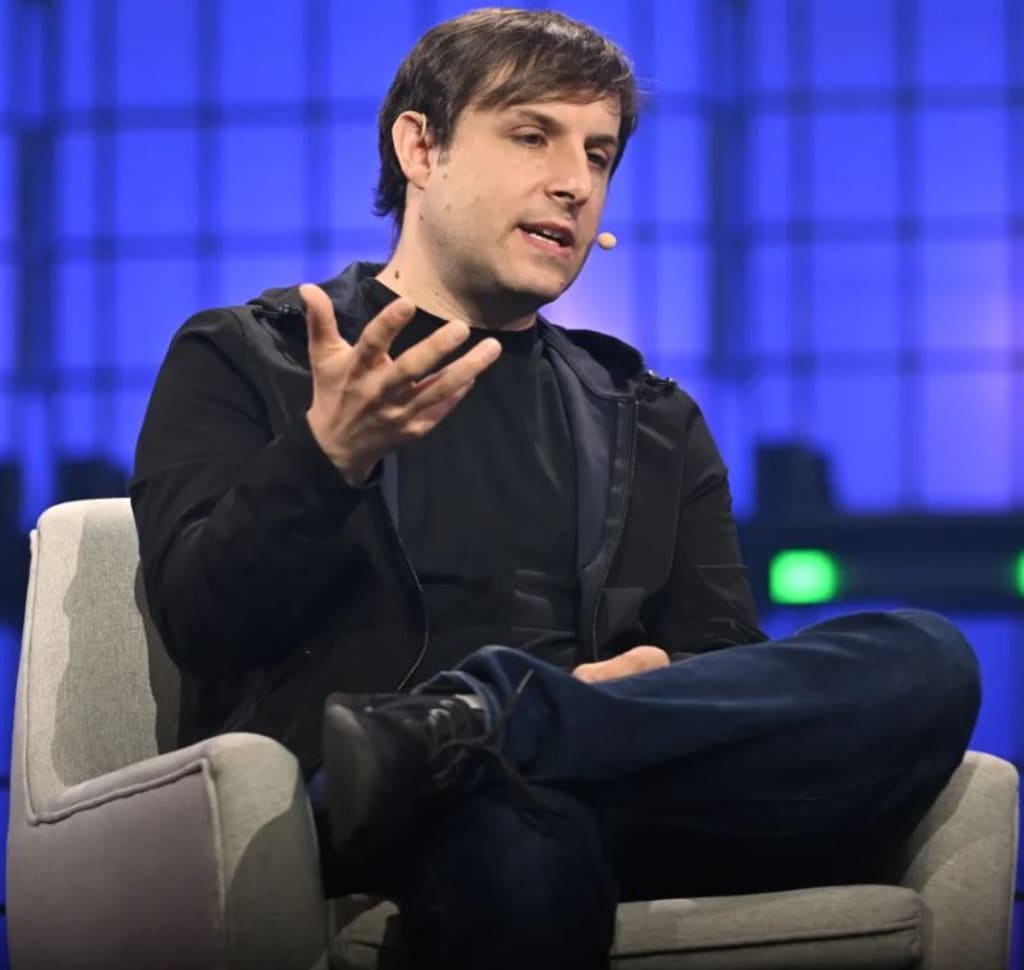
When most people envision interacting with technology, they picture tactile inputs: fingers on glass, keys clacking beneath wrists, or voice commands issued into the void. For Max Hodak, CEO of Science Corporation, these paradigms are already obsolete relics of a pre-neural era. Having spent his career betting that the bandwidth between human cognition and digital systems is catastrophically narrow, Hodak is now poised to present preliminary data from the first U.S. human trials of Science Corp’s biohybrid brain-computer interface (BCI) at TechCrunch Disrupt 2026. In his “Beyond Screens” session on the Disrupt Stage, he will articulate a vision where technology no longer demands adaptation from humans, but instead reshapes itself around neural signals, creating interfaces that are less about command-and-control and more about symbiotic communication. This presentation comes at a pivotal moment for the BCI field, as companies transition from engineering prototypes to clinical validation, and as investors begin to distinguish between speculative neuroscience and viable medical devices.
Hodak’s credibility in this space is rooted in a decades-long trajectory through the intersection of biology and computation. A programmer since age six and a biomedical engineer by training at Duke University, he cut his teeth in Miguel Nicolelis’ pioneering BCI lab before co-founding Transcriptic, a robotic cloud laboratory that automated life sciences research. His most prominent chapter began in 2016 as co-founder and initial president of Neuralink, where he helped transform brain implants from academic curiosities into cultural touchstones. Yet his departure to found Science Corporation in 2021 signaled a strategic divergence: while Neuralink pursued broad consumer and therapeutic applications with high-channel-count cortical arrays, Science Corp has focused on targeted, clinically validated interventions for specific neurological deficits. The company’s PRIMA implant, which uses retinal chips paired with camera-equipped glasses to restore functional vision in patients with severe degenerative blindness, stands as tangible proof of concept. Since its founding, Science Corp has raised $230 million in Series C funding at a $1.5 billion valuation, underscoring investor confidence in its disciplined, indication-first approach over moonshot ambition.
The upcoming Disrupt talk will likely center on what Hodak’s team has learned from translating bench science into human physiology, a process far messier than simulation or animal models suggest. Early trial data may reveal insights about signal stability, biocompatibility, and the cognitive load required to interpret artificial sensory input. But beyond vision restoration, Hodak envisions a broader therapeutic platform: implanted sensors capable of modulating neural activity to treat Parkinson’s disease, predict epileptic seizures before onset, or even stimulate neuroplasticity to repair damaged circuits. These ambitions hinge on solving fundamental challenges that have plagued BCIs for decades: immune rejection, long-term signal degradation, power delivery without tethered hardware, and ethical frameworks for neural data privacy. Unlike earlier generations of BCI startups that prioritized channel count as a proxy for capability, Science Corp appears to be optimizing for clinical utility per electrode a metric that matters more to regulators, payers, and patients than raw technical specs.
For attendees at Disrupt, Hodak’s session represents more than a status update; it is a case study in navigating the valley of death between breakthrough science and scalable medicine. His perspective carries unique weight given his role in shaping both the scientific and public narratives around neural interfaces. As AI agents grow more autonomous and screens become increasingly saturated with synthetic content, the appeal of bypassing traditional I/O altogether gains urgency not as a transhumanist fantasy, but as pragmatic infrastructure for accessibility, rehabilitation, and eventually, augmented cognition. Whether Science Corp’s biohybrid approach proves superior to competing modalities remains an open question, but Hodak’s track record suggests he understands that winning in this space requires patience, precision, and partnerships with clinicians who care more about patient outcomes than press releases. With ticket savings expiring September 25, Disrupt offers a rare opportunity to hear directly from one of the few founders who has lived through multiple cycles of BCI hype and disillusionment and emerged with a company still standing, still testing, and still pushing toward a future where the boundary between mind and machine is not erased, but thoughtfully renegotiated.
About the Creator
Mark Lim
Hi I am mark an automotive student and a car, tech and food enthusiast ! Im gonna try and post daily & hope you enjoy what I write and do share my page with people you know. I would gladly appreciate it! Cheers
Enjoyed the story? Support the Creator.
Subscribe for free to receive all their stories in your feed. You could also become a paid subscriber, letting them know you appreciate their work.
Comments
There are no comments for this story
Be the first to respond and start the conversation.