

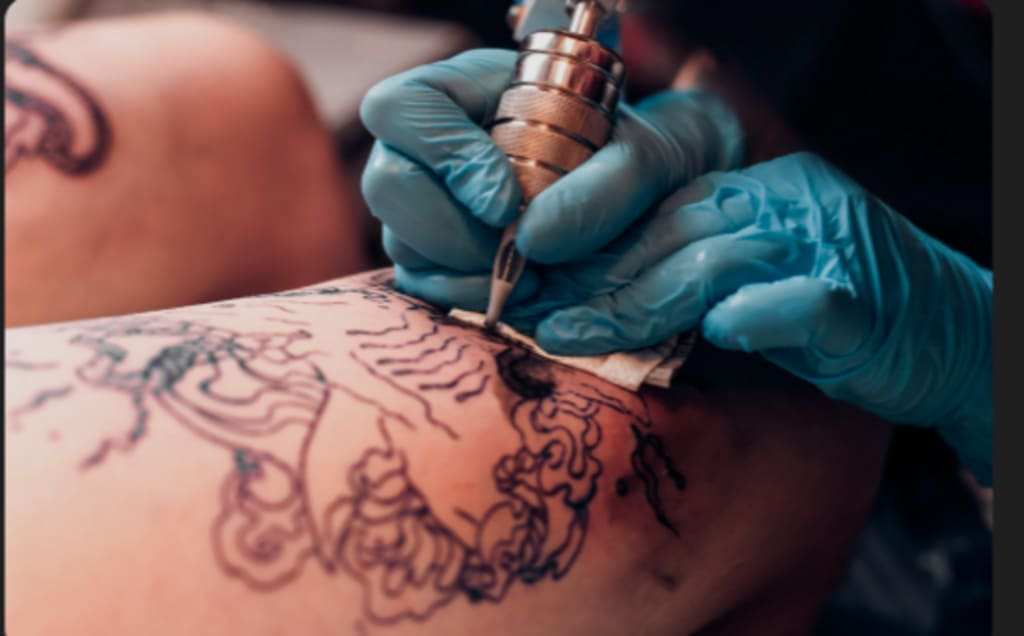
Could fine line tattooing be the creative skill that turns your passion for art into a professional career?
Fine line tattoos are popular with clients who appreciate delicate, understated and detailed designs. Fine line work gives tattoo artists an opportunity to create artwork where precision matters. However, creating clean, delicate tattoos involves much more than using a smaller needle.
For aspiring tattoo artists, a structured fine line tattoo course can provide a foundation for developing these skills. Jobs and Skills Australia reports approximately 3,700 people employed as Body Artists, with 51% working part-time. Because tattooing penetrates the skin, professional preparation must extend beyond aesthetics.
1. Understand fine line fundamentals
Fine line tattooing is characterised by delicate, precise lines and subtle detail. A small mistake can be highly visible in minimalist work. Artists need to understand how design, equipment, technique and skin interact.
Patience is essential. Adding excessive detail does not necessarily improve a tattoo. Strong fine line work uses detail purposefully while maintaining clarity and balance.
2. Develop drawing skills
Drawing provides an important foundation.
Practise straight lines, curves, circles and controlled patterns before attempting complex artwork. Repetition helps develop the hand control needed to translate designs into tattoos.
3. Learn tattoo machine control
A tattoo machine is a precision tool. Training should introduce machine setup, needle configurations, cartridges, voltage, hand speed, needle depth, movement and equipment maintenance.
Understanding how equipment behaves is more valuable than memorising one setting.
4. Practise line control
Line control is central to fine line tattooing. Practice skins can help develop hand control before progressing to supervised work on people.
The goal is repeatable technique rather than simply producing an impressive practice tattoo.
5. Understand needle selection and skin
Different needle configurations serve different purposes. A smaller liner may suit delicate details, but choosing the smallest needle does not automatically create the best fine line tattoo. Design, skin, technique and the desired result all matter.
Skin is not a flat canvas. Its texture, elasticity, curves and movement can affect the appearance of a tattoo. Understanding anatomy and body contouring helps artists create designs that flow naturally with the body.
6. Master placement and design
Even an excellent design can look awkward when positioned poorly. Consider size, orientation, body movement, surrounding anatomy and how the tattoo appears from different angles.
Consultation is important. Fine line work also benefits from thoughtful negative space, balanced proportions and appropriate detail. Consultation also helps establish realistic expectations before the procedure begins. Good artists balance the client's vision with what is appropriate for the chosen placement and design. This approach supports decisions and helps clients feel informed and prepared throughout the complete tattoo process.
7. Make hygiene a priority
Tattooing is a skin penetration procedure, so infection prevention is essential. NSW Health highlights the importance of infection control because tattooing can create opportunities for infections to spread.
Professional training should cover hand hygiene, protective equipment, workstation preparation, sterile equipment, single-use items, sharps disposal, surface cleaning, cross-contamination prevention and waste management.
Requirements vary between Australian states and territories, so artists should check the rules applicable to their location and local council.
8. Communicate with clients
Tattooing is a personal service. Clients may have an idea that needs to be adapted for their chosen body area. Good consultation should cover size, placement, style, meaning, existing tattoos, preferences and expected detail.
Artists should also explain when a design needs to be simplified or resized. Clear communication can prevent disappointment and build trust.
9. Provide aftercare and build a portfolio
Professional responsibility continues after the tattoo is completed.
As skills develop, create a portfolio showing precision and different capabilities, such as botanical, lettering, geometric and illustrative work.
10. Choose training and keep learning
When comparing a fine line tattoo course, consider whether it covers design principles, skin anatomy, body contouring, equipment, needle selection, machine setup, sanitation, stencil placement, application, consultation, aftercare and portfolio development.
After training, continue drawing, practising controlled movements, studying anatomy and reviewing finished work.
Turn precision into your craft
Fine line tattooing may look effortless when performed by an experienced artist, but clean, delicate lines require drawing ability, machine control, design knowledge, skin awareness and disciplined practice.
A structured fine line tattoo course can help aspiring artists build these foundations. Tattooing should always be approached as a professional skin penetration procedure, with hygiene, sterile equipment and safe working practices treated as essential.
The strongest designs are not necessarily the most complicated. They are the ones where every line has a purpose. With structured education, deliberate practice and professional standards, you can gradually develop the precision and confidence needed to explore your own style.
So, are you ready to turn your passion for delicate tattoo art into a skill you can continue refining for years to come?
About the Creator
Gulshan
SEO Services, Guest Post & Content Writter.
Enjoyed the story? Support the Creator.
Subscribe for free to receive all their stories in your feed.
Comments
There are no comments for this story
Be the first to respond and start the conversation.