
Malaysia Game-Based Learning Market Expected to Reach US$ 512.01 Million by 2034 as Digital Education Transformation Accelerates
Rising internet penetration, government-backed digital education initiatives, and growing demand for interactive learning experiences are fueling rapid growth in Malaysia’s game-based learning industry.

Malaysia’s education sector is undergoing a major technological transformation as schools, universities, corporations, and government institutions increasingly adopt interactive digital learning platforms.
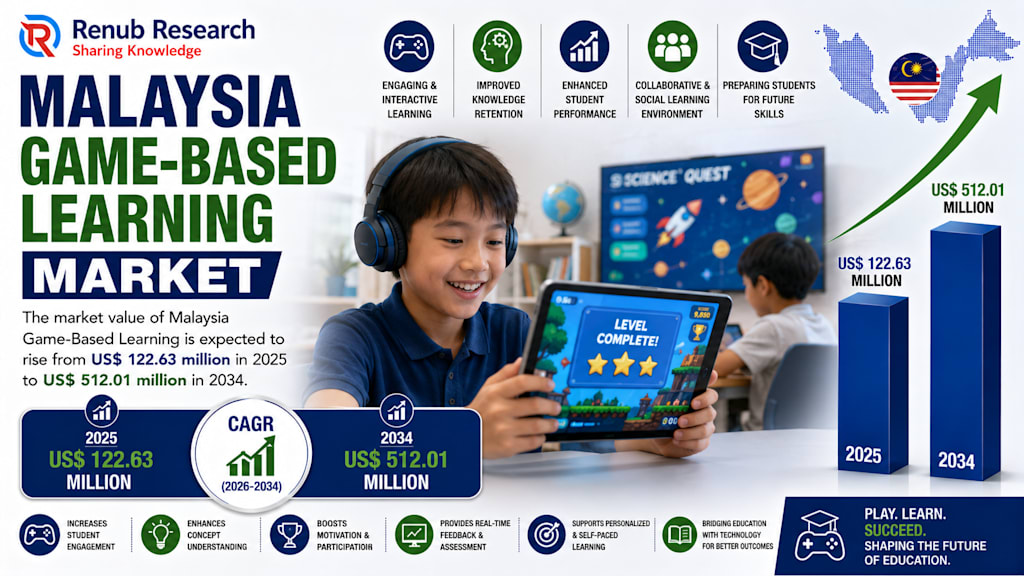
According to Renub Research, the Malaysia game-based learning market is projected to grow from US$ 122.63 million in 2025 to US$ 512.01 million by 2034, expanding at a remarkable CAGR of 17.21% during 2026–2034.
The market’s rapid growth is being driven by increasing digitalization in education, rising adoption of interactive teaching methods, widespread smartphone usage, expanding internet connectivity, and strong government support for e-learning initiatives.
From AI-powered educational games to cloud-based learning platforms and immersive AR/VR classrooms, game-based learning is rapidly transforming how Malaysians learn, train, and develop professional skills.
Game-Based Learning Is Reshaping Education
Game-based learning (GBL) refers to the use of gaming elements and interactive digital experiences to improve learning engagement, knowledge retention, and problem-solving skills.
GBL solutions often include:
- Simulations
- Quizzes
- Puzzles
- Role-playing activities
- Educational adventure games
- Interactive challenges
Key gamification features such as:
- Reward systems
- Points
- Badges
- Leaderboards
- Instant feedback
help motivate learners and improve participation.
Game-based learning is increasingly used across:
- Primary schools
- Universities
- Corporate training programs
- Government education initiatives
The approach is particularly effective because it combines entertainment with education, making learning more engaging and personalized.
Malaysia’s young and digitally connected population has played a major role in accelerating demand for these technologies.
Government Digital Education Initiatives Are Fueling Growth
One of the biggest growth drivers behind Malaysia’s game-based learning market is strong government support for digital education transformation.
National initiatives such as:
- Malaysia Education Blueprint
- Digital Economy Blueprint (MyDIGITAL)
- National Artificial Intelligence Roadmap (NAIR)
- Digital Education Policy (DEP)
are encouraging integration of technology into classrooms and training programs.
These policies aim to improve:
- Digital literacy
- Smart classroom adoption
- Technology-driven teaching methods
- Workforce readiness
Educational institutions across Malaysia are increasingly adopting:
- Interactive learning platforms
- Gamified educational tools
- AI-powered learning systems
to improve student performance and engagement.
Government investment in:
- Teacher training
- Digital infrastructure
- ICT integration
- Smart education ecosystems
continues accelerating market expansion.
Collaborations between educational institutions and private edtech companies are also helping create localized and culturally relevant educational content.
Smartphone Usage and Internet Penetration Continue Expanding Access
Malaysia’s strong digital connectivity is another major factor driving rapid adoption of game-based learning platforms.
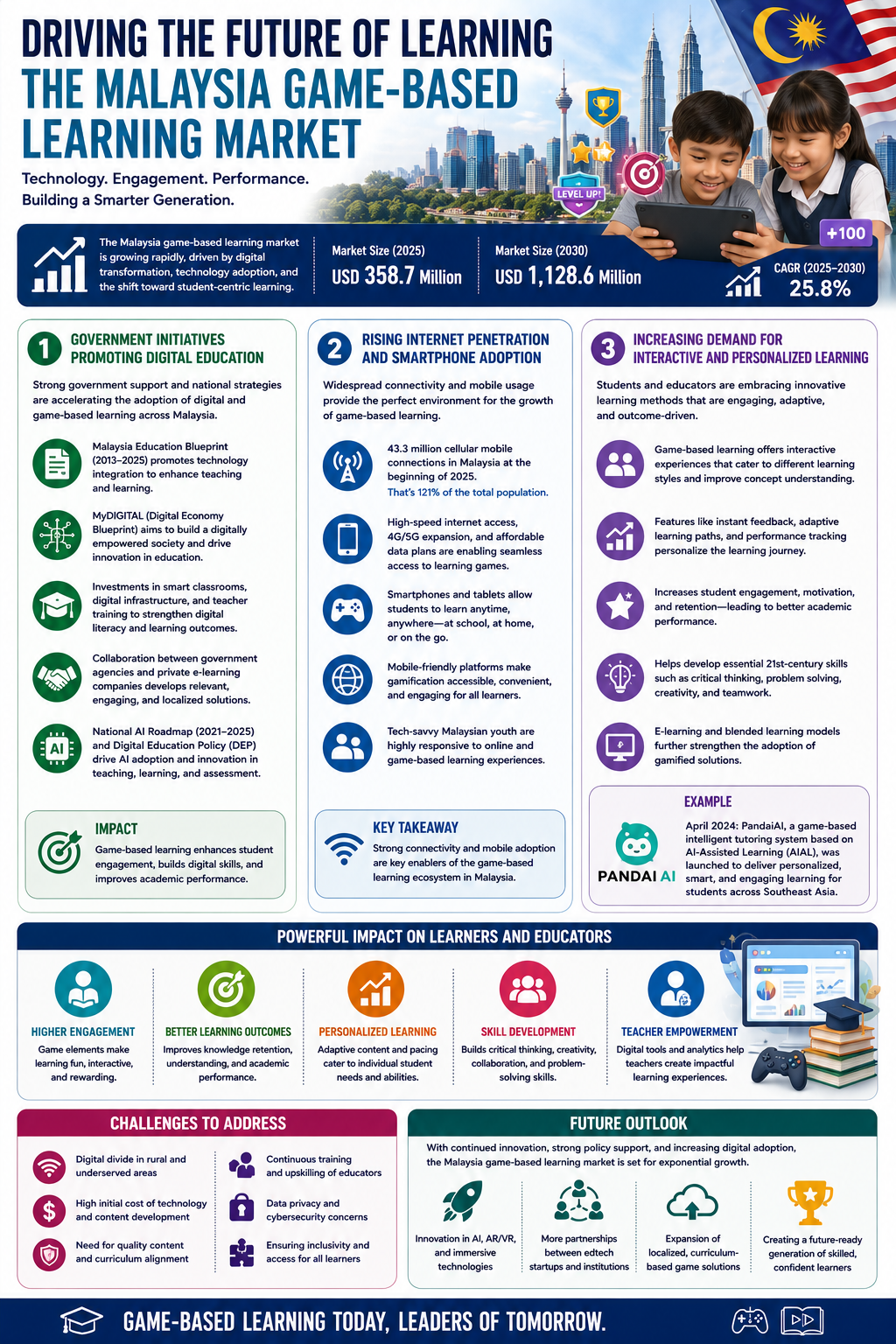
According to the report, Malaysia recorded approximately 43.3 million mobile cellular connections at the beginning of 2025, representing around 121% of the country’s population.
The widespread use of:
- Smartphones
- Tablets
- Mobile internet
- High-speed broadband
has made mobile learning more accessible than ever before.
Students can now access educational games and interactive learning platforms:
- At school
- At home
- During travel
- Through remote learning environments
The expansion of 4G and 5G connectivity networks has significantly improved the delivery of interactive educational content.
Malaysia’s tech-savvy younger generation is particularly receptive to gamified learning experiences that combine entertainment with educational value.
As digital infrastructure continues improving nationwide, game-based learning platforms are expected to become even more accessible across urban and rural regions.
Personalized and Interactive Learning Is Becoming Essential
The shift toward student-centered education is creating strong demand for more interactive and personalized learning experiences.
Traditional teaching methods are increasingly being supplemented with gamified learning systems that adapt to different learning styles and student performance levels.
Modern game-based learning platforms often include features such as:
- Adaptive learning pathways
- Instant feedback
- Progress tracking
- Personalized recommendations
- Performance analytics
These systems help improve:
- Student engagement
- Motivation
- Knowledge retention
- Problem-solving skills
Corporate organizations are also adopting game-based learning tools to train employees in areas such as:
- Leadership
- Teamwork
- Communication
- Critical thinking
- Technical skills
The increasing adoption of blended learning models and e-learning platforms is further accelerating demand for gamified educational solutions.
In April 2024, PandaiAI introduced an AI-assisted game-based tutoring system designed to provide personalized learning experiences for school students across Southeast Asia.
AI-Based Learning Games Are Emerging Rapidly
Artificial intelligence is becoming one of the most transformative technologies within Malaysia’s game-based learning market.
AI-powered educational games use:
- Behavioral analysis
- Performance tracking
- Adaptive learning algorithms
- Real-time feedback systems
to personalize educational experiences for individual learners.
These technologies can automatically adjust difficulty levels and content based on student performance, helping learners progress at their own pace.
AI-based learning games are increasingly used across:
- Schools
- Universities
- Corporate training programs
- Professional development platforms
The Malaysian government’s support for AI innovation and digital transformation continues strengthening growth in this segment.
Educational institutions are increasingly recognizing the value of AI-driven gamification for improving learning efficiency and student engagement.
Cloud-Based Learning Platforms Continue Expanding
Cloud-based game learning platforms are becoming increasingly popular across Malaysia because they offer flexibility, scalability, and accessibility.
Cloud-based systems allow users to access educational content from any internet-enabled device without requiring expensive local infrastructure.
Benefits of cloud game-based learning platforms include:
- Lower infrastructure costs
- Real-time updates
- Data security
- Remote accessibility
- Collaborative learning support
These systems are especially valuable for:
- Remote learning
- Distance education
- Hybrid classroom models
- Corporate training programs
Malaysia’s expanding cloud infrastructure and increasing adoption of Software-as-a-Service (SaaS) solutions are expected to continue supporting this segment’s growth.
Training and Skill-Based Games Gain Corporate Adoption
The training, knowledge, and skill-based games segment is witnessing strong growth due to rising adoption across both education and corporate sectors.
These games are designed to improve:
- Technical skills
- Communication abilities
- Analytical thinking
- Leadership capabilities
- Problem-solving performance
Industries increasingly using gamified training include:
- IT & Telecom
- Manufacturing
- Government services
- Retail
- Healthcare
Simulation-based learning environments and role-playing exercises are becoming especially important for practical employee training and workforce development.
Malaysia’s growing focus on digital workforce readiness is expected to sustain long-term demand for skill-based game learning platforms.
Government Sector Continues Supporting Adoption
Malaysia’s government sector plays a crucial role in accelerating adoption of game-based learning technologies.
Government-led educational modernization programs increasingly integrate gamification into:
- Public school curricula
- Vocational training programs
- Civic education
- Digital literacy initiatives
The use of educational games helps improve:
- Student participation
- Analytical skills
- Interactive learning experiences
Partnerships between government agencies, educational institutions, and edtech companies continue supporting localized content development.
Smart classroom investments and national digitalization initiatives are expected to remain major market growth drivers.
IT and Telecom Industry Drives Professional Learning Demand
Malaysia’s IT and telecom sector represents one of the fastest-growing end-user segments for game-based learning.
Technology companies increasingly use gamified learning systems to train employees in:
- Cybersecurity
- Coding
- Cloud computing
- Network management
- Data analytics
Gamification improves knowledge retention and allows employees to gain hands-on experience through simulation-based learning.
Malaysia’s emergence as a Southeast Asian digital technology hub continues increasing demand for highly skilled technology professionals.
The expansion of 5G infrastructure and digital services is also driving continuous workforce upskilling requirements.
Kuala Lumpur Leads National Adoption
Kuala Lumpur remains Malaysia’s leading market for game-based learning due to its advanced digital infrastructure and concentration of educational institutions.
The city hosts numerous:
- Universities
- International schools
- Corporate headquarters
- Technology startups
- Innovation hubs
Educational institutions in Kuala Lumpur increasingly utilize:
- Educational games
- Interactive simulations
- Gamified assessments
to improve student engagement and academic performance.
Corporate organizations also use gamification for leadership training, technical education, and compliance programs.
Strong internet infrastructure and government-backed digital transformation initiatives continue strengthening Kuala Lumpur’s market leadership.
Johor Bahru and Shah Alam Continue Expanding
Johor Bahru is rapidly emerging as an important game-based learning market due to its strategic proximity to Singapore and growing digital economy.
Cross-border collaboration and technological development are supporting increased adoption of interactive learning platforms.
Industries such as:
- Manufacturing
- Logistics
- IT services
are increasingly using gamified learning systems for workforce training.
Meanwhile, Shah Alam’s strong educational ecosystem and industrial presence are driving growth in:
- STEM education
- Vocational learning
- Professional development programs
Government support for digital literacy and smart city development further strengthens market opportunities within these regions.
Digital Divide and High Development Costs Remain Key Challenges
Despite strong growth potential, Malaysia’s game-based learning market continues facing several important challenges.
One of the biggest obstacles is the digital divide between urban and rural communities.
While major cities enjoy strong digital infrastructure, some rural areas still struggle with:
- Limited internet access
- Inadequate technological resources
- Financial limitations
These disparities can restrict widespread adoption of advanced educational technologies.
Another major challenge involves the high cost of developing game-based learning platforms.
Creating curriculum-specific educational games requires investment in:
- Software development
- Instructional design
- AI integration
- Technical expertise
- Content localization
Resistance to adoption among educators unfamiliar with digital tools can also slow implementation.
Concerns regarding:
- Excessive screen time
- Data privacy
- Technology integration
- Curriculum alignment
remain important issues within the education sector.
Addressing these challenges will require continued investment in infrastructure, teacher training, and public-private collaboration.
Major Companies Operating in the Market
Several major companies continue shaping Malaysia’s game-based learning industry, including:
- Amazon Web Services, Inc.
- Google LLC
- Duolingo, Inc.
- Mojang Studios
- Kahoot! ASA
- Epic Games
- Age of Learning, Inc.
- Tangible Play, Inc.
These companies continue investing heavily in AI-powered learning systems, cloud-based educational platforms, gamification technologies, and immersive digital experiences.
Final Thoughts
Malaysia’s game-based learning market is rapidly evolving as digital transformation reshapes the country’s education and training landscape.
Government-backed digitalization initiatives, rising internet connectivity, and growing demand for personalized learning experiences are creating strong long-term growth opportunities.
Artificial intelligence, cloud computing, and mobile learning technologies are helping transform traditional education into more interactive, engaging, and adaptive experiences.
Although challenges such as uneven digital access and high development costs remain significant, Malaysia’s commitment to digital education modernization positions the game-based learning industry for substantial expansion through 2034.
About the Creator
Enjoyed the story? Support the Creator.
Subscribe for free to receive all their stories in your feed.
Comments
There are no comments for this story
Be the first to respond and start the conversation.