
Maintenance Architecture Determines True Value of Premium Batch Plant Investment
How does the integration of oversized maintenance platforms and quick-access lubrication points within a modern asphalt batch mixing plant justify a premium asphalt batch mix plant price by drastically reducing the daily labor hours required for routine inspections?

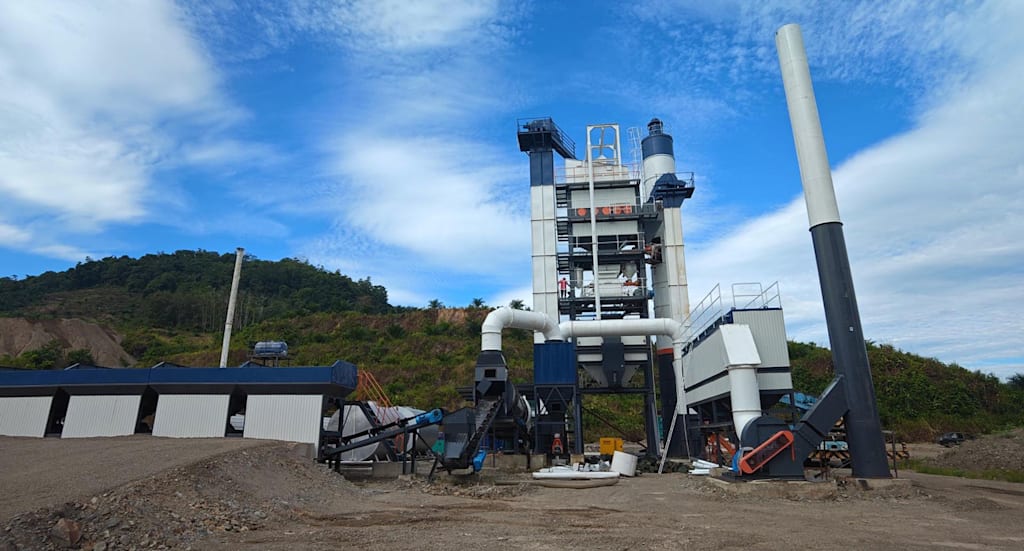
For site mechanics and procurement managers evaluating equipment in 2026, the daily operational case for a premium asphalt batch mix plant price is most clearly demonstrated not during peak production but during the maintenance windows that determine whether peak production is achievable at all. The integration of oversized service platforms, accessible lubrication systems, and externally mounted wear components within a modern asphalt batch mixing plant directly reduces the labor hours consumed by routine inspections — and eliminates the structural bottlenecks that convert minor maintenance tasks into extended production halts during critical paving seasons.
Service Platform Design and Daily Inspection Efficiency
The physical accessibility of an asphalt batch mixing plant is an engineering decision with direct labor cost consequences. Manufacturers who treat service platforms as structural afterthoughts — narrow walkways, inadequate handrail clearance, restricted access to screening decks and pugmill assemblies — force mechanics into time-consuming workarounds for inspections that well-designed platforms reduce to routine walkthroughs. On a plant operating double shifts during peak paving season, the cumulative labor hours lost to access friction across a week of maintenance cycles represent a measurable and preventable cost.
Oversized maintenance platforms engineered into premium asphalt batch mixing plant designs provide mechanics with the working clearance needed to perform visual inspections, torque checks, and minor adjustments without repositioning equipment or deploying temporary access structures. Specifically, platforms positioned at screen deck level, pugmill access height, and hot bin discharge zones allow a single mechanic to complete the full daily inspection circuit in a fraction of the time required on plants where these areas demand ladder repositioning or confined-space entry procedures.
In light of this, the labor efficiency argument for a higher asphalt batch mix plant price incorporating proper service platform engineering is quantifiable. Project managers who calculate daily mechanic hours against annual maintenance schedules consistently find that reduced inspection time across a full paving season recovers a significant portion of the platform design premium — before accounting for the production continuity value of catching developing faults during routine walkthroughs rather than discovering them as functional failures mid-shift.
Lubrication Point Accessibility and Bearing Protection
Bearing failures represent the most disruptive category of unplanned downtime in asphalt batch mixing plant operations, and the majority are attributable not to component quality but to lubrication intervals missed because access difficulty made routine greasing impractical under production pressure. External bearing housings with consolidated, clearly routed lubrication points eliminate this access barrier — allowing mechanics to complete the full greasing circuit efficiently without disassembling guards or navigating restricted mechanical spaces.
Reputable asphalt batch mixing plant manufacturers engineer lubrication manifolds that consolidate multiple bearing grease points into accessible external banks, reducing the time required to service rotating components across the plant's drive systems, elevator assemblies, and screen vibrator bearings. This consolidation does more than save time — it removes the human factors that cause lubrication tasks to be deferred when time pressure is high and access is difficult, converting bearing maintenance from a theoretically scheduled activity into a practically completed one.
The bearing protection value of accessible lubrication architecture compounds over the plant's service life. Bearings operating on consistent lubrication schedules reach their rated service lives reliably, while those subject to intermittent servicing due to access constraints fail prematurely — generating replacement costs, unplanned downtime, and the secondary damage to shafts and housings that accompanies bearing failure under load. Consequently, the asphalt batch mix plant price premium associated with external bearing housing design and consolidated lubrication systems should be evaluated against bearing replacement frequency and associated downtime costs on comparable plants without these features.
Bolt-On Wear Liners and External Component Serviceability
Wear liner replacement is among the highest-frequency maintenance interventions in an asphalt batch mixing plant, driven by the continuous abrasive contact between aggregate and the internal surfaces of the mixing pugmill, hot bin discharge gates, and aggregate elevator system. The critical design variable is not the liner material specification alone — it is how quickly worn liners can be accessed, removed, and replaced without extended plant downtime.
Bolt-on wear liner systems engineered into premium asphalt batch mixing plant designs allow mechanics to replace individual liner sections without dismantling surrounding structural components or waiting for extended cooling periods that take major assemblies out of service. Modular liner panels sized for single-person handling eliminate the lifting equipment dependency that makes liner replacement a multi-trade, multi-hour event on plants where wear surfaces are integrated into primary structural members rather than designed as serviceable components.
The production continuity value of rapid liner replacement is most pronounced during peak paving season, when extended maintenance windows are operationally unacceptable. A plant where pugmill liner replacement requires four to six hours of structural disassembly loses significantly more production value per maintenance event than one where equivalent work is completed in under two hours through bolt-on access. For site mechanics evaluating whether a premium asphalt batch mix plant price is justified, this maintenance time differential — multiplied across the liner replacement frequency expected over a paving season — provides a concrete, calculable return on the design investment that platform accessibility and lubrication engineering represent together.
Conclusion
The premium asphalt batch mix plant price associated with oversized service platforms, accessible lubrication architecture, and bolt-on wear liner systems is justified through a straightforward operational arithmetic: reduced daily inspection labor, consistent bearing maintenance compliance, and rapid wear component replacement collectively eliminate the maintenance bottlenecks that generate disproportionate production losses during peak paving seasons. For site mechanics and project managers evaluating asphalt batch mixing plant procurement in 2026, these design features are not comfort enhancements — they are the mechanical foundation on which production continuity during the highest-value paving windows depends.
About the Creator
Macroad Asphalt Plant
Macroad, a global leading manufacturer in asphalt mixing plants, offers a wide range of specifications to meet diverse project needs. Its high-quality, efficient equipment is widely applied in road construction.
Enjoyed the story? Support the Creator.
Subscribe for free to receive all their stories in your feed.
Comments
There are no comments for this story
Be the first to respond and start the conversation.