
Long Shadow of Sanctions: Huawei’s Trial and the Geopolitics of Technology
Eight years after secret charges were filed, the trial of Huawei Technologies in Brooklyn marks a pivotal moment in the U.S.-China tech war, with implications for global supply chains, national security, and the future of international commerce.

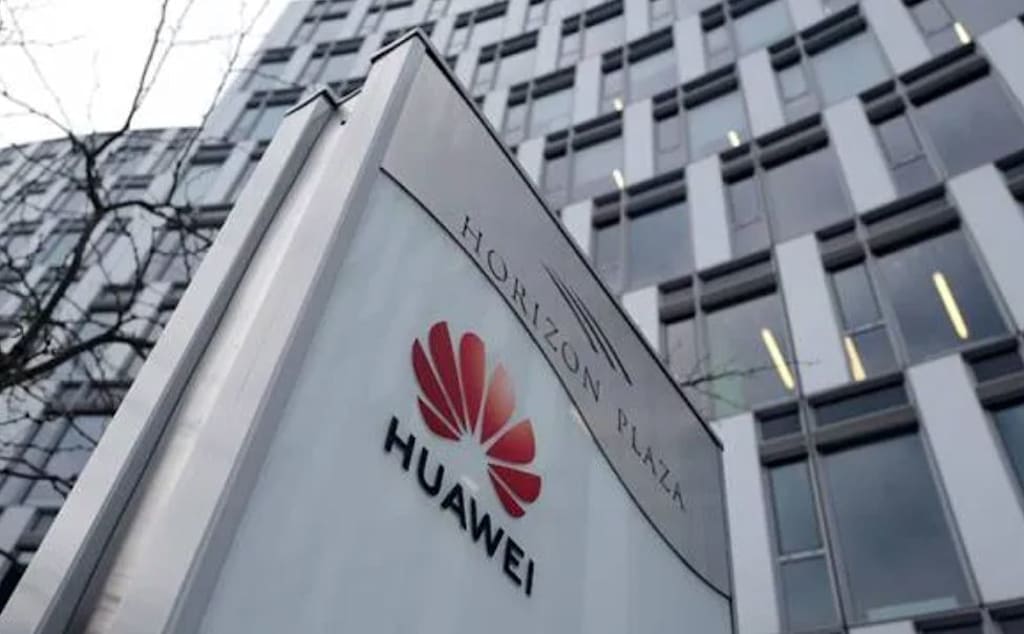
Eight years after U.S. prosecutors secretly charged China's Huawei Technologies with defrauding HSBC and other banks over its business with Iran, the case is finally heading for trial. The delay has allowed tensions between Washington and Beijing to escalate from a trade dispute into a full-blown technological cold war. Huawei also faces charges for conspiring to steal trade secrets from five U.S. technology companies and is accused of lying about its dealings in North Korea and supplying surveillance equipment to Iran to track protesters during 2009 anti-government demonstrations in Tehran. Jury selection is expected to begin on Tuesday in federal court in Brooklyn, New York, marking the start of a legal proceeding that will be watched closely by governments and corporations around the world.
The trial will bring to a close one of the U.S. government's earliest and most closely watched battles against a Chinese company and will play out as tech competition heats up between the two countries and Washington seeks to prevent American technology from aiding Beijing's military. The U.S.-China tech war has now spread across multiple technology sectors, including artificial intelligence, quantum computing, and semiconductor manufacturing. What began as a concern over telecommunications infrastructure has evolved into a broader struggle for dominance in the technologies that will define the 21st century.
The saga began in 2018 with the arrest of Huawei Chief Financial Officer Meng Wanzhou in Vancouver, which sparked a diplomatic crisis involving the United States, China, and Canada. Her detention became a symbol of the growing friction between the two superpowers, leading to retaliatory arrests and a prolonged standoff that only ended when she reached a deferred prosecution agreement with U.S. authorities. Now, the focus shifts from an individual executive to the corporate entity itself, raising the stakes for both sides.
Convictions on the Iran-related charges would bolster Washington's case for having placed Huawei, one of China's leading technology companies, on a U.S. trade blacklist in 2019, citing alleged criminal conduct that threatened national security. The blacklist effectively cut Huawei off from critical U.S. software and components, forcing the company to accelerate its development of domestic alternatives. A conviction would validate those earlier actions and provide a legal basis for further restrictions, potentially affecting other Chinese tech firms operating in global markets.
The trial before U.S. District Judge Ann Donnelly is expected to last about three months and overlap with Chinese President Xi Jinping's September 24 meeting with President Donald Trump in Washington. This timing adds a layer of diplomatic complexity to the proceedings, as both leaders may seek to use the trial as leverage in broader negotiations. Potential jurors have filled out 27-page questionnaires, including about their views on China's and Iran's governments, highlighting the political sensitivities involved in selecting an impartial jury in a case that has been heavily politicized in the media.
Other charges include violating U.S. sanctions against Iran, money laundering, racketeering, wire fraud, and obstruction. Huawei has pleaded not guilty to all charges and denied any wrongdoing. The company maintains that it has always operated in compliance with local laws and that the charges are motivated by political rather than legal considerations. This defense strategy aims to frame the trial as an example of U.S. protectionism rather than a legitimate enforcement of sanctions.
The criminal case is based in part on reporting by Reuters in 2012 and 2013 about close ties between Huawei and Skycom, a firm that operated in Iran. Reuters reported that Skycom had offered to sell at least €1.3 million (US$1.5 million) worth of embargoed Hewlett-Packard computer equipment to Iran's largest mobile-phone operator in 2010. Reuters also reported that Meng had served on Skycom's board of directors between February 2008 and April 2009. These reports provided the initial evidence that prompted U.S. investigators to look deeper into Huawei’s financial transactions and corporate structure.
BEIJING SAYS CASE AIMS TO UNDERMINE CHINESE TECH. Beijing has long criticized the case, saying it was part of a bigger campaign against China's technological rise. A Huawei spokesperson said in a statement on Saturday, "The government's overarching narrative is demonstrably false." The Chinese government views the trial as an attempt to stifle innovation and maintain U.S. hegemony in the tech sector. They argue that similar violations by Western companies have been handled with fines rather than criminal indictments, suggesting a double standard in enforcement.
Today, Huawei is a centerpiece of China's AI chip ambitions, and has diversified beyond network gear and smartphones. It has described the criminal case as an effort to undermine its competitiveness and the theft accusations as a repackaging of long-resolved commercial disputes. Despite the sanctions, Huawei has continued to invest heavily in research and development, launching new smartphones powered by domestically produced chips and expanding its cloud computing services. The company’s resilience has become a point of national pride in China, reinforcing the narrative that external pressure only strengthens domestic resolve.
If Huawei is convicted, prosecutors will seek the forfeiture of property or proceeds obtained from its illegal activity. While this may seem symbolic given the company’s size, it could have practical implications for its assets held in jurisdictions that cooperate with U.S. law enforcement. More importantly, a conviction could lead to further exclusion from global financial systems, making it harder for Huawei to conduct international business.
The case against the company was brought during the first Trump administration, which also took actions to curb the use of Huawei equipment in the U.S. and pressed other countries to drop Huawei from their telecommunications networks, saying China could use its equipment for espionage. This campaign succeeded in many allied nations, but Huawei remains a major player in emerging markets where price and performance often outweigh security concerns. The trial will test whether the U.S. can sustain this pressure through legal means rather than just diplomatic coercion.
The indictment covers alleged wrongdoing between about 1999 and 2020. This wide timeframe reflects the complexity of the investigation and the numerous instances of alleged misconduct. It accuses Huawei of using Skycom to obtain embargoed U.S. goods, technology, and services for Huawei's Iran-based business and to move money out of that country through the international banking system. By using a shell company, Huawei allegedly sought to hide its involvement from banks and regulators, thereby facilitating transactions that would otherwise have been blocked.
The U.S. said one bank, which was not named in the indictment but which sources and documents reviewed by Reuters identified as HSBC, cleared more than US$100 million worth of U.S.-dollar transactions related to Skycom. HSBC, which has faced its own regulatory scrutiny in recent years, was reportedly misled about the nature of its relationship with Huawei. The bank’s cooperation with U.S. authorities has been crucial to the prosecution’s case, providing detailed records of the transactions in question.
Prosecutors accused Meng of misrepresenting Huawei's ownership and control of Skycom in a presentation to an HSBC executive. She later admitted the statements were false, as part of an agreement with prosecutors to drop the charges against her. This admission is a key piece of evidence for the prosecution, as it directly links Huawei’s leadership to the deception. However, Huawei argues that Meng’s admission was made under duress and does not reflect the company’s official position or knowledge.
As the trial begins, the world watches to see if the U.S. legal system can deliver a verdict that satisfies both justice and geopolitical strategy. For Huawei, the outcome will determine not just its legal liability, but its future place in the global order. For the U.S., it is a test of its ability to enforce its laws in an increasingly multipolar world. And for the rest of the tech industry, it is a warning that in the new cold war, no company is too big to be caught in the crossfire.
About the Creator
Mark Lim
Hi I am mark an automotive student and a car, tech and food enthusiast ! Im gonna try and post daily & hope you enjoy what I write and do share my page with people you know. I would gladly appreciate it! Cheers
Enjoyed the story? Support the Creator.
Subscribe for free to receive all their stories in your feed.
Comments
There are no comments for this story
Be the first to respond and start the conversation.