
LLM Customer Service: Transforming the Future of Support Systems
How Large Language Models are reshaping customer experience with faster, smarter, and more human-like support

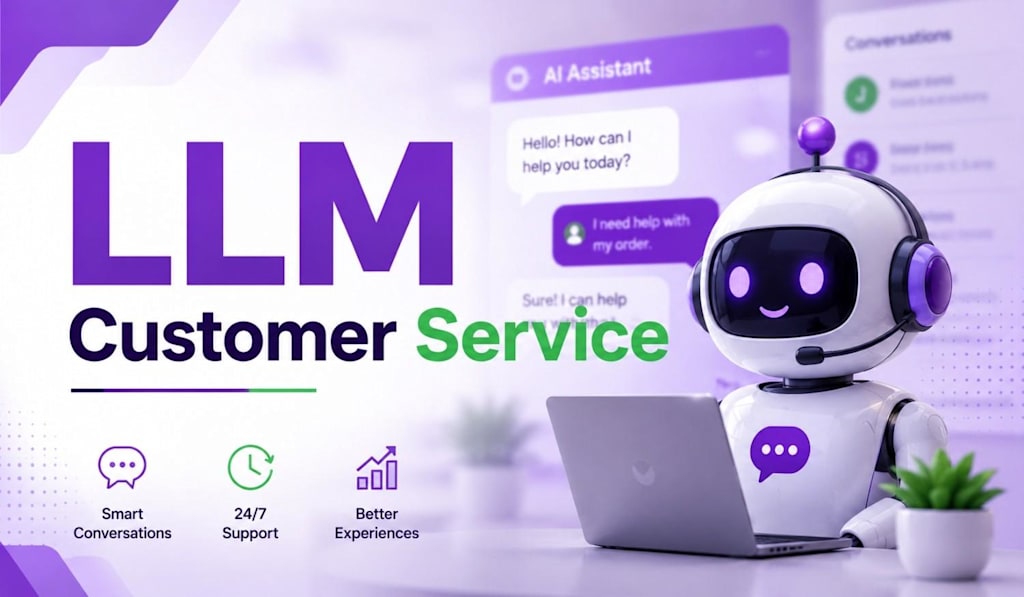
Introduction
Customer service has always been a critical part of business success. It’s not just about answering questions—it’s about creating trust, resolving problems, and ensuring that customers feel heard and valued. For decades, this responsibility has rested primarily on human support teams. But recently, a groundbreaking technology has started to change the way businesses interact with customers: Large Language Models (LLMs).
These AI systems are capable of understanding natural language, generating human-like responses, and managing conversations with impressive speed. As a result, LLMs are transforming customer support into a more efficient, scalable, and surprisingly human experience.
Read: LLM Customer Service: Transforming Modern Customer Support
What Is LLM Customer Service?
LLM customer service refers to the use of large language models—sophisticated AI systems trained on massive datasets—to handle customer support tasks. Instead of relying solely on human agents, businesses can now deploy AI that understands the nuances of language, interprets intent, and responds appropriately to customer queries.
Unlike traditional chatbots that follow scripted rules, LLMs can adapt to complex conversations. They can process context, detect sentiment, and deliver responses that feel natural. This allows businesses to provide support that is fast, accurate, and empathetic.
How LLMs Improve Customer Support
LLM-powered customer service addresses many challenges that traditional support teams face:
1. Instant Responses
No one likes waiting on hold or for a reply to an email. LLMs respond instantly to customer queries, reducing frustration and improving overall satisfaction.
2. 24/7 Availability
Support doesn’t stop when the office closes. LLMs can handle inquiries around the clock, providing assistance to customers across different time zones and ensuring that help is always available.
3. Natural Conversations
Modern LLMs don’t sound robotic. They understand context, use conversational phrasing, and maintain a friendly tone, making interactions feel more like talking to a real person.
4. Handling Large Volumes
During peak periods, human teams can be overwhelmed by the sheer number of requests. LLMs can manage thousands of queries simultaneously, ensuring consistent support without delay.
Real-World Applications
LLM customer service is already proving valuable across multiple industries:
- E-commerce: AI assistants help track orders, process returns, and recommend products based on customer preferences.
- Banking & Finance: Chatbots assist with account inquiries, transaction guidance, and fraud alerts.
- SaaS Companies: AI guides users through onboarding, troubleshooting, and exploring new features.
- Healthcare: LLMs help patients schedule appointments, understand symptoms, and access general medical information.
By integrating LLMs, companies can ensure that support is faster, more accurate, and more scalable.
Benefits for Businesses
Implementing LLM customer service brings tangible advantages:
- Reduced operational costs by automating routine tasks
- Faster ticket resolution and shorter response times
- Improved customer satisfaction through consistent and helpful interactions
- Scalable support systems that grow with business needs
- Better insights from analyzing customer interactions and trends
When repetitive tasks are automated, human agents can focus on complex issues that require judgment, empathy, or specialized knowledge.
Challenges and Limitations
While LLMs offer tremendous potential, they’re not a perfect solution:
Lack of Deep Human Judgment
AI may struggle with emotionally complex situations, requiring human intervention.
Accuracy Limitations
LLMs can sometimes provide incorrect or misleading responses if the training data is incomplete or ambiguous.
Data Privacy Concerns
Customer data must be handled carefully to prevent security breaches and protect sensitive information.
Need for Human Oversight
AI works best as a complement to human agents, not a full replacement, especially in critical cases that demand judgment or discretion.
The Future of LLM Customer Service
Looking ahead, LLMs will become even more advanced. Future systems are expected to:
- Detect and respond to emotions more accurately
- Deliver hyper-personalized support tailored to individual needs
- Seamlessly hand off complex issues to human agents
- Integrate multiple support channels, including voice, chat, and visual assistance
As these technologies evolve, customer service may feel less like navigating tickets and more like having a natural conversation with a knowledgeable assistant.
Conclusion
BigDataCentric: helps in creating intelligent customer support systems that are intended to increase efficiency, automate service processes, and provide a better customer experience.
LLM customer service is revolutionizing how businesses connect with their customers. By combining automation, intelligence, and adaptability, these systems help companies provide fast, reliable, and human-like support.
Although AI is not a replacement for humans, the best results come from combining LLMs with human oversight. This approach ensures that support is always available, efficient, and capable of handling both routine and complex inquiries.
For companies striving to meet customer expectations in a fast-paced world, embracing LLM-powered customer service is no longer optional—it’s essential.
About the Creator
Enjoyed the story? Support the Creator.
Subscribe for free to receive all their stories in your feed.
Comments
There are no comments for this story
Be the first to respond and start the conversation.