
Liquidation Pallet Business: How the Model Works, Risks, and Opportunities
A practical guide to sourcing, costs, risks, and profit opportunities in the liquidation pallet business.

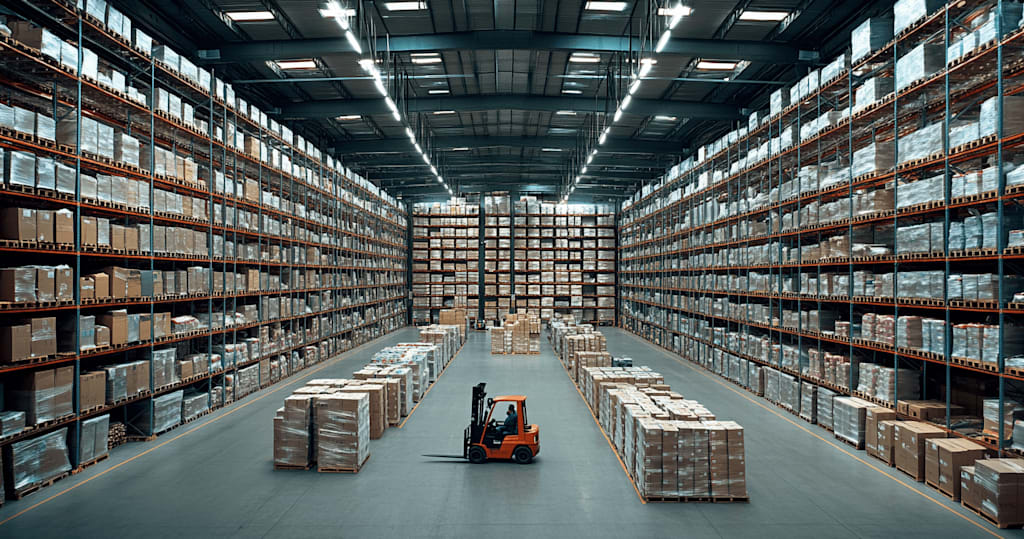
The liquidation pallet business has become a popular way for resellers to acquire large quantities of merchandise at discounted prices. The basic idea is simple: purchase returned, overstocked, discontinued or surplus products in bulk, break the pallet down and then resell the items individually for a profit.
But the reality is more complicated.
Discussions among experienced property flippers reveal a wide range of experiences. While some sellers report strong sales and attractive margins, others describe damaged products, slow-moving inventory, expensive shipping and pallets that were far less profitable than expected.
The difference often comes down to one thing: how well the reseller controls sourcing, costs, inventory, and sales.
What Is a Liquidation Pallet Business?
A liquidation pallet business involves purchasing merchandise that retailers, manufacturers, distributors, or other businesses no longer want to keep in their normal inventory.
The inventory can include:
Customer returns
Overstock
Shelf pulls
Discontinued products
Seasonal merchandise
Damaged goods
Excess inventory
Surplus stock
Rather than selling these products individually through their usual retail channels, businesses often sell them in bulk via liquidation marketplaces, wholesalers, auctions or local liquidation companies.
The reseller then purchases the inventory and attempts to recover their investment by selling the products individually or in smaller lots.
Common sales channels include online marketplaces, social media, live-selling platforms, flea markets, local marketplaces and direct wholesale sales.
The business model can therefore be summarized as:
Buy below realistic resale value → process inventory → sell through multiple channels → keep the remaining margin after expenses.
The challenge is making sure the inventory actually has enough resale value to justify the purchase.
Why Liquidation Pallets Are So Attractive
The biggest attraction is having access to large amounts of inventory without having to source every product individually.
Rather than visiting dozens of stores to look for products, a reseller can purchase a single pallet containing a variety of items.
This provides a significant amount of inventory in a single transaction.
For instance, a pallet might contain furniture, home improvement products, organisation products, electronics, toys, pet products or general merchandise.
The reseller can then separate the inventory according to value and sales channel.
Higher-value products could be listed individually, while cheaper items could be bundled together or sold at flea markets.
This is one reason why experienced sellers can make the model work.
However, the same bulk purchasing advantage creates one of the biggest risks: you are also buying the products nobody else wanted.
Why There Is So Much Conflicting Advice About Liquidation
Opinions on the liquidation industry tend to be very divided.
Some influencers present pallet flipping as a scalable business opportunity.
However, other experienced sellers warn beginners that liquidation is risky and that many pallets contain low-quality or slow-moving stock.
These different perspectives can coexist because not everyone operates the same type of business.
For example, a beginner buying one random pallet is completely different from a reseller buying several truckloads every month.
Experienced operations may have:
Better supplier relationships
Lower freight costs
Larger storage facilities
Established customers
Multiple sales channels
Employees
Faster inventory processing
Better product knowledge
A beginner may have none of these advantages.
Consequently, a pallet that works for an established reseller may not produce the same result for someone buying their first load.
Are There Really Secret Liquidation Suppliers?
One recurring question is why successful liquidation sellers are often reluctant to reveal their sources.
The explanation offered by several experienced sellers is straightforward: a reliable source is a competitive advantage.
After spending years finding suppliers, testing different pallets and losing money on poor purchases, not to mention developing reliable relationships, resellers may not want hundreds of competitors buying from the same source.
This is particularly relevant for live-selling businesses.
A seller who has found a supplier offering desirable merchandise at attractive prices has little incentive to publicly reveal every detail of that relationship.
This does not necessarily mean that there is a secret marketplace inaccessible to ordinary businesses.
Sometimes, the only difference is the seller's relationships, purchasing volume, location and negotiation skills.
Can Local Liquidators Be Buying From Larger Marketplaces?
They can be.
The liquidation supply chain can involve several layers.
For example:
Retailer → liquidation marketplace → liquidator → local reseller → consumer
A local liquidator may purchase inventory from a larger liquidation source and then resell it locally.
That does not automatically make the local supplier a bad option.
In fact, the local supplier may provide important advantages:
Local pickup
Lower transportation costs
Physical inspection
Smaller purchase quantities
Faster availability
Storage and handling
The important question is not simply whether the supplier is buying from another liquidation company.
The real question is:
Does the final price leave enough room for your business to make money?
Why The Cheapest Pallet Is Not Always The Best Pallet
A pallet advertised for $500 may appear better than another pallet advertised for $800.
But the $500 pallet might require $600 in freight, while the $800 pallet may be available locally.
The first pallet actually costs:
$500 + $600 = $1,100
The second costs:
$800
This is why experienced buyers calculate landed cost rather than looking only at the advertised pallet price.
Landed cost can include:
Purchase price
Freight
Auction fees
Taxes
Delivery charges
Handling
Repairs
Packaging
A low purchase price means very little if transportation and processing consume the expected margin.
The Biggest Risk Is Unsellable Inventory
One of the strongest themes in liquidation discussions is that not every product is going to be a winner.
A pallet can contain:
Missing accessories
Broken products
Incomplete furniture
Non-working electronics
Outdated merchandise
Seasonal products
Low-demand products
Products that are difficult to ship
One reseller described having some excellent pallets that generated strong profits, as well as some containing merchandise that remained unsold for months.
This illustrates why liquidation should not be treated as guaranteed inventory.
The retail value of a pallet does not equal the amount of money you will actually collect from selling it.
Why Return Pallets Can Be Especially Unpredictable
Pallets returned by customers introduce additional uncertainty.
A returned product may have been opened, tested or used; it may be damaged; or it may have missing components.
Sometimes, customers simply change their mind and return a perfectly good product.
In other cases, the item may require testing or repair before it can be resold.
This is why some experienced sellers prefer overstock and shelf-pull inventory.
Although return pallets can contain excellent products, the buyer needs to factor the risk into the purchase price.
Why Inspecting A Pallet Can Be Valuable
Whenever possible, being able to inspect liquidation inventory before purchasing can reduce uncertainty.
Physical inspection can help identify:
Product condition
Packaging quality
Missing components
Visible damage
Actual quantities
Product mix
Local sourcing can also reduce freight costs.
This is particularly important for bulky items such as furniture, appliances, tools and large household goods.
Sometimes, the option of picking up inventory yourself can make a more expensive local pallet more attractive than a cheaper one located hundreds of miles away.
How Resellers Deal With Slow-Moving Inventory
A major advantage of experienced liquidation businesses is having multiple ways to sell merchandise.
For example:
Expensive products: Individual online listings
Small inexpensive products: Flea markets or bundles
Bulky products: Local marketplace sales
Slow-moving products: Discounts and clearance
Large quantities: Wholesale buyers
This matters because not all products are suited to the same platform.
For example, a $10 item that takes 20 minutes to photograph, research, list, package and ship may not be worth the same effort as a $200 product.
Successful liquidation operations therefore consider inventory throughput rather than focusing solely on individual product margins.
Why Furniture And Home Products Can Be Attractive
Several sellers reported strong demand for categories such as furniture, home improvement products, organisation products, pet products and children's products in the discussions.
Furniture is of particular interest because local buyers may be willing to purchase items that would otherwise be expensive to ship.
However, furniture also presents additional challenges.
Large products require:
Storage space
Transportation
Local buyers
Additional handling
A product can have excellent resale potential and still become a problem if it occupies valuable storage space for six months.
Should You Start With A Full Truckload?
For most beginners, there is a major difference between purchasing one pallet and purchasing an entire truckload.
Larger operations can benefit from:
Better freight economics
Higher purchasing volume
More negotiating power
Faster inventory turnover
But the risk increases as the purchase becomes larger.
A bad $1,000 purchase is painful.
A bad $10,000 purchase can seriously affect a small business.
For that reason, new resellers can learn valuable information by starting with smaller purchases and tracking their actual results before increasing volume.
How To Start A Liquidation Pallet Business
The first step is choosing a category you understand.
Possible categories include:
Home goods
Tools
Furniture
Apparel
Electronics
Toys
Beauty products
Then research actual resale prices rather than relying on the original retail value.
Before purchasing, estimate:
Expected sales − purchase price − freight − fees − labor − repairs = potential profit
Also consider what happens if some of the inventory does not sell.
A good purchase should still make sense after allowing for damaged and slow-moving products.
Build A Backup Plan For Every Pallet
Before buying inventory, determine what you will do with products that cannot be sold through your primary channel.
For example, you could use:
Facebook Marketplace
Flea markets
Local discount sales
Bundles
Wholesale buyers
Clearance sales
Having multiple outlets reduces your dependence on one platform.
For specialized merchandise, businesses can also explore dedicated inventory such as wholesale football jerseys, wholesale baseball jerseys, or wholesale hockey jerseys.
Could AI Change The Liquidation Industry?
The original discussion also raises an interesting question about artificial intelligence.
AI can potentially help large companies analyze enormous amounts of information quickly.
For example, automated systems could:
Compare liquidation listings
Analyze historical selling prices
Predict demand
Identify profitable products
Optimize freight
Automate customer service
Improve inventory forecasting
If large retailers and liquidation buyers deploy these systems at scale, competition for attractive inventory could increase.
Small businesses may therefore need to compete through specialization, relationships, local sourcing, speed, and better knowledge of specific product categories.
Will AI Eliminate Liquidation?
It is unlikely that technology will completely eliminate liquidation.
Retailers will continue to experience:
Customer returns
Overstock
Seasonal inventory
Damaged goods
Discontinued products
Changing consumer preferences
Even highly efficient supply chains cannot guarantee that every product will sell through normal retail channels.
AI may change how inventory is processed and sold, but there will likely continue to be products that need secondary-market buyers.
The bigger question is which businesses will capture that opportunity.
What Is The Real Competitive Advantage?
The strongest advantage in liquidation is not necessarily discovering a secret website.
It is learning how to buy correctly.
Experienced resellers understand:
Which products actually sell
Which suppliers are consistent
Which condition grades to avoid
How much freight should cost
How long products typically take to sell
Which platforms work for different categories
How much time each item is worth
That knowledge takes time to develop.
A reseller who has processed thousands of products will naturally have more information to make purchasing decisions than someone buying their first pallet.
Is The Liquidation Pallet Business Worth It?
Liquidation can be a viable resale model, but it is not effortless.
The business requires real work:
Moving inventory
Sorting products
Testing merchandise
Researching prices
Photographing products
Creating listings
Answering customers
Managing storage
Handling returns
Disposing of unsellable products
The opportunity becomes more attractive when a reseller has a reliable source, controlled acquisition costs, efficient processing, and multiple sales channels.
The most important lesson is simple:
Do not buy liquidation inventory because the estimated retail value looks impressive. Buy it because the numbers still work after accounting for freight, damage, labor, fees, and unsold inventory.
Final Thoughts
The liquidation pallet business encompasses sourcing, retail, logistics, inventory management and sales.
While there are genuine opportunities, there is also substantial risk.
Some sellers build profitable businesses around pallets. Others end up with warehouses full of slow-moving or damaged stock.
The difference is often not just down to luck.
It comes down to buying discipline, supplier quality, product knowledge, logistics and the ability to efficiently move inventory.
Beginners do not need to discover a mythical secret supplier before getting started.
The goal should instead be to learn how the economics work, carefully test suppliers, track every expense and gradually increase purchasing volume as the numbers become more predictable.
The best liquidation deal is not necessarily the pallet with the highest advertised retail value.
It is the pallet where your actual cost, realistic selling prices, processing time, and expected demand all work together.
Frequently Asked Questions About Liquidation Pallet Businesses
Is a liquidation pallet business profitable?
It can be profitable, but results depend on acquisition costs, product condition, freight, resale prices, fees, labor, and inventory turnover.
Is it better to buy liquidation pallets locally?
Local purchasing can reduce freight costs and allow you to inspect inventory. However, the supplier and quality of the merchandise still need to be evaluated carefully.
Are Amazon return pallets risky?
Yes. Returns can include opened, damaged, incomplete, used, or non-working products. The level of risk depends on the source and condition of the inventory.
What is the difference between overstock and return pallets?
Overstock generally refers to products a retailer has in excess, while return pallets contain merchandise previously returned by customers. Return inventory can therefore have greater condition uncertainty.
Should beginners buy a full truckload?
Starting with smaller purchases can allow beginners to understand their processing costs, resale channels, and actual margins before committing substantially more capital.
How do liquidation pallet businesses make money?
They purchase merchandise below its realistic resale value and then sell individual products or smaller lots through appropriate sales channels while controlling operating expenses.
What is the biggest mistake when buying liquidation pallets?
One common mistake is calculating profit using estimated retail value instead of realistic resale prices after accounting for freight, fees, damaged goods, labor, and unsold products.
Can liquidation products be sold on Facebook Marketplace?
Yes. Local marketplaces can be particularly useful for furniture, bulky merchandise, appliances, and other products that are expensive or inconvenient to ship.
Is buying pallets better than buying individual products?
It depends on the business model. Pallets provide large quantities of inventory quickly, but they also create greater uncertainty and can leave the reseller with products that are difficult to sell.
Will AI replace liquidation resellers?
AI may make sourcing, pricing, inventory management, and customer service more efficient, but returns, damaged goods, surplus inventory, physical logistics, and secondary-market demand will continue to create opportunities for businesses operating in liquidation.
About the Creator
Enjoyed the story? Support the Creator.
Subscribe for free to receive all their stories in your feed.
Comments
There are no comments for this story
Be the first to respond and start the conversation.