
LED Lighting Market Expected to Reach US$193.74 Billion by 2034 as Smart Infrastructure and Energy Efficiency Drive Global Demand
Governments, businesses, and households worldwide are accelerating the shift toward LED lighting as sustainability goals, smart technologies, and rising energy costs reshape the future of illumination.

The global lighting industry is undergoing one of the most significant technological transformations in its history. Traditional incandescent and fluorescent lighting systems are rapidly being replaced by LED solutions that offer superior energy efficiency, longer operational life, and enhanced compatibility with modern smart technologies.
As governments intensify efforts to reduce carbon emissions and improve energy efficiency, LED lighting has emerged as a key solution for achieving sustainability goals. From homes and offices to factories, highways, and smart cities, LED technology is becoming the preferred choice for both consumers and organizations seeking lower operating costs and improved performance.
The growing integration of LEDs into smart homes, connected buildings, and urban infrastructure is further accelerating adoption worldwide. These developments are creating significant opportunities for manufacturers, technology providers, and infrastructure developers.
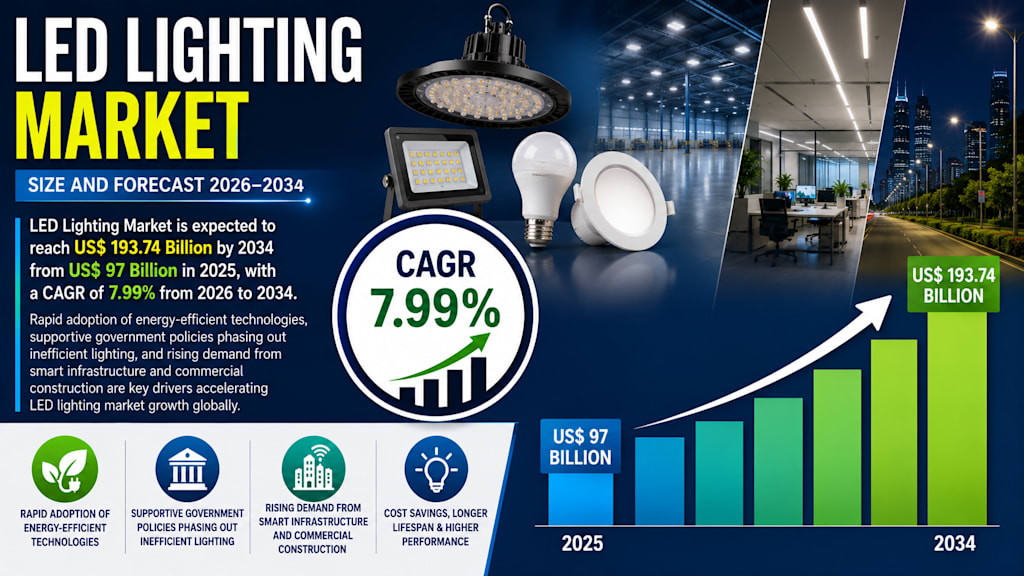
According to Renub Research, the global LED Lighting Market is projected to grow from US$97 billion in 2025 to US$193.74 billion by 2034, expanding at a compound annual growth rate (CAGR) of 7.99% between 2026 and 2034. The market's growth is being driven by energy-efficiency mandates, supportive government policies, smart infrastructure investments, and increasing demand from commercial construction projects.
Understanding LED Lighting Technology
LED, or Light Emitting Diode, technology uses semiconductor materials that emit light when an electric current passes through them.
Unlike traditional incandescent bulbs, which generate significant amounts of heat, LEDs convert most of their energy directly into light. This results in dramatically higher efficiency and lower energy consumption.
LED lighting systems offer several advantages, including extended operational life, instant illumination, improved durability, reduced maintenance requirements, and greater control over brightness and color settings. Their compatibility with digital controls and smart-home systems has also made them a central component of modern lighting solutions.
Because of these benefits, LED technology has become one of the fastest-growing segments within the global energy and technology sectors.
Why the LED Lighting Market Is Growing Rapidly
Several powerful factors are fueling the global expansion of LED lighting solutions.
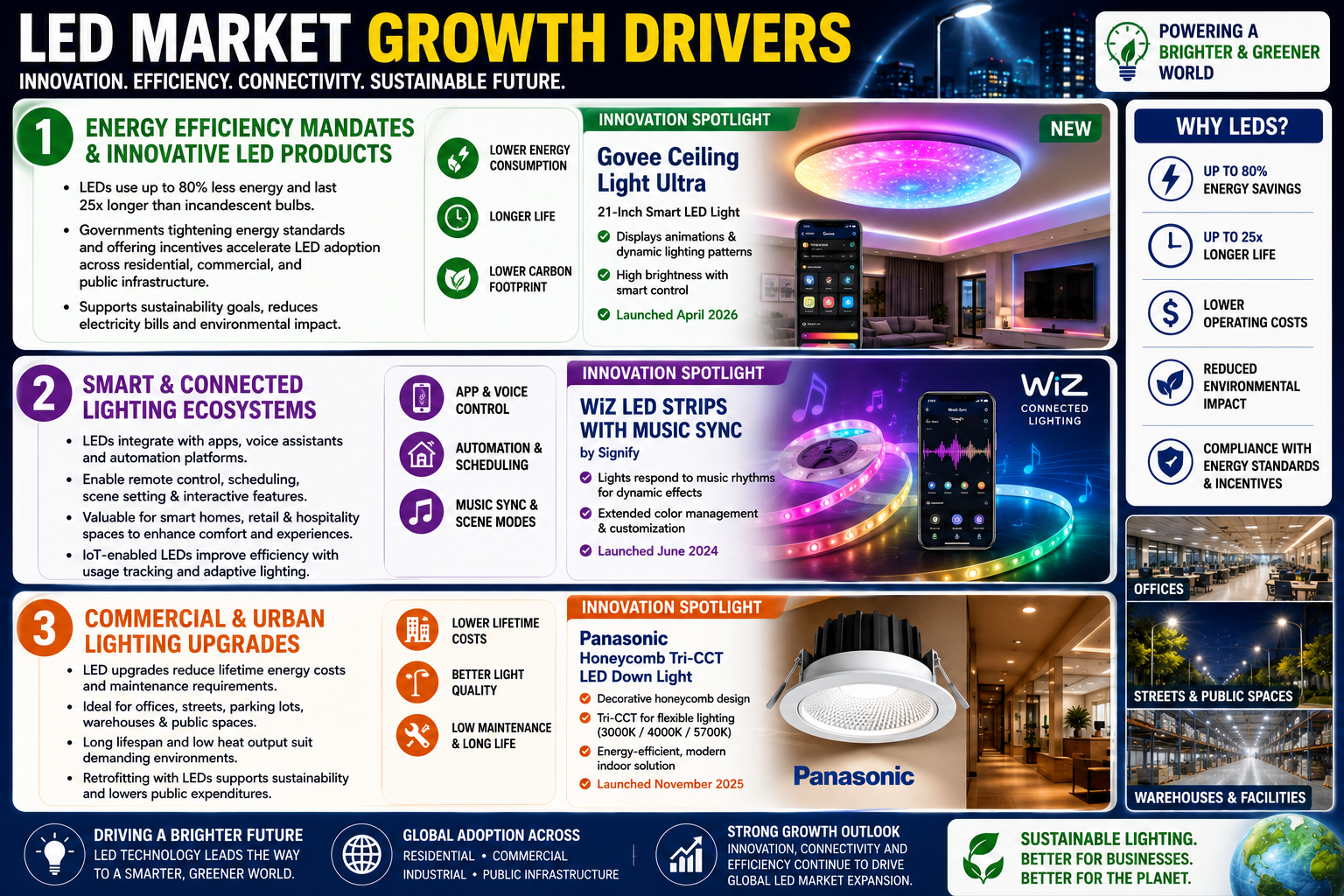
Energy Efficiency Remains the Primary Growth Driver
One of the strongest drivers of LED adoption is the growing emphasis on energy efficiency.
Compared with traditional lighting technologies, LEDs consume significantly less electricity while delivering superior illumination performance. This reduction in energy usage helps lower utility bills for households, businesses, and governments.
Many countries have introduced regulations and efficiency standards that encourage or require the replacement of outdated lighting systems with LED alternatives. These initiatives support broader sustainability goals while reducing strain on national power grids.
As organizations increasingly prioritize environmental responsibility and cost savings, LED lighting continues to gain market share across virtually every sector.
Government Policies Supporting Adoption
Governments around the world are actively promoting LED lighting through regulations, rebates, and energy-efficiency programs.
Many nations have phased out or restricted the use of inefficient incandescent bulbs while encouraging consumers and businesses to transition toward modern lighting technologies. These policies are helping accelerate market penetration while supporting climate and energy objectives.
Public-sector investments in street lighting, transportation infrastructure, schools, hospitals, and government facilities have further strengthened demand for LED solutions.
The combination of regulatory support and financial incentives continues to create favorable conditions for industry growth.
Rising Electricity Costs Encouraging Upgrades
Increasing energy prices are also influencing purchasing decisions.
Businesses and homeowners are becoming more conscious of long-term operating costs and seeking solutions that deliver measurable savings. Although LED systems may require higher initial investments than traditional bulbs, their longer lifespan and lower electricity consumption often result in substantial savings over time.
This financial advantage has become a major selling point, particularly in commercial and industrial applications where lighting systems operate for extended hours each day.
Smart Lighting Is Transforming the Industry
One of the most exciting developments in the LED market is the rise of smart and connected lighting ecosystems.
Integration with Smart Homes
Modern consumers increasingly expect lighting systems to offer more than simple illumination.
Smart LED products can connect to mobile applications, voice assistants, and home automation platforms, allowing users to control brightness, colors, schedules, and scenes remotely. These features enhance convenience while contributing to energy conservation.
The growing popularity of smart-home technologies has significantly expanded the market for intelligent LED solutions. Consumers are increasingly viewing lighting as part of a broader connected lifestyle ecosystem rather than a standalone utility product.
IoT and Connected Infrastructure
The Internet of Things (IoT) is creating new opportunities for LED lighting across commercial and public environments.
Connected lighting systems can collect data, monitor occupancy patterns, and adjust illumination automatically based on environmental conditions. These capabilities improve operational efficiency while reducing unnecessary energy consumption.
Cities implementing smart infrastructure projects are increasingly incorporating connected LED streetlights that support traffic management, environmental monitoring, and public safety initiatives.
As urbanization continues and smart-city investments grow, demand for intelligent lighting solutions is expected to increase significantly.
Enhanced User Experiences
Today's LED products are designed to deliver more engaging and personalized experiences.
Advanced lighting systems can synchronize with music, support dynamic color effects, and create customized environments tailored to individual preferences. These capabilities have expanded the appeal of LED technology beyond energy savings alone.
The growing intersection of technology, design, and entertainment is helping manufacturers attract a wider range of consumers and commercial clients.
Commercial and Urban Lighting Upgrades Fuel Demand
Large-scale infrastructure modernization projects are playing a major role in market expansion.
Office Buildings and Commercial Facilities
Commercial property owners are increasingly replacing legacy lighting systems with LED alternatives.
LEDs offer lower maintenance requirements, improved energy performance, and enhanced lighting quality, making them attractive investments for office buildings, retail centers, hotels, hospitals, and educational institutions.
Advanced lighting controls such as occupancy sensors, daylight harvesting systems, and centralized management platforms further increase efficiency and operational flexibility.
Smart Cities and Public Infrastructure
Municipal governments are investing heavily in LED-based public lighting systems.
Streetlights, parking facilities, transportation hubs, and public spaces are being upgraded to reduce energy consumption and maintenance costs. LED streetlights also improve visibility and public safety while supporting broader smart-city objectives.
These infrastructure projects are expected to remain a significant source of demand throughout the forecast period.
Industrial and Warehouse Applications
Industrial facilities and warehouses benefit substantially from LED technology due to long operating hours and challenging environmental conditions.
High-bay LED fixtures provide consistent illumination, improved durability, and lower maintenance costs. Integration with sensor-based controls allows organizations to optimize energy usage in low-traffic areas, further enhancing operational efficiency.
As logistics and manufacturing sectors continue expanding globally, industrial LED adoption is expected to remain strong.
Key Market Segments Driving Growth
The LED lighting industry includes several major segments contributing to overall market expansion.
LED Lamps
LED lamps remain one of the most widely adopted product categories.
Consumers appreciate their compatibility with existing fixtures, allowing easy upgrades without extensive modifications. Continuous improvements in color quality, brightness, and smart connectivity are further strengthening demand.
Government regulations promoting energy-efficient lighting continue to support widespread adoption of LED lamps worldwide.
Indoor LED Lighting
Indoor lighting applications represent a major growth segment across residential, commercial, healthcare, educational, and industrial environments.
Features such as adjustable brightness, color temperature control, and human-centric lighting capabilities are increasingly valued by consumers and facility managers.
Smart indoor lighting systems also support automation and energy optimization strategies, contributing to long-term market growth.
Commercial LED Lighting
Commercial LED solutions are gaining traction due to their ability to reduce operational expenses and support sustainability initiatives.
Businesses increasingly view lighting upgrades as strategic investments that improve both financial performance and environmental outcomes. Corporate commitments to green-building certifications and carbon reduction targets are accelerating adoption across commercial real estate sectors.
Retail and Warehouse Lighting
Retailers use LED technology to enhance product displays and create engaging shopping experiences.
Warehouses benefit from improved visibility, reduced maintenance requirements, and compatibility with intelligent control systems. As organizations continue modernizing facilities, demand within this segment is expected to remain robust.
Challenges Facing the Industry
Despite strong growth prospects, several challenges continue to affect market expansion.
Higher Initial Investment Costs
Although LEDs offer significant long-term savings, their upfront purchase costs remain higher than those of traditional lighting technologies.
Large-scale commercial and infrastructure projects may require substantial capital investments, which can delay adoption in cost-sensitive markets. Retrofitting older buildings often involves additional expenses related to fixtures, electrical systems, and installation labor.
Compatibility and Integration Issues
Integrating LED systems into existing infrastructure can sometimes be complex.
Older electrical systems may not be compatible with modern LED drivers, dimming controls, or smart-building platforms. Improper installations can result in reduced performance or operational challenges.
Ensuring compatibility and providing adequate installer training remain important priorities for industry stakeholders.
Regional Market Outlook
United States
The United States remains one of the leading LED markets globally due to strong energy-efficiency initiatives and widespread adoption of smart-home technologies.
According to the U.S. Department of Energy, LED bulbs use at least 75% less energy and can last up to 25 times longer than traditional incandescent lighting. These benefits continue to drive replacement projects across residential, commercial, and public infrastructure sectors.
Germany
Germany's commitment to sustainability and European Union energy-efficiency regulations has accelerated LED deployment across transportation networks, public infrastructure, and commercial buildings.
Municipal retrofit programs and climate-neutral development goals continue to support market growth throughout the country.
China
China remains the world's largest LED manufacturing and consumption market.
Government support for energy-efficient technologies, rapid urbanization, and extensive smart-city projects have reinforced China's leadership position within the global LED ecosystem.
Saudi Arabia
Saudi Arabia's Vision 2030 modernization strategy is creating substantial opportunities for LED lighting adoption.
Large-scale infrastructure developments, smart-city projects, and national energy-efficiency programs are driving demand across residential, commercial, and public-sector applications.
Competitive Landscape
The global LED lighting market features several established manufacturers competing through innovation, smart technology integration, and strategic acquisitions.
Major companies operating in the industry include Acuity Brands Inc., Koninklijke Philips N.V., Emerson Electric Co., Hubbell Inc., Daktronics Inc., Dialight Plc., LSI Industries Inc., and Samsung Electronics Co. Ltd.. These companies continue investing in product innovation, smart-lighting capabilities, and sustainable technologies to strengthen their market positions.
Final Thoughts
LED lighting has evolved from an energy-saving alternative into a foundational technology for modern infrastructure, smart cities, and connected living environments. Its ability to reduce electricity consumption, lower maintenance costs, and integrate seamlessly with digital ecosystems has made it one of the most transformative innovations in the global energy sector.
As governments, businesses, and consumers increasingly prioritize sustainability and efficiency, LED adoption is expected to accelerate further across residential, commercial, industrial, and public applications.
With the global LED Lighting Market forecast to grow from US$97 billion in 2025 to US$193.74 billion by 2034, the industry is positioned for substantial long-term expansion. Companies that continue investing in smart technologies, energy-efficient solutions, and innovative user experiences will likely lead the next phase of growth in this rapidly evolving market.
About the Creator
Enjoyed the story? Support the Creator.
Subscribe for free to receive all their stories in your feed.
Comments
There are no comments for this story
Be the first to respond and start the conversation.