Latest Stories
Most recently published stories in 01.
Vijayalaxmi’s Innovative Work in Federated AI and Ethical Machine Learning Earns IEEE Recognition
Senior Product Manager Vijayalaxmi Methuku is making waves in the artificial intelligence research community, with IEEE - the world's largest technical professional organization - publishing a series of her innovative papers that address some of the most pressing challenges in modern AI systems.
By Oliver Jones Jr.8 months ago in 01
How to Choose a Smartwatch That Fits Your Lifestyle
Smartwatches have evolved far beyond being simple timekeepers. Today, they serve as fitness trackers, communication tools, and personal assistants that integrate seamlessly into daily life. For professionals, fitness enthusiasts, and tech-savvy individuals Smart Watch Price in Pakistan, choosing the right smartwatch requires careful consideration of your lifestyle, needs, and budget. With the growing options and features available, understanding what to prioritize can save you both time and money. This guide provides practical advice to help you make an informed decision.
By Uzair Asif8 months ago in 01
India Signals Strategic Shift by Expanding U.S. Oil, Arms, and Aircraft Purchases. AI-Generated.
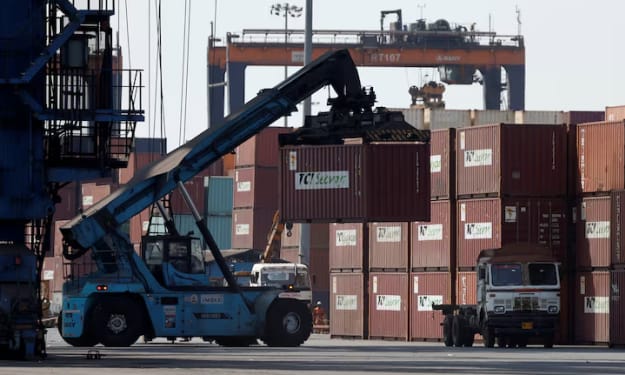
India is preparing to significantly expand its purchases of U.S. oil, military equipment, and aircraft, while also signaling limited openness to American agricultural products. The move reflects a careful recalibration of India’s global strategy—one that blends economic pragmatism with geopolitical foresight as New Delhi navigates a rapidly changing world order. Rather than a sudden pivot, this approach represents a gradual but deliberate alignment of interests between the world’s largest democracy and the United States. For India, the goal is not dependence, but diversification. For Washington, it is an opportunity to deepen ties with a key Indo-Pacific partner at a time of mounting global uncertainty. Energy Security Takes Center Stage India’s growing appetite for energy is one of the strongest drivers behind the push to ramp up U.S. oil purchases. As one of the world’s fastest-growing economies, India’s demand for crude oil continues to rise, even as it invests in renewable energy. Traditionally reliant on Middle Eastern suppliers and, more recently, discounted Russian crude, India is now seeking to broaden its energy portfolio. U.S. oil offers India a stable, politically reliable source that reduces overexposure to any single region. While American crude is often more expensive due to transportation costs, Indian refiners value the consistency and long-term predictability of supply. Increased imports from the U.S. also help India hedge against geopolitical disruptions that can rattle global energy markets overnight. For Washington, higher exports to India strengthen America’s role as a global energy supplier and reinforce economic ties that extend beyond short-term market conditions. Defense Cooperation Deepens Arms purchases form another critical pillar of the evolving relationship. India has historically sourced military hardware from a wide range of countries, with Russia long serving as its primary defense partner. However, shifting global dynamics and concerns over supply reliability have prompted New Delhi to diversify its defense procurement. U.S. defense systems—ranging from surveillance drones to advanced aircraft—offer cutting-edge technology and interoperability with Western allies. Recent years have already seen India acquire American military platforms, and further expansion signals growing trust between the two countries’ defense establishments. This shift does not mean India is abandoning its strategic autonomy. Instead, it reflects a calculated effort to balance relationships while ensuring access to modern technology. For the United States, arms sales to India are not just commercial transactions; they are a means of strengthening a security partnership in the Indo-Pacific, where concerns about regional stability continue to grow. Aviation and Commercial Aircraft Beyond military hardware, aircraft purchases—particularly commercial jets—are also part of India’s broader engagement with the U.S. India’s aviation sector is booming, fueled by a rapidly expanding middle class and increasing domestic and international travel. Airlines are placing massive orders to modernize fleets and meet future demand. American aircraft manufacturers stand to benefit from this expansion, offering fuel-efficient models and long-term maintenance partnerships. These deals create ripple effects across supply chains, generating jobs and investment on both sides. For India, access to advanced aircraft supports economic growth, tourism, and global connectivity. A Cautious Opening of Farm Access Perhaps the most sensitive element of this evolving relationship is agriculture. India has long protected its farm sector, which employs a significant portion of the population and carries immense political weight. Any suggestion of opening agricultural markets often sparks concern among farmers worried about competition from heavily subsidized foreign producers. Still, India appears willing to consider limited access for certain U.S. agricultural products. This is not a sweeping liberalization, but a selective, carefully negotiated opening designed to avoid domestic backlash. Products that do not directly threaten small farmers or that complement domestic supply shortages are more likely to be considered. For the U.S., even modest gains in farm access represent progress in a market known for its protective barriers. For India, the challenge lies in balancing trade concessions with social stability—an equation that requires precision rather than speed. Geopolitics Behind the Economics While trade and commerce dominate headlines, geopolitics looms large in the background. India’s decisions are shaped by its desire to maintain strategic independence while strengthening partnerships that align with its long-term interests. Deepening ties with the U.S. sends a signal about India’s role in the Indo-Pacific without locking it into rigid alliances. At the same time, New Delhi remains cautious. It continues to engage with a wide range of global players, ensuring that closer ties with Washington do not come at the cost of diplomatic flexibility. From the American perspective, India represents a vital partner in maintaining a balance of power in Asia. Economic engagement—through energy, defense, and aviation—is one of the most effective ways to anchor that partnership in mutual benefit rather than abstract strategy. Not a Deal, but a Direction It is important to note that these moves do not amount to a single, comprehensive deal. Instead, they reflect a direction—one marked by incremental steps, ongoing negotiations, and mutual testing of boundaries. India is signaling openness without surrendering control, while the U.S. is offering partnership without formal guarantees. Critics on both sides remain watchful. Some in India fear overreliance on American systems, while some in the U.S. question whether India will fully open its markets. Yet diplomacy often advances not through dramatic breakthroughs, but through steady alignment of interests. As India ramps up purchases of U.S. oil, arms, and aircraft, and cautiously opens limited farm access, it is crafting a strategy rooted in realism. In a fragmented global landscape, such pragmatism may prove to be one of its greatest strengths.
By Saboor Brohi 8 months ago in 01
Why I Think YouTube Advertising Services and Google Ads Agency Matter?. AI-Generated.
The spend didn’t explode overnight. That would’ve been easier to catch. What happened instead was slower. Ads kept running. Views kept coming in. Clicks didn’t fall off a cliff. Nothing screamed “stop.” Yet every week, I felt the same pressure when I checked the bank balance.
By Jane Smith8 months ago in 01
Minneapolis Hospitality Workers Wary of ICE’s Promises to Pull Back, Union Says. AI-Generated.
In Minneapolis, thousands of hospitality workers remain deeply uneasy about the presence and activity of U.S. Immigration and Customs Enforcement (ICE) agents, despite recent promises by federal authorities to dial back aggressive enforcement operations. The concerns, expressed by labor advocates and community organizations, reveal a gap between official assurances and the lived experiences of workers — many of whom are immigrants or have immigrant family members. Hospitality workers, including hotel staff and food service employees, have endured months of heightened federal immigration enforcement in the Minneapolis area. Unite Here Local 17, the union representing up to 7,000 of these workers, says that many employees are still afraid to go about daily life — even after ICE pledges to focus on more limited targets. Promises vs. Reality: Why Workers Are Still Afraid The Biden administration — and later federal officials — said agents would concentrate on individuals with criminal records rather than broad sweeps of immigrant communities. But workers and advocates say ICE retains the legal authority to detain people without prior convictions, heightening fear among immigrant laborers and their families. This uncertainty has a ripple effect. Some workers avoid public spaces or regular shifts because they worry about being stopped on their way to or from work. The union reports that fear has disrupted routines and contributed to significant economic effects for workers and local businesses alike. Economic Strain on Workers and Businesses Businesses across Minneapolis are feeling the impact of decreased foot traffic and staffing shortages. With many employees skipping shifts due to fear and some customers choosing to stay away from downtown areas, revenue losses have mounted. Estimates suggest that weekly economic activity in the city could be reduced by $10 million to $20 million because of these conditions. In some neighborhoods, workers report that the stress of possible encounters with ICE makes normal routines — like going out for lunch or traveling to work — sources of anxiety. In sectors like hospitality, where tipped wages make up a large part of many employees’ income, missed shifts translate directly into financial hardship. Union and Community Response Unite Here Local 17 continues to provide support for its members, including helping with basic needs like food and rent during this period of disruption. Union leaders emphasize that the fear among workers predates the most recent pledges by ICE, driven by patterns of enforcement that many see as unpredictable and wide-ranging. Beyond labor unions, community activism has grown in Minneapolis in response to broader ICE operations in the region. Recent nationwide attention has centered on protests and outbreaks of local resistance after the deaths of civilians during immigration enforcement actions. These events have intensified calls from community leaders for federal immigration agents to leave the city entirely, framing the presence of these agents as counterproductive to public safety and trust. Public Safety and Tourism Concerns The ongoing concerns extend beyond employees to the broader hospitality and tourism industry. Reports indicate that some hotels and restaurants have lost customers who choose to avoid areas where demonstrations and enforcement actions are frequent. Some establishments near federal buildings or areas of protest have seen sharp drops in reservations and foot traffic. In one case, a hospitality venue changed its name from “Ice House” to “Winter House” during a prominent national event after intense backlash over perceived associations with immigration enforcement rhetoric. That shift reflects how deeply the issue has penetrated public sentiment and business calculations. Looking Ahead: Trust, Policy, and Local Impact For Minneapolis hospitality workers — many of whom are immigrants or closely connected to immigrant communities — reassurances about changes in enforcement strategy do not yet override the memories of arrests, detentions, or community anxiety. The distrust stems from past experiences and ongoing uncertainty about how enforcement teams operate in daily life. The issue also highlights a broader challenge in federal-local relations: when national policy shifts intersect with local economies and community well-being, communication and trust become crucial. Minneapolis leaders and union representatives are urging federal authorities to not only revise tactics but to build confidence through transparency, clear guardrails, and assurances that do more than verbal commitments. Ultimately, for workers and businesses in Minneapolis, the question isn’t just about what enforcement policies are on paper — but how those policies play out on the streets and in workplaces every day. Until fears of arbitrary detentions and workplace disruptions ease, many employees remain wary and cautious, balancing economic needs with personal safety concerns.
By Saboor Brohi 8 months ago in 01
10 Expert CAD Bathroom Vanity Drawings Every Designer Should Know. AI-Generated.
In modern bathroom design, precision matters. Among the most foundational elements clients expect to be planned carefully is the bathroom vanity a key component in both form and function. Whether you’re working on residential projects in London, commercial spaces in New York, or high-end builds anywhere in the world, bathroom vanity CAD drawings are a cornerstone of excellent design execution.
By Shalin Designs8 months ago in 01
The Future of Digital Product Engineering: Building AI-Infused Strategic Software for a Rapidly Transforming World
Not long ago, building software was largely about execution. You gathered requirements, wrote code, shipped features, and iterated when things broke or customer feedback rolled in. That approach worked in a relatively stable digital environment.
By alan michael8 months ago in 01