Latest Stories
Most recently published stories in 01.
Building No-Code Apps in 2026: Empowering Businesses with Speed . AI-Generated.
In 2026, No-Code App Development is more than just a fad; it has become a popular methodology for creating digital products efficiently. Many organizations are using no-code platforms to develop applications without relying as much on programming.
By Muhammad Usman6 months ago in 01
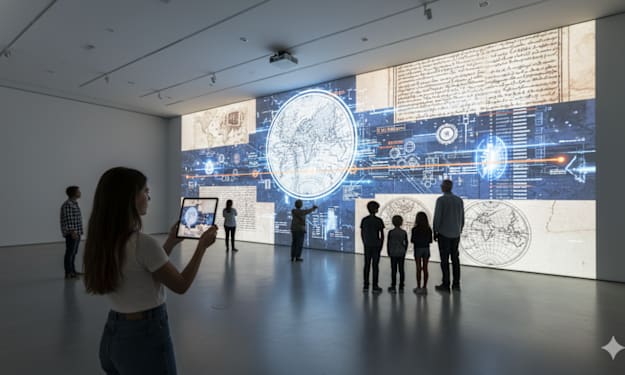
Museums Are Losing the Digital Generation. Here's What Changes That in 2026
Cultural institutions are sitting on some of the world's most valuable knowledge. Yet a growing number of visitors — especially younger ones — walk through exhibits and feel nothing. They take a photo, glance at a placard, and move on.
By ViitorCloud Technologies6 months ago in 01
Top 7 Trusted Fintech App Development Companies in USA in 2026
The fintech revolution continues to reshape how businesses and consumers interact with money. From digital banking and payment gateways to blockchain-powered platforms, the demand for reliable fintech app development solutions is higher than ever in 2026.
By keith laurance6 months ago in 01
Rooted in Principle, Ready for the Digital Age: The Story of ADNTC
Is this arrangement designed for me, or for them? In most conventional models, the honest answer tends to favour the house. Premiums come in, claims go out, and the gap between them becomes profit. The policyholder is a customer. The company is a business. The relationship is transactional.
By Mathew Davis6 months ago in 01
The One Second That Changes Everything: Why Dubai's Roads Demand Your Full Attention
But there's a particular kind of anxiety that comes with merging onto a Dubai highway during rush hour — the kind where you check your mirrors twice, then a third time, and still somehow feel underprepared for what might come flying up behind you at 160 kilometres an hour.
By Mathew Davis6 months ago in 01
How to Rebuild an AI-Wrapped App Into AI Native
The initial gold rush of generative AI led to a predictable result. Market saturation occurred through the "AI Wrapper." These applications primarily serve as a stylized interface. They connect to a third-party Large Language Model (LLM). Common examples include GPT-4 or Claude 3.5. Wrappers allowed for rapid market entry in 2024 and 2025. However, they often lack long-term defensibility. They suffer from high latency issues. They also offer limited user experience differentiation.
By Del Rosario6 months ago in 01
Why AI Native Apps Outperform AI Add-Ons in 2026
The novelty of "adding a chatbot" has officially worn off. This change occurred in early 2026. Expectations for artificial intelligence have now matured. A stark performance gap has emerged in the market. Legacy software uses "bolted-on" AI features. AI native apps use a different approach entirely.
By Del Rosario6 months ago in 01
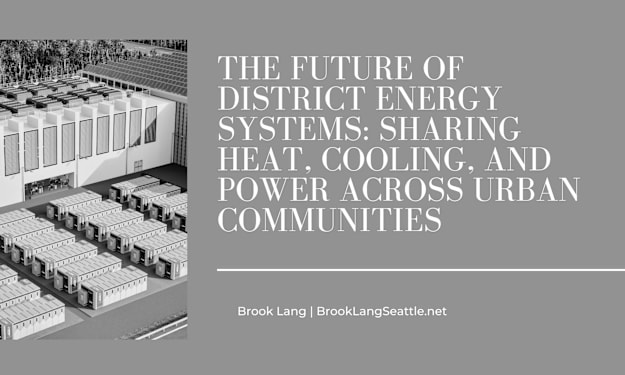
The Future of District Energy Systems: Sharing Heat, Cooling, and Power Across Urban Communities
As cities grow denser and energy demands increase, traditional building-by-building energy systems are becoming less efficient and more costly to operate. Heating, cooling, and electricity are often generated separately for each structure, leading to wasted energy and higher emissions. District energy systems offer a smarter alternative by centralizing energy production and distributing it across multiple buildings. This shared approach is transforming how urban communities manage power, heat, and cooling.
By Brook Lang Seattle6 months ago in 01
Circular Construction: How Recycled Materials and Modular Design Are Reducing Building Waste
The construction industry is one of the largest contributors to global waste and carbon emissions. Traditional building practices follow a linear model: extract raw materials, build, and eventually demolish—sending vast amounts of debris to landfills. As sustainability becomes a priority, the industry is shifting toward a circular construction model that emphasizes reuse, recycling, and resource efficiency. By integrating recycled materials and modular design, circular construction is redefining how buildings are created and deconstructed.
By Brook Lang Seattle6 months ago in 01
Top 8 MVP Development Companies for Growth. AI-Generated.
Starting a new venture is exciting—but it can also feel overwhelming. There’s always that big question in the beginning: Will this idea actually work? That’s exactly why building a Minimum Viable Product (MVP) is such an important step.
By Olivia Carter6 months ago in 01