
Language Services Market Set to Reach US$131.75 Billion by 2033 as Global Communication Breaks Barriers
From AI-powered translation to multilingual content creation, language services are becoming essential in a world driven by globalization, digital transformation, and cultural connectivity.

In today's interconnected world, communication has become one of the most valuable assets a business can possess. Companies no longer operate within a single market, and consumers are no longer limited by geography when purchasing products, accessing information, or consuming entertainment. As organizations expand internationally, one challenge consistently emerges: language.
The ability to communicate effectively across cultures and languages has evolved from a competitive advantage into a business necessity. Whether it involves translating websites, localizing software, interpreting legal documents, dubbing films, or supporting multilingual customer service, language services have become an indispensable part of global operations.
As globalization accelerates and digital content continues to expand at an unprecedented pace, demand for language services is growing across industries worldwide.
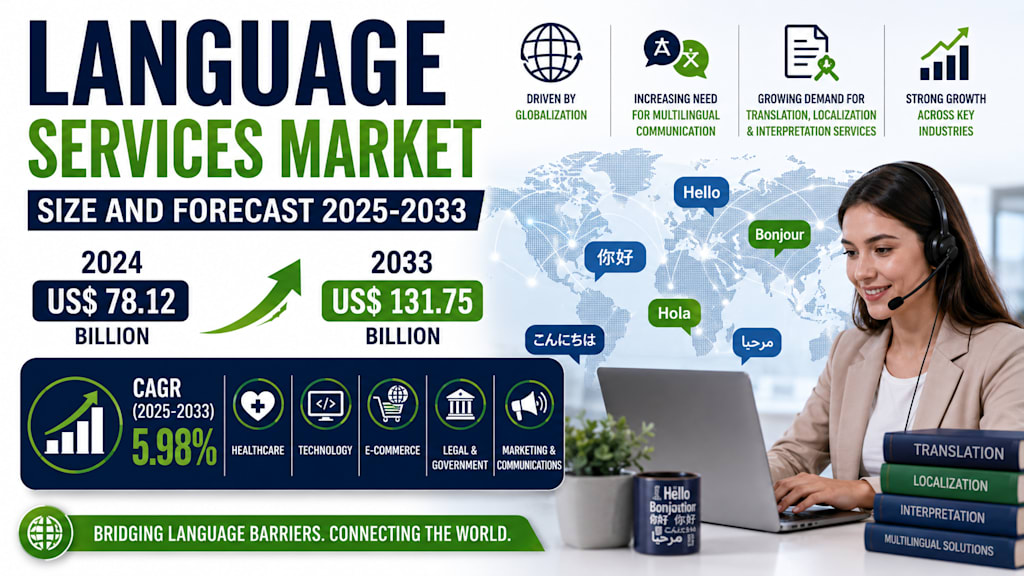
According to Renub Research, the global Language Services Market was valued at US$78.12 billion in 2024 and is projected to reach US$131.75 billion by 2033, growing at a compound annual growth rate (CAGR) of 5.98% between 2025 and 2033.
The market's growth reflects a simple reality: businesses, governments, healthcare providers, and consumers increasingly need solutions that allow them to communicate seamlessly across linguistic and cultural boundaries.
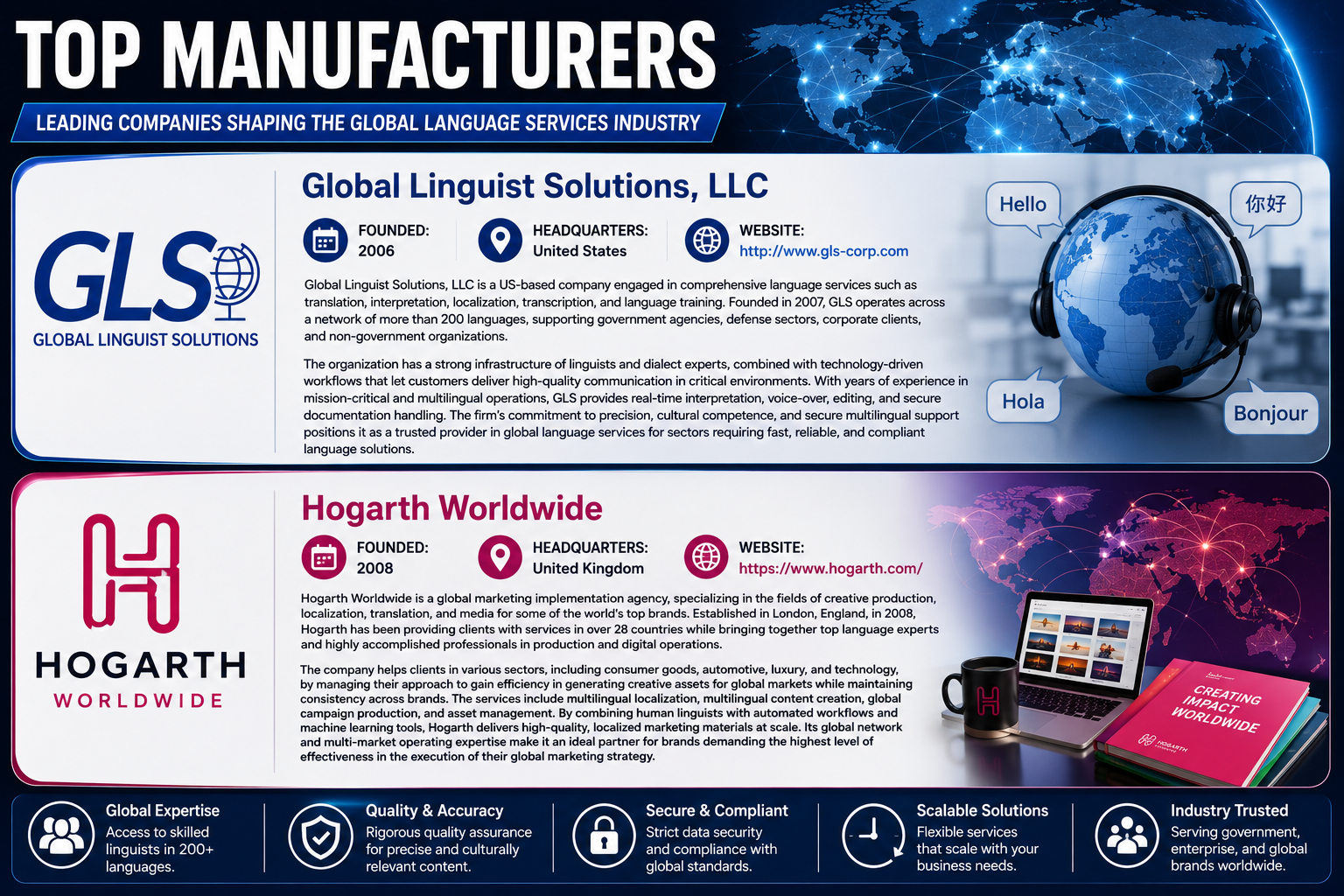
Why Language Services Matter More Than Ever
Language services encompass a broad range of professional solutions designed to facilitate communication between people who speak different languages.
These services include translation, interpretation, localization, transcription, subtitling, dubbing, multilingual content creation, language training, and cultural adaptation.
At their core, language services do much more than convert words from one language into another. Effective communication requires preserving context, intent, tone, and cultural relevance.
For example, a marketing campaign that succeeds in one country may fail completely in another if cultural nuances are overlooked. Similarly, inaccurate medical translations can create serious healthcare risks, while legal misinterpretations can result in costly disputes.
Professional language services help organizations avoid these pitfalls while ensuring that communication remains clear, accurate, and culturally appropriate.
As global interactions become more frequent, the importance of these services continues to increase.
Globalization Is Fueling Market Expansion
One of the most powerful drivers behind the language services market is globalization.
Businesses today operate across multiple countries and continents. E-commerce platforms serve customers worldwide. Streaming services distribute content globally. Software companies launch products simultaneously in dozens of markets.
This international expansion requires businesses to communicate effectively with diverse audiences.
Consumers increasingly expect products, websites, applications, and customer support to be available in their native languages. Organizations that fail to meet these expectations often struggle to gain trust and market share.
Language services help bridge these gaps.
By adapting content to local languages and cultures, businesses can improve customer engagement, strengthen brand reputation, and expand their global reach.
As international trade and digital commerce continue growing, demand for professional language support is expected to rise significantly.
The Rise of Localization
Translation alone is no longer sufficient in many industries.
Modern businesses increasingly rely on localization—the process of adapting content to meet the cultural, linguistic, and regional expectations of specific markets.
Localization goes beyond language.
It may involve adjusting imagery, colors, currencies, measurement units, date formats, product descriptions, marketing messages, and user interfaces.
For example, a mobile application designed for users in North America may require extensive modifications before being launched successfully in Asia, Europe, or the Middle East.
Localization ensures that products feel natural and relevant to local audiences rather than appearing as direct translations of foreign content.
As organizations compete for global audiences, localization has become one of the fastest-growing segments within the language services industry.
Digital Content Is Creating Massive Demand
The digital economy is generating unprecedented volumes of content.
Every day, businesses publish websites, blogs, social media posts, videos, product descriptions, training materials, and customer communications. Much of this content is intended for international audiences.
The challenge lies in making content accessible to people who speak different languages.
Multilingual content strategies have become increasingly important for businesses seeking global growth.
Companies that provide content in multiple languages often experience improved customer engagement, higher conversion rates, and stronger market penetration.
Streaming platforms, online education providers, gaming companies, software developers, and e-commerce businesses are among the largest consumers of language services today.
As digital content creation continues accelerating, the demand for translation, localization, subtitling, and multilingual content development is expected to increase substantially.
Artificial Intelligence Is Transforming the Industry
Technology has dramatically changed the language services landscape.
Artificial intelligence, machine learning, neural machine translation, and automation tools are helping language service providers improve efficiency, scalability, and speed.
AI-powered translation systems can process large volumes of content within seconds. Translation management platforms streamline workflows and improve collaboration among linguists, editors, and project managers.
Machine translation has become particularly valuable for handling repetitive or high-volume content.
However, despite technological advancements, human expertise remains essential.
Language involves emotion, creativity, cultural understanding, and contextual interpretation—areas where human linguists continue to outperform machines.
As a result, many organizations are adopting hybrid approaches that combine AI-driven efficiency with human quality assurance.
This combination enables faster turnaround times while maintaining accuracy and cultural relevance.
Rather than replacing language professionals, technology is increasingly serving as a powerful tool that enhances their capabilities.
Healthcare Depends on Effective Communication
The healthcare sector represents one of the most critical markets for language services.
Accurate communication can directly affect patient outcomes, treatment decisions, and medical safety.
Healthcare providers regularly serve patients who speak different languages and come from diverse cultural backgrounds. Miscommunication can lead to misunderstandings regarding symptoms, diagnoses, medications, and treatment plans.
Professional medical interpreters and translators help ensure that patients receive accurate information and appropriate care.
Healthcare organizations also require multilingual documentation, consent forms, patient education materials, and regulatory submissions.
As healthcare systems become increasingly multicultural, language services will remain essential for improving accessibility and patient experiences.
Legal and Financial Industries Require Precision
Few industries demand accuracy as intensely as legal and financial services.
Contracts, court documents, compliance materials, financial reports, and regulatory filings often require highly specialized translation expertise.
Even minor translation errors can create significant legal or financial consequences.
Professional language service providers employ subject-matter experts who understand industry-specific terminology and regulatory requirements.
These specialized services help organizations navigate international business transactions, regulatory compliance obligations, and legal proceedings with confidence.
As cross-border business activity continues expanding, demand for professional legal and financial language services is expected to remain strong.
Entertainment and Media Are Going Global
The entertainment industry has become one of the most visible beneficiaries of language services.
Streaming platforms now distribute movies, television shows, documentaries, and original content to audiences around the world.
Viewers increasingly expect access to content in their preferred language through subtitles, dubbing, voice-over services, and localized user interfaces.
Language service providers play a crucial role in making global content accessible to diverse audiences.
Gaming companies also rely heavily on localization to adapt storylines, dialogue, instructions, and user experiences for international markets.
As global media consumption continues rising, demand for entertainment localization services is expected to grow significantly.
Remote Work and International Collaboration
The rise of remote work has created new opportunities for multilingual communication.
Organizations increasingly employ teams distributed across multiple countries and time zones. Virtual meetings, collaborative projects, and international partnerships have become common business practices.
Language barriers can create challenges in these environments.
Translation, interpretation, transcription, and multilingual collaboration tools help organizations facilitate effective communication among globally distributed teams.
As businesses continue embracing flexible work models, language services will play an increasingly important role in supporting international collaboration.
AI Training Creates New Revenue Streams
One of the newest growth opportunities within the language services market involves artificial intelligence development.
Modern AI systems require enormous amounts of high-quality language data to train and improve machine learning models.
Language service providers are increasingly involved in data annotation, content labeling, speech recognition training, factuality testing, and multilingual dataset creation.
These services help improve AI performance while ensuring linguistic diversity and cultural representation.
As AI adoption accelerates across industries, demand for language-related data services is expected to become a significant growth driver for the market.
Sustainability Is Influencing Industry Practices
Environmental responsibility is becoming increasingly important within the language services industry.
Many providers are reducing their environmental impact by adopting digital workflows, cloud-based platforms, and remote collaboration technologies.
These approaches help reduce paper consumption, business travel, and office-related emissions.
Language service companies are also emphasizing social sustainability through inclusive communication initiatives.
Providing multilingual access to healthcare, education, government services, and public information helps create more equitable and accessible societies.
By combining technological innovation with environmental and social responsibility, language service providers are positioning themselves for long-term sustainable growth.
Challenges Facing the Industry
Despite strong growth prospects, the language services market faces several challenges.
One of the most significant concerns is maintaining quality while increasing speed and scalability.
Global businesses increasingly expect rapid turnaround times without compromising accuracy. Meeting these expectations requires careful coordination between technology platforms and human experts.
Pricing pressure also presents challenges.
As machine translation becomes more widely available, some clients may underestimate the value of professional linguistic expertise.
Language service providers must continue demonstrating the importance of cultural adaptation, subject-matter specialization, and quality assurance.
Data security and confidentiality represent additional concerns, particularly in industries such as healthcare, finance, and government services.
Providers must maintain rigorous standards to protect sensitive information while delivering multilingual support.
The Future of Language Services
The future of the language services market appears exceptionally promising.
Globalization continues expanding economic opportunities across borders. Digital transformation is generating increasing amounts of multilingual content. Artificial intelligence is creating entirely new service categories. Meanwhile, cultural diversity and international collaboration continue growing.
Language services sit at the intersection of all these trends.
Organizations increasingly recognize that successful communication requires more than technology alone. It requires cultural understanding, linguistic expertise, and the ability to connect with people in meaningful ways.
As businesses compete in increasingly global markets, the demand for professional language support will only continue to rise.
Final Thoughts
Language has always been one of humanity's most powerful tools. It enables collaboration, education, innovation, commerce, and cultural exchange.
In today's global economy, the ability to communicate across languages has become a critical driver of business success and social inclusion.
With the Language Services Market expected to grow from US$78.12 billion in 2024 to US$131.75 billion by 2033, the industry is positioned for sustained expansion.
Whether through translation, localization, interpretation, subtitling, AI training, or multilingual content creation, language service providers are helping organizations connect with audiences around the world.
As globalization and digital transformation continue reshaping industries, language services will remain at the heart of international communication—bridging cultures, breaking barriers, and bringing the world closer together.
About the Creator
Enjoyed the story? Support the Creator.
Subscribe for free to receive all their stories in your feed.
Comments
There are no comments for this story
Be the first to respond and start the conversation.