
Kraft Paper Pouches: What Buyers Should Know Before Choosing a Packaging Supplier
Understanding materials, performance, and sustainability.

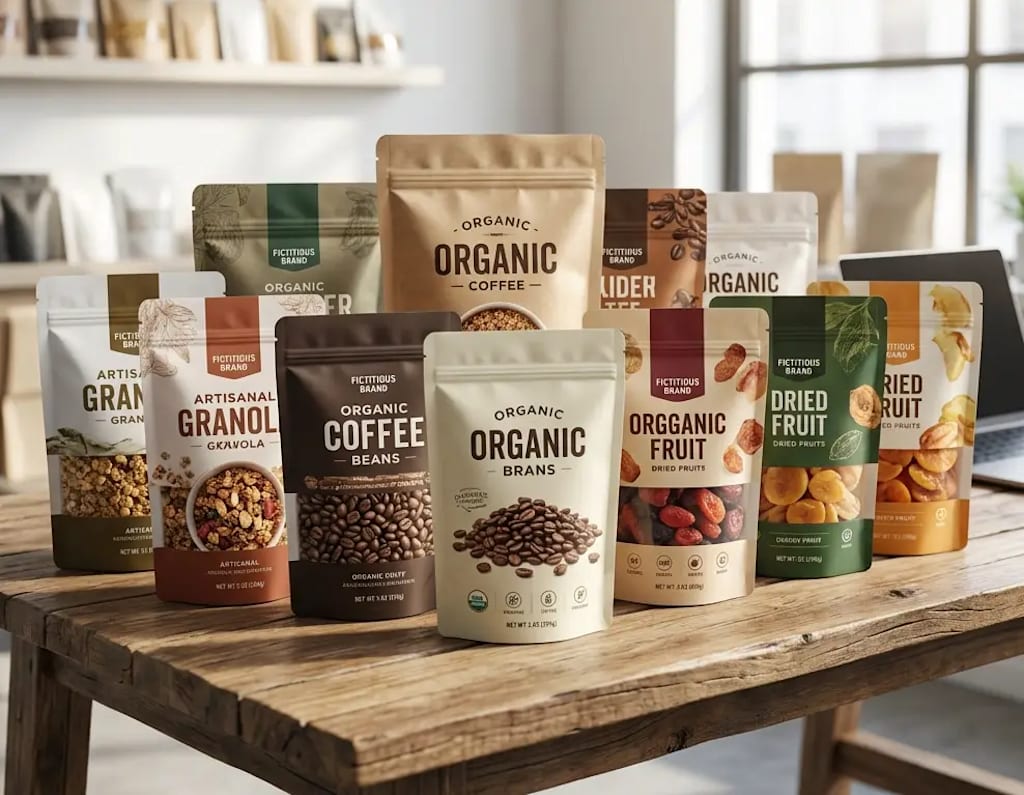
Packaging has become an important part of how products are stored, transported, displayed, and eventually disposed of. For many businesses, the challenge is finding packaging that offers practical protection while also responding to growing interest in paper-based and recyclable materials.
Kraft paper pouches are one option receiving attention across food, cosmetics, household goods, and other consumer product categories. They combine the familiar appearance of paper with pouch-style construction, creating a format that can be adapted for different products and applications.
However, choosing packaging should involve more than appearance. Material composition, barrier performance, manufacturing capabilities, printing, closures, minimum order quantities, and end-of-life considerations can all influence whether a pouch is appropriate for a particular product.
What Is a Kraft Paper Pouch?
A kraft paper pouch is a flexible package that uses kraft paper as one of its structural or outer layers. Kraft paper is produced from wood pulp using the kraft process, which is designed to create relatively strong paper.
Unlike a simple paper bag, a pouch can incorporate features such as heat-sealed edges, zip closures, tear notches, windows, and multiple material layers. The exact construction varies according to the intended application.
This distinction matters because a pouch that looks like paper may not consist entirely of paper. Some products use plastic films, aluminum layers, coatings, or adhesives to provide moisture, oxygen, grease, or aroma barriers.
Consumers and businesses therefore need to distinguish between paper appearance and actual material composition.
Why Are Businesses Considering Kraft Paper Packaging Bags?
One reason for the popularity of kraft paper packaging bags is their familiar appearance. The natural brown surface is often associated with simple, minimal, or environmentally conscious packaging.
Kraft paper can also provide useful strength for many dry-product applications. Depending on its construction, it can be used for products such as snacks, coffee, tea, grains, powders, pet treats, and various non-food items.
Another consideration is branding. Kraft paper provides a relatively simple surface that can support printed information, product descriptions, instructions, and visual design.
Still, packaging decisions should be based on performance rather than appearance alone. A package designed for a product containing oil or moisture, for example, may require substantially different barrier properties from a pouch intended for dry goods.
Finding Kraft Paper Pouch Suppliers
Businesses searching for Kraft paper pouch suppliers should evaluate several factors before placing an order. Supplier selection can affect both the quality and consistency of the finished packaging.
Important questions include:
What materials are used in the pouch structure?
Is the pouch designed for the intended product?
What barrier properties are available?
Are different sizes and closure systems offered?
What printing methods are available?
What are the minimum order quantities?
Can samples be provided before a larger order?
Are material specifications and test information available?
What are the storage and transportation requirements?
Supplier transparency is particularly important when environmental claims are involved. Terms such as "eco-friendly," "recyclable," and "compostable" can mean different things depending on the material structure and local waste-management infrastructure.
Comparing Kraft Paper Pouch Manufacturers
There are many Kraft paper pouch manufacturers serving different markets, so buyers should avoid making decisions based only on price.
Manufacturing capabilities can differ considerably. Some companies focus on standard pouch formats, while others produce customized structures for specific products. Production equipment, quality-control systems, printing capabilities, and material sourcing can also vary.
For large orders, consistency is another important consideration. A packaging design may look satisfactory in a sample but still require careful quality control during mass production.
Businesses can request technical specifications, samples, production information, and details about quality-control procedures before committing to an order.
Understanding Flexible Packaging Manufacturing
Flexible packaging is a broad category that includes pouches, sachets, bags, films, and other lightweight packaging formats. A China flexible packaging bags factory may produce packaging for domestic and international markets, but the phrase itself does not indicate a particular level of quality.
When evaluating an overseas manufacturer, buyers should look beyond location. Production standards, communication, documentation, quality assurance, lead times, shipping arrangements, and compliance requirements may be more relevant than geography alone.
Some manufacturers also specialize in flexible packaging pouches made with combinations of paper and polymer films. Such structures can provide properties that a single paper layer cannot provide.
Paper Pouches and Environmental Considerations
Paper is widely recognized as a material used in bags and packaging. Its history and common applications are discussed in resources such as the Wikipedia overview of the paper bag.
However, the environmental profile of a pouch depends on its entire construction and disposal pathway.
A multilayer pouch may contain several materials bonded together. Although the outer layer may be kraft paper, separating those materials after use may not be straightforward. In some recycling systems, flexible multilayer packaging may not be accepted.
For this reason, buyers should ask specific questions rather than relying on broad environmental descriptions. A useful assessment considers material composition, production, transportation, product protection, expected shelf life, reuse possibilities, and local recycling or disposal systems.
What Should Buyers Look for?
The most suitable pouch depends on the product and its distribution environment. A dry product with limited sensitivity to oxygen may have different requirements from coffee, oily snacks, powdered foods, cosmetics, or moisture-sensitive goods.
Before choosing a package, buyers can create a basic specification covering:
Product characteristics — moisture, oil, oxygen, aroma, and light sensitivity.
Required shelf life — how long the product needs protection.
Pouch dimensions — capacity, shape, and filling requirements.
Closure — zipper, heat seal, spout, or another format.
Material structure — paper, film, coating, or multilayer construction.
Printing requirements — artwork, labeling, and regulatory information.
Distribution conditions — storage, shipping, temperature, and handling.
End-of-life options — recycling, composting, or disposal in the target market.
This approach can make supplier comparisons much more objective.
The Bottom Line
Kraft paper pouches can be a practical packaging format for many products, but there is no single pouch design that works for every application. The visible paper layer is only one part of the packaging system.
Businesses considering a Kraft paper pouch wholesale purchase should examine material construction, barrier performance, manufacturing consistency, customization options, order requirements, and end-of-life considerations before making a decision.
Likewise, choosing between different Kraft paper pouch suppliers or Kraft paper pouch manufacturers requires more than comparing catalog photographs and prices. Understanding what is inside the pouch, how it is manufactured, and how it will perform throughout the product's life cycle provides a more reliable basis for comparison.
As flexible packaging continues to evolve, the most useful approach is not simply to choose the packaging that looks most sustainable. Instead, buyers should match packaging performance with product requirements while considering the practical realities of production, distribution, use, and disposal.
About the Creator
Enjoyed the story? Support the Creator.
Subscribe for free to receive all their stories in your feed.
Comments
There are no comments for this story
Be the first to respond and start the conversation.