
Key Technical Features of Microservices
In the realm of modern software design, microservices architecture revolutionizes backend development by breaking down complex systems into discrete, autonomous services.
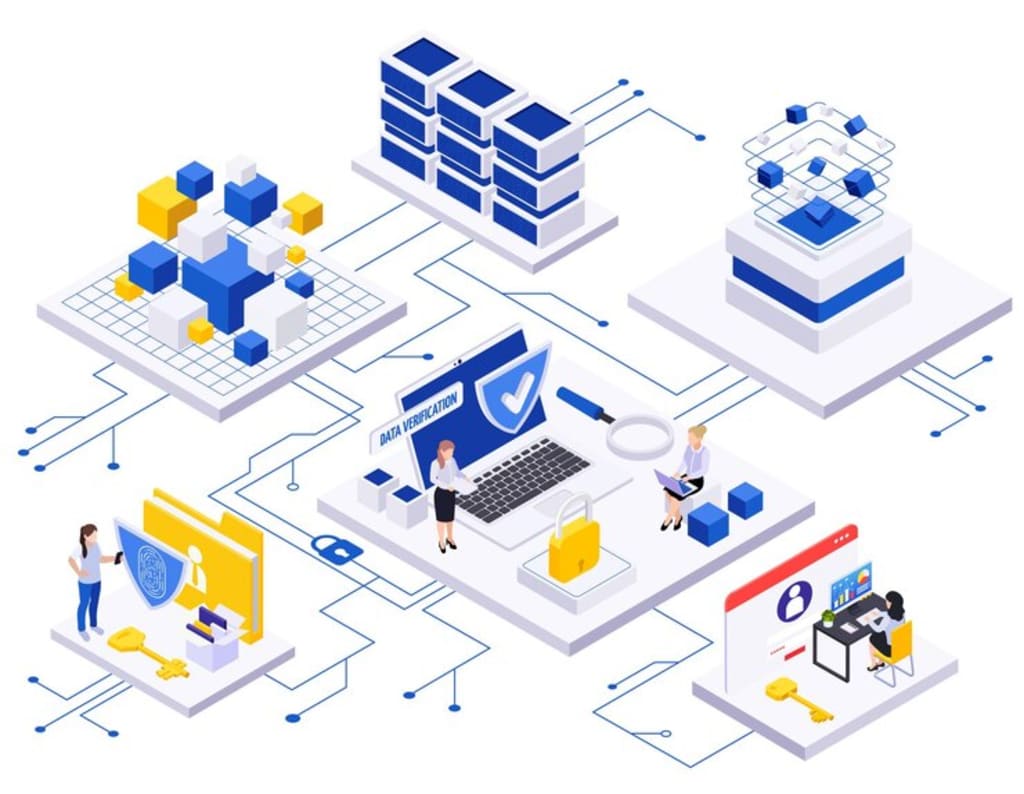
Each service is crafted with a specific business capability in mind, functioning as a self-contained unit that can operate and evolve independently. These services communicate through well-defined application programming interfaces (APIs), typically using lightweight protocols like REST or gRPC, enabling seamless interaction while maintaining their individual autonomy.
The key of microservices architecture benefits lies in its ability to create a flexible, scalable system where services can be developed, deployed, and scaled separately without disrupting the entire application ecosystem. Unlike monolithic architectures, microservices allow teams to work on different components simultaneously, choose the most appropriate technology for each service, and quickly respond to changing business requirements. Read more information about microservices architecture advantages here.
Key Technical Features of Microservices
Decentralized Data Management
One of the most powerful features of microservices is decentralized data management. Each service can have its own database, allowing teams to choose the most appropriate data storage solution for their specific requirements.
Traditionally, software systems relied on a single, centralized database that attempted to accommodate diverse data requirements, resulting in significant compromises and inefficiencies. Microservices architecture shatters this limitation by allowing each service to become its own data steward, selecting the most appropriate storage mechanism tailored to its unique computational needs and characteristics.
Independent Database
Management By maintaining separate databases, services can select database technologies that best suit their unique needs. A user management service might use a relational database, while a recommendation engine could leverage a graph database.
Polyglot Persistence
Microservices embrace polyglot persistence, meaning different services can use different types of databases simultaneously. This flexibility enables optimized data storage and retrieval strategies. Services can now meticulously select databases that align perfectly with their computational characteristics, whether it's a time-series database for efficient log management, an in-memory database for real-time analytics, or a specialized graph database for complex relationship tracking.
Service Independence and Autonomy
Loose Coupling
Microservices are designed with minimal dependencies between services. Each service can be developed, deployed, and scaled independently, reducing the risk of system-wide disruptions.
The implications of this approach are profound. Development teams gain freedom and flexibility. A payment processing service can undergo comprehensive updates without forcing the entire e-commerce platform into downtime. A recommendation engine can be completely redesigned or replaced without sending shockwaves through the entire system. This independence dramatically reduces the complexity and risk associated with software maintenance and evolution.
Independent Deployment
Teams can update, modify, or replace individual services without affecting the entire application. This approach dramatically reduces deployment risks and accelerates development cycles.
In traditional software development all components had to move in perfect synchronization. Microservices break this constraint, allowing teams to deploy updates with surgical precision. A user authentication service can receive critical security patches without forcing a complete system-wide release. Performance improvements in one service can be implemented rapidly, without the need for extensive, time-consuming comprehensive testing.
The technical and organizational benefits extend far beyond mere technological convenience. This approach enables smaller, more focused teams to take ownership of specific services. Developers can become true specialists, diving deep into the nuanced requirements of their specific service rather than becoming generalists managing complex, interconnected systems. The result is higher-quality code, faster innovation, and more targeted expertise.
Architectural Design Principles
Modular Design Approach
Microservices follow a modular design principle, breaking complex applications into smaller, manageable components. Each service encapsulates a specific business capability, promoting better organization and maintainability.
API-First Strategy
Communication between services is primarily achieved through well-defined APIs. This strategy ensures clear interfaces, making integration and interaction between services more predictable and manageable.
Communication Mechanisms
Synchronous vs Asynchronous Communication
Microservices support both synchronous (request-response) and asynchronous communication patterns. Asynchronous communication, often implemented through message queues, provides better system resilience and performance. More details:
Communication mechanisms form the neural network of microservices architecture, transcending traditional interaction paradigms by introducing sophisticated strategies for service connectivity. Synchronous and asynchronous communication patterns represent sophisticated approaches to inter-service dialogue, each offering unique advantages in distributed system design.
Synchronous communication operates through direct, immediate request-response interactions where services engage in real-time exchanges. A service sends a request and waits for an immediate response, creating a linear, predictable communication flow. This approach ensures instantaneous data exchange but introduces potential performance bottlenecks and system vulnerabilities. If a service becomes unresponsive, the entire communication chain can potentially halt, creating cascading system failures.
Asynchronous communication fundamentally transforms this interaction model. Services communicate without requiring immediate reciprocation, creating a more resilient, flexible communication ecosystem. Messages are dispatched without blocking service operations, enabling parallel processing and enhanced system responsiveness. This approach allows services to continue functioning independently, even when specific communication channels experience temporary disruptions.
Message Queues and Event-Driven Architecture
Message queues emerge as critical infrastructure in asynchronous communication strategies. These sophisticated communication channels act as intermediary buffers, facilitating indirect service interactions. By decoupling message senders from receivers, message queues create a more robust, scalable communication framework. Services can generate messages without immediate dependency on recipient availability, creating a more dynamic, adaptable system architecture.
Event-driven architectures elevate communication mechanisms to an advanced level of system intelligence. Instead of relying on direct, predetermined interactions, services become responsive entities capable of reacting to systemic changes. When a specific event occurs, multiple services can simultaneously receive and process information, creating a more organic, adaptive communication model.
The profound significance of these communication mechanisms extends beyond technical implementation. They represent a fundamental shift from rigid, predefined interaction models to dynamic, responsive communication strategies. Services transform from passive endpoints to active, intelligent participants in a complex distributed ecosystem.
Technological complexity demands sophisticated communication strategies that balance performance, reliability, and flexibility. Teams must develop nuanced approaches to inter-service communication, understanding the intricate trade-offs between synchronous directness and asynchronous resilience. Careful architectural design becomes crucial in creating communication frameworks that optimize system performance while maintaining operational integrity.
Scalability and Performance
Horizontal Scaling Capabilities
Unlike monolithic systems, microservices can be scaled horizontally. Individual services experiencing high load can be replicated across multiple instances, distributing the workload efficiently.
Dynamic Resource
Allocation Cloud-native microservices architectures enable dynamic resource allocation. Services can automatically scale up or down based on real-time demand, optimizing infrastructure utilization and cost.
About the Creator
Dirk Goetz
I am a skilled Web Developer with expertise in Service Cloud, Ecommerce Headless solutions, ensuring scalability and exceptional user experiences.
Enjoyed the story? Support the Creator.
Subscribe for free to receive all their stories in your feed.
Comments