
Japan's E-Commerce Payment Boom: How a Traditionally Cash-Focused Nation Is Embracing Digital Commerce
Government-backed cashless initiatives, mobile payment innovation, and the rapid growth of online shopping are transforming Japan's digital payment landscape.

For decades, Japan was often viewed as one of the world's most cash-oriented developed economies. Despite its reputation for technological innovation, consumers and businesses alike relied heavily on physical currency for everyday transactions. However, a remarkable transformation has been taking place over the past several years.
The rise of e-commerce, widespread smartphone adoption, government-backed cashless initiatives, and changing consumer preferences have accelerated the adoption of digital payment solutions throughout the country. Today, online shoppers in Japan increasingly expect fast, secure, and convenient payment experiences, driving substantial growth across the nation's e-commerce payment ecosystem.
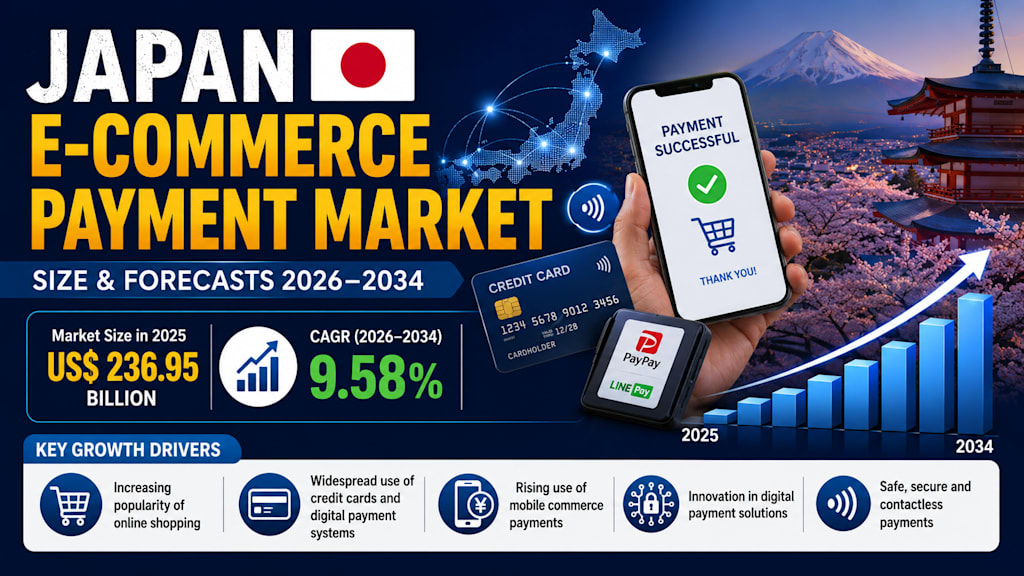
According to Renub Research, the Japan E-Commerce Payment Market is expected to grow from US$ 236.95 billion in 2025 to US$ 539.82 billion by 2034, representing a strong compound annual growth rate (CAGR) of 9.58% between 2026 and 2034. This impressive growth reflects not only the expansion of online shopping but also a broader shift toward digital financial services.
As Japan continues its transition toward a more cashless society, payment providers, retailers, financial institutions, and technology companies are racing to meet evolving consumer expectations.
The Evolution of E-Commerce Payments in Japan
E-commerce payments refer to the digital systems and technologies that allow consumers to purchase products and services online. These solutions include credit cards, debit cards, digital wallets, mobile payment applications, prepaid cards, electronic fund transfers, and emerging payment innovations designed to simplify online transactions.
In today's digital economy, payment systems play a critical role in shaping the overall customer experience. A smooth and secure checkout process can encourage repeat purchases, while a complicated payment experience often leads to abandoned shopping carts.
Japanese consumers have become increasingly comfortable conducting transactions online, whether purchasing fashion items, electronics, groceries, entertainment subscriptions, or digital services. As a result, businesses are investing heavily in payment technologies that prioritize speed, convenience, and security.
The growing importance of e-commerce has transformed payment solutions from back-end transaction tools into strategic assets that directly influence customer satisfaction and business performance.
Japan's Journey Toward a Cashless Society
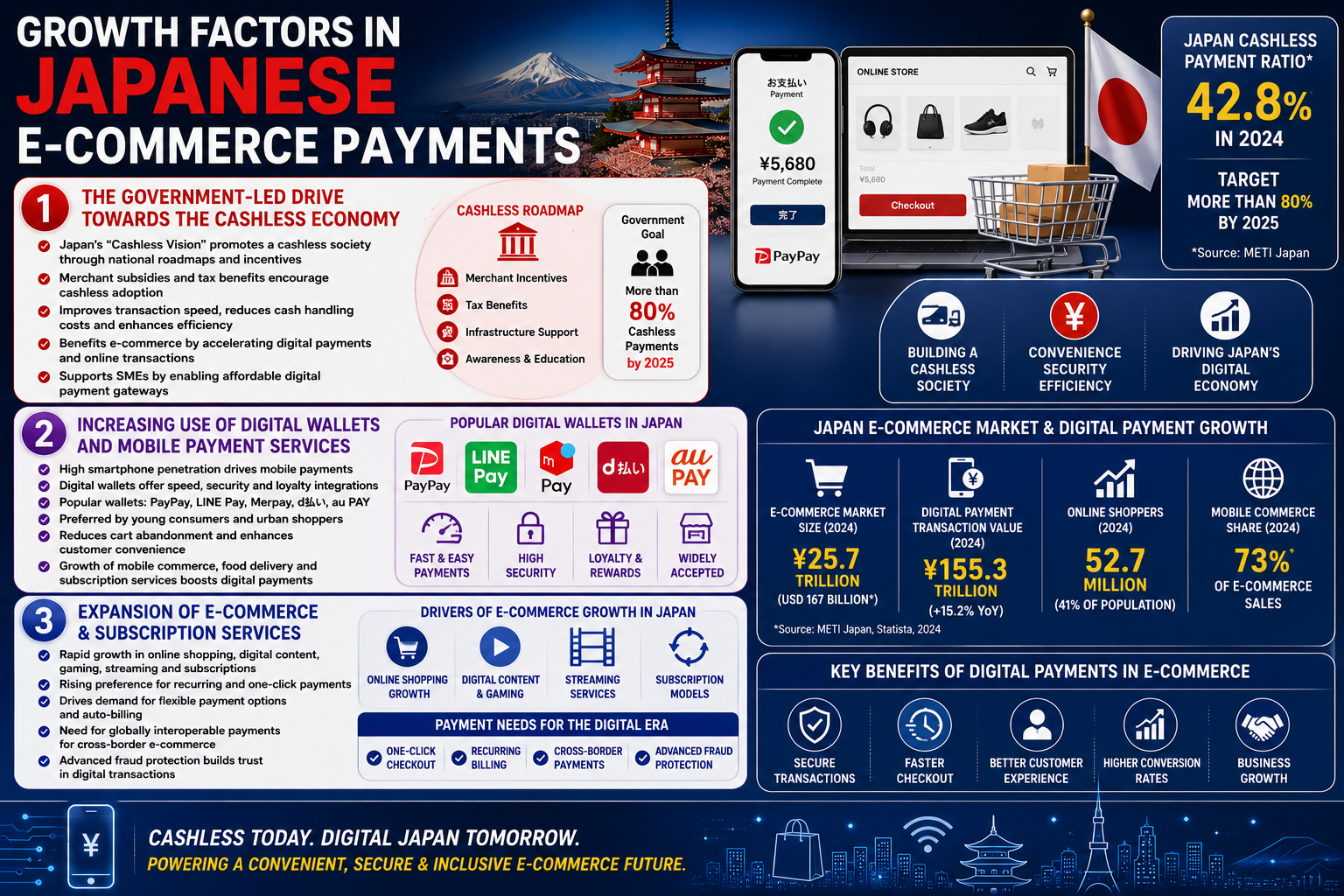
One of the most significant factors driving growth in Japan's e-commerce payment market is the government's ongoing effort to promote a cashless economy.
Historically, Japan maintained a strong preference for cash due to cultural traditions, trust in physical currency, and concerns about digital security. While many countries rapidly embraced electronic payments, Japanese consumers often continued relying on cash for everyday transactions.
Recognizing the economic and operational benefits of digital payments, policymakers launched initiatives designed to encourage cashless adoption. These efforts include merchant incentives, support for electronic settlement systems, and broader strategies aimed at increasing digital transaction volumes.
The shift toward cashless payments benefits not only consumers but also businesses and government agencies. Electronic payments reduce cash handling costs, improve transaction efficiency, and support broader economic digitization efforts.
As merchants increasingly integrate digital payment gateways into their operations, online commerce continues to gain momentum across the country.
The Rise of Digital Wallets
Digital wallets have emerged as one of the fastest-growing segments within Japan's e-commerce payment market.
Consumers increasingly value payment methods that eliminate unnecessary steps during checkout. Rather than entering payment information repeatedly, shoppers can complete purchases quickly through stored credentials and one-click payment capabilities.
The convenience offered by digital wallets is especially appealing to mobile shoppers. As smartphone usage continues to rise, consumers expect payment experiences that match the speed and simplicity of mobile commerce.
Digital wallets also provide enhanced security features such as tokenization and biometric authentication. Fingerprint scanning, facial recognition, and secure authentication protocols help protect users while reducing fraud risks.
In addition, many digital wallets integrate loyalty programs, promotional rewards, and personalized offers, creating additional value for consumers. These features encourage repeat usage and strengthen customer engagement.
For retailers, supporting digital wallets often leads to lower cart abandonment rates and higher conversion rates, making them an increasingly important component of e-commerce strategies.
Mobile Commerce Is Reshaping Consumer Behavior
The rapid adoption of smartphones has fundamentally changed how Japanese consumers shop online.
Mobile commerce has become a major force within the country's digital economy. Consumers can browse products, compare prices, read reviews, and complete purchases from virtually anywhere, making convenience a key competitive advantage for retailers.
As mobile shopping becomes more common, payment providers are focusing on creating frictionless mobile payment experiences. Fast authentication, streamlined checkout processes, and secure mobile wallets have become essential features.
Food delivery services, subscription platforms, ride-sharing applications, and online marketplaces have all contributed to increased demand for mobile payment solutions.
Younger consumers, in particular, have embraced mobile-first shopping behaviors. Their preference for app-based transactions and digital payment methods continues to influence payment innovation across the broader market.
The continued growth of mobile commerce is expected to remain one of the strongest drivers of e-commerce payment expansion throughout the forecast period.
Subscription Services Fuel Payment Innovation
Japan's growing digital economy extends beyond traditional retail purchases.
Subscription-based business models have become increasingly popular across multiple industries, including streaming entertainment, software services, digital media, online gaming, and food delivery.
Recurring billing systems require reliable and efficient payment infrastructure capable of handling automated transactions without disrupting customer experiences.
Consumers increasingly appreciate the convenience of automatic payments, while businesses benefit from predictable revenue streams and stronger customer retention.
As subscription services continue expanding, payment providers are developing advanced solutions that support recurring billing, automated renewals, and improved fraud prevention capabilities.
This trend is creating new opportunities for payment innovation while driving overall market growth.
Credit Cards Remain a Dominant Payment Method
Despite the rise of digital wallets and alternative payment options, credit cards continue to play a central role in Japan's e-commerce payment ecosystem.
Consumers trust credit cards because of their reliability, fraud protection features, installment payment options, and reward programs. These advantages make them particularly attractive for higher-value purchases and international transactions.
Credit card providers have also invested heavily in security enhancements, helping maintain consumer confidence in online transactions.
Many digital wallets are linked directly to credit card accounts, creating a complementary relationship rather than direct competition between payment methods.
As a result, credit cards are expected to remain a major contributor to transaction volumes even as newer payment technologies gain popularity.
Prepaid and Debit Card Solutions Continue to Expand
Beyond credit cards and digital wallets, prepaid and debit card solutions are experiencing steady growth in Japan's e-commerce market.
Prepaid payment methods appeal to consumers who want greater control over spending or prefer not to use traditional credit products. These solutions are particularly popular among younger consumers, online gamers, and individuals seeking enhanced privacy.
Prepaid cards also reduce the risk of overspending since users can only spend funds that have been loaded onto the card.
Debit cards are attracting consumers who prefer direct access to funds held in bank accounts. Real-time payment capabilities and improved digital banking services have contributed to growing adoption rates.
As financial literacy and digital banking continue to expand, both prepaid and debit payment segments are expected to play increasingly important roles in Japan's evolving payment landscape.
E-Commerce Categories Driving Payment Growth
Several e-commerce sectors are contributing significantly to payment market expansion.
Electronics and Media
Japan's strong consumer electronics industry remains a major driver of online payments. Consumers frequently purchase smartphones, computers, gaming consoles, software, and digital subscriptions online.
These transactions often involve higher purchase values, making secure payment systems particularly important.
Credit cards and digital wallets dominate this segment due to their convenience, installment payment options, and fraud protection capabilities.
Fashion and Accessories
Online fashion retail has experienced substantial growth in recent years. Consumers increasingly purchase clothing, footwear, bags, jewelry, and lifestyle products through digital channels.
Younger shoppers often favor mobile payment solutions and flexible financing options, while premium fashion purchases frequently rely on credit card transactions.
The influence of social commerce, influencer marketing, and direct-to-consumer brands has further accelerated payment activity within this sector.
Food and Personal Care
Online grocery shopping and personal care product purchases have become increasingly common among Japanese consumers.
Convenience, trust, and speed are essential factors in this category. Debit cards, digital wallets, and recurring payment systems are widely used for everyday purchases and subscription-based services.
As consumers become more comfortable ordering essentials online, payment volumes in this segment are expected to continue rising.
Challenges That Could Slow Market Growth
Despite strong growth prospects, the market faces several obstacles.
Cultural Preference for Cash
One of the most persistent challenges remains Japan's long-standing preference for cash.
Many consumers continue to associate physical currency with reliability, privacy, and security. Concerns about online fraud and digital security sometimes discourage the adoption of electronic payment methods.
Although attitudes are gradually changing, cultural habits can take time to evolve.
Fragmented Payment Ecosystem
Japan's payment landscape includes numerous payment platforms, digital wallets, card networks, and alternative payment providers.
While consumers benefit from having multiple options, merchants often face integration challenges. Supporting numerous payment methods can increase operational complexity and technology costs.
Smaller businesses may struggle to manage multiple payment systems effectively, potentially slowing adoption rates.
Addressing interoperability and simplifying integration processes will be important for sustaining long-term market growth.
Major Cities Leading Digital Payment Adoption
Japan's largest urban centers are driving much of the country's digital payment expansion.
Tokyo
As Japan's economic and technological hub, Tokyo leads the nation in e-commerce activity and digital payment adoption. Consumers in the capital are often among the earliest adopters of new financial technologies.
Osaka
Osaka's vibrant retail sector and strong consumer spending contribute significantly to online payment volumes. Businesses throughout the region continue investing in advanced payment solutions.
Aichi, Kanagawa, and Saitama
These regions are experiencing increasing demand for digital payment services due to growing e-commerce participation, smartphone adoption, and expanding online retail ecosystems.
Together, Japan's major metropolitan areas are shaping national payment trends and influencing future innovation.
The Future of E-Commerce Payments in Japan
The next decade promises continued transformation across Japan's payment landscape.
Emerging technologies such as artificial intelligence, biometric authentication, embedded finance, and advanced fraud detection systems are expected to enhance both convenience and security.
Cross-border commerce will likely expand as Japanese consumers increasingly purchase products and services from international retailers. This trend will create demand for payment solutions that support global interoperability and seamless currency management.
At the same time, businesses will continue seeking ways to reduce checkout friction and improve customer experiences through personalized payment options.
As digital transformation accelerates, payment providers that prioritize innovation, trust, and simplicity will be best positioned for success.
Final Thoughts
Japan's e-commerce payment market is entering a period of remarkable growth driven by changing consumer habits, government support for cashless transactions, and rapid technological advancement.
With the market projected to increase from US$ 236.95 billion in 2025 to US$ 539.82 billion by 2034, digital payments are becoming a fundamental component of the country's economic future.
Although challenges such as cultural resistance to cashless payments and payment ecosystem fragmentation remain, the overall direction is clear. Consumers increasingly value convenience, security, and flexibility, and businesses are responding with innovative solutions designed to meet those expectations.
As Japan continues its journey toward a more digital economy, e-commerce payment technologies will play a central role in shaping how consumers shop, spend, and interact with businesses in the years ahead.
About the Creator
Enjoyed the story? Support the Creator.
Subscribe for free to receive all their stories in your feed.
Comments
There are no comments for this story
Be the first to respond and start the conversation.