
Japan Plant Protein Market Size, Growth, Trends and Demand Report 2026–2034
How Sustainable Nutrition, Alternative Protein Innovation, and Health-Conscious Consumer Trends Are Driving Japan Plant Protein Industry

The growing popularity of plant-based eating habits is one of the key factors driving market growth in Japan. Consumers are increasingly incorporating plant-derived protein products into their diets due to perceived health benefits, ethical considerations, and environmental concerns. This shift is encouraging food manufacturers to expand their plant-based product portfolios.
Market Overview
Plant protein has emerged as a key ingredient in the evolving food and nutrition industry, driven by growing consumer interest in sustainable diets, health-focused nutrition, and alternative protein sources. Derived from various plant-based materials, plant proteins are widely used in food products, dairy alternatives, meat substitutes, animal feed, and performance nutrition applications. In Japan, increasing awareness regarding wellness, environmental sustainability, and dietary diversification is supporting the rapid growth of the plant protein market.
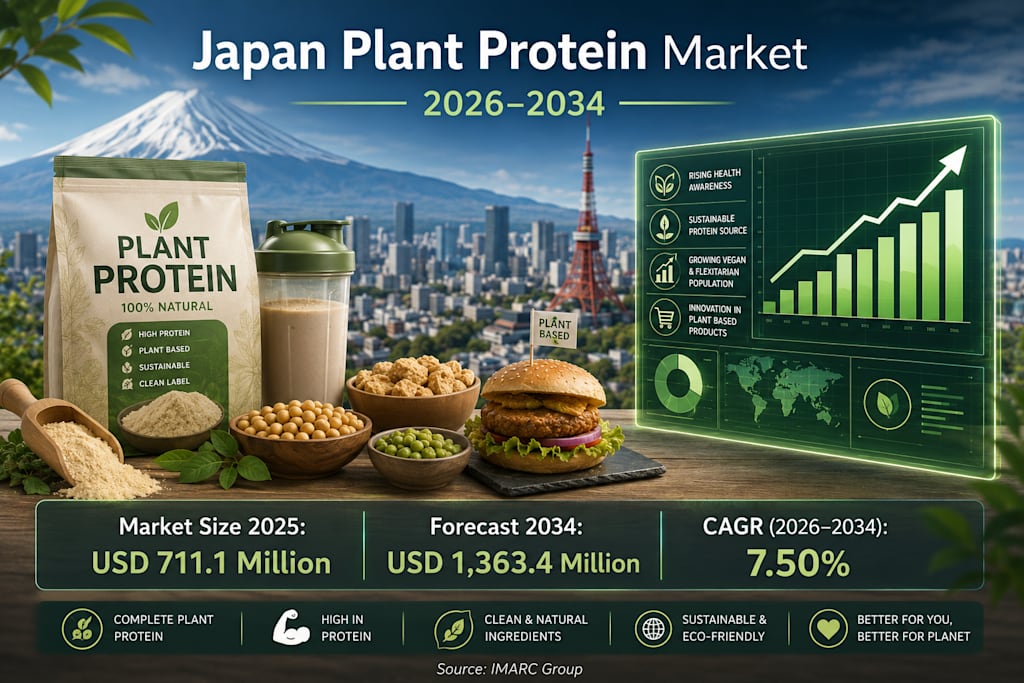
The Japan plant protein market size reached USD 711.1 Million in 2025. Looking forward, IMARC Group expects the market to reach USD 1,363.4 Million by 2034, exhibiting a growth rate (CAGR) of 7.50% during 2026-2034. Market expansion is being driven by increasing demand for plant-based food products, rising adoption of alternative protein solutions, and continuous innovation in food processing technologies.
Request PDF Sample for more detailed market insights:
Role of Innovation in Market Development
- Advancements in Plant-Based Food Technologies
Food manufacturers are investing heavily in advanced processing technologies to improve the taste, texture, and nutritional value of plant protein products. Innovations in protein extraction, texturization, and formulation techniques are helping create plant-based alternatives that closely resemble traditional meat and dairy products, enhancing consumer acceptance and market growth.
- Expansion of Alternative Protein Applications
Plant proteins are increasingly being incorporated into a wide variety of food categories beyond meat alternatives. Applications in bakery products, convenience foods, dairy substitutes, and nutritional supplements are expanding rapidly as consumers seek healthier and more sustainable dietary options. This diversification is creating new growth opportunities for manufacturers across the value chain.
- Growth of Organic and Clean-Label Products
Consumers are showing a strong preference for organic, minimally processed, and clean-label food products. As a result, manufacturers are developing plant protein offerings that align with transparency, sustainability, and natural ingredient trends. Organic plant proteins are gaining popularity among health-conscious consumers looking for premium nutritional solutions.
Japan Plant Protein Industry Trends and Drivers
- Rising Demand for Plant-Based Diets
The growing popularity of plant-based eating habits is one of the key factors driving market growth in Japan. Consumers are increasingly incorporating plant-derived protein products into their diets due to perceived health benefits, ethical considerations, and environmental concerns. This shift is encouraging food manufacturers to expand their plant-based product portfolios.
- Increasing Focus on Health and Wellness
- Sustainability and Environmental Awareness
Health-conscious consumers are actively seeking protein-rich foods that support fitness, weight management, and overall well-being. Plant proteins offer nutritional benefits such as lower saturated fat content and high protein value, making them attractive alternatives to traditional animal-based protein sources.
Environmental sustainability is becoming a major purchasing consideration for Japanese consumers. Plant protein production generally requires fewer natural resources and generates lower greenhouse gas emissions compared to conventional animal protein production. This environmental advantage is supporting the growing adoption of plant-based products across the country.
Japan Plant Protein Market Segmentation
Type Insights
• Concentrates
• Isolates
• Textured
Nature Insights
• Conventional
• Organic
Application Insights
Food
• Meat Alternatives
• Dairy Alternatives
• Bakery Products
• Performance Nutrition
• Convenience Foods
• Others
Feed
Regional Insights
• Kanto Region
• Kansai/Kinki Region
• Central/Chubu Region
• Kyushu-Okinawa Region
• Tohoku Region
• Chugoku Region
• Hokkaido Region
• Shikoku Region
The segmentation highlights the diverse applications and growing adoption of plant protein ingredients across food and feed industries throughout Japan.
Competitive Landscape
The Japan plant protein market includes ingredient manufacturers, food processing companies, alternative protein producers, and nutrition product developers. Competition is driven by product quality, protein functionality, innovation capabilities, and sustainability initiatives. Companies are investing in research and development, advanced processing technologies, and product diversification to strengthen their market position and meet evolving consumer preferences.
Market Outlook
The Japan plant protein market is expected to witness robust growth over the coming years, supported by increasing demand for sustainable food products, rising health awareness, and ongoing innovation in plant-based nutrition. Expansion of meat alternatives, dairy substitutes, and performance nutrition products will continue to drive market development. As consumers increasingly prioritize wellness, environmental responsibility, and dietary flexibility, plant proteins are expected to play a central role in Japan’s future food and nutrition landscape.
About IMARC Group
IMARC Group is a leading market research and consulting company that provides management strategy and market research services worldwide. The company offers industry analysis, business consulting, feasibility studies, market forecasting, and data-driven intelligence solutions across numerous industries and global markets.
About the Creator
David Michel
David Michel brings precision and depth to the world of market research. By uncovering trends, analyzing data, and delivering meaningful insights, he helps businesses navigate opportunities with confidence.
Enjoyed the story? Support the Creator.
Subscribe for free to receive all their stories in your feed.
Comments
There are no comments for this story
Be the first to respond and start the conversation.