
Japan Micro-Mobility Market Size, Share, Trends, and Growth Outlook
How Urbanization, Electric Mobility, and Last-Mile Connectivity Are Driving Growth in Japan Micro-Mobility Market

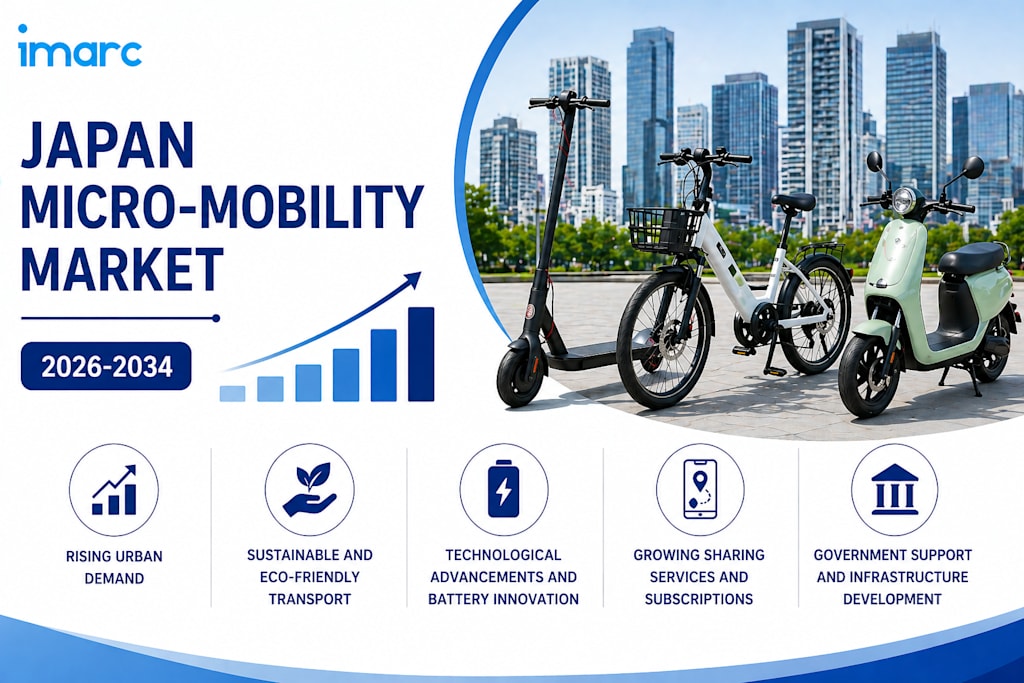
Market Overview
The micro-mobility market in Japan is witnessing strong growth, supported by the increasing need for efficient, low-emission transportation solutions in densely populated urban areas. The market encompasses electric scooters, e-bikes, and shared mobility platforms designed to address short-distance travel challenges. Rising concerns around traffic congestion, environmental sustainability, and urban efficiency are significantly accelerating adoption.
According to market analysis, the Japan micro-mobility market reached USD 4.4 billion in 2025 and is expected to grow to USD 15.1 billion by 2034, exhibiting a CAGR of 14.73% during 2026–2034.
This expansion is being fueled by rapid advancements in battery technologies, supportive regulatory developments, and growing consumer preference for flexible and cost-effective transportation options. Both public and private sectors are actively investing in infrastructure and digital mobility ecosystems.
As urban mobility continues to evolve, micro-mobility solutions are becoming an integral part of Japan’s transportation landscape.
Key Drivers Fueling Market Growth
Rising Urban Congestion and Last-Mile Challenges
Increasing population density in cities is driving demand for compact and efficient transportation solutions that address last-mile connectivity gaps.
Acceleration of Electric Mobility Adoption
Technological improvements in batteries and electric drivetrains are making micro-mobility solutions more practical, affordable, and reliable.
Growth of App-Based Shared Mobility Platforms
Digital platforms are enabling seamless access, booking, and payment, enhancing user convenience and driving widespread adoption.
Role of Innovation and Consumer Experience
Integration of Smart Mobility Technologies
IoT-enabled vehicles, GPS tracking, and mobile apps are improving operational efficiency and user experience.
Advancements in Battery Efficiency
Longer battery life and faster charging capabilities are enhancing usability and reducing operational limitations.
Focus on User-Centric Design
Lightweight, foldable, and ergonomically designed vehicles are improving convenience for daily commuters.
Japan Micro-Mobility Industry Trends & Drivers
The market is strongly shaped by Japan’s focus on smart city development and sustainable transportation systems. Increasing integration of micro-mobility into urban transit networks is supporting long-term growth.
Rising adoption of shared e-scooters and e-bikes, particularly in metropolitan areas, is further expanding market penetration and changing commuting behavior.
Additionally, regulatory support, infrastructure upgrades, and advancements in mobility-as-a-service (MaaS) platforms are creating a more connected and efficient transportation ecosystem.
Japan Micro-Mobility Market Segmentation
By Type
- Bicycles
- E-Bikes
- E-Scooters
- Others
By Propulsion Type
- Manual
- Electrically-Powered
- Hybrid
Competitive Landscape
The Japan micro-mobility market includes mobility service providers, vehicle manufacturers, and technology platforms.
Competition is driven by service availability, technological capabilities, pricing models, and user experience. Companies focusing on integrated mobility solutions and digital platforms are gaining a competitive advantage.
Partnerships with urban authorities, expansion of fleet networks, and investment in smart mobility infrastructure are shaping the competitive landscape.
Market Outlook
The Japan micro-mobility market is expected to witness strong growth through 2034, supported by increasing urbanization and demand for sustainable transportation alternatives.
As cities continue to prioritize efficient and low-emission mobility solutions, adoption of micro-mobility services will accelerate.
In the coming years, the market will evolve toward more integrated, technology-driven, and service-oriented mobility ecosystems, making it a key growth area within Japan’s urban transport sector.
About the Creator
Haruto Leo
Haruto Leo is an enthusiastic content writer who enjoys exploring market trends and transforming data into meaningful insights. His work focuses on delivering valuable knowledge in a simple and engaging way.
Enjoyed the story? Support the Creator.
Subscribe for free to receive all their stories in your feed.
Comments
There are no comments for this story
Be the first to respond and start the conversation.