
Japan Indoor Farming Market Size, Share and Growth Forecast 2026-2034
How Limited Arable Land, Extreme Weather, and Sustainability Focus Drive Japan's Indoor Farming Sector

Market Overview
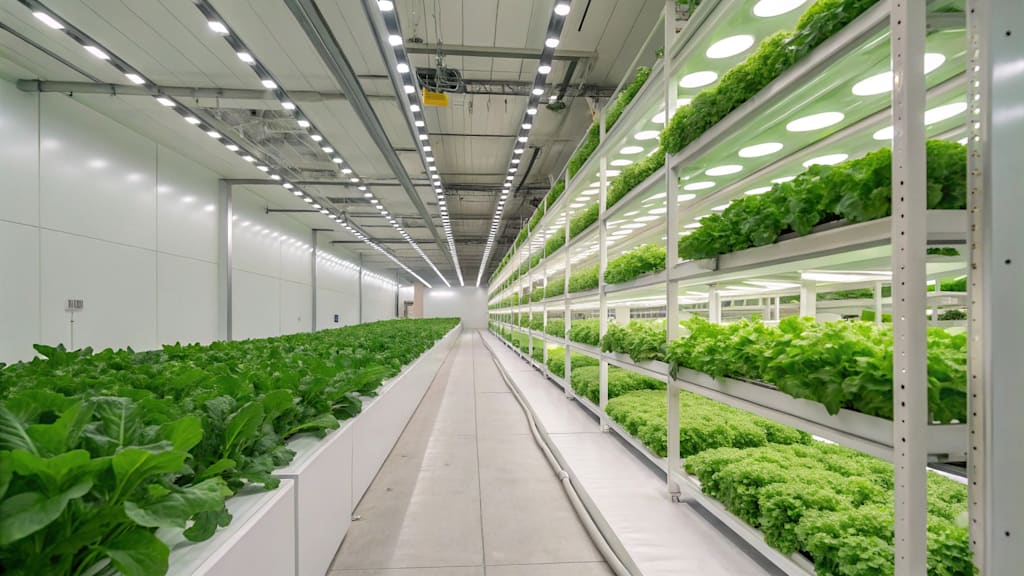
Indoor farming, also referred to as controlled environment agriculture, represents agricultural practice of cultivating plants within enclosed settings including greenhouses and completely closed warehouse environments. Indoor farming leverages vertical farming structures enabling cultivation of plants in stacked arrangements maximizing available space utilization. Controlled environment agriculture enables year-round plant cultivation independent of external weather conditions through management of light, temperature, humidity, and nutrient levels. Indoor farming requires significantly less water than traditional soil-based farming through water recirculation systems reducing consumption. Closed environment eliminates pesticide necessity through pest and disease prevention providing chemical-free produce. Urban agriculture capability enables fresh produce cultivation in metropolitan areas reducing transportation distances improving food accessibility. Ideal research platform allows scientists to control and manipulate growing environments advancing understanding of plant growth and development. Advanced technologies including LED lighting, automation, and artificial intelligence enhance farm efficiency and productivity. Growing systems including hydroponics, aeroponics, aquaponics, and soil-based approaches enable diverse crop cultivation. In Japan's context, indoor farming represents critical agricultural innovation supporting food security, workforce adaptation, space optimization, weather resilience, and sustainable food production addressing unique geographic and demographic challenges.
The Japan indoor farming market size reached USD 1,459.7 Million in 2025, reflecting growing adoption of controlled environment agriculture. Looking ahead, the market is projected to reach USD 3,102.8 Million by 2034, exhibiting strong growth rate (CAGR) of 8.48% during 2026-2034. This substantial expansion is supported by limited availability of fertile arable land necessitating intensive cultivation methods, harsh weather conditions including typhoons and heavy rainfall devastating traditional crops, rising sustainability consciousness promoting environmental health, aging farming population creating labor shortage requiring automation, mountainous terrain limiting traditional agricultural space, increasing urbanization concentrating population on limited land, technological advancement in LED lighting and automation improving productivity, growing consumer demand for locally grown fresh produce, food security and self-sufficiency concerns, government support for agricultural innovation, and expansion of vertical farming technology adoption.
Request PDF Sample for more detailed market insights:
Role of Innovation in Market Development
• LED Lighting Technology and Spectral Optimization
Innovation is revolutionizing indoor farming through advanced lighting. LED spectrum optimization maximizes photosynthesis efficiency. Wavelength-specific lighting reduces energy consumption. Adjustable spectrum suits different crop growth stages. Heat management through LED efficiency improves climate control. Extended lifespan reduces replacement costs. Real-time monitoring systems optimize light delivery. Dynamic lighting enables precision cultivation. Energy cost reduction through efficiency gains. Lighting innovation improves yield per watt. Technology advancement drives economic viability.
• Automation and Artificial Intelligence Integration
Automation and AI represent transformative innovations. Robotic harvesting systems increase throughput. Automated environmental monitoring maintains optimal conditions. AI-driven irrigation systems optimize water usage. Predictive maintenance prevents equipment failure. Machine learning predicts crop yields. Autonomous climate management systems. Real-time monitoring and adjustment. Labor cost reduction through automation. Productivity enhancement through precision management. AI integration enables scalability.
• Advanced Growing System Development
Advanced growing systems represent critical innovations. Aeroponics enables efficient nutrient delivery. Aquaponics integrates fish farming with plant cultivation. Hybrid systems combine multiple approaches. Hydroponics optimization improves root system efficiency. Recirculating systems minimize water waste. Nutrient film technique enables continuous delivery. Deep water culture increases oxygen availability. System innovation enables diverse crop cultivation. Technology advancement improves sustainability profile.
Japan Indoor Farming Industry Trends and Drivers
• Aging Population and Labor Shortage
Workforce aging represents primary market growth driver. Traditional farming workforce decline. Labor cost increases justify automation. Aging farmers seek less labor-intensive methods. Technology adoption necessity increases. Younger farmer recruitment challenges. Skill-based employment opportunities in technology. Farm consolidation and mechanization. Labor shortage ensures sustained adoption. Demographic trends provide fundamental growth catalyst.
• Climate and Weather Resilience
Typhoon and weather damage represents significant driver. Extreme weather crop devastation. Crop loss prevention through controlled environment. Weather-independent production capability. Climate risk mitigation importance. Natural disaster resilience. Consistent product supply despite conditions. Risk reduction justifies investment. Weather resilience ensures sustained growth. Climate challenges provide market support.
• Space Optimization and Urban Agriculture
Limited arable land drives innovation. Population density in limited space. Vertical farming maximizes yield per square meter. Urban agriculture reduces transportation distances. Metropolitan area food production. Land scarcity addresses through stacking. Space efficiency importance. Urban development support. Space constraint provides fundamental driver.
Key Growth Drivers of Japan Indoor Farming Market
• Food Security and Self-Sufficiency
Food security concerns drive investment. National self-sufficiency goals. Import dependency reduction. Domestic production capability. Agricultural resilience importance. Supply chain security. Strategic food production. Government support for independence. Food security provides policy support.
• Sustainability and Environmental Consciousness
Environmental sustainability drives adoption. Chemical-free produce benefits. Water conservation importance. Carbon footprint reduction. Organic farming alignment. Pesticide elimination. Soil preservation. Environmental certification value. Sustainability consciousness ensures growth.
• Consumer Demand for Fresh Produce
Freshness and quality preference. Local food preference. Nutritional content importance. Chemical-free produce appeal. Farm-to-table movement. Urban consumer health consciousness. Convenience of local availability. Organic produce premium pricing. Consumer demand provides market support.
Opportunities of Japan Indoor Farming Market
• Vertical Farming Expansion and Space Optimization
Substantial opportunities exist in vertical farm development. Multi-story facility construction. Urban warehouse conversion. Space utilization maximization. High-density cultivation. Rooftop farming systems. Building integration farming. Skyscraper agriculture. Vertical expansion provides growth opportunities.
• Specialty Crop Production and Premium Positioning
Significant opportunities exist in specialty crop cultivation. Medicinal herb production. Microgreens and sprouts. Exotic fruit cultivation. Organic certification premium. Heirloom variety production. Functional food crops. High-value crop focus. Specialty positioning enables premium pricing.
• Export and International Market Expansion
Emerging opportunities exist in export markets. International produce export. Asian market expansion. Quality reputation leveraging. Technology export potential. Breeding stock export. Knowledge and consulting services. Global market access. International expansion provides growth potential.
Japan Indoor Farming Market Segmentation
By Facility Type
• Greenhouse (Semi-Controlled Environment)
• Indoor Vertical Farms (Multi-Story Facilities)
• Container Farms (Modular Systems)
• Indoor Deep Water Culture Systems
• Others (Hybrid, Innovative Designs)
By Crop Type
• Fruits, Vegetables, and Herbs
o Leafy Greens (Lettuce, Spinach, Kale)
o Fruiting Crops (Tomato, Peppers, Strawberry, Cucumber)
o Herbs (Basil, Parsley, Mint)
o Others
• Flowers and Ornamentals
o Annual Flowers
o Perennial Flowers
o Ornamental Plants
• Others (Microgreens, Sprouts)
By Component
• Hardware
o Structure and Framework
o LED Lighting Systems
o HVAC and Climate Control
o Irrigation and Hydroponic Systems
o Monitoring Equipment
• Software
o Web-Based Management Systems
o Cloud-Based Analytics Platforms
o IoT Integration
By Growing System
• Aeroponics (Nutrient Mist Delivery)
• Hydroponics (Water-Based Cultivation)
• Aquaponics (Fish-Plant Integration)
• Soil-Based Systems
• Hybrid Systems
By Region
• Kanto Region (Tokyo, Yokohama)
• Kinki Region (Osaka, Kyoto)
• Central/Chubu Region (Nagoya)
• Kyushu-Okinawa Region
• Tohoku Region
• Chugoku Region
• Hokkaido Region
• Shikoku Region
This comprehensive segmentation reflects the diverse structure of Japan's indoor farming market, encompassing multiple facility types from greenhouses to vertical farms, diverse crop types from leafy greens to flowers, diverse components from hardware to software, multiple growing systems, and geographic distribution across all major Japanese regions.
Competitive Landscape
The Japan indoor farming market includes global indoor farming technology providers, Japanese agricultural companies expanding into controlled environment agriculture, technology specialists in automation and AI, startup companies with innovative farming concepts, and government-supported research institutions. Competitive positioning is influenced by technology innovation, system reliability, cost competitiveness, crop yield performance, and customer support. Global leaders leverage international experience. Japanese companies emphasize local adaptation. Technology specialists differentiate through automation. Startups introduce disruptive innovations. Research institutions support advancement. Successful competitors balance innovation with practicality. Strategic partnerships enable market access.
Market Outlook
The Japan indoor farming market is expected to witness steady and sustained growth as demographics shift, technology matures, and sustainability becomes imperative. LED efficiency will continue improving. AI integration will expand widely. Vertical farming will scale substantially. Automation will advance significantly. Urban agriculture will proliferate. Export capabilities will develop. Climate resilience will gain importance. Specialty crops will expand. Integrated systems will become standard. Government support will strengthen. As Japan addresses agricultural challenges and pursues food security, indoor farming will remain essential infrastructure supporting domestic food production, environmental sustainability, and urban agriculture. Market expansion from USD 1,459.7 Million in 2025 to USD 3,102.8 Million by 2034 reflects strong growth potential driven by demographic pressures, climate urgency, and technology advancement. Indoor farming will continue serving as critical agricultural innovation enabling Japan's transition toward sustainable, resilient, locally-centered food production systems through sustained technology advancement and market expansion.
About IMARC Group
IMARC Group is a leading market research and consulting firm providing strategy development, industry analysis, feasibility studies, and data-driven insights across global markets. The firm supports businesses, investors, and governments in making informed decisions through reliable and actionable research.
About the Creator
Yoshio
Market Research Analyst with 5+ years of experience in consumer insights and market segmentation. Skilled in data analysis and qualitative research.
Enjoyed the story? Support the Creator.
Subscribe for free to receive all their stories in your feed.
Comments
There are no comments for this story
Be the first to respond and start the conversation.