
Japan In-Vitro Diagnostics Market: How Is Advanced Testing Transforming the Future of Healthcare in Japan?
Aging demographics, rising chronic diseases, molecular diagnostics innovation, and preventive healthcare initiatives are accelerating the growth of Japan’s in-vitro diagnostics industry through 2034.

Japan's healthcare industry has long been recognized as one of the most advanced in the world. From cutting-edge medical technology to a highly developed healthcare infrastructure, the country continues to set benchmarks in healthcare innovation. Among the many sectors contributing to this progress, the in-vitro diagnostics (IVD) market stands out as a critical pillar supporting disease detection, treatment planning, and preventive healthcare.
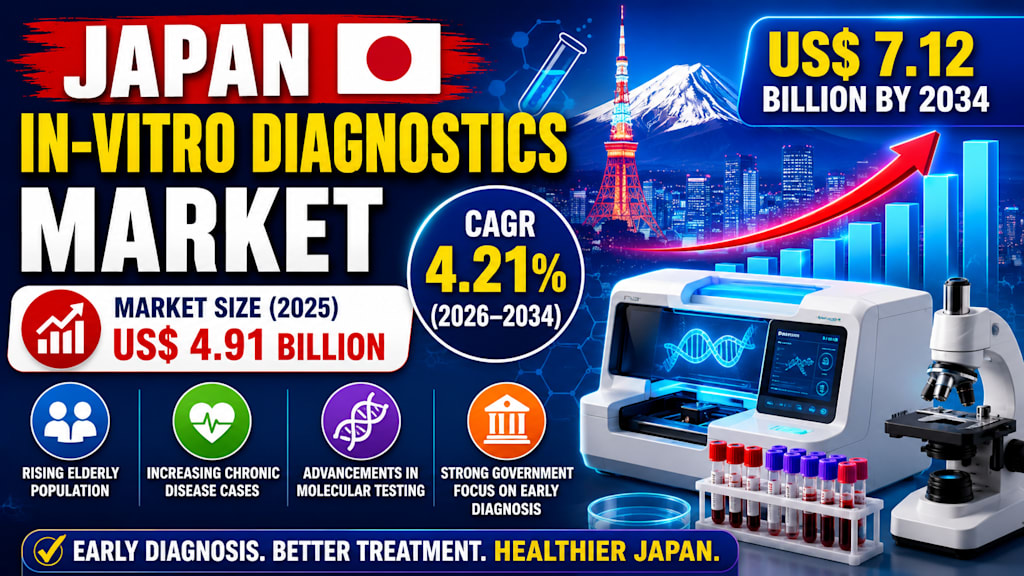
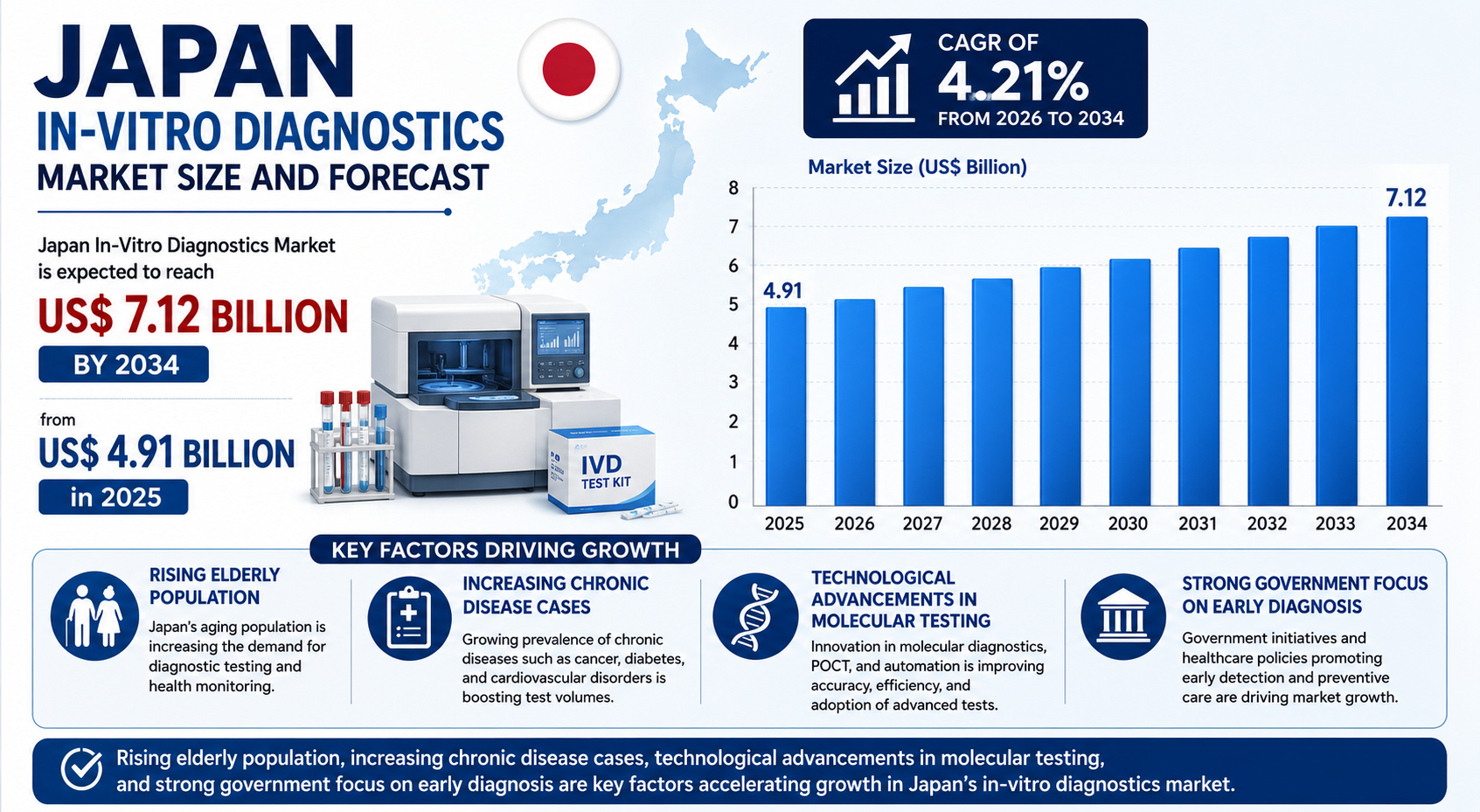
According to Renub Research, the Japan In-Vitro Diagnostics Market is projected to increase from US$ 4.91 billion in 2025 to US$ 7.12 billion by 2034, expanding at a CAGR of 4.21% from 2026 to 2034. Growing demand for early disease detection, increasing prevalence of chronic illnesses, advancements in molecular diagnostics, and government-backed healthcare initiatives are collectively driving the market's growth.
Understanding the Role of In-Vitro Diagnostics
In-vitro diagnostics refers to tests performed on biological samples such as blood, urine, tissue, or other bodily fluids outside the human body. These tests help healthcare professionals diagnose diseases, monitor treatment effectiveness, identify risk factors, and make informed clinical decisions.
IVD technologies include clinical chemistry, molecular diagnostics, immunodiagnostics, hematology testing, microbiology diagnostics, and genetic testing. These diagnostic solutions are widely used across hospitals, laboratories, clinics, and increasingly in home healthcare settings.
Modern healthcare depends heavily on diagnostic information. In fact, many treatment decisions begin with laboratory results that provide physicians with crucial insights into a patient's condition. As healthcare moves toward personalized medicine and preventive care, the importance of advanced diagnostic technologies continues to rise.
Why Japan's IVD Market Is Growing Rapidly
Japan's healthcare sector is experiencing a significant transformation driven by demographic changes, technological innovation, and increased healthcare awareness. The country's unique demographic profile makes diagnostics particularly important.
Japan has one of the highest life expectancies in the world and one of the largest elderly populations. As people live longer, the need for continuous health monitoring and disease management becomes increasingly important. This creates strong demand for diagnostic tests that can detect diseases at an early stage and guide effective treatment.
At the same time, healthcare providers are embracing innovative technologies that improve diagnostic accuracy, reduce testing time, and support better patient outcomes. These developments are positioning the IVD market as one of the fastest-growing segments of Japan's healthcare industry.
Aging Population and Rising Disease Burden Drive Market Expansion
One of the most important factors fueling growth in Japan's IVD market is the country's aging population.
Older individuals are more susceptible to chronic diseases such as diabetes, cardiovascular disorders, cancer, kidney diseases, and autoimmune conditions. These illnesses require ongoing diagnostic testing for effective monitoring and treatment.
Healthcare providers increasingly rely on diagnostic technologies to track disease progression, assess treatment responses, and identify potential complications before they become severe. Regular testing has become a routine part of healthcare management for millions of elderly patients.
Furthermore, lifestyle-related diseases are becoming more common among middle-aged adults. Factors such as sedentary lifestyles, dietary changes, and stress contribute to the increasing prevalence of chronic health conditions. As a result, demand for diagnostic services continues to expand across all age groups.
The government's focus on preventive healthcare has also increased awareness about routine health screenings, encouraging more individuals to undergo diagnostic testing before symptoms appear.
Technological Advancements Transforming Diagnostic Capabilities
Innovation remains one of the strongest drivers of growth within Japan's IVD market.
Recent advancements in molecular diagnostics, digital pathology, automated laboratory systems, and artificial intelligence are transforming the way diseases are detected and monitored. These technologies provide greater accuracy, faster turnaround times, and enhanced efficiency compared to traditional diagnostic methods.
Molecular diagnostics, in particular, has emerged as a game-changing technology. Techniques such as polymerase chain reaction (PCR), nucleic acid amplification testing, and next-generation sequencing enable healthcare professionals to identify diseases at the genetic and molecular level.
These technologies are increasingly used in oncology, infectious disease testing, genetic disorder screening, personalized medicine, and companion diagnostics. Their ability to detect diseases earlier and more accurately is improving patient outcomes while supporting more targeted treatment approaches.
Automation is also helping laboratories handle growing testing volumes. Automated analyzers can process large numbers of samples quickly while reducing the risk of human error. This is particularly valuable in Japan, where healthcare facilities face increasing demand alongside workforce challenges.
Digital Healthcare Revolution Supports Diagnostic Growth
Digital transformation is reshaping healthcare delivery throughout Japan.
Healthcare institutions are adopting artificial intelligence, machine learning, cloud-based platforms, digital pathology systems, and automated laboratory analyzers to enhance diagnostic workflows.
Artificial intelligence is increasingly being used to analyze diagnostic images, detect abnormalities, and assist clinicians in making more accurate decisions. Machine learning algorithms can process vast amounts of patient data, helping healthcare professionals identify patterns that might otherwise go unnoticed.
Cloud-based diagnostic platforms enable healthcare providers to access patient information and laboratory results from virtually any location. This improves collaboration among physicians, specialists, and laboratories while accelerating clinical decision-making.
The integration of digital technologies is not only improving efficiency but also supporting the broader shift toward precision medicine and patient-centered care.
Government Support Strengthens Market Development
Japan's government has played a significant role in promoting the growth of the IVD industry.
National healthcare policies increasingly emphasize preventive medicine, early disease detection, population screening, chronic disease management, and pandemic preparedness. These priorities directly increase demand for diagnostic products and services.
The country's universal healthcare system ensures that many diagnostic procedures remain accessible to a large portion of the population. This broad access encourages individuals to participate in routine screenings and health assessments.
Government-funded screening programs for cancer, metabolic disorders, and infectious diseases continue to create demand for advanced diagnostic technologies. At the same time, investments in healthcare infrastructure and laboratory modernization are supporting the adoption of next-generation diagnostic platforms.
Japan's commitment to healthcare innovation ensures that the IVD market remains a key area of investment and development.
Growing Importance of Point-of-Care Testing
Point-of-care testing is becoming increasingly popular across Japan's healthcare system.
Unlike conventional laboratory testing, point-of-care diagnostics provide results near the patient, often within minutes. This rapid access to information enables faster treatment decisions and improved patient management.
Applications include blood glucose monitoring, infectious disease testing, cardiac marker analysis, pregnancy testing, and coagulation monitoring.
The convenience of point-of-care testing is particularly valuable for elderly individuals, patients in remote locations, and healthcare facilities seeking to improve efficiency. As technology continues to advance, point-of-care devices are expected to become even more accurate and widely adopted.
Challenges Facing the Japan IVD Market
Despite strong growth prospects, the industry faces several challenges that could influence future development.
High Cost of Advanced Diagnostic Technologies
Advanced diagnostic systems often require substantial financial investment. Molecular testing platforms, automated analyzers, and digital diagnostic tools involve costs related to equipment acquisition, maintenance, software integration, quality assurance, and staff training.
Large hospitals and research institutions are generally able to absorb these costs. However, smaller clinics and regional healthcare providers may face financial constraints that limit technology adoption.
Balancing innovation with affordability remains an important challenge for healthcare stakeholders.
Shortage of Skilled Laboratory Professionals
Japan is also facing a shortage of trained laboratory personnel and diagnostic specialists.
Modern diagnostic technologies require professionals capable of operating complex systems, interpreting molecular data, managing quality control procedures, and ensuring regulatory compliance.
The aging workforce and limited influx of younger professionals have created staffing shortages that affect laboratory operations. Although automation helps improve efficiency, human expertise remains essential for validating results and managing sophisticated diagnostic processes.
Addressing workforce challenges will be critical to sustaining long-term market growth.
Regional Insights
Tokyo Leads the National Market
Tokyo remains the largest and most influential market for in-vitro diagnostics in Japan. The city benefits from world-class hospitals, leading universities, advanced research institutions, strong healthcare spending, and a concentration of biotechnology companies.
Its healthcare ecosystem enables rapid adoption of emerging diagnostic technologies, making Tokyo the country's primary hub for innovation and market growth.
Osaka Continues to Expand Diagnostic Innovation
Osaka serves as another major contributor to Japan's IVD industry. The region hosts numerous hospitals, pharmaceutical companies, and research centers actively involved in developing advanced diagnostic solutions.
Strong biomedical research capabilities and growing healthcare demand continue to drive investments in molecular diagnostics, immunoassays, and infectious disease testing throughout the region.
Aichi Emerges as a Growing Healthcare Center
Aichi is strengthening its position within Japan's healthcare landscape through investments in automated laboratory systems, molecular testing equipment, and digital diagnostic solutions.
The region's aging population and increasing prevalence of chronic diseases are creating sustained demand for advanced diagnostic services.
Kanagawa Supports Technology-Driven Healthcare
Kanagawa's well-developed healthcare infrastructure and proximity to Tokyo make it an important market for diagnostic innovation.
The region is actively integrating advanced molecular diagnostics, digital health technologies, and automated laboratory systems to improve healthcare delivery and patient outcomes.
Recent Developments in Japan's IVD Industry
The pace of innovation within Japan's diagnostic industry remains impressive.
In February 2025, Roche introduced its Sequencing by Expansion technology in Japan, enabling whole-genome analysis with turnaround times of less than six hours. This breakthrough has the potential to significantly accelerate genetic testing and personalized medicine applications.
In January 2025, Japan's Pharmaceuticals and Medical Devices Agency (PMDA) released revised safety and self-inspection guidelines for influenza virus detection reagents. The updated regulations strengthened labeling and compliance requirements, reinforcing quality standards across the diagnostic sector.
These developments highlight the country's commitment to maintaining high levels of innovation while ensuring patient safety and regulatory excellence.
Competitive Landscape
The Japan In-Vitro Diagnostics market features strong competition among global and domestic companies focused on technological innovation, product development, and strategic partnerships.
Key industry participants include Abbott Laboratories, Danaher Corporation, bioMérieux, Roche Diagnostics, Becton Dickinson, Sysmex Corporation, Bio-Rad Laboratories, Inc., and Thermo Fisher Scientific Inc.
These companies continue investing heavily in research and development to introduce more accurate, efficient, and user-friendly diagnostic solutions. Strategic collaborations with healthcare providers, research institutions, and government agencies further strengthen their market positions.
Future Outlook
The future of Japan's in-vitro diagnostics market appears highly promising. Rising healthcare demands, technological advancements, aging demographics, and growing emphasis on preventive medicine will continue to create opportunities for expansion.
As molecular diagnostics, artificial intelligence, automation, and digital healthcare technologies become increasingly integrated into routine medical practice, diagnostic testing will play an even greater role in healthcare delivery.
The market's projected growth to US$ 7.12 billion by 2034 reflects the growing importance of diagnostics in improving patient outcomes, reducing healthcare costs, and supporting personalized medicine initiatives.
Organizations that continue investing in innovation, workforce development, and accessible diagnostic solutions will be best positioned to capitalize on the opportunities ahead.
Final Thoughts
Japan's in-vitro diagnostics market is entering a new era of growth driven by technological innovation and evolving healthcare needs. The combination of an aging population, increasing chronic disease burden, supportive government policies, and advancements in molecular diagnostics is creating strong momentum for the industry.
As healthcare providers seek faster, more accurate, and more personalized diagnostic solutions, the role of IVD technologies will only become more critical. With continued investment and innovation, Japan is poised to remain a global leader in diagnostic excellence throughout the coming decade.
About the Creator
Enjoyed the story? Support the Creator.
Subscribe for free to receive all their stories in your feed.
Comments
There are no comments for this story
Be the first to respond and start the conversation.